Why Bernie Didn’t Sell Out

Why Bernie Didn’t Sell Out

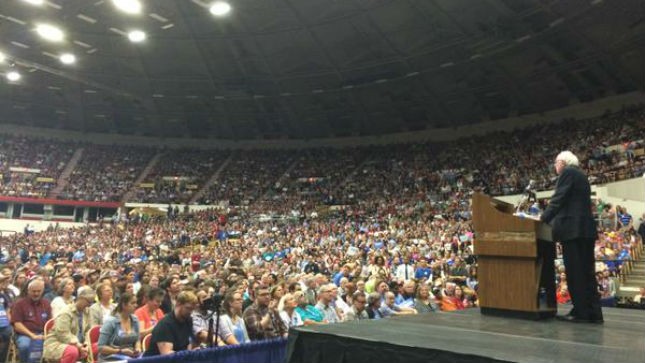
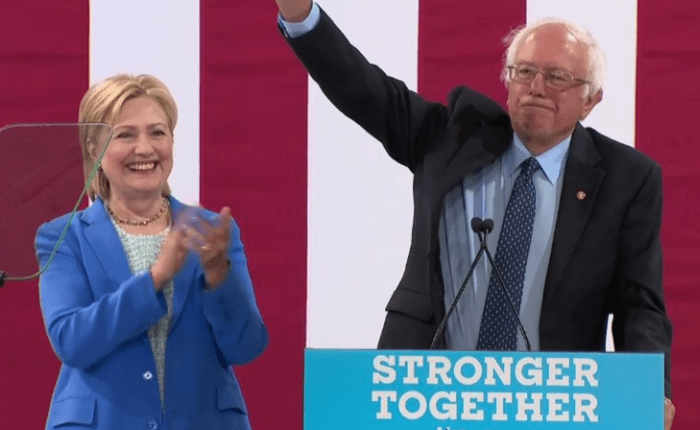
Last week marked the unofficial end of the rivalry between Hillary Rodham Clinton and that ever cantankerous Senator Sanders. In a speech delivered before the people of New Hampshire, who voted in his favour, he addressed the question of his movement’s future and where his loyalty lay. I watched this as it streamed live on Facebook, torn between the body language of the two figures at the podium and the incoming flood of knee-jerk reactions from half-wits and the odd informed. Many complimented this change in tone; it had after all been a long and arduous primary season. Others lamented however Bernie’s decision to stand by the Devil and surrender everything he had ever stood for. And that’s where we stop because (and I’ll put this plainly), Bernie didn’t sell out. Here’s why:

  1. He won on the issues- if you listened to Clinton’s speech, which directly followed Sanders’ endorsement, you will have noticed how clever SNL were with their skit on Clinton becoming more and more Sanders’ like (to the point where Kate McKinnon ended up with a bald cap). At first, I gave her the benefit of the doubt on the assumption that she just isn’t as conservative as the uber-liberals have suggested. When it came to Wall Street however and her bargaining plea to overturn Citizen’s United, it became clear that she was taking note of the issues that prevailed in the debates, brought about because of Sanders’ longstanding rhetoric. She delved into college fees and global warming too, which made for a nice combination, leading me to believe that she has moved far more to the left than even the most hawkish of critics could have guessed.
  2. It’s not just about the Presidency- Sanders’ movement and the rise of the Left cannot solely rely on an office tampered with more than ever. It needs to endure beyond one or two terms into a progressive model by which the future of the Democratic Party can be shaped. Yes, Hillary has, in many senses, won the battle but the future could be Sanders, so long as the issues on which he based his candidacy, continue to resonate. As mentioned above, I think they already have to the point that Hillary can’t afford to ignore them. As well as that however, he can also serve as a highly influential figure outside of the White House. Who, for example, had more of an effect on American culture in the 1960s than Martin Luther King? Has Jimmy Carter not accomplished some of his best work out of office? The presidency is a convenient altar, through which many channels, from foreign aid to educational reform, can be distributed but as Bill Clinton himself has noted, it’s also prey to circumstances beyond a president’s control (e.g. 9/11).
  3. Trump must be defeated- I’ll admit that this is not my favourite argument as I do not believe elections should be contested on the basis of fighting against, rather than for something. It is an important one though and whether it depresses you or not, voting for the lesser of two so-called evils is still worthwhile. Bernie’s candidacy, has gone as far it needs to, in my opinion. With the Democratic National Convention coming up, it has become clear that his issues and supporters will not simply be sidelined but incorporated into the party’s agenda for the coming years. For now, he needs to ensure, if his own visions are to be realised though, that this party does as well as it can come November. Otherwise, the country will head in the exact opposite direction with Trump.
  4. Listen to the speech again- Sanders didn’t have to necessarily endorse Clinton but it was the responsible thing to do; what purpose would their rivalry have served after all? Not enough to sway you? Listen to the speech again then and tell me where exactly he abandons the principles on which he built his campaign? Still not enough? Take a trip through his YouTube interviews and go back to a year ago when he expressed his admiration for Hillary Clinton whilst acknowledging their differences of opinions. Granted, the race heated up and nostrils flared during the primary season but the gulf in rhetoric that existed between their camps, was never as deep as many of Sanders’ less reasonable supporters suggested. He fought a good battle and we can only admire him for what he did but that battle is over now and at some point, you have to concede and look to the positives.

It’s undoubtedly sad to see Bernie leave the race; he shook things up and set the country’s vision towards a better tomorrow, in a manner we just couldn’t have expected over a year ago with the “inevitable” Clinton candidacy. His role however in this race will at least go down in the history books and his role to come will remain that of an inspiring spokesman for a disenfranchised generation.
The Age Of Protest Votes

The Age Of Protest Votes

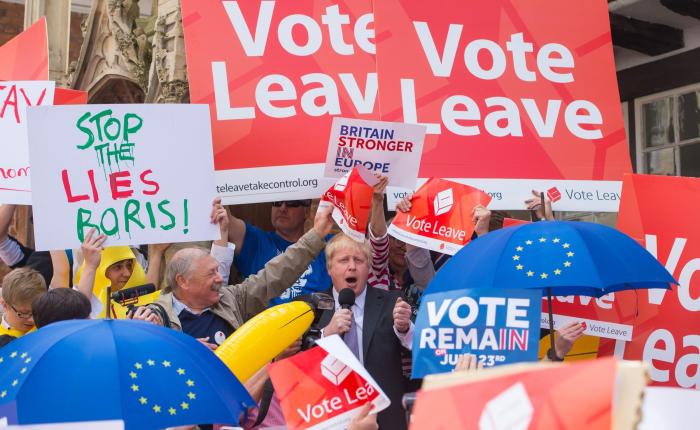
The United States has something important to learn in the wake of Brexit; protest votes are not only petty, they’re extremely dangerous and stupid too. In this election year, we have been bombarded with multiple pieces on public frustration with establishment politics. As much as we are seeing an intelligent dialogue developing in this context however, we are also witnessing with a great many others, the collapse of a logical framework for debate. Too many people are now voting with knee jerk reactions; against rather than for something. The political game can’t be played like customer service though. Protest votes yield actual results.

imrs_wdp

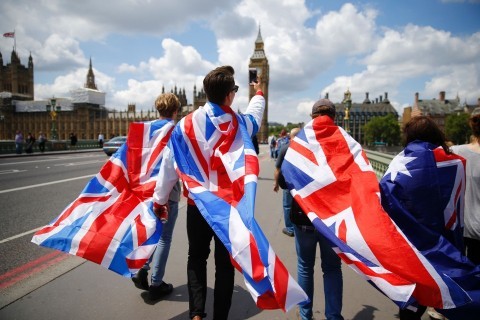
On June 23, the British people voted narrowly to leave the EU. Across social media and the web, the reaction was one of shock, even amongst many who voted in this favour. And then came “Bregret”- the pun on a word already being played with, as up to 7% Leave voters began to profess their vote was only cast in the belief that Britain would inevitably remain, or as some form of quasi-protest against some half-formed ideal they didn’t even understand. This became evident immediately in the wake of the votes, as top Google searches ranged from questions concerning what Britain’s role in the EU is to what indeed this “European Union” is. And we thought America was hogging all the stupidity this year…

The campaigns in Britain were of course controversial and already we are beginning to see how weak the structures on which Nigel Farage and Boris Johnson built their case were. Interestingly, national identity and immigration were key issues, especially amongst older voters who by large voted to leave the institution that had been irking them since 1973. The question has loomed for many years as to whether Great Britain is losing its Britishness. In America too, this question has come to the forefront with Trump’s campaign. Many of his voters, the so-called “silent majority,” white middle-class feel that they are not being catered for in the way they used to be. After all, look at how much hip hop music is on the radio these days. It’s threatening, quite frankly.

pho-english-bulldog-11-e1310185714112_zps6938df48
Holding onto their Britishness no matter what…


Political correctness is another factor, in tandem with this, which boils the blood of many. Where actual issues arise with immigration, many liberals disavow the very notion of discussion on this area with labels of bigotry being thrown around at the clinking of a tea-cup. Trump, for all his bullishness and disregard, comes across as genuine and honest, in contrast to the political suits of past times. When he speaks about Mexicans, he’s speaking from the heart. Granted, that’s not a heart I’m sure exists, but he’s speaking from whatever’s there nonetheless. People appreciate this. They want a politician who speaks like your drunken grandfather on a night out. So when people complain about how they’re losing their political identity, it’s not a far stretch to attribute it to many of the left-leaning commentators who put a binding on the language book many years ago.

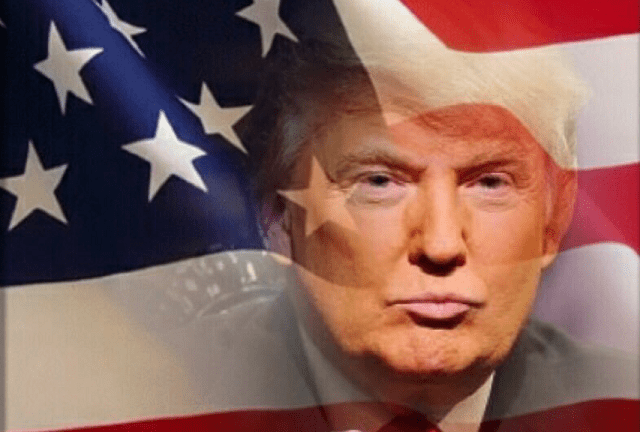
trump-face-american-flag.png

Whilst I am clearly not a fan of political correctness, I do appreciate where people are coming from. There are problems with the EU and America. There are problems with immigration. National identity and culture should be appreciated. With all these cases however, common sense must then prevail however. For example, you may not have agreed with David Cameron on many domestic or foreign issues, but his Remain stance, was no just cause for joining the anti-establishment. You may feel America is being pushed around with immigration, but does this justify the extremist measures of a man whose policy is based on a Wikipedia entry? Establishment politics can prove frustrating but overhaul and revolutions are only required where all other means are exhausted. Trump may appear to many the underdog saviour who will restore American prestige at rallies, but sit down again and read the transcript of what he says, then think. If the Google searches come November concern the costs of a border wall, then standardised testing should be needed to secure the right to vote.

Andrew Carolan

A Divided Left?

A Divided Left?

As Philadelphia prepares to host throngs of Democratic Party delegates for the upcoming Democratic National Convention next month, authorities are gearing up for the inevitable ‘Bernie or Bust’ protestors. This wildly loyal cadre of Sanders’ supporters, most of whom are Independents young and old, are eager to voice their displeasure with the internal processes of the Democratic Party, and their vehement dissatisfaction with the manner in which this primary season has been managed.

Yet, there is always a hope and purpose that through the carnival-esque mechanisms of the convention process, the nominee will emerge and successfully unite the party behind their banner. This incredibly tough challenge falls not only to the presumptive nominee, Hilary Clinton, but also to the yolk of the Democratic Party and those pious super delegates. However, the outcome of disunity and a growing chasm of indifference is often the result. Will it be the same this time?

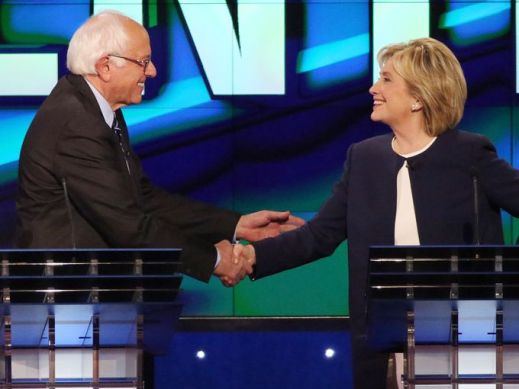
635803756227070512EPAUSAELECTIONSDEMOCRATICDEBATE
Sanders said that he will vote for Clinton in November to stop Trump

In short, no! Yesterday, Bernie Sanders stated that he will vote for Hilary Clinton in November in order to stop the meretricious master of tautology, Trump. Though Sanders’ concession to Clinton is long overdue, one cannot help but get the feeling that the political revolution at the foundation of his incredibly successful campaign will endure in some form.

For Sanders and his millions of dedicated supporters who continue to feel the ‘Bern,’ a revision (and in some cases overhaul) of Democratic electoral processes and procedures is desideratum. Following a meeting of the two Democratic primary candidates this week in Washington DC, the task fell to Hilary Clinton to placate the Sanders’ campaign in the interest of uniting the party and securing a larger voter base this coming Autumn. Both campaigns issued similar statements in the wake of the meeting saying that the candidates and their aids spoke constructively about beating their opponent and ‘progressive ideas.’

 It is no surprise that the Vermont senator has called for the ousting of leadership from the convention committee all the way to the upper echelons of the party. He has been especially critical of DNC Chair, Debbie Wasserman Schultz. The Floridian Representative, Schultz, was this week replaced by Brandon Davies – a Clinton surrogate. This move likely came as a conciliatory tactic by camp Clinton following comments made by Sanders’ campaign manager, Jeff Weaver, on MSNBC. These overtures were clearly an attempt to placate Sanders’ stoic efforts. Caveat Emptor!

Supporters hold signs and cheer as U.S. Democratic presidential candidate Sanders speaks during a campaign rally at Cornell College in Mount Vernon, Iowa
Hordes of Sanders’ supporters hungry for political revolution and reform

In a Washington Post article that Sanders composed this past Thursday, the obstinate senator laid out his 95 theses that, should we be living in the 1500s, he would nail to the doors of both the Wells Fargo Center and the Pennsylvania Convention Center. Sanders consistently and emotively repeats the question, ‘what do we want?’ at the beginning of each new point – appealing to the union and solidarity of his support base. Scansion aside, there is nothing new from Bernie here, yet he makes some incredibly salient points about the flawed criminal justice system and climate change.

If Bernie Sanders can auspiciously carry his brand of revolutionary politics to the convention floor and begin a comprehensive dialogue in a public forum the mollification process may continue. Among the alterations that the senator is lobbying for is the abolition of closed primaries, automatic voter registration, and the monitoring of voting machine software.

Sanders needs to show the Democratic Party that he still holds some of the chips, but will have to temper his approach if he is to garner any substantive gains. On the flip side, Clinton and the Democratic establishment know that the Sanders’ promissory note is a valuable asset and have slowly come around to his $15 an hour minimum wage, ban on fracking, and Wall Street reform. Though, according to a Bloomberg poll published on Wednesday, only 55 percent of Sanders’ supporters said that they would vote for Clinton – proving that the ball is now firmly in the establishment’s court.

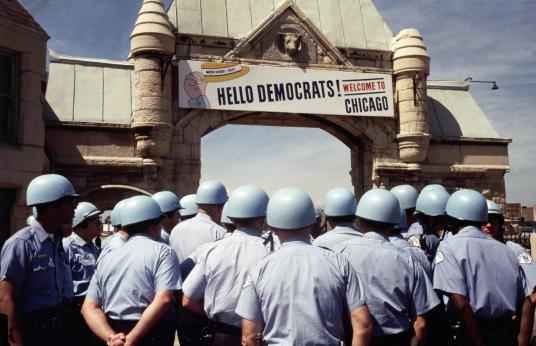
Ixq79cw
The National Guard were heavily utilised at the DNC in Chicago, 1968

For Democrats, the malaise of the 1968 DNC held in Chicago haunts the party to this very day, as it became a lacerating event that distilled a year of heartbreak, assassinations, riots and a breakdown in law and order. For many American’s, it symbolised the fragility and chaos of the nation. The present environment is equally as delicate and anarchic loaded with pernicious potential. While the issue of unity within the Democratic camp is tenuous, it’s not nearly as tensile as the threads holding the Republican Party together.

Matthew O’Brien

The Divided Right

The Divided Right

The piñata that is the Republican Party has been burst open and every day, new morsels are being discovered by the media. Last Friday, we heard that Mayor Danny Jones of Charleston, West Virginia, had changed his political party status to “unaffiliated” in a growing list of disillusioned conservative officials. That same week, several major companies including Apple pulled their sponsorship from the Republican National Convention. And to cap it all off? The man, the Republican loyalists stood behind (if reluctantly), has lost his momentum.

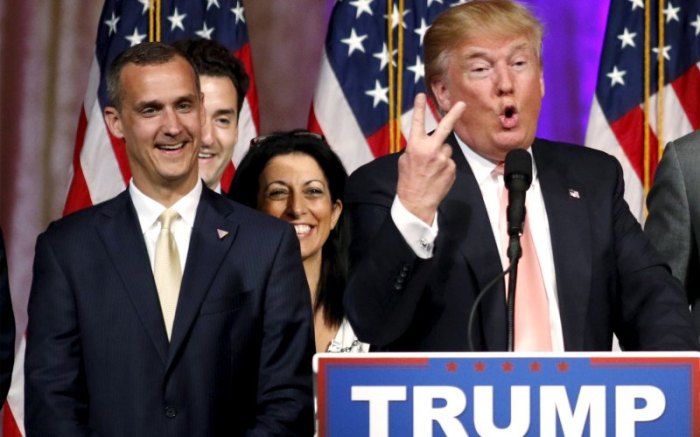
For a year now, the accepted narrative has been that Trump stands no chance against Clinton. Despite mass coverage and the GOP nomination, many remained undeterred. It seems their faith has been rewarded however as his latest hurdle has resulted in a parting of ways with his campaign manager, Emperor Palpatine… I mean, Corey Lewandowski. The poll numbers are no longer looking so good for the man who once promised “so much winning” for America and in the wake of this great cataclysm of popularity, lies the remains of the fractured right-wing. So what happened? Why? And what’s next?

trump-lewandowski-campaign-manager
Trump and Lewandowski (left) kicking up a storm.


Since the shining light of Reagan descended upon America, the GOP has adopted an increasingly conservative and radical stance in the political system. This culminated most recently in the refusal to work with the Obama administration on almost every initiative, leading to a Government shutdown on Obamacare. With the culture wars wagging their tails every now and again, the great beliefs of the usually strongly united right became that America was losing its identity. Even the vaguest idea of making it “great” again was so appealing that a man like Trump, strange though he may seem, at least had to be considered. And in their desperation for this fabled era of prosperity, the fractures which set a part fiscal conservatives, social conservatives, tea-party members and cowboys, widened so much so that the GOP abandoned whatever shred of dignity they still held.

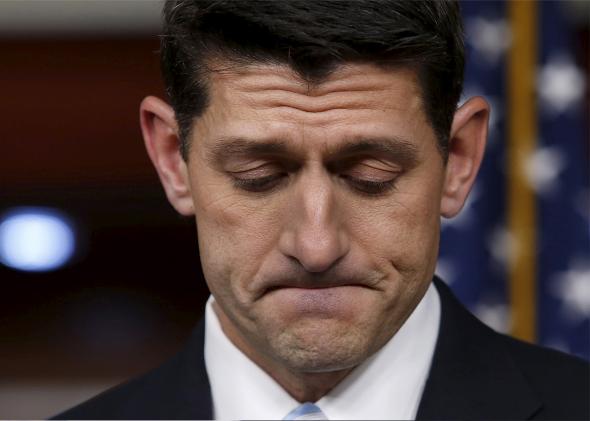
Since securing the nomination, a tenuous effort has been made to cobble this mess back together and create something sufficient, lest the Wicked Witch of New York, gain power. The problem is however that it all seems so forced. Even Speaker of the House, Paul Ryan, a man who should really have a pivotal role to play in this, has a hard time vocalising just what he wants. He think Trump is a racist and bigot and should not be encouraged by any means. He also believes Hillary is not the “answer” and therefore Trump must win. His role however, he asserts, is not to tell delegates what to do. It’s the kind of stuff you could imagine seeing on Saturday Night Live but alas, Ryan is presently a tortured soul. It therefore seems the pieces will have to be picked up by Trump himself, who will undoubtedly face the least reserved GOP convention in history next month.

151022_POL_Paul-Ryan_jpg_CROP_promovar-mediumlarge
Paul Ryan’s the kind of guy who holds up the drive through with his indecisiveness.


It’s hard to imagine exactly where this party will go next. They could simply reform if Trump loses, pretend as if 2016 never happened and go after Hillary, the way they have done with Obama. After all, remembering things accurately has never been a top priority (remember, Reagan raising taxes, anyone?). They could also have a long look in the mirror, smash it, and treat the likes of Trump as icons of a prevailing radical right, in stark contrast to the rising Left. Lastly, they could not smash the mirror and realise their party can only redeem itself by returning to the principles which once held it in high esteem. Fiscal conservatism, a lower-taxed market, and small government are not necessarily bad ideas if executed with a degree of rationale.  They just need to be checked with compromise where compromise is needed and common sense where alternatives yield better results. Richard Nixon understood this when he proposed an ambitious health care plan, alienating himself from many members of his party. George H.W. Bush, too, understood this when he abandoned his pledge and raised taxes to help stimulate the economy. Perhaps, 2016 can mark the beginning of the end for modern conservative practises and a return to form.

Andrew Carolan

Who Will Be The Donald’s VP?

Who Will Be The Donald’s VP?

Since he announced his candidacy one year ago, Donald Trump has been drawing consistent headlines for his outlandish remarks, wildfire debate performances, and of course, the odd lapse in logic. It seems by this point that there is no way he can truly surprise us but just like Game of Thrones, he manages to reel you in every week to see if that threat beyond the wall is indeed serious or just a way to waste some time. And guess what? We are only a month and a half off from the Republican National Convention in Cleveland, Ohio where he’ll presumably hold his hand up with another’s and bark sentiments of making America great again. So who’s hand will it be? Will it be a hook?

First, let’s consider the factors that go into choosing a running mate. In 1960, JFK chose LBJ to compensate for his lack of support in the South. Obama got Biden on board so that he could add experience to his cabinet’s credentials. Similar concerns will no doubt be dogging the otherwise muddled minds of Trump’s camp. As it is, he’s doing well across the country with many speculative polls tying him with Clinton but women and Hispanics aren’t flocking to his side. Having some insiders would also be a good measure as his business acumen will not compensate for political naivety. So without further ado, let’s take a look at a cluster of depressing possibilities.

Chris Christie

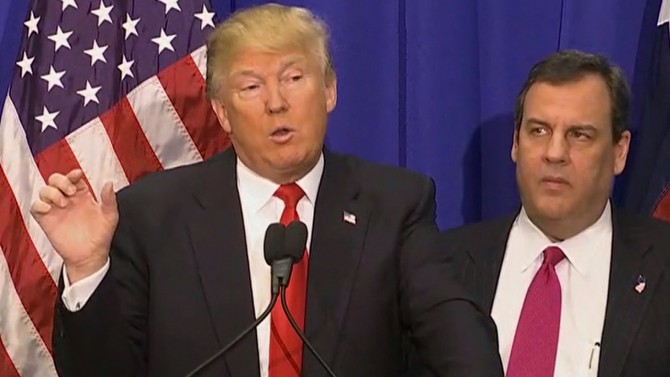
The New Jersey governor was one of the first Republican candidates to sell his soul to the Devil. We all remember that moment in March when he stood behind the Donald at a rally, conveying all the confidence of a Cosby apologist. Despite this, his loyalty has been noted by the Republican candidate in several interviews.

14940

Newt Gingrich

You may remember him as the crazed Speaker of the House from the mid 1990s but did you know Newt attempted a Presidential bid in 2012? He has ambitions still. As a stalwart of the GOP, Gingrich could help Trump solidify the party’s base, although that may not prove an issue considering how easy it’s been for him already in building that momentum.

Ben Carson

The former neurosurgeon and bat-shit crazy candidate was at one point last year, the gravest threat to Donald’s victory. He’s another person Trump has said he “respects” and his help could sway those easily fooled by the race card. And in terms of image too, he projects a level of calmness lacking from the frothing jowls of Trump.

Sarah Palin

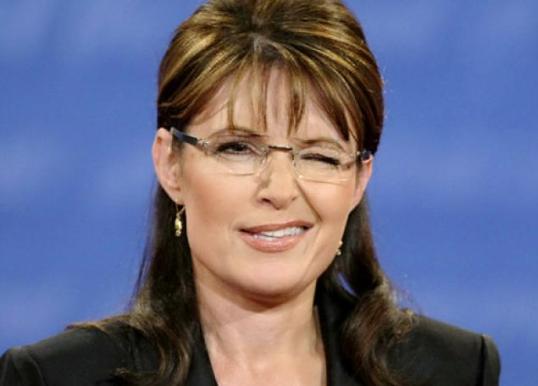
It was the death nail for McCain eight years ago but it says a lot about America that the wacky Sarah Palin still has a part to play in the party that pretty much disowned her a couple years ago. Some folk have speculated that Trump has just given up courting the female vote but if he has a woman as his running mate, he can’t be sexist, right? Sneaky stuff, Don but this would definitely be the worst bet.

palin-wink

Joni Ernst

Another female Republican but one who has been critical of Trump’s sexist comments, many feel Ernst could be the perfect counterweight to Trump. She’s an able communicator and can help Trump with the Midwestern vote. She’s a bit less colourful of course than the others though which may not go down well with the man who paints himself orange.

Ted Cruz

Cruz’ exit surprised me somewhat considering the fact that he himself had chosen a running mate in Carly Fiorina just before. Trump has repeatedly called Cruz a slime-ball and launched personal attacks, even against his wife. The senator’s exit may have been a calculated move for a greater cause however. This would seem a hypocritical move but many pundits are nonetheless intrigued as Cruz has a large following. After all, they don’t have to like each other (JFK and LBJ certainly didn’t).

A Member of his Family

This seems like a ridiculous prospect but not an unpopular one. Ivanka, in particular, seems to be drawing a lot of attention. They’ve had gainful employment in his business ventures so clearly he has no qualms with nepotism.

A Mountain Bear?

Why not? It’s not as if making sense is high on Trump’s agenda. The mountain bear, or any bear in fact, would sure up the support of those who enjoyed either this year’s The Revenant or The Jungle Book. They also convey a level of toughness that even Putin would flinch at.

il_340x270_918133908_l2qy

Nothing is of course yet finalised though we expect to hear an announcement in the coming weeks as Donald continues to rail assaults against Hillary and that wild husband of hers. Whoever he picks, it can be assured that there will be a lot of “winning.”


Ten Years On: An Inconvenient Truth Remains

Ten Years On: An Inconvenient Truth Remains

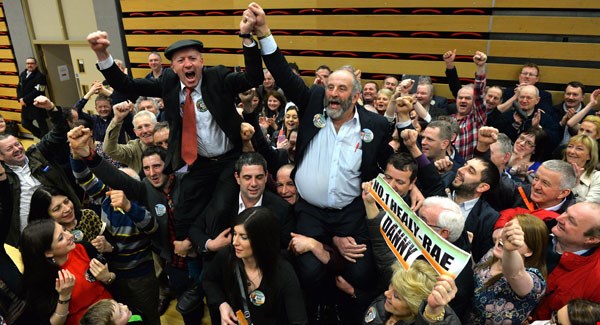
It seems America is not the only nation that can boast its share of Climate Change denying morons. Last week, most of you will have heard Independent TD Danny Healy-Rae’s bamboozling testimony on the case of Global Warming. You will be glad to hear that there’s nothing we have to do anymore to save this world because God, of course, controls the weather. How could we have been so foolish? As much as the voters of Kerry should feel ashamed of themselves for having enabled this crackpot’s rise to power, we should remind ourselves first that these ludicrous distinctions hold a great weight and advantage in the arena of politics. Let our focus now turn back to America; where the stakes are considerably higher.

HealyRaebrothersGE_large
Healy-Rae’s election should also prove the point that just because they’re not in a party does not mean they’re smart.


It is now ten years since Al Gore’s groundbreaking documentary, An Incovenient Truth, was released and as Bill Maher put it recently, we are perhaps in need of that sequel, An Inconvenient Truth 2: What The Fuck Is The Matter With You People? Out of the three candidates remaining in the 2016 election, one of them firmly believes that Global Warming is a hoax. Can you guess who? The trouble is that such views create a dialogue, in tangent to the more crucial debates we should be having, in which areas to build turbines and on what level our investment for renewable energy should be, i.e. the specifics. The question still remains as to whether we can really trust the 99% of scientists who believe in the accelerated rise of global temperatures or to what degree  human influence has been felt. And the Republicans who begrudgingly accept this theory (that is essentially consensus) have simply adopted the defeatist viewpoint that ‘well… it’s too late, innit?’ For many it seems this reality is too daunting. They’d rather bury their heads in the sand.  Well that reality is upon us already; California is drying up, the Great Lakes of the US-Canadian border have reached record lows, and worst of all, the melting of Arctic ice has caused our beloved walruses to seek salvation off the coast of Alaska- where Sarah Palin lives!

walrus-sea-ice_jpg_650x0_q70_crop-smart
We here at the Washington Walrus are fond of these guys. For those of you who aren’t, polar bears and fish will also be gravely affected.


To be fair there’s been some progress. President Mic-Drop, for example  stood against the Keystone Pipeline and last year’s Clean Power Plan called for 30% more energy renewal generation by 2030 with a 32% reduction in carbon dioxide emissions from 2005 levels. Economically, this makes sense too in that renewable energy will be the future. Obama’s plan is still not good enough though, considering scientific projections. A lot can happen in 14 years too: we may yet see President Yeezus and the great Kardashian Deficit of 2022; we will certainly hear about more politicians putting big money ahead of the environment; and naturally (with a pinch of irony) a barge load more of pollutants and fossil fuels will be ejected into the atmosphere. So just as President Kennedy ambitiously called for man to walk on the moon before his decade was out, why shouldn’t Obama or the next president switch that 30% to 50% and begin to prioritise the foremost issue of our day; the one which should dominate this election cycle because it the one which cannot wait.

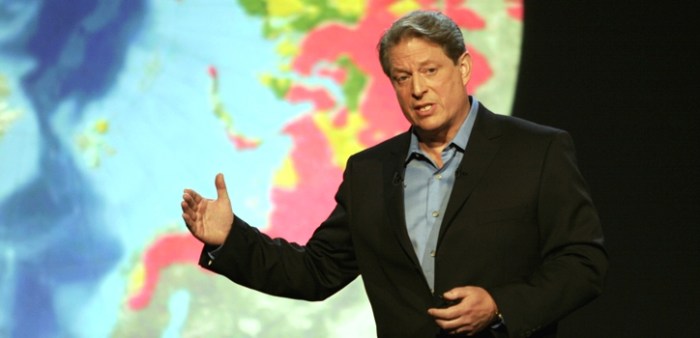
Al Gore said ten years ago: “Each one of us is a cause of global warming, but each one of us can make choices to change that with the things we buy, the electricity we use, the cars we drive; we can make choices to bring our individual carbon emissions to zero. The solutions are in our hands, we just have to have the determination to make it happen. We have everything that we need to reduce carbon emissions, everything but political will. But in America, the will to act is a renewable resource.” Since that great renegade Carter before him was thrown out of office for tearing up the flag with his “Energy Programme,” America has fallen back on its worst habits of greed and self-consumption. Sacrifice is not a word anyone likes to hear but the eleventh hour has by this point surely been reached. So whilst we must never pay respect the likes of Healy-Rae, we must accept that their assertions are crucial in the greater scheme of things.

inconvenient-truth-abc-of-solar-mbqfda8oym2nfdi9k0j74v70rxq4sxc5an94kr4dyk
Al Gore in 2006- forever standing by his slide shows.


Andrew Carolan

A Comedy of Errors: Voting Hurdles in the Race for the White House

A Comedy of Errors: Voting Hurdles in the Race for the White House

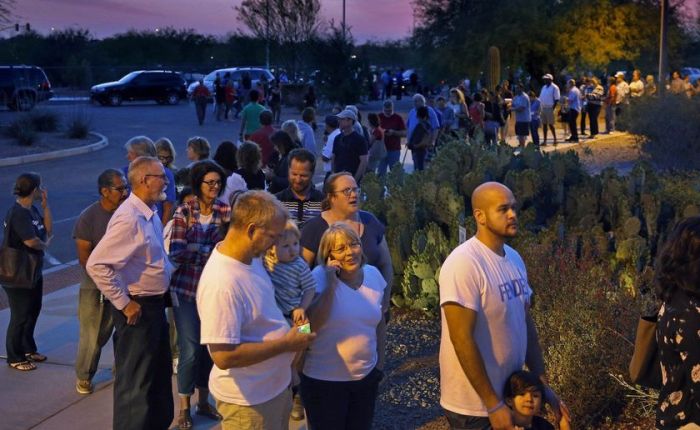
On the evening of March 22, the residents of Maricopa County, Arizona, left their homes to vote in the Grand Canyon States’ primaries. Little were they aware that excruciatingly long voter lines would obstruct their path as residents scattered the pavements that wended from the bloated polling stations. The evenings polling swiftly descended into farce, leaving many locals without a vote, and seething at the poorly handled event. But, what went wrong, and who was to blame?

Maricopa County Recorder, Helen Purcell, fell on her sword, proclaiming that she “screwed up”. Purcell was responsible for planning polling locations ahead of elections, which were reduced by a whopping 70 percent this year in contrast to the 2012 primaries, from 200 locations to a paltry 60. This was a ludicrous decision – the agency of hindsight is not required. Maricopa County is the most populous statewide, and includes its largest city, Phoenix, which just happens to have a non-white majority and is predominantly a Democratic Elysium situated within a Republican Nirvana.

To put things in perspective, four years ago 300,000 citizens voted compared to the 800,000 that were trying to cast their ballots last month. Looking at it from another angle: there was one polling facility for every 21,000 voters, compared with one facility for every 2,500 voters throughout the rest of the state. This is a serious oversight particularly with the knowledge that this years primaries have been acerbically divisive, resulting in huge voter turnout nationwide, it is simply deplorable that this was allowed to happen.

Purcell nonchalantly claimed afterward that the number of polling stations reflected the early voting lists and that one third of the people registered in the county could not officially mark a ballot, as they were Independents. The latter is an unfortunate, obstructive by-product of Arizona’s closed primary system in which one must be registered to vote for a designated party.

Arizona_voting_AP_img
Maricopa County residents faced lengthy queues while trying to vote in Arizona’s primaries last month. (AP Photo/Matt York)

Much to the chagrin of many Independent voters (who have the option to change, or choose a party at the time of voting), many were left disillusioned as they were turned away upon reaching the top of the lengthy queues. Some were given provisional ballots, or simply told that their votes would not be counted, fueling the frustration.

In the aftermath of the fiasco and bearing in mind that many Independents would have voted for Bernie Sanders if they had been given the opportunity, a whitehouse.gov petition emerged that charged voter fraud and voter suppression in Arizona. As of April 8, there have been 213,306 signatures meaning that the White House is required to provide an official response (the threshold being 100,000 signatures).

What transpired at the polling stations across Maricopa County is hardly a new phenomenon, yet it serves as a useful, and worrying precedent. The Mayor of Phoenix, Greg Stanton, illuminated the saliency of the issue and disparaged the lack of organisation. He expounded that the allocation of stations was more favourable in predominately Anglo communities and that there were fewer voting locations in parts of the county with greater minority populations.

Furthermore, Stanton highlighted the plight of poorer voters, “if you’re a single mother with two kids, you’re not going to wait for hours, you’re going to leave that line,” he added that “tens of thousands of people were deprived of the right to vote.” This iniquity is nestled in the bosom of voting bulwarks that have been mainly constructed by the GOP across the United States in recent years.

Leading the way with such studies is the Brennan Center for Justice at the New York University School of Law. Michael Waldman, president of the center, argues that Republicans have been positioning to pass laws around the U.S. with the end goal of making it more difficult and convoluted for people to cast their vote. According to the Brennan Centre, in 2016 17 states will have new voting restrictions in place for the first time in a presidential election. These new laws vary, from strict photo ID requirements, to early voting cutbacks, to registration restrictions.

Some of the more punitive and heterogeneous cases feature an amendment in Texas that stipulates residents must show a state or federal issued form of ID to vote, or that the only ID issuing office in Sauk City, Wisconsin, is open 8:15am to 4:00pm on the fifth Wednesday of each month (there are only 4 fifth Wednesdays this year).

20141108_usp502
Voter ID is an increasingly pressing issue facing the Presidential election (AP Photo/Matt York)

The presentation of relevant identification at polling stations was the cause of puzzlement during the Wisconsin primaries last Tuesday evening. Wisconsin has been thrust centre stage over the last few weeks as it became apparent that Governor Scott Walker (formerly of the presidential hopeful parish) signed a bill into law that would make it harder for the poor and minorities to register to vote in the upcoming presidential election. The new legislation will allow Wisconsinites to register to vote online.

While this sounds like a positive step in the right direction, many community organisers, such as the the League of Women Voters, et al, have argued that it will disenfranchise the poor or marginalised as these groups are more likely to register through voter registration drives. There are other obstacles that face these groups too, such as the lack of a driver’s license.

Historically, a larger voter turnout for presidential elections has favoured the Democratic nominee, a philosophy that the Sanders’ campaign has firmly grasped. That being said, high turnouts this primary season for Donald Trump have helped catapult him to the top of the withering GOP tree. Yet, it is apparent that the GOP establishment is holding out hope for a contested RNC. The abjectly handled primaries in Arizona, and Wisconsin on Tuesday evening are telltale signs of an ominous portend for the general election in November. Voter suppression is a cog in a larger machine that asphyxiates the very fabric of American ideals, a moralistic tapestry that continues to fray with much contrition.

Matthew O’Brien 

Hillary or Bernie? The Audacity of Change

Hillary or Bernie? The Audacity of Change

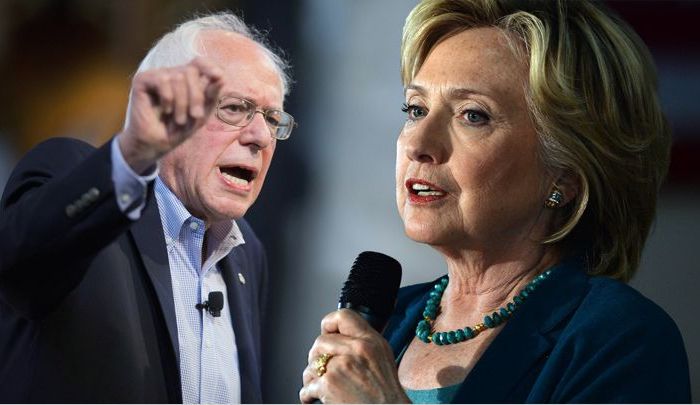
Earlier this year, the popular liberal commentators The Young Turks discussed Obama’s ill defined but probable endorsement of Hilary Clinton, suggesting that he perhaps felt stung by the notion that Bernie’s campaign reflected his own one in 2008; for change. While his Presidency has been gratifying in many areas for liberals,  few would argue that it exactly reflected the rhetoric of that glorious, “hope-mongering” (as he once put it) campaign. Simply put, he did not break the political establishment of old. Bi-partisanship has entrenched the country into its greatest division in years. Wall Street still looms malevolently; its regulations tightened but its lesson unlearned or accounted for. Campaign finance, as Sanders would put it, is a “mess” and despite economic recovery, millions are still struggling with poverty. While these issues aren’t wholly the President’s fault, it is interesting to consider The Young Turks’ assertion, especially in light of the struggle between progressive and revolutionary rhetoric being exhibited between Hillary and Bernie.

120123_barack_obama_change_605_ap

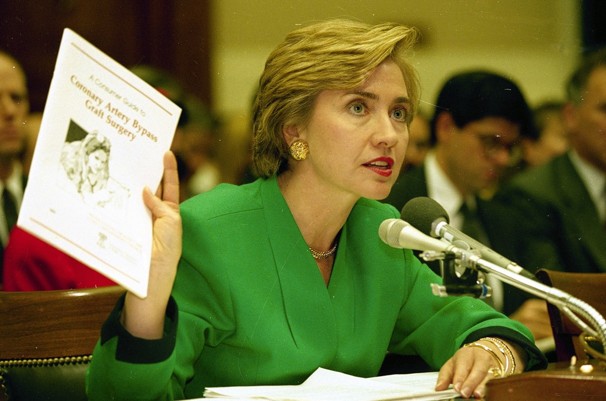
In a sense, Hillary truly does stand for progressivism; having championed women’s rights for years and led the effort for an ambitious if unsuccessful health care bill in 1993. There have been hiccups along the way (with her support for same-sex marriage sliding in at a convenient time) but evolution in thought and policy should naturally coincide with progressivism. Many of Clinton’s detractors have argued that she is part of the political elite; a chameleon who adapts to her environment as it changes. That’s true but is it necessarily a bad thing? For all her flaws and that hyena cackle, Clinton’s hardly rebounded and flopped her way to the top the way Mitt Romney has. Rather, she has allowed herself some leg room so that she may face the mercurial world she acknowledges Washington to be. As she said herself, she’s a progressive but one “who likes to get things done.” It worked for good old Bill when the GOP regained the Congress in 1994, could it not work again?

tl6195

On the other side of this struggle for the soul of the Democratic party is Sanders; a rogue independent, who wants to drive the party back to the Left it so long ago abandoned. At this point, his nomination seems highly unlikely but the people are nevertheless paying attention because his cause remains relevant. Can America continue to accept a rigged economy? Can America afford to see so many of its citizens unable to afford third level education in a competitive global market? Can America continue on this rightward path that began in 1980? Earlier this year, we here at the Walrus wrote a piece on the “return of the left.” This is very much the revolution Sanders and his supporters want. It’s certainly not politically viable on Capitol Hill, especially with the likes of today’s Republicans but it is a bold step, many would argue, is essential for a modern United States.

sandersbernie_070215

Every now and again, the US will witness an election which changes everything; from the way its politics is conducted to the way it is perceived abroad. In 1860, it was with Lincoln. A hundred years later, it was with the election of John F. Kennedy. In 2008, it was with the first Black President (albeit for a small bit). Other elections are not so dramatic however. Eisenhower, for example, may have resolved the Korean War which dampened Truman’s appeal in the early 1950s but the course America took, economically and in terms of Cold War policy, remained very similar. In the late 1980s, George Bush Sr. faced a rapidly changing world with the fall of the Berlin Wall, but moved into it with care for the populist Reagan vision, whilst acting off of his own more reserved diplomacy. So with Bernie and Hillary, we see two different trajectories for the US; a revolution in rhetoric and a will for progressivism with respect for the past. As Bernie’s appeal continues to soar, we will likely see Hillary’s campaign continue to pay more credence to liberal principles but the revolutionary zeal for which the people beckoned in 2008 will remain in waiting.

Andrew Carolan


Why Won’t Obama Do Bill Maher…

Why Won’t Obama Do Bill Maher…

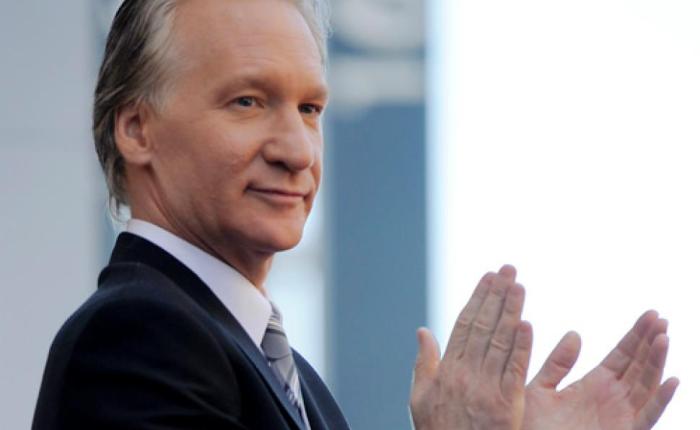
For many connoisseurs of US political commentary, Real Time With Bill Maher has remained a constant source of liberal principles. While its host has not always agreed with the President and his base, he has been a loyal disciple of sorts, lambasting the opposition whilst upholding the general rhetoric of the Obama administration. So why won’t Obama acknowledge this and make a guest appearance?

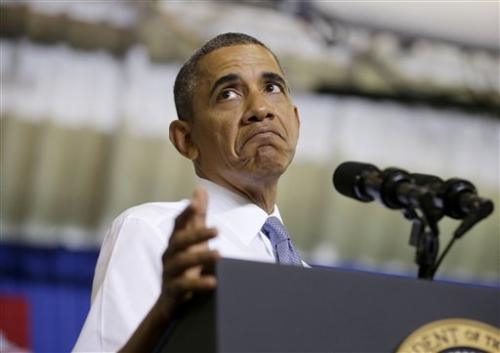
Barack Obama
“Eh… I don’t feel like it.”

To elucidate, I will first give a brief context: for Bill’s 60th birthday in January, he requested Obama appear on the show while in office, on the basis that he and his audience support the President and that he has appeared on virtually every other show (from the Colbert Report right through to Between Two Ferns). Bill Maher, during his tenure with Politically Incorrect and Real Time, has interviewed former President Carter and dabbled with stand up in the White House for Bill Clinton, but he has never bagged a sit-down chat with an in-term Commander-in-Chief.

Of course, as is the case with what seems to be every minute plea these days, a petition was set up online and over 100,000 quickly signed their names down for Obama to give a response, which arrived a week ago in the form of a vague gesture of consideration whilst expressing open admiration for the show. Although disappointed, Bill largely shrugged it off but the question nevertheless lingers as to why Obama won’t do this one show, when he’s put his name to so many others. Here are just a few, quick interlinking theories:

  • The Controversial Element: Jon Stewart and Stephen Colbert were known for making critiques on their own platforms but they always kept it light hearted. Bill Maher doesn’t feel the need to do so. For example, he unreservedly warns about the threat of radical Islam and what he perceives as the innate flaws of that religion, often without pause for a snappy closer. In short, he’s not afraid to put his opinion on the line, even if it upsets some of his politically correct audience or the general public. Obama, as President, naturally has to avoid potential hazards with such divisiveness. Bad press is created for him on an hourly basis before he’s even brushed his teeth. Would it really serve him to make an appearance on a show where witty jabs at large chunks of American society are commonplace?
  • The Partisanship Element: Bill Maher has absolutely no problem with criticising the Democratic base but it’s clear nonetheless that he sides with them over the GOP. While Obama is a Democrat, presidents should overcome partisanship. Like it or not, Obama has to work for all Americans and not just the ones who support him. By appearing on this show and grating Donald Trump’s hyenas, he would, in many people’s opinions, not be acting presidential-like.
  • He’s Not Well Equipped Enough: On Jimmy Fallon, if you forget what your child’s name is, you could probably get away with it by playing a quick game of Box of Lies. This same flippancy applies elsewhere but on Real Time, you have to know what you’re talking about. That’s why so few celebrities join the panel discussion; it’s just a different ball game altogether. Now, I am by no means insinuating Obama is not clever enough to join Salmon Rushdie or Sam Harris. The problem is that he just wouldn’t be able to express his opinions fully for fear of political backlash on topics such as Marijuana legalisation (something Maher is devotedly in favour of). As with the partisanship element, he has to be sensitive to security issues, the opposition, his own party, international relations, and the people. On Bill Maher, of course, you expect the unfiltered, real guest who appears. Sidestepping issues and avoiding controversial subjects just wouldn’t work (which begs to question why certain politicians even bother). Perhaps, once he leaves office he can speak freely but for now, Obama’s own true opinions have to be kept, tucked away in a corner.
  • He’s Afraid?: I think this is unlikely but it is plausible that Obama doesn’t have satisfactory answers to some burning questions, which again could be brushed off on other shows, but would be pursued on this one: Why’d it take so long to act on Guantanomo? Hillary or Bernie?, etc. There’s an element of vulnerability on this show, lacking from the press junkets, which would make for a stressful day; not that Bill would even go after Obama.

In these regards and in my own opinion, it seems the better question to ask would be: why would Obama think to appear on this show? Personally, as a fan, I would love to see it but for now, we’re going to have make due with the odd senators and representatives Bill does get. Hillary certainly won’t be appearing.

Andrew Carolan