Hillary or Bernie? The Audacity of Change

Hillary or Bernie? The Audacity of Change

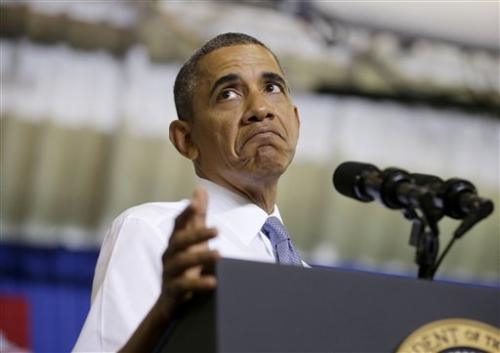
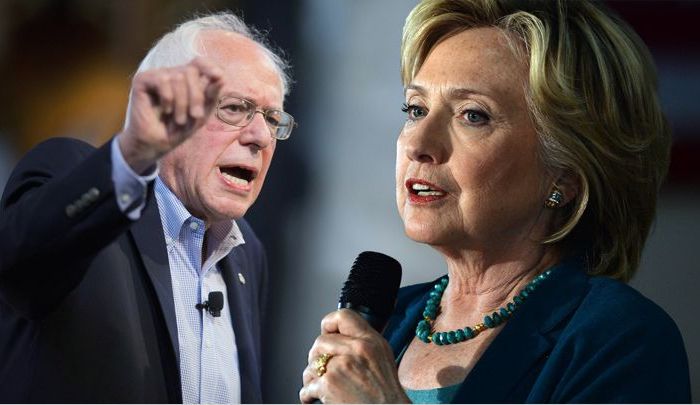
Earlier this year, the popular liberal commentators The Young Turks discussed Obama’s ill defined but probable endorsement of Hilary Clinton, suggesting that he perhaps felt stung by the notion that Bernie’s campaign reflected his own one in 2008; for change. While his Presidency has been gratifying in many areas for liberals,  few would argue that it exactly reflected the rhetoric of that glorious, “hope-mongering” (as he once put it) campaign. Simply put, he did not break the political establishment of old. Bi-partisanship has entrenched the country into its greatest division in years. Wall Street still looms malevolently; its regulations tightened but its lesson unlearned or accounted for. Campaign finance, as Sanders would put it, is a “mess” and despite economic recovery, millions are still struggling with poverty. While these issues aren’t wholly the President’s fault, it is interesting to consider The Young Turks’ assertion, especially in light of the struggle between progressive and revolutionary rhetoric being exhibited between Hillary and Bernie.

120123_barack_obama_change_605_ap

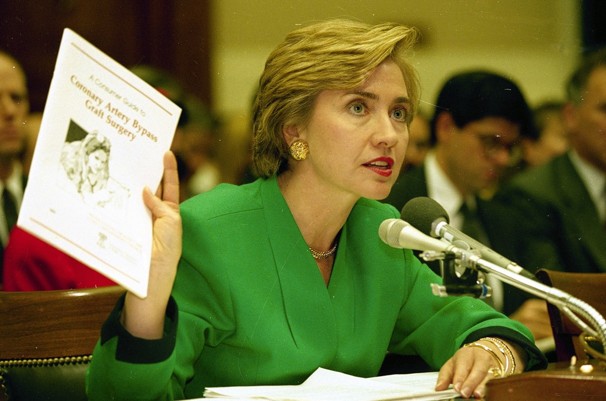
In a sense, Hillary truly does stand for progressivism; having championed women’s rights for years and led the effort for an ambitious if unsuccessful health care bill in 1993. There have been hiccups along the way (with her support for same-sex marriage sliding in at a convenient time) but evolution in thought and policy should naturally coincide with progressivism. Many of Clinton’s detractors have argued that she is part of the political elite; a chameleon who adapts to her environment as it changes. That’s true but is it necessarily a bad thing? For all her flaws and that hyena cackle, Clinton’s hardly rebounded and flopped her way to the top the way Mitt Romney has. Rather, she has allowed herself some leg room so that she may face the mercurial world she acknowledges Washington to be. As she said herself, she’s a progressive but one “who likes to get things done.” It worked for good old Bill when the GOP regained the Congress in 1994, could it not work again?
tl6195

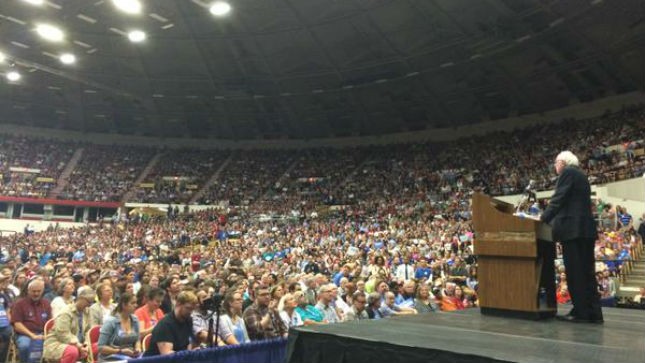
On the other side of this struggle for the soul of the Democratic party is Sanders; a rogue independent, who wants to drive the party back to the Left it so long ago abandoned. At this point, his nomination seems highly unlikely but the people are nevertheless paying attention because his cause remains relevant. Can America continue to accept a rigged economy? Can America afford to see so many of its citizens unable to afford third level education in a competitive global market? Can America continue on this rightward path that began in 1980? Earlier this year, we here at the Walrus wrote a piece on the “return of the left.” This is very much the revolution Sanders and his supporters want. It’s certainly not politically viable on Capitol Hill, especially with the likes of today’s Republicans but it is a bold step, many would argue, is essential for a modern United States.
sandersbernie_070215

Every now and again, the US will witness an election which changes everything; from the way its politics is conducted to the way it is perceived abroad. In 1860, it was with Lincoln. A hundred years later, it was with the election of John F. Kennedy. In 2008, it was with the first Black President (albeit for a small bit). Other elections are not so dramatic however. Eisenhower, for example, may have resolved the Korean War which dampened Truman’s appeal in the early 1950s but the course America took, economically and in terms of Cold War policy, remained very similar. In the late 1980s, George Bush Sr. faced a rapidly changing world with the fall of the Berlin Wall, but moved into it with care for the populist Reagan vision, whilst acting off of his own more reserved diplomacy. So with Bernie and Hillary, we see two different trajectories for the US; a revolution in rhetoric and a will for progressivism with respect for the past. As Bernie’s appeal continues to soar, we will likely see Hillary’s campaign continue to pay more credence to liberal principles but the revolutionary zeal for which the people beckoned in 2008 will remain in waiting.

Andrew Carolan
 

Why Won’t Obama Do Bill Maher…

Why Won’t Obama Do Bill Maher…

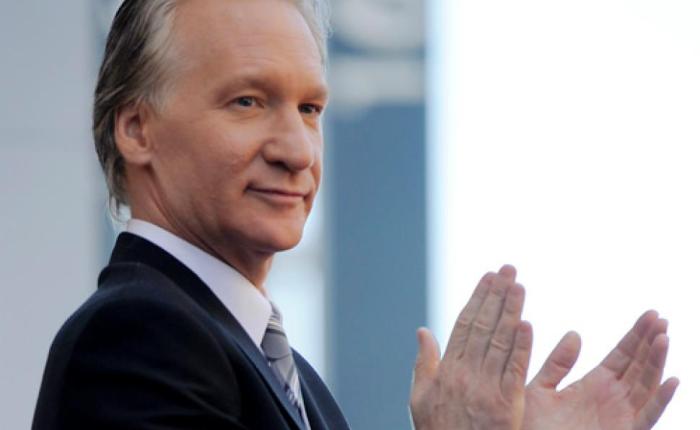
For many connoisseurs of US political commentary, Real Time With Bill Maher has remained a constant source of liberal principles. While its host has not always agreed with the President and his base, he has been a loyal disciple of sorts, lambasting the opposition whilst upholding the general rhetoric of the Obama administration. So why won’t Obama acknowledge this and make a guest appearance?

Barack Obama
“Eh… I don’t feel like it.”

To elucidate, I will first give a brief context: for Bill’s 60th birthday in January, he requested Obama appear on the show while in office, on the basis that he and his audience support the President and that he has appeared on virtually every other show (from the Colbert Report right through to Between Two Ferns). Bill Maher, during his tenure with Politically Incorrect and Real Time, has interviewed former President Carter and dabbled with stand up in the White House for Bill Clinton, but he has never bagged a sit-down chat with an in-term Commander-in-Chief.

Of course, as is the case with what seems to be every minute plea these days, a petition was set up online and over 100,000 quickly signed their names down for Obama to give a response, which arrived a week ago in the form of a vague gesture of consideration whilst expressing open admiration for the show. Although disappointed, Bill largely shrugged it off but the question nevertheless lingers as to why Obama won’t do this one show, when he’s put his name to so many others. Here are just a few, quick interlinking theories:

  • The Controversial Element: Jon Stewart and Stephen Colbert were known for making critiques on their own platforms but they always kept it light hearted. Bill Maher doesn’t feel the need to do so. For example, he unreservedly warns about the threat of radical Islam and what he perceives as the innate flaws of that religion, often without pause for a snappy closer. In short, he’s not afraid to put his opinion on the line, even if it upsets some of his politically correct audience or the general public. Obama, as President, naturally has to avoid potential hazards with such divisiveness. Bad press is created for him on an hourly basis before he’s even brushed his teeth. Would it really serve him to make an appearance on a show where witty jabs at large chunks of American society are commonplace?
  • The Partisanship Element: Bill Maher has absolutely no problem with criticising the Democratic base but it’s clear nonetheless that he sides with them over the GOP. While Obama is a Democrat, presidents should overcome partisanship. Like it or not, Obama has to work for all Americans and not just the ones who support him. By appearing on this show and grating Donald Trump’s hyenas, he would, in many people’s opinions, not be acting presidential-like.
  • He’s Not Well Equipped Enough: On Jimmy Fallon, if you forget what your child’s name is, you could probably get away with it by playing a quick game of Box of Lies. This same flippancy applies elsewhere but on Real Time, you have to know what you’re talking about. That’s why so few celebrities join the panel discussion; it’s just a different ball game altogether. Now, I am by no means insinuating Obama is not clever enough to join Salmon Rushdie or Sam Harris. The problem is that he just wouldn’t be able to express his opinions fully for fear of political backlash on topics such as Marijuana legalisation (something Maher is devotedly in favour of). As with the partisanship element, he has to be sensitive to security issues, the opposition, his own party, international relations, and the people. On Bill Maher, of course, you expect the unfiltered, real guest who appears. Sidestepping issues and avoiding controversial subjects just wouldn’t work (which begs to question why certain politicians even bother). Perhaps, once he leaves office he can speak freely but for now, Obama’s own true opinions have to be kept, tucked away in a corner.
  • He’s Afraid?: I think this is unlikely but it is plausible that Obama doesn’t have satisfactory answers to some burning questions, which again could be brushed off on other shows, but would be pursued on this one: Why’d it take so long to act on Guantanomo? Hillary or Bernie?, etc. There’s an element of vulnerability on this show, lacking from the press junkets, which would make for a stressful day; not that Bill would even go after Obama.

In these regards and in my own opinion, it seems the better question to ask would be: why would Obama think to appear on this show? Personally, as a fan, I would love to see it but for now, we’re going to have make due with the odd senators and representatives Bill does get. Hillary certainly won’t be appearing.

Andrew Carolan