As America celebrates its 250th birthday, one can’t help but make comparisons from the present to the past in leadership and rhetoric. After all, Donald J. Trump is a much different specimen to Barack Obama, let alone Abraham Lincoln. In the span of these two and a half centuries however, I would argue Americans have tried out a range of styles (and personalities) when it comes to governing democracy, demonstrating this notion we have that this nation is still just an idea being worked out. And sometimes, you don’t even have to take too many steps to demonstrate this.
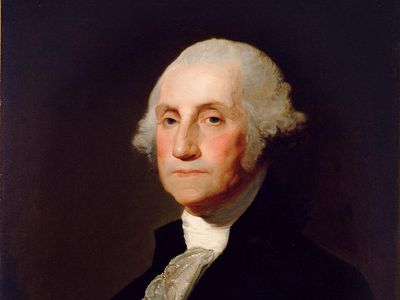
For instance, John Adams (the 2nd president) stood in stark contrast to George Washington. While both Founding Fathers, instrumental in the success of the “American Experiment”, they were fundamentally different in temperament and leadership styles. Washington was a reserved leader who brought America together, albeit with an essential unified backing. A revolutionary, in quite the literal sense, but also something of a caretaker, he wanted to set a precedent in limiting power. Adams, who fought a contentious election, proved to be more outspoken and (shall we say) strident, dividing opinion with sweeping power moves, like the Alien and Sedition Acts. He lasted one term.
Martin Luther King. Jr. once said “the arc of the moral universe is long, but it bends towards justice”. Obama quoted this several times in the last weeks of his presidency, as one type of leader, wedged between two very different others. His case was not without (vague) precedent however. Abraham Lincoln, the 16th and most widely revered president, came between James Buchanan and Andrew Johnson, two of the worst. Lincoln’s election of course led to the secession of the southern states and resulted in the Civil War. The question of the American experiment was never more in question than during this darkest chapter. With the victory of the North and the passage of the 13th Amendment however, a very different path forward was paved and because of a divisive president. Or so it seemed. While this eventually led to greater things, the end of slavery did not automatically improve the lives of Black citizens or offer them an equal stake. Indeed, it would be another hundred years before the Civil Rights or Voting Rights bills passed. In the interim (and immediately following Lincoln in the Reconstruction era), bold and inspiring leadership gave way to more conservative, non-commital, meandering approaches in government (not to mention opposing factors in the Jim Crow laws, segregation, the KKK, etc).
Even in the supposed arc of justice (or just an arc of policy), variations occur. For example, following World War 2, US presidents took differing approaches to handling communist containment, as national sentiment shifted and some experiments (shall we call them) floundered. At first, the Red Scare was a fervent and immediate threat, leading to the Korean and Vietnam Wars. Thereafter, as the apparent futility of such endeavours increasingly tested a tired public, President Nixon took a more strategic and diplomatic approach to dealing with the Soviet Union, via a policy of Détente. As the SALT II negotiations tethered out later under the Carter administration, a slight revival of fervency would then be found as Ronald Reagan amped up the drama, calling the USSR an “evil empire”. And then again, things shifted as the US saw possibilities with Gorbachev they had not seen with any Russian leader before. By the fall of the Berlin Wall in 1989, the then-president, George HW Bush, was taking a more subdued, again tactical approach, to US-Russian relations.
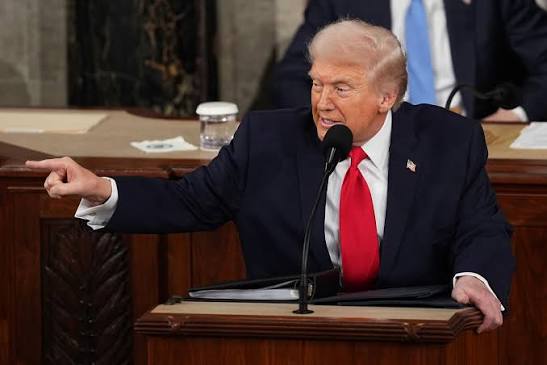
In a sense, the US (like most countries) really doesn’t know what it wants (or needs) when it comes to leadership and as the media landscape has opened up the windows to power to a wider audience, the swing back and forth has become more pronounced. Following Watergate, people wanted honesty and accountability. So Carter came along. But he was too honest and sort of a buzzkill with his conservation efforts. So they elected Reagan to make them feel good about themselves. And in the last couple of decades we’ve gone from George W. Bush to Obama to Trump to Biden and back to Trump; both sides seemingly completely at odds with the other in terms of policy, rhetoric, and what America’s about. Just how far the original vision of 1776 has been strayed from has already been speculated on at nauseum.
This is a cursory outline of this thesis, of course, and there are plenty of continuums to be found in the greater scheme of foreign and domestic policies. It is interesting, more than anything however, to consider the range of leaders and leadership styles America has attempted (outside of you know, women). Very few of them were remarkable. Perhaps some had the right temperament at the wrong time. Perhaps some simply adapted to the time and matched the energy given by the fortunes of the time. And perhaps, as some would have it, we’re all on the fortune wheel therein, with fashion playing a part of politics just as it is film or music. Change, really, is the only constant of politics. And as America turns the great age of 250 this July 4th, we must remind ourselves that it’s in a relative pubescent stage, compared to other nations. So keep trying new things America (like learning from your mistakes).
America at 250: An Experiment in Leadership
 The Washington Walrus