A Bridge Collapsed: The Biden Presidency

A Bridge Collapsed: The Biden Presidency

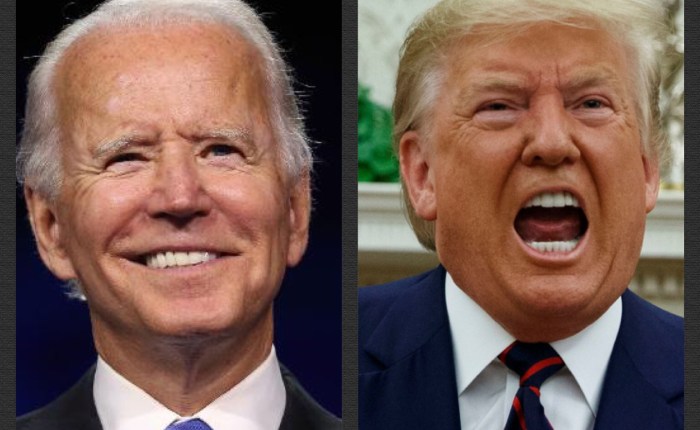
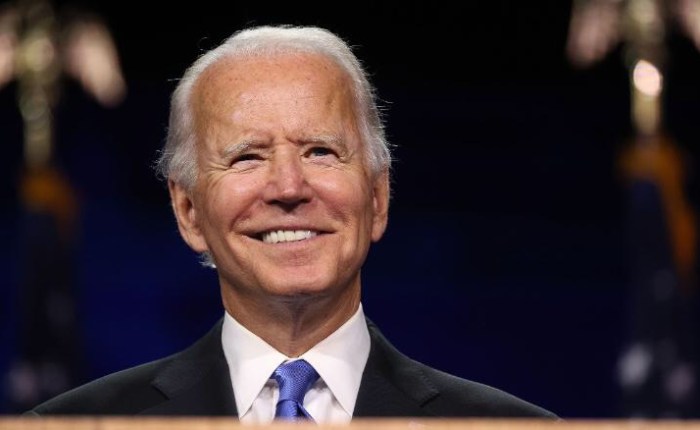
Had President Biden made the decision to withdraw from the 2024 race earlier, we might’ve been writing a much different story. Alas, his refusal to do so (in conjunction with his initial proposal that his presidency would mark a “bridge”- like transition to a new generation) will likely be the first thing people recount when asked about his legacy. As it stands, this legacy looks on the grim side of things; at least, according to a Gallup poll which showed 54% of Americans viewed him as a “below average” or “poor” leader. But… history has a way of changing perspectives and so in complete folly, we’re going to (already) try and take the longview in assessing this administration.

Well, it’s a bridge of some kind, albeit between two terms of Donald Trump. So assuming the historians hold true on their negative assessment of Trump’s tenure, they’re not going to be too pleased with Biden for enabling his comeback. Granted, a lot of that blame can be placed at the feet of top Democrat party heads too but the story of a fractured party, torn by generational and cultural values, doesn’t exactly help Biden’s case. Had a more effective coalition been built, there might’ve been proper competition for the MAGA crowd. Instead, this party floundered and yielded way for the return of a stronger Trump backing. 

Granted, some of this was beyond Biden or Trump’s control. The chaos of the pandemic, for instance, was always going to have severe economic repercussions and this came in the shape of a massive 9% inflation rate in 2022. Like Jimmy Carter or any other unfortunate president before him, Biden simply had to take the hand he was dealt. To his credit, he passed sweeping legislation such as the Inflation Reduction Act to tackle this but since prices never went down, the average person was unable to see the benefits of such actions. In actuality, the economy has improved, with record-low employment and a record amount of applications for new businesses. In the next couple of years, Trump will undoubtedly take credit for the changes in fortune as they manifest more clearly. Unfortunately, sound economic policies just can’t be waved as a flag until everyone has else got theirs.

For that matter, the major achievements of the Biden presidency, such as the CHIPS act, his supports of unions, and infrastructure bill seem to pale against the half-glass empty analyses, i.e. the revelation that there are still some ways to go. This will always be true with regards any measures taken by a sitting president (who can only face tough decisions). For example, while the “Plan B” proposals of his student-loan forgiveness scheme were withdrawn, he still managed to achieve $180 billion in loan forgiveness. 

And then there is foreign policy, where there are domestic differences to contend with. Given another era, there probably would’ve been a consensus in the US against Russia. In the 2020s however, there’s even a faction of Republicans who favour their former adversaries over the Democrats, complicating the funds appropriated for Ukraine’s defence. Biden has been steadfast in his support of NATO and a strong ally of Zelensky, but as Trump prepares to take office again, a question mark lingers over how this will resolve. With the Palestine-Israel war then, we have seen divided opinions in the US on an ethnic and generational level. This has marked a shift away from the broad support Israel was once guaranteed there, with critics of Biden’s (and continued US foreign policy) arguing he’s helped facilitate war crimes in the Gaza Strip, failing to ever hold Prime Minister Netanyahu’s government to account. Should the very recent ceasefire hold, Biden might be looked on with some deference eventually, though it’ll be eternally countered with questions of why he couldn’t have pushed for peace sooner. This will also likely go down as the most contentious foreign policy decision of any president since George W Bush. We’re also going to have to contend with speculation on whether the incoming Trump administration was a greater factor in allowing this to pass.

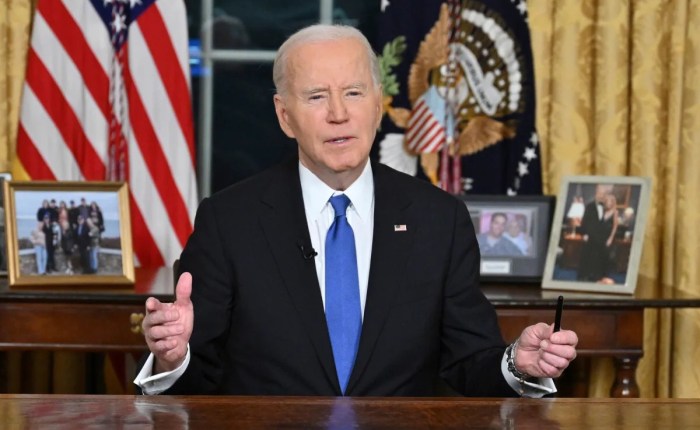
Whichever way you look at the Biden presidency, Donald Trump seems to hover over it at every turn. The return to “normalcy” or the goal of “restoring the soul of the nation” has either fallen flat or been dismissed as liberal hogwash. Trump has, in a sense, been legitimised this time around; by virtue of winning the popular vote and the Democrats’ own flawed power dynamics leading to their own downfall. And despite a relatively decent farewell address, one can’t help but roll their eyes when Biden warns against the abuse of power, weeks after pardoning his own son (who apparently was above the law). The problem remains that the top Democratic Party members appear too elitist, slow, and out of touch with the people. And for much of Biden’s term, that image was capitalised on, with every stutter and pause exemplified to the Republicans’ benefit. As it stands, the Democrats are weakened and down on their luck. Of course, they’ve been handed major defeats in the past and come back before but it’ll take a proper chance to mobilise their base next time; a new generation with some authenticity. If one thing can be learned from these last few years, whether with the election or Biden’s cognitive decline, it is that you can’t pull the wool over the people’s eyes forever.

Lessons for the Left

Lessons for the Left

One week ago, the Democrats were handed an unambiguous defeat. A royal smackdown. Not just in the presidential race (across the electoral college and popular vote), but in the house and senate too. While many have been quick to suddenly attain 20-20 hindsight, it remains important for the Democrats to actually undergo proper penance, learn some lessons, and knuckle down for some hard work. 

Lesson 1: Democratic Process Matters

Up until a month ago, I thought Kamala might just pull through. Given the game-changing nature of her succession to the ticket, it felt like that wave of momentum might hold on (as discussed in our last article). Unfortunately, it crashed a little early from the shore and became a somewhat hollow experiment, in the wake of media appearances and interviews on her part, contrasted with a series of PR grabs for Trump (the McDonald’s gig and “garbage people” alliance). Ultimately, it became apparent that she just wasn’t the best candidate for the job (on the Democrats’ side). This leads us to a crucial point: the gulf in credibility between this party’s supposed defence of democratic values and their practice in nominating leaders.

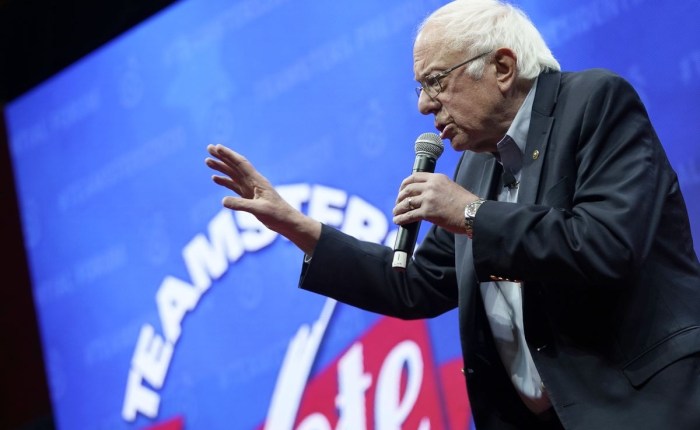
In 2015-16, Bernie Sanders was one of the most exciting and promising voices of the left. Many (including myself) felt he would’ve done better than Hillary against Trump. Of course, history went one way and much of the older generation and establishment didn’t agree. They weren’t exactly honest in their tactics however, with the DNC swaying things in favour of Hillary. But okay, that might have been excused… if it were not for the race of 2020 coalescing around Joe Biden, seemingly just to speed things up. (I will never forget Pete Buttigieg dropping out after just his fourth primary, despite winning the first major one or Bernie’s shots being dashed by the onset of the pandemic; even if it understandably changed matters.) The point of the matter is that the party’s leaders were and have been directing the flow of this so-called democratic process.

Had Joe Biden withdrawn earlier (as he should have), there might’ve been time for a full primary season and open convention. Instead, it was purported that Biden was totally fine and capable of running again. When it became clear (during the debate) that he wasn’t, the Democrats began to panic. This meant taking quick action and… well, we’ve explored this all too recently. I’m not saying there was any easy path to be taken here. An open convention at this point probably would’ve been messy too but in the name of saving democracy, the Democrats didn’t exactly follow through with the public’s wishes. (Kamala’s approval ratings were pretty low before her big boost.) It’s a simple lesson but an important one for them to remember: practice what you preach. Let the cream rise to the top in 2028, without meddling.

Lesson 2: Retire The Vanguard

This will be brief. It’s time for a new generation of leadership. Joe Biden did well in 2020 but was never considered by anyone to be a serious contender for a two-term presidency. In those four years, the party should’ve been looking for their next Barack Obama… okay, that’s a little optimistic but they should’ve been looking for their next Bill Clinton or someone who could actually inspire voters. Instead, they’ve plodded along with Nancy Pelosi (retired from her speaker role but) retaining enormous influence. (She’s also just been elected for another term at age 84 by the way). I’m not saying these boomers have done a bad job or are unable to continue their roles in some capacity but they’ve dominated the political sphere of influence since the 90s at this point. It’s a different world now and it’s time for new faces.

Lesson 3: Re-Connect With The Working Class

Why the party of big business, led by a billionaire, has managed to secure all the swing states and won the allegiance of the working class should be mystifying. Economically speaking, the Democrats have been much better for the low-wage earner and yet as Bernie Sanders put it, “they feel abandoned” and have thus abandoned their party. Some of this was inevitable with inflation shaping the election. Tragically though, Joe Biden and Kamala Harris just never managed to find a way to assure the public that things would improve. To start with, Biden stated (albeit accurately) that the economy was in good shape, with inflation rates coming down, when he should have empathised with people struggling with grocery prices, which never came down or matched the average wage hike. When Kamala came to acknowledge this struggle, it was all too late. Trump had swept up the disenfranchised who believed his rule had contributed to a more prosperous times (with Obama missing out on credit).

This was always going to be Kamala’s greatest struggle (besides interviews). She had relatively little time to make up the ground Trump had in the swing states. But let’s face it: he was also just better at getting out there.

Lesson 4: Embrace New Media

Trump made great waves by appearing on long-form podcasts, such as Theo Von’s and Joe Rogan’s. This chiefly helped to consolidate the male vote but also showed he had nothing to hide and could hold up in a more relaxed, conversational environment. Similar to Hillary in 2016, Kamala played it too safe by (at first) limiting her media appearances and then by not following Trump in this vein.

In 2008, Obama became the first presidential candidate to really understand the internet and social media, taking advantage of it to propel himself to success. Well, social media has changed quite a bit since then and people are a lot more attuned to being “sold” something. Podcasts like these don’t rely on cheap chat show bits or celebrity cameos to entice someone. Apparently with the coaching aid of his son, Barron, Trump was able to tap into an aspect of online culture ignored previously in these election cycles. Given the uselessness of big news’ media outlets with polls, it might be worth re-examining where the pulse of this nation lies. (And yes, also stop with the celebrity endorsements. Per this point and the lesson above, they don’t connect you with the people.)

Lesson 5: Control the Outrage

The first few weeks of Trump’s first term were exhausting with multiple decrees garnering fresh cries of outrage from the Democrats and media. Clearly the controversies didn’t matter that much in the end. The simple thing about Trump that the Democrats have never been fully able to appreciate is that he’s a disruptor. Therein lies his appeal. He is a kind of antidote to traditional politics and corruption; albeit not a man who plays by the book.

Naturally, there’s going to be a lot to be outraged with over the next four years. Not everything will necessitate a battle. Two impeachments and multiple court cases didn’t eliminate Trump so it’ll be important to tackle him in a different way. Granted, I don’t know what that way is but since the Democrats have so far been playing a losing strategy, it’s worth considering what’s worth their energy.

Conclusion

As Jon Stewart stated in his latest episode of The Daily Show a Democratic comeback is plausible. Reagan won every state but one in 1984 and Nixon trounced McGovern in 1972. The senate and house will always swing back and forth. Indeed, the history of the electorate is basically a game of ping-pong. As George HW Bush’s team put it, in analysing his defeat in 1992, “change is the only constant of politics”. So on and so forth. There’s hope there but to be frank, for at least a few years, the Democrats will have to contend with Republican power, will, and legislation; via the presidency, the house, the senate, the majority of governors, and the Supreme Court. So… good luck and take what you will from those lessons.

Trump v. Biden: The First Debate (2024 ed.)

Trump v. Biden: The First Debate (2024 ed.)

Back in September 2020, myself and a couple of friends discussed whether or not it was worthwhile for Joe Biden to debate Donald Trump. While the former president and clown prince of crime’s theatrics would surely play off the televised medium more fancifully, we felt it was important for Biden to take a stance in establishing normality again. Now, four year later, things have changed. The once-challenger, now incumbent has added much clout to his nickname “Sleepy Joe”, thanks to a number of recent bewildering public appearances, whilst his opponent has racked up an array of criminal charges, already convicted of one. Neither prospect is exactly gleaming in the eyes of the public, with a recent CBS poll showing Trump leading by just 1%. Will Thursday’s debate change much? Given how polarised the country has gotten, probably not. Nevertheless, I thought it worth exploring anyways for the heck of it.

Firstly, we should acknowledge how two rules, crucially, seem to suit Biden more: that there will be no audience and mics will be muted when the other person is speaking. Lame. On the other hand, there will be no pre-written notes either, which is fine for Trump since many of his best zingers seem to have come out of the moment, particularly in 2016. So if he can produce a couple of new greatest hits (in line with “weak-sauce Jeb” and “I should’ve won [the Emmy]”, then Biden may be in trouble. His material simply isn’t as entertaining. Having said that, we didn’t see as much of that as in 2020, when Trump’s maverick status had started to veer from hilarious if dumb to deranged if occasionally hilarious.

Supposing “the issues” come up in this debate, the candidates will likely spar on inflation, immigration, Roe v. Wade, and funding for Ukraine, among other matters. (Undoubtedly, the culture wars will seep into the mix too, since both sides see each other as an existential treat to the country vis a vis the fight for democracy, lawlessness, the far left, and so on.) Biden will make the case for an economic success story, which he can back up with GDP and unemployment figures. Trump will argue inflation has been a disaster for the country and that people’s wages travelled a lot further four years ago (from the book of Reagan). In tandem with this, he may throw his lot in with the Republicans questioning how much money should be put into defending Ukraine. Then, he may move onto the border. It depends how much time is wasted and what questions are asked (maybe that doesn’t even matter).

Biden will be on the defensive against a range of broad accusations and probable lies. Since perception becomes reality and the visual spectacle matters as much (if not more) than the content of what they’re saying, combatting them one by one may not prove the most effective strategy. Debates have swung one way or another for a variety of reasons, from JFK wearing makeup in 1960 to George HW Bush checking his watch during a question in 1992. Given the narrative that the president’s not “all there”, he needs to be as sharp as possible and to the point without any stammering or lost gazes.

Should Biden choose to hammer on the point of Trump’s multiple legal troubles, he will of course have to answer for his son, Hunter. Many people will of course come to the lazy false equivalency that both candidates are mixed up in corruption and so “it’s a wash”, but to Biden’s credit, he never tried to intervene or stir the legal course of action with regards Hunter’s mishaps. Perhaps that can be used to his advantage. Perhaps he can point to the kind of accountability he and his family take, which Trump has tried to elude and undermine. Perhaps that will work…. Though perhaps not.

One of the main issues Biden has returned to in his case against Trump is the January 6th Capitol Insurrection. This will likely be a talking point which he can exploit by asking Trump if he will concede the election should he lose again. I’m not sure what Trump’s strategy will be here, other than to deflect to other matters and emphasise the bias of the mainstream media against him. He will have to try wiggle out of it somehow and Biden, in turn, will have to keep the spotlight on this. But again, since everything’s so politicised and since three and a half years have passed since, this also may not matter much.

If I were to advise, without any moral culpability, I’d tell Trump to needle the president on the devastating effects of inflation on the average person and crime in America. For Biden, I would advise trying to keep up his 2020 performance, while pushing Trump on January 6th and how disastrous his first term was, thus resulting in him “losing” (emphasise that word) the last time. At this point, I predict a Biden victory in November (if a lesser one than before). While Trump’s percentage lead is not to be dismissed, he has come down in the last couple of months and come election time, he’ll have been raked through the fire a lot more than he has been the last couple of years, in which he’s been uncharacteristically absent from the spotlight. (Relatively speaking.)

American History In The Washington Walrus’ Time: 2016-Present

American History In The Washington Walrus’ Time: 2016-Present

The Washington Walrus has finally hit 100 articles! And in the 7 years since its inception (January 2016; okay, we don’t post regularly), a lot has changed in America. So to commemorate this momentous… moment, we thought it’d be fun to try and summarise and maybe evaluate some of the things that have happened since then. How has the character (or “soul”, as Joe Biden would put it) of this nation changed? What distinguishes today from back then… Well, there’s only one place to start.

2016: The Rise Of Donald Trump

In his final Last Week Tonight segment of that year, John Oliver blew up the cursed numbers themselves in a therapeutic gesture of frustration and disappointment with what seemed like a terrible year, marked by numerous high-profile celebrity deaths (David Bowie, Prince, Alan Rickman, etc) and the election of Donald J. Trump. The latter point marked the most significant shift of this period of time.

While most of us were certain of Hillary Clinton’s victory, in hindsight, the writing was on the wall. Many Americans felt betrayed by the system and disappointed in the not so perceptible “changes” promised by the Obama administration. In truth, Obama had to sweep up the mess of the economic downfall that occurred in 2008 and was largely gridlocked in his domestic agenda, against increasingly combative Republicans. Hillary Clinton, it seemed, was not the answer. Perhaps, no run-of-the-mill Democrat was.

In the 2015-16 Democratic campaign, Bernie Sanders had emerged as an unlikely favourite amongst the youth. An independent with a noble, if not particularly successful track record, he seemed to capture something of the same spirit that led to Trump’s shocking election; a feeling that corruption was ripe is Washington and lobbyists, billionaires, and special interest groups were calling the shots. For quite awhile, he was a great challenge to the Clinton campaign, but ultimately lost. (Many assert that had he succeeded, he might’ve beaten Trump. I’m not exactly convinced he wouldn’t…) This is besides the point however. The point is that a rot had set in and politics would not proceed as usual.

2017-19: “Chaos Is A Ladder”- Littlefinger

Upon releasing her memoir, Becoming, the following year, Michelle Obama wrote that she “stopped smiling” upon listening to Trump’s inaugural address because she simply couldn’t pretend any longer. For those who hoped he would rise above the petty insults and divisive rhetoric of his campaign, it became immediately clear that things were about to get wild. First, there was the ban on people flying in from predominantly Islamic nations. Then, a series of cabinet upheavals. Scandals galore. Then, an insensitive summary of Charlottesville, in which he deemed there were fine people on both sides; both sides being white supremacists and protestors. It was in this moment, Joe Biden apparently decided he should run, in order to “save the soul” of America.

The fact that Trump was so emboldened in his office and able to get away with (seemingly) anything perhaps emboldened the left, in turn. If the battle couldn’t be won in Washington, then perhaps it could be in the culture wars. Indeed, the values of left and right had polarised increasingly throughout the decade with right-wing commentators arguing the left were pushing a politically correct agenda across America, particularly in universities while the left challenged the right’s reticence on civil rights’ issues including gay marriage, trans identification, and more.

The breakthrough of the Harvey Weinstein case in 2017 marked a major cultural shift in the dynamic of women dealing with powerful men. With the colossal expose, a number of issues and transgressions were brought to light, helping to widen the scope of what was and wasn’t acceptable behaviour (or had always been). In the following years, Hollywood would amp up their promotion of diverse works and female-led stories, again sparking the ire of many who felt politics (or liberal politics) had become more important than art and story. At the same time, a parallel was being drawn by critics of the Democratic Party, who felt identity politics and the optics of diversity were becoming ever more prioritised in electoral agendas. This was dismissed by some as generational blindness. “OK boomer” became a de facto response for many.

The battleground for the culture wars had traditionally been fought in news media. By the 2010s though, social media had become the dominant source of information for most. Where misinformation and been brought to light with the 2016 election and the ensuing trials of Facebook, there now also lay the problem of a new level of sensationalism in misleading click bait headlines, yellow journalism, and (often) straight-out lies. Trump’s rise to power was seen as being emblematic of a post-truth world, in which both sides claimed ownership of whatever the “truth” was. Annoying celebrities started confessing their stories as “speaking [their] truths”. There was much cringe-worthiness to be found. Most crucially, it seemed beyond political differences, the left and right had come to hate each other outright.

Let’s not forget the dual disappointments of Game of Thrones season 8 and The Rise of Skywalker (both 2019) either. I’ve nothing to say about them. Just don’t forget.

2020: The Boiling Point

The fact that this year started with an impeachment barely anyone remembers shows how crazy the Trump years had gotten by this point. Somehow, 2020 would become the year all hell broke loose for a couple of reasons. First, the beginning of lockdowns in response to the emergence of Covid-19. Second, the protests and unrest that resulted from the murder of George Floyd in the summer. Both of these factors influenced the culture and politics of the US enormously this year, with the mania perhaps lending some desire for normalcy, found in the wrinkled hands of old Sleepy Joe.

How Covid became a political issue may be question for future historians but by 2020, when everything else had, there was no reason this shouldn’t have been. Indeed, Trump mocked Biden in the debates for “wearing the biggest mask” before getting Covid himself. Beyond his pantomime, it was drawn as a debate on the nature of civil liberties for many; with some arguing against big government limiting their freedom through mandated governmental worker vaccines and lockdowns. Others felt that these opponents were questioning science itself in the name of partisanship or wilful ignorance.

As regards the second factor, the Black Lives Matter movement had become increasingly visible throughout the 2010s since social media allowed for the sharing and exposure of police brutality. With the shocking violence and boiling point of George Floyd’s death, the truth was driven home once again that black lives were treated as second class in America. Critical Race Theory became more prominent in the years that followed, with a wider net cast for those learning of the systemic oppression caused by economic and power models in US history. And while some progress had been made since the 1992 riots, Americans were reminded of the lived realities of many Black Americans. Unfortunately, this lesson has needed repeating throughout history.

2021-Present: Conflict At Home & Abroad

2021 started off with a little hiccup at the Capitol. A misunderstanding or something. Then a new leader was sworn in. So… Joe Biden’s presidency has and hasn’t marked a return to normalcy. I, for one, no longer feel the need to google the president’s name every day to see what wackiness he’s gotten up to. On the other hand, America remains deeply divided and though Trump is presently indicted, I don’t think his loss in 2024 is guaranteed. The same seeds of discontent fester and not even under the surface. To many, these legal proceedings are a “witch hunt”. Increasingly the idea of a “national divorce” seems pushed to the forefront, even if in political jest.

The Biden presidency (post Covid), outside this sphere, has chiefly been defined by the Ukraine-Russia war and inflation. The expansion of NATO and America’s involvement in this conflict may define the coming years, if no resolution materialises soon. As Trump had been (shall we say) cozy with Putin, things would likely change should he succeed in getting a second term. For most Americans however, economic burdens will distinguish this decade (even more so) than the last. To go back to where we began, it seems Bernie Sander’s concerns have only become more pertinent and fully understood with the passing years. As billionaires control social media and politicians fail to close the left-right divide, the country lies in a precarious position.

The Washington Walrus Thanks You…

Thanks to all for reading this or any of the articles we’ve put out in the last 7 years. It’s been an interesting blog to attend to, even if not attended to regularly. While it started out as an exercise in writing about current politics and American history, it transformed to something that could address all sorts of cultural, social, and even entertainment-based issues. No subject’s too light or heavy to cover, so long as something lies beneath the surface (e.g. Rotten Tomatoes’ scoring not accurately reflecting viewers’ interests and appreciation of art).

“Speak Your Truth” or “The Truth”?

“Speak Your Truth” or “The Truth”?

“Speak[ing] your truth” has become an incessantly annoying phrase in recent years. Once the mantra of the truly oppressed, used for good cause in shedding light on issues like sexism and racism, it’s become a cliche adopted by anyone and everyone. You see it in magazine articles, on inane Instagram posts, in every Oprah interview, and even in ad campaigns. And for what purpose, I wonder, besides some vague reach for headline fodder?

In full disclosure, I’ll admit that I am a curmudgeon and contrarian. So in the interest of attaining some balance, I decided to give “speak your truth” a fair shot by reminding myself of its origins and use. In essence, it’s a reiteration of sharing one’s story or providing a different perspective. With the #metoo movement, it became a calling card for accounts of abused women who were never afforded a platform to share their version of events. Similarly, across history, it rallied strength by numbers for groups of oppressed minorities, whose history was erased; a new edition of “the truth” for many, educated by a whitewashed system.

The truth is different from your or my truth however. It may sound petty to distinguish these, in light of what’s been stated above but here’s the thing: who’s to validate the actual truth when so many sides can claim legitimacy via emotional goodwill? It’s not just the oppressed that use this phrase. It’s dragged out for pasture by the flat-earthers, the anti-vaxxers, Holocaust deniers, and Trump supporters of this world too. And with so much “truth” going on, it gets pretty foggy out there.

The Atlantic highlighted this well in early 2018, speaking about Oprah’s Cecile B. De Mille Award speech at the Golden Globes. A strong proponent of all things spiritual and motivational, she urged people to (you guessed it) “speak [their] truth” leading to calls (among idiots) for her to run for president. To be fair, given the actual good she’s done with her show and her background, there’s some weight to her pronouncement against others except that she’s also helped dilute the power of this message by praising the likes of Jenny McCarthy for her bravery when speaking out against vaccinations (in 2007). This is not meant to fan the flames of a vaccination debate but to simply point out that opposing sides (as we’d imagine them) each believe they’re speaking truth to power.

In a “post-truth world” of “alternative facts” and headline readers, speaking one’s truth isn’t entirely a noble endeavour. I’d even go so far as to say that it emboldens political opposites by adding an extra layer of sanctimonious narcissism to their bubbles. On top of that too, it’s been capitalised on by celebrities for surpassing a certain number of followers (The Rock) and by clothing brands like Calvin Klein who featured a roster of celebrities in their “I speak my truth” campaign. (Kendall Jenner was one of them.)

The use of language changes throughout history and most people will dabble in hyperbole from time to time but with important concepts like truth and lies, one should take the time to consider their value. After all, a large percentage of Americans still believe the election was stolen from Trump despite clear evidence to the contrary. Their arguments may be non-existent but the emotional weight attached to their call can’t be denied. And when one begins conflating their opinion with facts, it gets pretty to see where the my and your get separated from the the (truth).

Donald Trump: The Greatest Sh**s

Donald Trump: The Greatest Sh**s

With just over a week to go until the official start of a new administration, we thought it would be a good time to reflect on the accomplishments of the incumbent, as we fondly did for Barrack Obama four years ago. Now, Donald J. Trump hasn’t exactly been everyone’s cup of tea for various reason including political bribery, racism, sexism, and an innate ineptness but in the tradition of a dignified transition, it’s only fair that we give him his dues.

Of course, upon completion of the above paragraph, we immediately remembered just how terrible a president and person this man was (and still is). So in the more appropriate spirit of actually qualifying the times we live in, we thought we’d instead list the ten worst things he’s done or affected in his tenure. There’s a lot so apologies if we missed out on anything. And while these are indeed numbered, we’re not necessarily ranking them.

1. The Muslim Ban

Trump ordered a ban on flights from seven Islamic majority nations straight away upon taking office. Having touted on the campaign trail that the Obama administration hadn’t called out “radical Islam” for what it was, he wanted to make an impression quickly on this issue. He faced backlash for this decision but handled it in good grace, firing the Attorney General Sally Yates, when she refused to uphold it on some vague, liberal human rights’ basis.

2. Withdrawal From The Paris Climate Agreement

Nobody was exactly surprised when this came to pass in June 2017 but it is worth reminding ourselves that Climate Change is still very much the most serious threat our species face. So, this wasn’t a step in the right direction.

3. Law & Order Rhetoric

Trump was endorsed by the KKK in 2016. This was something he really should have disassociated himself from but instead following Charlottesville in 2017, he remarked that there were “very fine people” on both sides. This ultimately made Joe Biden run for president, which thankfully worked out.

Trump’s rhetoric has, without a doubt, seriously enflamed the racial divide in America. Following the George Floyd protests of last year, he perhaps could have taken a stand and tried to heal a broken nation, as leaders should do. Instead, he resolved to run for re-election on a law and order basis, firmly signalling where he stood on civil rights.

4. Separation Of Migrant Children From Parents

Trump’s Great Wall agenda never took off in the way he promised, despite this being the centrepiece of his campaign in 2016. Nevertheless, keeping with his “no BS” image, he still managed to preside over the shameful separation of children from their parents at the border. The image of cages and lives permanently affected by the deluded sense of paranoia associated with immigration will remain intangible with his legacy.

5. Russia/Ukraine & General Undermining of Democracy

Although the Mueller Report didn’t result in the firework display we all hoped it would, it still proved what we knew all along; that there was a connection between the Trump campaign and Russian interference in the 2016 election. Whether he was personally aware of it or not, Trump made every effort to contain this story, belittling the dignity of the investigative process at every step, even going so far as to fire the FBI director, James Comey.

Seeking to consolidate his preposterous image, he went too far in 2019, by trying to get Ukraine in on a deal to dig up dirt on Biden. Anyways, upon that leaking, the Democrats (who took power of the House in 2018) finally had the concrete case they needed to pursue impeachment. It may not have removed Trump from office but it gave him the black mark previously only posted on two other presidents’ folders.

6. Nepotism & Other Terrible Hires

Has an administration ever had so much turnover? From Sean Spicer to Anthony Scaramucci, nobody was able to keep their job in this White House. Even Steve Bannon, one of the “brilliant” architects of his 2016 campaign was cast aside. Trump has put the blame on their own individual incompetences and loyalty but really the common denominator is the boss who appointed them.

These people were also dumped for running afoul the special counsels, that are Trump’s family members (particularly Ivanka and Jared Kushner). One of the most obvious signs your democracy’s in the toilet is when your president starts appointing family members to privileged positions.

7. The Longest Shutdown

Upon retaking the House in the midterm elections, one of the first things in order was for the Democrats and the Trump Administration to agree on a budget. What resulted was a prolonged he-said, she-said situation with both sides refusing to budge, a slurry of Trump tweets, and the longest shutdown in US history, affecting pay checks for many from December 2018 trough January 2019. Again, in light of Trump’s need to appear mighty and triumphant, others had to suffer.

8. Appointments To The Supreme Court

Trump had the privilege of appointing three separate judges to the Supreme Court and on an ironic basis too. The first was Neil Gorsuch, who came about because the Republicans felt it was unfair for Obama to appoint a new judge in an election year. The third was Amy Coney Barrett, who was quickly shoehorned in a few weeks out from election.

The second was Brett Kavanaugh, who was trialled over accusations of sexual misconduct by Christine Blasey Ford in 2018. After a (frankly) crazy testimony in which he defended himself, he was sworn in, but with no end to ridicule over his temperament. Trump’s picks have come under fire for just how extremely right-wing they are and although he will leave office, the impact of his decisions on the Supreme Court will unfortunately reside for decades to come.

9. Handling of Corona

Both George W. Bush and Barack Obama recognised the potential threat of a pandemic in their time. Obama had the framework in place to deal with one should it occur. It’s a good thing Trump kept it in place, right?

Perhaps the worst thing Trump has done in mishandling the Coronavirus is in making the restrictions a matter of political allegiance. His followers don’t wear masks and they congregate in large crowds. The other side do the opposite because they don’t respect freedom or something to that stupid effect.

In case that’s not enough to disqualify him as a medical expert however, let’s remember that he withdrew the US from the World Health Organisation, advised people to drink bleach, and got the virus, himself.

10. Inciting A Riot

It should be clear by now that Trump really isn’t all that keen on law and order but if it isn’t, just last week he decided to go out with a flare, by suggesting his minions march on the Capitol. In what amounted to the most bizarre, atrocious, and frightening moment in his presidency, the historic building and symbol of democracy in America was basically besieged, resulting in the death of four people.

Since then, he’s finally been suspended from social media, members of his cabinet have resigned, and Nancy Pelosi has called for Mike Pence to invoke the 25th Amendment or in lieu, a second impeachment. With so little time left, I suspect neither will happen but I’d be happy to be proven wrong.

Dishonourable Mentions

It was pretty clear upon taking office that Trump would become the worst US president of all time. We have qualms with others but never has a president been so inept on so many levels, with so much disdain for democracy. These have been just a few selections of his worst moments and tendencies however. Feel free to comment your own, as we provide a few more dishonourable additions:

  • Inflaming tensions w/ Iran
  • Buddying up to Putin
  • Being “played” by Kim Jong Un
  • Various tweets
  • Going after Obamacare

November 3rd: What Lies In The Balance

November 3rd: What Lies In The Balance

In just over a week, Americans will cast their ballots and decide once and for all who has the grit and guts to lead their nation into the mid 2020s- Fat Don or Sleepy Joe. As well as that, they will also be voting on 1/3 of the Senate, all of Congress, district attorneys, and more. Basically, a lot is up for grabs. Now, I don’t want to simply state that this is the most important election of all time because people say that every election. But I do want to highlight what lies in the balance when Joe Biden says “the soul of the nation” is in question this year because he’s absolutely right on that count.

First of all, with regards the Senate and House of Representatives, plus other lower-scale governmental jobs, there is an ongoing tug of war between cultural liberalism and conservatism. This applies to policy, how forces such as the police are dispensed (i.e. Black Lives Matter), and even the attitudes propelled into the zeitgeist. Will they ratify the President’s assertion that law and order has never been more important or challenge the systemic models by which racism thrives? Will a calm tone be struck that attempts to offer compromise on these counts or will the flames of vitriol be stoked? Remember Trump is as much a symptom of the divisiveness of politics and increasingly entrenched cultural welfare as he is a perpetuator of it. Defeating him alone won’t restore faith in government. Many souls folded in his backing last election across the GOP.

Second of all, there’s the question of the Supreme Court. With Trump’s nominee Amy Coney Barrett at the forefront now, it may already be too late for the Democrats to do anything. Even in the case of a Blue sweep in November, a change in power wouldn’t occur until late January. On the other hand, perhaps there will be a chance to delay this and vindicate the process proposed by Republicans when Obama had a chance to nominate six months out from election (as opposed to a mere six weeks). You know, play fair?

Thirdly, there’s the honour of the electoral process at hand. With Trump already lambasting mail-in voting, a sinister suggestion hangs in the air that he may not accept the results of the election or perhaps will declare victory before some votes are accounted for. Indeed, the suspense could last a lot longer than a single night. We could be seeing the next Gore v. Bush and if it comes to the Supreme Court as it did in December 2000, God help us all.

To those who say, well he will have to leave if he loses, I would extend a message of warning. What exactly has this man done by the books so far? How many times should he have been foiled but managed to slip by? Do you even remember this year started with an impeachment? With Republicans gerrymandering districts for congressional advantage, I simply wouldn’t be surprised if the whole electoral process becomes mired in deceit and controversy. Even the Carter Centre is monitoring the US election now and usually, they keep an eye on the most corrupt governments in Africa. So, where exactly are the standards? Let’s stop being surprised all the time.

Lastly and most obviously- yes, the person in charge really does make a difference. In the past, I used to think speeches and rhetoric were not actually all that important to a president’s legacy; that that was fluff for the media and history books. I don’t feel that way anymore. Trump has changed America in many ways but the damage begun before he was even elected, when he descended that escalator in the summer of 2015 and made a speech referring to Mexicans as “rapists” pillaging the good nature of the US.

This is a president who’s refused to criticise white supremacy; whose campaign staff has colluded with Russia; who’s basically followed the 2nd act of The Interview, failing to finish the movie and realise he’s being groomed by the North Korean dictator; and who’s enflamed anti-Asian sentiment with his use of terms like “Kung Flu”. And of course, “grab them by the pussy”. All that, without even touching on his Twitter.

For all his faults and stammers, Joe Biden is a compassionate human being. He’s made mistakes with regards his support of Iraq and his handling of the Anita Hill trial in the early 90s, but I honestly believe he’s learned from them. And even if he doesn’t pass a single credible bill during his tenure as president, his election would mark a notable shift from an aggressive leadership to an empathic one. He’s lost close family members, including his first wife, in tragic circumstances and has learned lessons in life Trump can’t possibly relate to.

For those who would defend the President on the basis that nice men don’t necessarily get the job done, consider exactly what job this man has done and what job it is he should be doing. Leadership used to involve, whether you liked the leader or not, at least some measure of respect or dignity. It wasn’t all about postulating and being stubborn for the sake of strength of appearance. Compromise, whether you like it or not (and this applies to liberals as much as it does conservatives), has always been key to politics. It’s very rare that a great leader has been born out of iron-clad or extremist ideology. Tact and strategy is a far more valuable asset in a president than a hilarious Twitter account.

I can’t argue Joe Biden will be a great president but if elected, he will strike a conciliatory tone where it matters, take foreign policy seriously, put public health above “freedom” with the Coronavirus, and yes (cheesy as it may sound) “restore the soul of America”. For now, that’s more than enough.

Sleepy Joe vs. Fat Don: Our Panel’s Discussion

Sleepy Joe vs. Fat Don: Our Panel’s Discussion

Andy

With the election less than two months away, it’s time for the candidates to knock their game up an extra gear. And one surefire way to get their peeps talking is through the debates, the first of which is expected to close off this month. Now, some folk (such as Nancy Pelosi) don’t think Joe Biden should even dignify such discourse with the Mad King but he seems intent on holding his opponent’s feet to the fire nevertheless. 

Is this a good idea? Here to discuss this with me are two former MA History, UCD classmates of mine- Matthew O’Brien (PhD student, Washington Walrus co-founder) and Declan Clear (our London correspondent). Fellas, what are your initial thoughts- should Joe debate Trump or stay locked in his basement with his toffees and unfinished Sudoku puzzles?

Matt

Wow, an email thread – how 2000s of you, Andy! 

I mean, Biden is going to have to debate, right? He has remained quiet enough over the last 6-months since becoming the presumptive Democratic nominee in what seems like a lifetime ago. 

So much has happened since then, and continues to unfurl, seemingly on a daily basis. I only see that escalating between now and the election. And, if the recent suggestion from Anthony Scaramucci that senior Republican figures are going to abandon Trump at the electoral alter can be believed, it’s only going to get juicier. 

Biden will need to robustly address the social and cultural frustration and disconnect that has become a tenet of public discourse since the public execution of George Floyd, and that has in many ways defined this election cycle. 

While the debates will presumably have an eerily unfamiliar format this year, the battle for who can clock up a greater number of non sequiturs, memes, gaffs, etc., will be an enjoyable subplot. 

Declan

There is 100% a need for a debate despite what Nancy Pelosi might say. I do worry about Biden and the debates as he is making a lot of gaffes and lost his cool more than once on the campaign trail. Plus I’m sure Trump will try and push his buttons . Social media memes and gaffes aside (which I am 100% sure Trump will come out worse from), the tone that Biden takes will be interesting: will he aim to appeal to the Bernie supporting left or will he try tap into the moderate voter?

While Matt has pointed to some of the rumours (“the recent suggestion from Anthony Scaramucci that senior Republican figures are going to abandon Trump at the electoral alter”), I feel one of the strengths of Trump is that the Republican Party are more united ahead of the November election. Some of the arguments around the races within the Democratic Party this past month and the gap between the likes of Bernie supporters/ the left of the Democratic Party vs the moderates creates issues. 
A left leaning vocal democrat movement might push American moderates to go with what they might see as the safe bet in sticking with the current administration. Obviously there is a lot of time between now and November but I think the election is far less clear cut than the apparent majority Biden will win by according to many main stream news channels. 
The horrific murder of George Floyd will undoubtably have a huge impact on this election but which side will it impact more? Will it drive BIPOC people to the polls to vote Trump out or will it come help his law and order narrative?
The real question is will Trump once again silence the political experts? 2020- the so called battle for the heart of America is a stage set to far surpass the drama of 2016. 

Andy

Good points.I fear that a debate could be a no-win scenario for Biden however. Yes, he will look the part in comparison to the tyrannic wreck opposite him but will he draw the media’s attention away? I doubt it. I don’t know if the issues that matter to liberals will become more important as people pay attention. It may simply revert back to charisma, character, and vague notions of authenticity.

If he chooses not to debate, that will of course lend Trump a different kind of victory too. Biden’s too scared to get out.
But seeing as he’s willing to go head to head and assuming he doesn’t fall asleep or try to kiss a female moderator or something, how can Biden tackle Trump? How does one fight someone devoid of reason- whose campaign is epitomized by emotion? What can he learn from Hillary, Jeb, and others who’ve been slain by this man?

Declan

I think Biden needs to appeal to a wider base then the mainstream democrats are currently targeting in the debates. I think he needs to come across strong on condemning violence across the board. The shooting of 2 LA Sheriff department cops last weekend is something that Trump is obviously lording over and blaming the democrats for. But it will be interesting to see how the democrats react to this. 

While the murder of George Floyd and countless other Black Americans across the USA is not compareable to the incident in anyway or the shooting in Dallas in 2016 of a number of cops, a lack of compassion from Democrats might play into Trump supporting law and order. Then again Biden needs to be careful not to upset the movement that has emerged from BLM. 
While Biden should in no way start posing with a Blue Lives Matter flag he needs to at least show that he does support the police and the military. Otherwise Trump could say Biden only cares about appeasing liberals and BIPOC people!! further mobilising his white voter base. 
What is interesting is despite the number of developing stories about Trump, the virus, etc, the one issue which has now become embedded in every part of American life is the debate over BLM. The true question is who will it help! Will it be Biden unifying the nation or Trump pushing the gap between Black and White even further. 
Hard to believe that in 2020 race relations are at its worst since the Rodney King Riots. 

Matt

Lets also not forget that BLM has existed as an organisation since 2013, and that movement has been building to its crescendo, which appears to be 2020. A lot of scholar activists, and highly respected scholars like Robin Kelley have posited that there is something different this time, something more real about the activism taking place. When you break the scale of these demonstrations down, it’s pretty phenomenal; not to mention this is all happening to the backdrop of a pandemic that will usher in monumental social, cultural, economic, and political behaviours. The pandemic has served to magnify the iniquities of US society, and usher in critical dialogues on concerning the politics of care. As Declan said, the debate over BLM is ubiquitous, and is an issue which will largely define this election. 

Biden’s response has been largely milquetoast, and part of me cannot help but think that he feels that in selecting Harris as his running mate, this will placate those fighting for social justice. Biden was always going to score better with Black communities, and while the Democrats can’t rest on their laurels as they did 4-years ago, I think it’s a fairly safe assumption that Biden will win the Black vote. I’ve no doubt that Harris will speak eloquently on the issue of race, and the contemporary discourse on law and order. As Andy teased out, the question of emotion versus logic will be a critical factor throughout. I don’t believe we fully clasped that in the last election cycle, but we sure see it now; it’s inescapable. 
On the theme of that somewhat despondent time 4-years ago (lets not forget Brexit, too), Andy has prompted the comparison between Biden and Clinton. Most of the mainstream media outlets approach this in a very similar way: Biden will outperform Clinton with white male voters; Biden will outperform Clinton with older voters; Bidden will outperform Clinton among working-class voters; Biden will outperform Clinton with women; Biden will outperform Clinton with younger voters. The latter is broadly considered to be true because it seems the Bernie Bros have formed a consensus to “Settle for Biden” – which has created a rather hilarious Instagram account. As all three of us have discussed in the past, the presence of celebrity voices of support in politics can be grating – Clinton was unabashed in rolling out Jay-Z and Beyonce, among a litany of others. This strategy is phoney and saccharine. Lets hope Biden doesn’t do the same. 
As far as Trump’s campaign goes he really seems to just have one thing going for him: Law and Order. A few weeks ago there was an Atlantic article (not the one about Trump calling the glorious dead losers) that drew historical comparisons to Nixon’s Law and Order campaign in 1968. The funny thing is that Nixon inherited this rhetoric largely from the actions of the Johnson administration’s War on Crime, which evolved into the War on Drugs under Nixon. This was marshalled at a precarious stage of the nation’s history and had a number of markers that helped create the narrative, which mainly pivoted on police and state sanctioned violence to quench violence in the streets. While it worked with Nixon’s “silent majority,” I am not so sure the pallet is there among the wider US public – perhaps I’m giving them too much credit, who knows? 

Andy

The “lame stream” media as actually lame people call it has, to a certain extent, exacerbated this division between chaos and order. Interestingly, each side sees the other as the chaotic one.

Black Lives Matter and the issues concerning race relations have always been pertinent in the US. In recent years, the spotlight has intensified, partially due to increased coverage with camera phones and partially due to a more zealous call for accountability on the parts of liberals. I think the election of Trump really stoked a flame in the culture wars. People felt so cheated and perhaps even ashamed of their political inactivity before that they fervently moved to take up arms (in a socio political way).
We see this in the BLM movement and even in the #metoo movement. Trump represents more than just one man’s vision for America. (If he even has one.) He represents a constituency of emotional appeal for the ways of old and an end to the perceived climate of political correctness being ushered in by the “radical left”. 
I think we’ve touched on the pulse of what matters this election season but let’s consider a couple more questions to conclude this session.
1) Does defeating Trump defeat Trumpism (i.e. the cultural values of his support)?
2) Just as an afterthought- Even if Biden wins, will Trump sail away calmly into the night?

Declan

1, No a. Trump defeat will not change the cultural values of his support; they have always been there. Trump just put them in the public eye. 

2.  If Trump is defeated, he will leave. I know a lot of people are like will Trump accept the result etc. I reckon if Trump loses he will retire to his tower with his bucket of KFC and 24 piece Chicken Nuggets and get about planning a golf tour. Mind you the tweets will be fun.

I would be interested to see how the Democrats react if Trump gets reelected- will they allow the party to become more radically left or will a moderate emerge from the doldrums and tone down the narrative which a very small vocal minority of the party have pushed to the front of the agenda.

Andy

I can’t see it being a smooth transition, no matter what. Perhaps, years down the line, Barron will even try to avenge his father. What say you Matthew, on the first two questions and what Declan brings up as regards Democrats’ reaction should Trump succeed?

Matt

In response to the first question, I agree with Declan. Trump’s politics unlocked Pandora’s box as it were… his actions, and the fact that they come from the office of the President help to legitimise this further. The thing about ‘isms’ is that they’re totally malleable and relatively indestructible… they’re almost zombified. As Declan said, those values have always been there just below the surface… but in a weird way, I think for all of the hate Trump has whipped up, it has focused people a little more, given more people a reason to pause, and think,”wait… what? Is this really happening?” We need to continue to be appalled by what Trump says and does, because the more comfortable we get with his Janus-faced behaviour, even making light of it, the more he will get away with in the future. 

As for the second question, I also think Trump will leave office if defeated at the polls. However, I think his post-presidency will be torrid. The DOJ have been biding their time, massing their evidence. We know that they cannot investigate a sitting commander in chief, but when it comes to lame ducks, it’s open season!   

Andy

And there you have it! Tuesday, November 3rd is not far away so for any Americans who may be reading this, be sure to register and vote- early, if possible. 

The first of three debates between Joe Biden and Donald Trump will take place September 29 with one scheduled also between Kamala Harris and Mike Pence. The stakes are high and the ratings will surely be HUGE!
Join us next week as we rank the best and worst outfits of Kim K in 2020 so far and discuss what Kendall had hidden away in that clutch!
Can Bernie Do It?

Can Bernie Do It?

We are a week out from the Iowa caucus now and my hopeful 2015 self should be starting to re-emerge in full blossom. Bernie Sanders is leading. Not only there. But in New Hampshire. Momentum is growing. The attacks are escalating on him, yes, but they don’t seem to be having the desired effect. And yet, I’m filled with trepidation when anyone speaks the warm and effervescent words “President Sanders”. I should stop them. I raise a finger as if to offer counsel but I just cant. Hardship must be learned in the battle fields.

I speak metaphorically, of course, with a dash of drama thrown in. After all, the 2016 election wasn’t that long ago. I still remember it well. I remember thinking: Holy cheese and crackers, he could really do it. If social media’s anything to go by, nobody’s voting for Hillary. Like that Kevin Spacey character from House of Cards, she can remain a part of the old Washington tapestry. Kevin Spacey sure does seem like a nice guy in interviews though…

What a fool I was. Not only did it turn out that my liberally-infested social media actually accounted for f- all in the grand scheme of things but apparently Kevin Spacey was also somewhat demanding on film sets. Ah, to have that cocky gleam brought back to my eyes; that penchant for hope that made 2008 a magical year for so many. But alas, it is not 2008. It’s not 2016. It’s 2020. We’ve seen the election of Donald Trump. We’ve seen Brexit come to pass. We’ve seen Bolsanaro turn a blind eye to the Amazon fires in Brazil. We’ve seen similar fires ravage the landscape of Australia and be ignored by political leadership. We’ve seen both Game of Thrones and Star Wars butchered to death. We should probably just give up and hope Sleepy Joe doesn’t make a faux pas in the debate against Donald Trump.

It would be easier that way but even though I’m skeptical of what I read on social media these days, I am hopeful to a reasonable degree. Why? Because somethings have changed for the better since 2016. Hillary may have got the nomination back then but the momentum of the party came from the rallies of Bernie Sanders. Three years later, we were given a wide and much more liberal-leaning Democratic field than we could have imagined, debating the best ways to tackle the climate change crisis without a major candidate’s proposal falling below the Greenpeace B grade. The year before, the Democrats also took the House back with cultural change highlighted in the election of representatives like Alexandria Ocasio-Cortez and Ilhan Omar.

Despite becoming a household name, Sanders has had, in some respects, a tougher climb this time around however. Whilst a breath of fresh air in 2015/16, by the time candidates were declaring early last year, he was one of several leftist options. Warren was leading him for the most part. Even, Kamala Harris managed a strong ascent for awhile. Joe Biden, of course, became the presumptive nominee even before he had announced. Plus, the rise of woke culture meant he had to deal with the impossible contention of being “another old white man”; a deal breaker for some people we can’t find a politically correct word for. He also had to account for some volunteers of his sexually harrassing others in 2016, as if he personally shepharded every single person involved in his campaign. The criticism was feeble and his moral consistency never wavered; that’s why he managed to succeed.

In recent weeks, the attacks have gotten more desperate. First, Elizabeth Warren affirmed that in a private meeting in December 2018, Sanders had told her he didn’t believe a woman could be president. She quickly tried to downplay the importance of this, which seemed unfair considering anyone alive would know how big a splash this would make. Sanders outright dismissed the validity of this statement anyways, leaving speculation to hang in the air although to many, Warren’s allegations came across as calculated given her falling poll numbers. Then Hillary Clinton, most calculated of all politicians, said that “nobody likes” Sanders, criticizing the culture around “Bernie Bros” and calling him a “career politician”. This may have boosted his numbers, if anything because a) people saw this as a child-like insult, b) people countered that he had done in excess of 30 rallies for her in 2016 (far more than she did for Obama in 2008), and c) not that many people like her (even Trump probably thought to enter the backlash for a minute before returning to his Mc Cheese Burger). And then, Bernie had the audacity to share a video of popular podcaster Joe Rogan saying he’d “probably” vote for Sanders, which many pointed out, was wrong because Joe Rogan has said made some controversial comments about trans people in the past. Bernie’s team responded by saying that just because he valued the endorsement does not mean he agrees with everything Joe Rogan says. I mean, it was hardly an endorsement from the KKK.

So, the attacks don’t seem to be landing. The latest polls show Bernie leading Buttigieg and Biden in Iowa. There is a good chance he could win the primaries and go onto becoming the Democratic nominee. His battle with Trump will be a whole other challenge thereafter. I don’t believe there are any proper controversies that are worth taking this man down. Unfortunately, I’m not part of the crowd with the loudest voices. Taking into account those cases above, anything seems to be on the cards for a stir. Bernie could lose half of his online California following by dismissing a vegan sandwich as “gross”. Maybe he’ll stand on a grasshopper? Who knows? For now, most people seem to be wising up to the vapid nature of woke criticism but just remember any previous election in US history; things get dirty and viscous. Is it worth discarding an A candidate if we discover a little tip-ex over the minus part that follows? Is it worth jeopardizing the future of the party over impossible standards and loose lips that okay, sometimes say the wrong words (or the right words the wrong way)?

The idea of “President Sanders” is not an impossibility. It is not going to be a walk in the park either. Just as the Republicans have united to win elections when unity was called for, so should the Democrats follow suit. And I mean this too for if Warren or Biden or Buttigieg (somehow) gets the nomination. The hope that defined Obama’s rise twelve years ago was a noble but surface concept; the jaded US of today needs something a little more tangible.