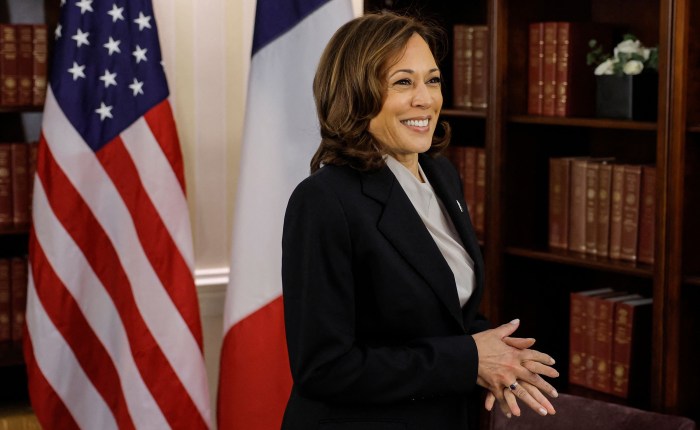
The Last Stretch for the Kamala Wave

The Last Stretch for the Kamala Wave

With less than a month now to the election, the forecast remains murky. Depending which poll you look at, either candidate could be nabbing it. Some say Kamala Harris has a 3% lead. Others say Trump’s support is underestimated. Many argue it will simply come down to the battleground states (particular Pennsylvania). Yada yada.

It’s become so difficult to predict a US election accurately for a number of reasons; top of my list being the polarised nature of the media. It thrives on biases and in recent years has escalated to caricature-like proportions. Indeed, till CNN’s (still spliced) “60-minute” feature on the Vice President, I felt like I was witnessing the most softball interviews ever, bordering on propaganda. That is not to say Trump’s not got his own echo chamber; indeed, he would not exist if not for them. But the liberals are getting their hands dirty too and despite my preference for her eventual victory, it is worth critiquing the “Kamala Wave”. If just for pure honesty’s sake.

First, there’s an element of contrivance. Not wholly, but in comparison to say… Obama’s rise in 2008, it feels like the carpet has been rolled out for her. If we cast our minds back to the 2020 election, Kamala had an early surge in popularity before dropping off after the early debates. Months later, she became Biden’s running mate, on the basis / accusations of picking (pandering with) a female VP. The ticket won and she largely remained in the background, with some coverage (then criticism) given to her handling of immigration and the border. Indeed, as Biden’s advancing years began to show, many wondered whether he was being stubborn or doing what was necessary, in refusing to step down and hand the baton over to her. Kamala’s approval ratings weren’t great, even at the start of this year. (Even by June, really.) To many, Biden still seemed the more sensible prospect. Then that debate happened and the emergency klaxons started ringing. Sleepy Joe had to go.

Now the story being written is that Joe Biden’s decision to drop out of the race in July 2024 was a “courageous” and “selfless” one, bordering on George Washington-like sacrifice for the country. This has been one of the most embarrassing declarations on chat shows and interviews with Kamala Harris (if not necessarily by her). Let’s not forget he insisted on staying the course even after that debate, quite adamantly, until people like Nancy Pelosi “may or may not have” held discussions with him. To be fair, he may have eventually concluded what others had (with respect to his chances) but let’s face it, the Democrats played this one beautifully (at least from the point on of assuring he couldn’t win). They ousted him and got Kamala in at the perfect moment.

Biden endorsed Kamala and everyone promptly forgot he was president. Then a range of support from high-profile figures and past presidents came in. Any notions of an open-convention were quickly swept aside in the fervour of this tide. And just as Trump’s very recent assassination attempt faded quickly into the background, a star was born. It was Kamala Harris’ time to shine and in the weeks that followed, there weren’t many questions to darken the mood. 

Admittedly, there’s some sourness to this coverage; necessary but not indicative of the full picture. While Kamala is no Obama, there is some genuine encouragement to be found in the camps of supporters who believe she could be their first female president, without that encroaching as the only quality she brings to the table. She’s not a great orator or interviewee but she’s also not clueless, as some of her detractors would put it. She’s relatively engaged and relatable (i.e. no Hillary Clinton), given the right environment (see her interview with Howard Stern). She’s also able to handle Trump, as evidenced by the first (and probably only) debate they had. And she made a good choice in running mate, in Tim Walz. Most importantly for the Democrats and her supporters, she’s rode this wave to maximum potential. Unfortunately, October may prove a different kettle of fish.

Kamala’s opponents believe her greatest weakness lies in facing the media (via tough interviews). While Trump reels off a litany of bizarre anecdotes and conjectures, he comes across… stridently? Or at least confident. Kamala has been somewhat meandering, in her rare appearances.Part of the problem stems from her promotion of an image of change and not repeating the past. Her calls for action on any issue are met with derisive snorts that “she and Biden” could act right now. Of course, neither candidate’s alien to the White House but as the closing weeks clock in, Kamala will have to make sure she’s distinguished just enough from the (actually still) president. With the media’s always-fervent dreams of an “October surprise” (e.g. Comey reopening the investigation to Hillary’s emails last minute), their general flair for dramatics, and the last rounds of public and world events in concurrence, the narrative could be spun again. For while riding the Kamala Wave has proved fruitful for many so far, boredom can quickly set in. And I’m afraid that’s the level we’re at.
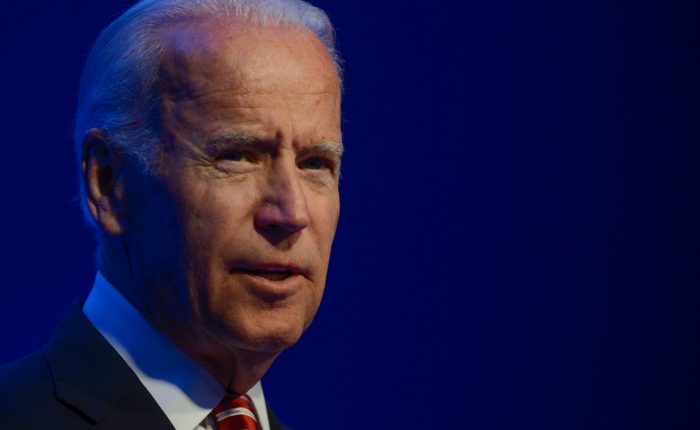
The Re-Framing of Donald Trump

Something has shifted in the perception of Donald J. Trump. Even before the assassination attempt last weekend, there seemed to be a quelling of the crime and dystopian associations being levied his way in the media and online. It is perplexing in a sense, given his loss in the Stormy Daniels’ court case and the the amping up of rhetoric by the Biden campaign (vis a vis Project ’25 and January 6th), but it seems those matters just aren’t registering the way many would hope. Instead what’s emerging is the picture of a strong leader ready to get business done. Is this a genuine re-evaluation? Collective amnesia? Or simply, the more interesting narrative to be pushed forward?

Well, it’s always going to be a mix of the three isn’t it? With regards this re-evaluation, I’d argue some are falsely equating the stronger economy of the late 2010s with his successes, even though these changes take years to manifest. Since everything’s so polarised nowadays however, one can see why confusion would abound when Biden points to the deficit Trump established as an excuse for the poor state of things now. Inflation’s been covered suitably in the last several articles so I won’t delve into it here but basically “perception becomes reality”. So even though it’s unfair, Biden will undoubtedly be associated with the high inflation rates of 2022 where Trump will be with pre-Covid.

Then with the collective amnesia, there’s a tendency to forget the details of the past and look to the present and future with any president. Despite George HW Bush’s success with the Gulf War for example (leading to a 90% approval rating), it didn’t much matter a couple of year later when (again), the economy took priority. So many of the controversies of the Trump presidency have faded into the background; with his handling of Covid almost wilfully dismissed as a “strange anomalous time for everybody,… who knows what was going on then”. January 6th is more surprising. The democrats have relentlessly pursued that in making a case against Trump but to seemingly less effect each year. Maybe it just wasn’t consequential enough for the average voter to care: shocking to be seen but nothing to be concerned about on a day-to-day basis. I would argue this remains a concerning moment, in building on (rather than diminishing) the cult of Trump but alas, it seems things will have to escalate for that to become clear. It’s always a matter of urgency with these things.

Tied into January 6th now is of course the assassination attempt. The shooter’s motives remain ambiguous (registered Republican, otherwise liberal?) but Trump’s supporters will nevertheless have a point of contention when arguing for extremism on both sides; e.g. Biden calling for a “cooldown of rhetoric is rich given the existential threat he keeps pushing with Trump”. And given Trump survived and emerged for that photo op, it’s very difficult for anyone to portray him as anything but a fighter. It fits a narrative so well that it feels like the race is essentially over. His proclamation that “God was on his side” (despite someone dying at the same rally) should ring alarm bells but instead it seems to have struck a chord at the Republican National Convention this week, where a party stands unified. 

Naturally, we can’t talk about the narrative of Trump’s survival then without touching on the decline of Joe Biden. That’s where the media has pivoted most, even with those who traditionally backed him. Until that debate, I still believed Biden had a chance at re-election, had he given a strong performance and exposed Trump for his lies. But… well, let’s just say that last article on the debate has already aged like milk. Biden’s cognitive decline has been spotlighted everywhere from CNN to The Daily Show and he’s highly unlikely to recover. As it stands, he looks to be heading down the Ruth Bader Ginsburg road of leaving the stage well after he should’ve, securing a goal for the other side. With that said… to offer a glimpse of hope for a Democratic victory; the election is not over. And just as things have so dramatically shifted in the last month or so, there’s time for them to make a comeback. But it won’t be with Joe Biden and likely, not Kamala Harris either. Rather, with an open convention next month, they could introduce a new (younger) candidate to stand up and take the cameras away from Trump and offer something fresh and exciting. It would be the “twist” the media would devour; a necessary move in my opinion, for if nothing else, Trump knows how to play the media.

The Economy Is Strong But Nobody’s Buying It

The Economy Is Strong But Nobody’s Buying It

In a recent CBS/YouGov poll, 59% of people questioned described the current economy as “bad”, with nearly 2/3 believing it was stronger during the Trump administration. This stands in sharp contrast to what the experts are saying and what the numbers show: GDP growth was 3.3% last quarter, unemployment down to a record-low of 3.4% (from 6.9% when Biden took office), consumer spending is up, inflation is down, etc. The fact of the matter is, despite these impressive indicators, the “average Joe” just isn’t feeling the good times or benefits. This can likely be attributed to years of price increases prior to recent change, the uncertainty of the Covid years, and staggering interest rates. In tandem with the general politicised air of today, people feel vulnerable to what’s been described as the “vibecession”, an addendum to the “perception becomes reality” thesis.

Needless to say, this is a major problem for the Biden camp as the election approaches. As with our last piece on Biden’s presentation of his age, it’s not necessarily effective to just state that everything is fine or “the economy is strong”. The lapse in credibility comes from the day-to-day reality of gas and grocery prices; the latter of which have remained high despite the slow-down of inflation in the past year. Indeed, the gravest mistake the Biden camp has made in this respect has been to emphasise this improvement, while blatantly ignoring how desperate the rate of inflation was in 2022 (8%). Either side of that (4.7% in 2021 and 4.1% in 2023) aren’t exactly great either, when you compare with the 2010s’ figures (e.g. 1.8% in 2019). So while the economy is on the right path, people are still feeling that 11% increase in grocery prices (2021-22), which normally would have been a 2% annual increase. 

As elections are largely media driven, we must remind ourselves that fear is unfortunately a big selling point too. Therein, the anxiety surrounding what may come seems to be more pressing than ever. As the invasion of Ukraine sent energy prices skyrocketing (albeit far more in Europe), people have become wary of international affairs having knock-on effects. The beginning of last year was marked by reports of massive layoffs in the tech industry. AI meanwhile, hovers as a merciless shadow over the proceedings of so many more. The housing market, of course, remains a mess as people resist selling, lest they lose optimal interest rates. And some economists have speculated that recent consumer spending (or splurging) could create vulnerability in the market going forward. It may be a glass-half-empty approach to looking at things, but the notion of a “vibecession” (while cringeworthy as a term) is not a merit-less one.

Again, it takes time for economic improvement to translate into reality. Back in 1992, George HW Bush’s electoral hopes were partially dashed by an 8-month recession (which ended in March 1991). The sluggish recovery cast doubts on his ability to govern domestically, leading to the popular slogan employed by the Clinton camp: “it’s the economy, stupid”. A compromise on his 1988 “no new taxes” pledge had actually helped set the stage for the growth of the 1990s but alas, despite recovery by the election, Bush’s image never faired as successfully.

Will Biden’s? There has been a longer stretch of economic prosperity than in 1992 (unfortunately mired by high inflation rates) but should things keel out and continue as they are, I think there’s cause for optimism in his camp. There’s still eight months to go and the creation of new jobs and businesses are likely to bolster his image. But it’ll take some strategic selling and frankness. As with the matter of age, perhaps Biden needs to acknowledge the perception out there; how devastating inflation’s been, while promising in turn to challenge unjust profits on the parts of certain corporations. He took a step in this direction during a Super-Bowl break, by addressing the scandal that is “shrinkflation” (where product sizes shrink but prices remain high; this is whole other article though so I won’t delve deeper for now.) He needs to continue fighting for an economy that works for low- and middle-income families, via cost of living prices, as well as the bigger picture trends of GDP and employment. Again, it’s the perception that becomes reality.

The Kamala Harris Problem: Meritocracy vs. Identity

The Kamala Harris Problem: Meritocracy vs. Identity

The nature of the vice presidency is typically one of brief significance, ridicule, and vague adaptability. They’re briefly significant in the election cycle because they can be used to give some momentum to a candidate’s campaign, as the final months close in. They’re ridiculed because, while seemingly senior in management, they’re often sidelined next to other key positions such as Chief of Staff or Secretary of State. And then their actual role remains vague, depending on the administration, and adaptable, because their responsibilities may change depending on the issues at hand, their credibility, or image.

All of these things are as true for any VP as they’ve been for the current incumbent, Kamala Harris. And yet, with an approval rating hovering in the 30s (a few points below Joe Biden’s), she seems to be suffering the brunt more unjustly. To the left, this is because she is a woman and mixed race. To the right (and many others aside), this is kind of for the same reasons, if with a twist. They see Kamala Harris’ very appointment in terms of affirmative action; a choice made solely to appeal on the grounds of identity politics. To reel in those wide-eyed liberals.

This is a tough ordeal for Harris because she can’t exactly deny such criticisms. Indeed, it was always Biden’s plan to choose a woman as his running mate but given she’d been relatively tough on him in the debates, she also might’ve drawn some early intrigue for her strength in challenging a potential “yes man” agenda. This might’ve mattered to some. To most, it probably didn’t.

But say, Harris was just what many expected; a choice to appease Democratic voters. This is hardly different (beyond the issues of gender and race) in making such a decision. Kennedy picked Johnson (despite disliking him) to win the South. Roosevelt was forced to go with Truman for his fourth round, to appease his party. Mike Pence was hardly a regular at Trump’s various resorts but yielded an opportunity to appeal to more traditional, evangelical Republicans. This kind of appointment is nothing new. And yet…

Well, things have changed a bit. The cultural and political wars of today are more toxic than ever. There is increasing skepticism and frustration with the Democratic Party and liberals today (from within and outside the party) on how important identity politics has become in electing and appointing important positions. Credibility is at play on the level of perception and media coverage. Plus, more tangibly, there’s the matter of Sleepy Joe’s age. He’s 80. And while relatively fit for the job, one can’t help but hover over the matter of mortality. Indeed, the question of whether he’ll run again in 2024 has been springing up at every occasion (he plans to, by the way). This is awkward for Harris because (already labelled an affirmative action pick), she’s been perceived as a forced successor; a more likely leader than most VPs have been before her. The optics are concerning.

The gullible (or innocent) response to this quagmire would be to posit that Harris need only prove herself in the role she has to attain credibility. If you regard most the criticisms of Harris however, they’ve been mostly vague: weak on immigration (not exactly a simple issue to tackle); not doing enough to support Biden and conversely, out there too much or hidden in the background; and “dysfunctions” in her office (as if Trump’s cabinet didn’t changed a thousand times in his first year). Again, this role is largely symbolic and without definition. Harris’ main prerogative seems to be addressing immigration, voting reform, and other issues (e.g. the destruction of Roe v. Wade) with an ambassadorial-type approach, which granted hasn’t yielded any phenomenal results. But the same people who’d argue how disastrous she’s been would likely be hard-pressed to define the legacy of past VPs such as Pence or Biden, himself. The point is that most people simply don’t care about the actual job, whatever they think it may be.

To return to the matter of image then, Harris faces a challenge there may be no solution to. It seems to me that she’s been given a raw deal on one hand but on the other, having watched her give several interviews, I’m not exactly impressed by her traditionally political, say-a-bunch-without-saying-anything approach either (see her on Colbert recently; cringe). The 2024 election is looming and where the question of Biden’s age lingers, so too does a tangent on Harris’ continued suitability. At the end of the day, is she worth the hassle? Would offing her prove cowardly or tactically smart? If Biden’s credibility is at stake, I think he’d be better off sticking with her; the image of loyalty supersedes political meanderings. They may be no Obama-Biden, but they can at least stick it out and maybe one day, Harris’ legacy will be revised to reflect her support of this administration rather than her attributes as a candidate.