As America celebrates its 250th birthday, one can’t help but make comparisons from the present to the past in leadership and rhetoric. After all, Donald J. Trump is a much different specimen to Barack Obama, let alone Abraham Lincoln. In the span of these two and a half centuries however, I would argue Americans have tried out a range of styles (and personalities) when it comes to governing democracy, demonstrating this notion we have that this nation is still just an idea being worked out. And sometimes, you don’t even have to take too many steps to demonstrate this.
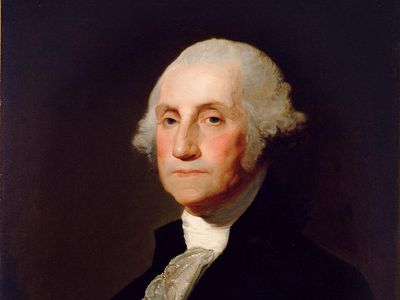
For instance, John Adams (the 2nd president) stood in stark contrast to George Washington. While both Founding Fathers, instrumental in the success of the “American Experiment”, they were fundamentally different in temperament and leadership styles. Washington was a reserved leader who brought America together, albeit with an essential unified backing. A revolutionary, in quite the literal sense, but also something of a caretaker, he wanted to set a precedent in limiting power. Adams, who fought a contentious election, proved to be more outspoken and (shall we say) strident, dividing opinion with sweeping power moves, like the Alien and Sedition Acts. He lasted one term.
Martin Luther King. Jr. once said “the arc of the moral universe is long, but it bends towards justice”. Obama quoted this several times in the last weeks of his presidency, as one type of leader, wedged between two very different others. His case was not without (vague) precedent however. Abraham Lincoln, the 16th and most widely revered president, came between James Buchanan and Andrew Johnson, two of the worst. Lincoln’s election of course led to the secession of the southern states and resulted in the Civil War. The question of the American experiment was never more in question than during this darkest chapter. With the victory of the North and the passage of the 13th Amendment however, a very different path forward was paved and because of a divisive president. Or so it seemed. While this eventually led to greater things, the end of slavery did not automatically improve the lives of Black citizens or offer them an equal stake. Indeed, it would be another hundred years before the Civil Rights or Voting Rights bills passed. In the interim (and immediately following Lincoln in the Reconstruction era), bold and inspiring leadership gave way to more conservative, non-commital, meandering approaches in government (not to mention opposing factors in the Jim Crow laws, segregation, the KKK, etc).
Even in the supposed arc of justice (or just an arc of policy), variations occur. For example, following World War 2, US presidents took differing approaches to handling communist containment, as national sentiment shifted and some experiments (shall we call them) floundered. At first, the Red Scare was a fervent and immediate threat, leading to the Korean and Vietnam Wars. Thereafter, as the apparent futility of such endeavours increasingly tested a tired public, President Nixon took a more strategic and diplomatic approach to dealing with the Soviet Union, via a policy of Détente. As the SALT II negotiations tethered out later under the Carter administration, a slight revival of fervency would then be found as Ronald Reagan amped up the drama, calling the USSR an “evil empire”. And then again, things shifted as the US saw possibilities with Gorbachev they had not seen with any Russian leader before. By the fall of the Berlin Wall in 1989, the then-president, George HW Bush, was taking a more subdued, again tactical approach, to US-Russian relations.
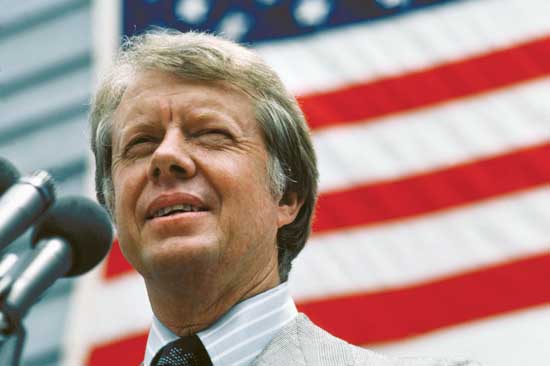
In a sense, the US (like most countries) really doesn’t know what it wants (or needs) when it comes to leadership and as the media landscape has opened up the windows to power to a wider audience, the swing back and forth has become more pronounced. Following Watergate, people wanted honesty and accountability. So Carter came along. But he was too honest and sort of a buzzkill with his conservation efforts. So they elected Reagan to make them feel good about themselves. And in the last couple of decades we’ve gone from George W. Bush to Obama to Trump to Biden and back to Trump; both sides seemingly completely at odds with the other in terms of policy, rhetoric, and what America’s about. Just how far the original vision of 1776 has been strayed from has already been speculated on at nauseum.
This is a cursory outline of this thesis, of course, and there are plenty of continuums to be found in the greater scheme of foreign and domestic policies. It is interesting, more than anything however, to consider the range of leaders and leadership styles America has attempted (outside of you know, women). Very few of them were remarkable. Perhaps some had the right temperament at the wrong time. Perhaps some simply adapted to the time and matched the energy given by the fortunes of the time. And perhaps, as some would have it, we’re all on the fortune wheel therein, with fashion playing a part of politics just as it is film or music. Change, really, is the only constant of politics. And as America turns the great age of 250 this July 4th, we must remind ourselves that it’s in a relative pubescent stage, compared to other nations. So keep trying new things America (like learning from your mistakes).
Tag: American values
How Sitcoms Reflect Their Times
Like many of yous, I’ve been eagerly awaiting new episodes of the Marvel series Wandavision each week. Besides fitting in with the greater course of the Marvel Cinematic Universe and boasting an interesting premise in itself (and no spoilers, don’t worry), what delights me is the attention paid to the shifting styles of sitcoms from the 1950s to the 2010s. It’s so expertly executed each episode that it stirs nostalgic feelings, even for times before my own (1991 on).
As someone who unabashedly lives in the past, I can’t help but remark how much our sensibilities have changed; evident even in such a specific format as the sitcom. Where some subjects were once taboo (the word “pregnancy” wasn’t used on I Love Lucy in the 1950s) and others prioritised (the traditional family unit), we now tend to approach these issues and images with a much different set of eyes. Of course, this can be traced through cultural developments that extend beyond the sitcom, but for a format that’s (more or less) remained consistently popular, I think some of these changes are more readily apparent.
1950s-1960s
With the advent of TV in American households, a novel form of entertainment was born. Being a rather conservative era (culturally), risqué subjects weren’t often broached with emphasis instead placed on garnering comfortable content that would make audiences tune in each week. To this end, the format was developed with strong lighting, familiar camera angles, likeable characters who embodied the American middle class ideal and below the line, comedy fodder (slapstick gags, catchphrases, etc.) Some of the popular sitcoms from this era included I Love Lucy, The Dick Van Dyke Show, and The Andy Griffith Show.
1970s
The 1960s saw remarkable cultural change with the rise of the counter-culture and boomers beginning to assert their voices. Plus, colour started creeping onto TV sets, setting the stage for a new era of television. Despite the vibrancy of these tones and the fashion however, sitcoms began to reflect a more realistic world, focusing on friends, family, and the workplace. Taboos also began to be addressed, such as abortion, in shows like All In The Family.
1980s
A crazy decade for sure but again, the sitcom snuggly repeated tropes on the cozy, ideal American family unit. In an era of conservatism and Reagan, heavy-handed morals also began to dominate many shows (“just say no” to drugs, etc.) The wholesomeness of this era was reflected in Family Ties, The Cosby Show (now ironically), and Cheers, among others.
1990s
The sitcom continued to follow some of the usual cliches but with an increased air of rebellion against the traditional family unit becoming the norm. Gen-X were now asserting their claim to TV. This was thanks in part to The Simpsons, which flared up the culture wars when President George H.W. Bush reflected his hopes that there were more families “like the Waltons and less like The Simpsons.” Alas, his finger wasn’t on the pulse there. Instead, parental figures would increasingly become the ire and mocking of the “school sucks, parents blow” ethos.
Working class families and family dysfunction began to also see some representation with the likes of Roseanne, although on the whole, we were still dealing with conventional values.
2000s
The sitcom format was more purposefully challenged this decade with the likes of The Office reflecting a reality-TV obsessed world. Catchphrases by this point had largely become hokey and laugh tracks were on the way out. As The Office and shows to follow took up a mockumentary-style format, others like Malcolm In The Middle and Scrubs experimented with narrative. Thanks to globalisation, syndication, and the Box set market, shows also became a lot more attuned to retention humour, relating to the popular culture they were influencing.
2010s
With traditional networks losing ratings as streaming became the norm, the sitcom was seemingly on the decline. Still, there was plenty of room for the likes of Modern Family and Brooklyn Nine-Nine to thrive. What’s especially notable about the sitcoms of more recent years is the diversification in cast members and the deconstruction of the family unit, to reflect something less traditional. On the other hand, where the 90s and 00s saw moves away from moralistic standpoints, the 2010s revived this sense of idealism, in part (albeit in a far more progressive and tactful way, perhaps reflecting millennial indignation, as opposed to the despondency of Gen X).
Change and Consistency
Any discussion of generational change is bound to ensnare the trappings of misgivings and generalisations but sometimes, it’s worth drawing a sketch. To an extent, the sitcom really hasn’t changed all that much, considering the span of decades in discussion. The same innovations in lighting and cinematography, largely pioneered by Karl Freund for I Love Lucy in the ’50s set the stage for what followed with many classics like Growing Pains, The Golden Girls, The Fresh Prince Of Bel Air, Seinfeld, and Friends. Sure, single-cam sitcoms have replaced multi-cam ones in many instances, the laugh track has largely died out (a positive development, in my opinion), and the American family has changed in appearance but many of these popular shows have thrived because they’ve all shared the collective space of comfort TV. We relate to and enjoy returning to the lives of these characters and the wacky shenanigans they get up to. It’s likely, there’ll always be a space for such light-hearted entertainment, even if the streaming services get the bulk of their kudos from the heavy-hitting dramas.
What Wandavision has managed to achieve, in this regard, is giving us a glimpse into the sensibilities of the eras it depicts. We see the idealism of the Eisenhower era, the cultural change of the 1970s, the pop-punk aesthetic of the MTV generation, and the onset of the modern era. They’re not wholly accurate representations, sure, but they reflect the popular images we’ve come to appreciate of these times (which in part, then also reinforces the nostalgic preoccupation of today). And as art imitates life, the opposite often holds true as well.
A Crisis Of Confidence Revisited
We always believed that we were part of a great movement of humanity itself called democracy, involved in the search for freedom; and that belief has always strengthened us in our purpose. But just as we are losing our confidence in the future, we are also beginning to close the door on our past…
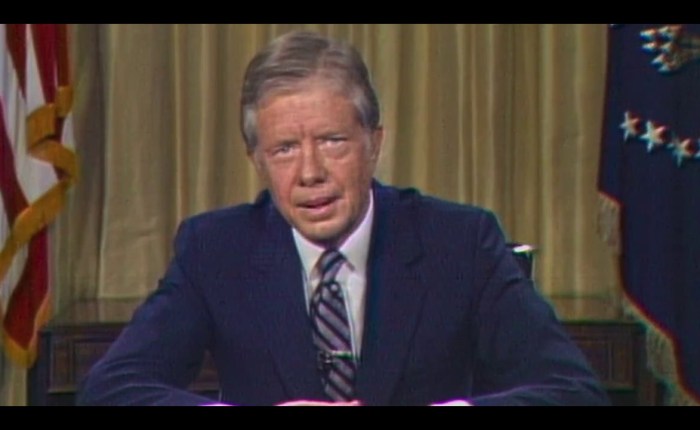
38 years ago, President Jimmy Carter spoke to the nation in an effort to reconcile the will of the people with his own agenda. In the years preceding, America had undergone a radical decline in morale thanks to the War in Vietnam, the assassinations of two Kennedys, Watergate, an Energy Crisis, and inflation. The people were agitated on an account of the inference that their lives were getting worse and that Washington, in its bubble, seemed unwilling to help. The same old story tends to repeat itself throughout history. So why revisit this one?
The short and simple answer is that it so emboldens the contrast in leadership values held between two of the most diametrically opposed leaders of recent history. Carter was a morally-minded, peace-seeking, detail-oriented hard worker who never lied to the American people and Trump is a comic-book villain. In tandem to this however, many of the things said in the famous ‘Crisis of Confidence’ speech still garner interest to people today. Indeed, I would go so far as to assert that it is one of the best speeches that was ever delivered by a president, at least in terms of diagnosing what was wrong with American values then.

It was delivered on July 15 under the context of an Energy Speech. Carter understood he wasn’t exactly popular and that this program needed help. In a somewhat prophetic move, he thus retreated to Camp David and let citizens of all walks of life give him their assessment of his presidency. To many today, this would appear a weak and even pathetic move. I would argue however that a little humility can go a long way in evoking an image of thoughtfulness. Confidence certainly has its place but not when misguided and blinded. Carter, a wise man, didn’t have the audacity to just stupendously ignore the people. He listened to them and did his best to understand their concerns.
… [After] listening to the American people, I have been reminded that all the legislation in the world can’t fix what’s wrong with America.
Many things were and still are wrong with America but back in 1979, Carter pinpointed a growing tendency towards greed and self-indulgence that would prevail in the succeeding decade and thereafter (a time in which Trump’s fortunes inflated beyond any sense of reality). It wasn’t purely a commercial, economic, and political triad of change however, it was one weighing on the consciousness of the American spirit which had always bolstered the idea of going from rags to riches through hard work.
In a nation that was proud of hard work, strong families, close-knit communities and our faith in God, too many of us tend to worship self-indulgence and consumption. Human identity is no longer defined by what one does but by what one owns.
Carter’s most savage critics sneered that he was piously preaching; even blaming the shortcomings of his administration on the hard-working American people. It’s not too difficult to make this case given the realities of the time. The importance of this speech, regardless, rests on the fact that no other president would ever say such things. As blunt as it may seem, they have always appeased the public with undeserved flattery to save their own skin like Goneril and Regan to King Lear… which brings us back to the mad King.

Can he change? Can he inspire? Can he tell the truth? Going by any interview, biography, or fortune cookie, it would be fair to say that he is a lost cause but we must remember, that other leaders will arise, from the smallest towns to the state capitals to Capital Hill and the White House. We must raise the bar for what we expect from them. Trump-level leadership is not acceptable. Paul Ryan-level leadership isn’t either. Not even George W. Bush, as saintly as he may appear these days, is acceptable. We need to be given a hard slap of reality frequently and not just when election cycles go haywire. America may have fallen off the band wagon altogether in 2016 but those wheels have been rocking for a long time. Of course, Carter called it back then:
We are at a turning point in our history. There are two paths to choose. One is a path I’ve warned about tonight, the path that leads to fragmentation and self-interest. Down that road lies a mistaken idea of freedom, the right to grasp for ourselves some advancement over others…
The other path is presumably somewhere in Canada.