Lessons for the Left

Lessons for the Left

One week ago, the Democrats were handed an unambiguous defeat. A royal smackdown. Not just in the presidential race (across the electoral college and popular vote), but in the house and senate too. While many have been quick to suddenly attain 20-20 hindsight, it remains important for the Democrats to actually undergo proper penance, learn some lessons, and knuckle down for some hard work. 

Lesson 1: Democratic Process Matters

Up until a month ago, I thought Kamala might just pull through. Given the game-changing nature of her succession to the ticket, it felt like that wave of momentum might hold on (as discussed in our last article). Unfortunately, it crashed a little early from the shore and became a somewhat hollow experiment, in the wake of media appearances and interviews on her part, contrasted with a series of PR grabs for Trump (the McDonald’s gig and “garbage people” alliance). Ultimately, it became apparent that she just wasn’t the best candidate for the job (on the Democrats’ side). This leads us to a crucial point: the gulf in credibility between this party’s supposed defence of democratic values and their practice in nominating leaders.

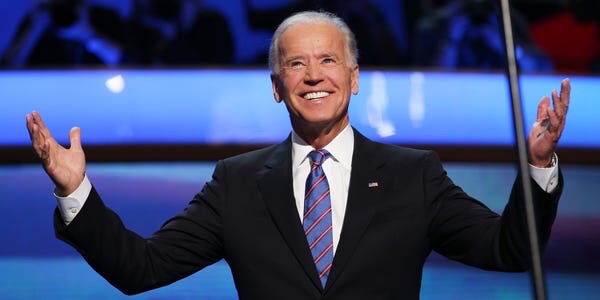
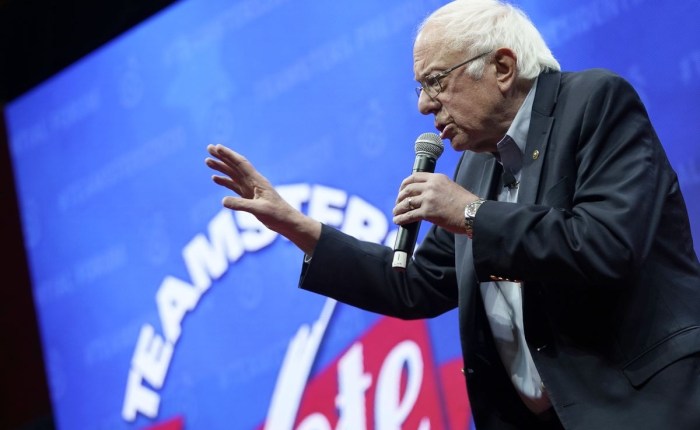
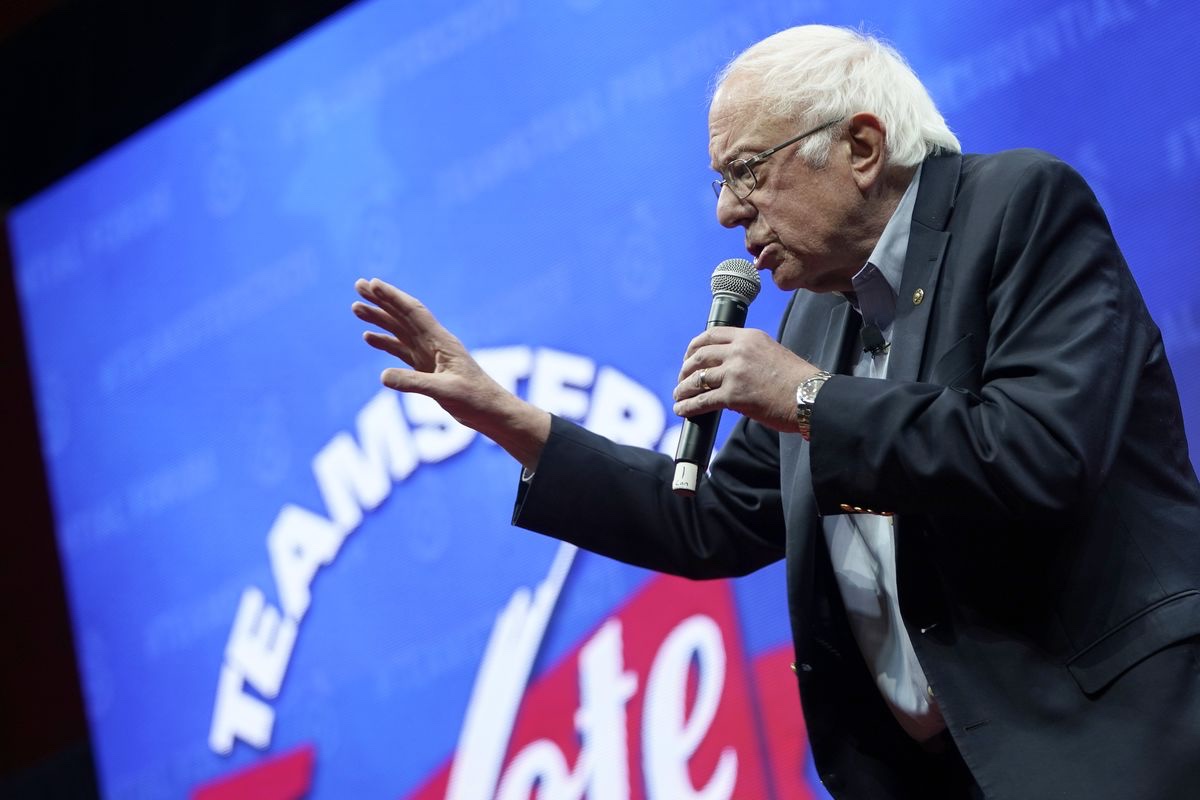
In 2015-16, Bernie Sanders was one of the most exciting and promising voices of the left. Many (including myself) felt he would’ve done better than Hillary against Trump. Of course, history went one way and much of the older generation and establishment didn’t agree. They weren’t exactly honest in their tactics however, with the DNC swaying things in favour of Hillary. But okay, that might have been excused… if it were not for the race of 2020 coalescing around Joe Biden, seemingly just to speed things up. (I will never forget Pete Buttigieg dropping out after just his fourth primary, despite winning the first major one or Bernie’s shots being dashed by the onset of the pandemic; even if it understandably changed matters.) The point of the matter is that the party’s leaders were and have been directing the flow of this so-called democratic process.

Had Joe Biden withdrawn earlier (as he should have), there might’ve been time for a full primary season and open convention. Instead, it was purported that Biden was totally fine and capable of running again. When it became clear (during the debate) that he wasn’t, the Democrats began to panic. This meant taking quick action and… well, we’ve explored this all too recently. I’m not saying there was any easy path to be taken here. An open convention at this point probably would’ve been messy too but in the name of saving democracy, the Democrats didn’t exactly follow through with the public’s wishes. (Kamala’s approval ratings were pretty low before her big boost.) It’s a simple lesson but an important one for them to remember: practice what you preach. Let the cream rise to the top in 2028, without meddling.

Lesson 2: Retire The Vanguard

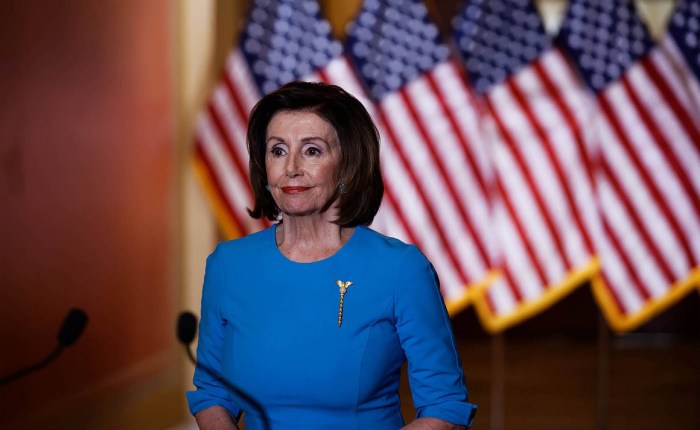
This will be brief. It’s time for a new generation of leadership. Joe Biden did well in 2020 but was never considered by anyone to be a serious contender for a two-term presidency. In those four years, the party should’ve been looking for their next Barack Obama… okay, that’s a little optimistic but they should’ve been looking for their next Bill Clinton or someone who could actually inspire voters. Instead, they’ve plodded along with Nancy Pelosi (retired from her speaker role but) retaining enormous influence. (She’s also just been elected for another term at age 84 by the way). I’m not saying these boomers have done a bad job or are unable to continue their roles in some capacity but they’ve dominated the political sphere of influence since the 90s at this point. It’s a different world now and it’s time for new faces.

Lesson 3: Re-Connect With The Working Class

Why the party of big business, led by a billionaire, has managed to secure all the swing states and won the allegiance of the working class should be mystifying. Economically speaking, the Democrats have been much better for the low-wage earner and yet as Bernie Sanders put it, “they feel abandoned” and have thus abandoned their party. Some of this was inevitable with inflation shaping the election. Tragically though, Joe Biden and Kamala Harris just never managed to find a way to assure the public that things would improve. To start with, Biden stated (albeit accurately) that the economy was in good shape, with inflation rates coming down, when he should have empathised with people struggling with grocery prices, which never came down or matched the average wage hike. When Kamala came to acknowledge this struggle, it was all too late. Trump had swept up the disenfranchised who believed his rule had contributed to a more prosperous times (with Obama missing out on credit).

This was always going to be Kamala’s greatest struggle (besides interviews). She had relatively little time to make up the ground Trump had in the swing states. But let’s face it: he was also just better at getting out there.

Lesson 4: Embrace New Media

Trump made great waves by appearing on long-form podcasts, such as Theo Von’s and Joe Rogan’s. This chiefly helped to consolidate the male vote but also showed he had nothing to hide and could hold up in a more relaxed, conversational environment. Similar to Hillary in 2016, Kamala played it too safe by (at first) limiting her media appearances and then by not following Trump in this vein.

In 2008, Obama became the first presidential candidate to really understand the internet and social media, taking advantage of it to propel himself to success. Well, social media has changed quite a bit since then and people are a lot more attuned to being “sold” something. Podcasts like these don’t rely on cheap chat show bits or celebrity cameos to entice someone. Apparently with the coaching aid of his son, Barron, Trump was able to tap into an aspect of online culture ignored previously in these election cycles. Given the uselessness of big news’ media outlets with polls, it might be worth re-examining where the pulse of this nation lies. (And yes, also stop with the celebrity endorsements. Per this point and the lesson above, they don’t connect you with the people.)

Lesson 5: Control the Outrage

The first few weeks of Trump’s first term were exhausting with multiple decrees garnering fresh cries of outrage from the Democrats and media. Clearly the controversies didn’t matter that much in the end. The simple thing about Trump that the Democrats have never been fully able to appreciate is that he’s a disruptor. Therein lies his appeal. He is a kind of antidote to traditional politics and corruption; albeit not a man who plays by the book.

Naturally, there’s going to be a lot to be outraged with over the next four years. Not everything will necessitate a battle. Two impeachments and multiple court cases didn’t eliminate Trump so it’ll be important to tackle him in a different way. Granted, I don’t know what that way is but since the Democrats have so far been playing a losing strategy, it’s worth considering what’s worth their energy.

Conclusion

As Jon Stewart stated in his latest episode of The Daily Show a Democratic comeback is plausible. Reagan won every state but one in 1984 and Nixon trounced McGovern in 1972. The senate and house will always swing back and forth. Indeed, the history of the electorate is basically a game of ping-pong. As George HW Bush’s team put it, in analysing his defeat in 1992, “change is the only constant of politics”. So on and so forth. There’s hope there but to be frank, for at least a few years, the Democrats will have to contend with Republican power, will, and legislation; via the presidency, the house, the senate, the majority of governors, and the Supreme Court. So… good luck and take what you will from those lessons.

American History In The Washington Walrus’ Time: 2016-Present

American History In The Washington Walrus’ Time: 2016-Present

The Washington Walrus has finally hit 100 articles! And in the 7 years since its inception (January 2016; okay, we don’t post regularly), a lot has changed in America. So to commemorate this momentous… moment, we thought it’d be fun to try and summarise and maybe evaluate some of the things that have happened since then. How has the character (or “soul”, as Joe Biden would put it) of this nation changed? What distinguishes today from back then… Well, there’s only one place to start.

2016: The Rise Of Donald Trump

In his final Last Week Tonight segment of that year, John Oliver blew up the cursed numbers themselves in a therapeutic gesture of frustration and disappointment with what seemed like a terrible year, marked by numerous high-profile celebrity deaths (David Bowie, Prince, Alan Rickman, etc) and the election of Donald J. Trump. The latter point marked the most significant shift of this period of time.

While most of us were certain of Hillary Clinton’s victory, in hindsight, the writing was on the wall. Many Americans felt betrayed by the system and disappointed in the not so perceptible “changes” promised by the Obama administration. In truth, Obama had to sweep up the mess of the economic downfall that occurred in 2008 and was largely gridlocked in his domestic agenda, against increasingly combative Republicans. Hillary Clinton, it seemed, was not the answer. Perhaps, no run-of-the-mill Democrat was.

In the 2015-16 Democratic campaign, Bernie Sanders had emerged as an unlikely favourite amongst the youth. An independent with a noble, if not particularly successful track record, he seemed to capture something of the same spirit that led to Trump’s shocking election; a feeling that corruption was ripe is Washington and lobbyists, billionaires, and special interest groups were calling the shots. For quite awhile, he was a great challenge to the Clinton campaign, but ultimately lost. (Many assert that had he succeeded, he might’ve beaten Trump. I’m not exactly convinced he wouldn’t…) This is besides the point however. The point is that a rot had set in and politics would not proceed as usual.

2017-19: “Chaos Is A Ladder”- Littlefinger

Upon releasing her memoir, Becoming, the following year, Michelle Obama wrote that she “stopped smiling” upon listening to Trump’s inaugural address because she simply couldn’t pretend any longer. For those who hoped he would rise above the petty insults and divisive rhetoric of his campaign, it became immediately clear that things were about to get wild. First, there was the ban on people flying in from predominantly Islamic nations. Then, a series of cabinet upheavals. Scandals galore. Then, an insensitive summary of Charlottesville, in which he deemed there were fine people on both sides; both sides being white supremacists and protestors. It was in this moment, Joe Biden apparently decided he should run, in order to “save the soul” of America.

The fact that Trump was so emboldened in his office and able to get away with (seemingly) anything perhaps emboldened the left, in turn. If the battle couldn’t be won in Washington, then perhaps it could be in the culture wars. Indeed, the values of left and right had polarised increasingly throughout the decade with right-wing commentators arguing the left were pushing a politically correct agenda across America, particularly in universities while the left challenged the right’s reticence on civil rights’ issues including gay marriage, trans identification, and more.

The breakthrough of the Harvey Weinstein case in 2017 marked a major cultural shift in the dynamic of women dealing with powerful men. With the colossal expose, a number of issues and transgressions were brought to light, helping to widen the scope of what was and wasn’t acceptable behaviour (or had always been). In the following years, Hollywood would amp up their promotion of diverse works and female-led stories, again sparking the ire of many who felt politics (or liberal politics) had become more important than art and story. At the same time, a parallel was being drawn by critics of the Democratic Party, who felt identity politics and the optics of diversity were becoming ever more prioritised in electoral agendas. This was dismissed by some as generational blindness. “OK boomer” became a de facto response for many.

The battleground for the culture wars had traditionally been fought in news media. By the 2010s though, social media had become the dominant source of information for most. Where misinformation and been brought to light with the 2016 election and the ensuing trials of Facebook, there now also lay the problem of a new level of sensationalism in misleading click bait headlines, yellow journalism, and (often) straight-out lies. Trump’s rise to power was seen as being emblematic of a post-truth world, in which both sides claimed ownership of whatever the “truth” was. Annoying celebrities started confessing their stories as “speaking [their] truths”. There was much cringe-worthiness to be found. Most crucially, it seemed beyond political differences, the left and right had come to hate each other outright.

Let’s not forget the dual disappointments of Game of Thrones season 8 and The Rise of Skywalker (both 2019) either. I’ve nothing to say about them. Just don’t forget.

2020: The Boiling Point

The fact that this year started with an impeachment barely anyone remembers shows how crazy the Trump years had gotten by this point. Somehow, 2020 would become the year all hell broke loose for a couple of reasons. First, the beginning of lockdowns in response to the emergence of Covid-19. Second, the protests and unrest that resulted from the murder of George Floyd in the summer. Both of these factors influenced the culture and politics of the US enormously this year, with the mania perhaps lending some desire for normalcy, found in the wrinkled hands of old Sleepy Joe.

How Covid became a political issue may be question for future historians but by 2020, when everything else had, there was no reason this shouldn’t have been. Indeed, Trump mocked Biden in the debates for “wearing the biggest mask” before getting Covid himself. Beyond his pantomime, it was drawn as a debate on the nature of civil liberties for many; with some arguing against big government limiting their freedom through mandated governmental worker vaccines and lockdowns. Others felt that these opponents were questioning science itself in the name of partisanship or wilful ignorance.

As regards the second factor, the Black Lives Matter movement had become increasingly visible throughout the 2010s since social media allowed for the sharing and exposure of police brutality. With the shocking violence and boiling point of George Floyd’s death, the truth was driven home once again that black lives were treated as second class in America. Critical Race Theory became more prominent in the years that followed, with a wider net cast for those learning of the systemic oppression caused by economic and power models in US history. And while some progress had been made since the 1992 riots, Americans were reminded of the lived realities of many Black Americans. Unfortunately, this lesson has needed repeating throughout history.

2021-Present: Conflict At Home & Abroad

2021 started off with a little hiccup at the Capitol. A misunderstanding or something. Then a new leader was sworn in. So… Joe Biden’s presidency has and hasn’t marked a return to normalcy. I, for one, no longer feel the need to google the president’s name every day to see what wackiness he’s gotten up to. On the other hand, America remains deeply divided and though Trump is presently indicted, I don’t think his loss in 2024 is guaranteed. The same seeds of discontent fester and not even under the surface. To many, these legal proceedings are a “witch hunt”. Increasingly the idea of a “national divorce” seems pushed to the forefront, even if in political jest.

The Biden presidency (post Covid), outside this sphere, has chiefly been defined by the Ukraine-Russia war and inflation. The expansion of NATO and America’s involvement in this conflict may define the coming years, if no resolution materialises soon. As Trump had been (shall we say) cozy with Putin, things would likely change should he succeed in getting a second term. For most Americans however, economic burdens will distinguish this decade (even more so) than the last. To go back to where we began, it seems Bernie Sander’s concerns have only become more pertinent and fully understood with the passing years. As billionaires control social media and politicians fail to close the left-right divide, the country lies in a precarious position.

The Washington Walrus Thanks You…

Thanks to all for reading this or any of the articles we’ve put out in the last 7 years. It’s been an interesting blog to attend to, even if not attended to regularly. While it started out as an exercise in writing about current politics and American history, it transformed to something that could address all sorts of cultural, social, and even entertainment-based issues. No subject’s too light or heavy to cover, so long as something lies beneath the surface (e.g. Rotten Tomatoes’ scoring not accurately reflecting viewers’ interests and appreciation of art).

The Key Players Of The House & Senate

The Key Players Of The House & Senate

With the start of a new administration and change in power in the Senate, we here at the Washington Walrus thought we’d take the time to recalibrate our takes on the key players of the House of Representatives and the Senate. Basically, a who’s who of the big cheeses; the ones pulling the strings, be it with their positions or influence in the media and political landscape. So without further ado.

Nancy Pelosi, Speaker of the House, pictured (D)

The 80-year old Speaker looks like she owns a formidable hard candy collection and is known for keeping her party in check. She proved she still had it by taking on Donald Trump, upon retaking the majority in the House in 2019. Now, she is pursuing impeachment against the former President, despite initially holding out on the first one until they had a solid case with evidence. How old school of you, Nancy.

At present, she is navigating a tough transition for the Democratic Party. Despite keeping the majority last election, they lost a number of seats to Republicans. Is it because they’re perceived as moving in too liberal a direction or holding onto old cronies like her? It’s hard to say but most seem glad to have her steady-hand and salon-tempered hair at the wheel in these uncertain times.

Mitch McConnell, Senate Minority Lead (R)

What if a bullfrog wished he could be transformed into human form? Now, what if that bullfrog was also kind of a dick? Well, then you’ve got Mitch McConnell. Also ancient in age, he’s proved himself to be one of the least likeable Republicans in American history, by hawkishly prioritising politics over the good of the country at almost every turn; one of the key figures responsible for the gridlock of Washington during the Obama administration. If he had a chance to redeem himself, he sure squandered it during the Trump era, again mindful of what anything but appeasement would cost him (even if he truly abhorred him).

The Senate is roughly 50-50 at present (with Kamala Harris coming in as the deciding vote) but McConnell’s influence unfortunately doesn’t look like it’s going to wane any time soon. To an extent, I suspect he’s glad to be the minority leader because he gets to still effectively oppose new legislation without feeling the burden to present any of his own (or indeed any solutions, as evidenced when both parties’ leaders were brought together in late 2008 to discuss the financial crash).

Ted Cruz, Senator (R)

The Senator’s electability apparently hasn’t suffered despite the fact he is one of the least liked members of the Senate, even in his own party. Like McConnell, he’s all about politics but he’s just that bit more weasel-like to the point he resembles some sort of rat or otter.

Cruz’ immediate test is moving beyond his association with Donald Trump, who once called him a “sleaze” who nobody liked. Cruz helped goad the Trump supporters who stormed the Capitol last month without taking any responsibility for his part. If I might liken him to a Harry Potter character, I’d have to choose Wormtail.

Chuck Schumer, Senate Majority Lead (D)

He’s a key player in that he’s the Senate majority lead but there’s not much to say about him. Decent, I guess. Where Nancy’s a bit more collected and elegant, he’s a bit more rough and ready with the odd controversial remark on Gaza or immigration. The bulldog of the Senate, why not?

“The Squad”, House Members (D)

Netflix’s casting dream consists of Alexandria Ocasio-Cortex, Ilhan Omar, Ayanna Pressley, Rashida Tlaib, Jamaal Bowman, and Cori Bush. The former four were elected to the House in 2018 and the latter two in 2020. They’re generally painted as the progressive wing or “future” of the party to some and can’t be criticised, lest you face the wrath of Twitter. So let’s just leave it at they’re excellent and brave and speak your truth and stay true to yourself, cause they are “fire” and move on. Quite quickly.

Elizabeth Warren, Senator (D)

But you don’t have to be young and hip to be progressive, just ask 71-year old Elizabeth Warren who ran the 2nd-most progressive presidential campaign after Bernie Sanders. While undoubtedly impressive, she probably lacked the charisma necessary to ever mount a notable bid. Still, we need someone who’s economically minded like her and just doesn’t speak in platitudes or empty gestures.

Bernie Sanders, Senator (Independent)

Bernie Sanders is both no nonsense and a master of memes; something that should be paradoxical but just works. In a sense, it’s a shame he didn’t get the nomination in either of his bids but with the might of the Democratic Party at hand, it’s hard to move that last boulder. Still, the energy of America’s youth was behind him and there’s no one else who’s been so consistent in his or her values. Thankfully, he’s stayed on long enough that his ideas have become more mainstream and even though he’s not a part of Biden’s administration, it looks at least as if he’ll have some influence.

Amy Klobuchar, Senator (D)

Honestly, I kind of find her annoying. Anyone else? Well, apparently not Joe Biden or Kamala Harris, since she introduced the inaugural proceedings last month.

Lindsey Graham, Senator (R)

Joe Biden admitted his old friend’s allegiances had been something of a “personal disappointment” in an interview with Stephen Colbert. Once described as pretty amiable, even by former Democratic Senator Al Franken, Lindsey Graham’s lowered his standing by association and defence of Trump.

Mitt Romney, Senator (R)

There’s something quite likeable about Mitt Romney, although it may just be a desire to see a Republican act anything other than reprehensible. The 2012 nominee is something of a new McCain, in a sense. He’s conservative in his principles but entirely anti-Trump and willing to to go outside what one would consider regular party behaviour, marching in solidarity with BLM last summer. If there’s a way to restore some dignity to the morally compromised GOP and toe a more centrist line, perhaps Mitt Romney could be looked on as a potential future candidate (again).

Will Corona Response Be Trump’s End?

Throughout history, it’s often been the case that great crises produce great leaders, should they meet the challenge of their time. Lincoln prevailed in his efforts to pass the 13th Amendment during the bloodiest war in American History. Franklin D. Roosevelt saw America through both the Great Depression and World War II. Even John F. Kennedy, to a less significant extent, bolstered his legacy by navigating the Cuban Missile Crisis (although it must be said, this was a crisis he had a hand in creating). In trying times, petty squabbles are usually put aside, and people do something quite rare; they support their leaders.

That support can be inspiring albeit brief. After the 9/11 attacks, George W. Bush’s approval ratings rose to 90%. His father’s also peaked during the Gulf War, a decade before. In both cases, those numbers quickly dwindled. I would like to suspect the same will happen for Donald J. Trump, whose approval ratings have somehow risen, despite a disastrous response to Covid-19.

I would like to think that because…

The effects of his inaction and bluster are palpable. As I write (Easter Sunday), the death toll in the US resulting from Covid-19 has reached 20,000. Unfortunately, that will continue to rise and many more will continue to be incapacitated to some extent or another. Hospitals are overwhelmed and there are not enough face masks to go around. Trump’s position has shifted considerably from a month ago when he glibly downplayed the extent of the crisis; something a lot of people did, but not those with top-level intel. I’m glad he is now taking it seriously and yes, perhaps it could’ve gotten a lot worse but really, with a competent president, it could’ve been a lot better.

Before this crisis, Trump had already made a mockery of the Oval Office and committed himself to the status of being the worst US President in history. However, a lot of his legacy was also built on the fragmentation of politics and polarisation of liberals and conservatives. The latter, fervent in their beliefs, would not give an inch even if it meant ignoring treason on their leader’s part. That’s pretty despicable and we can get into it another day but what’s fundamentally different about this crisis, is that politics simply shouldn’t enter the equation. Trump’s response is not political dogma; it’s sheer incompetence. Economically and emotionally, neither liberals or conservatives will be spared. The figures speak for themselves.

Alas though, I suspect he might survive this…

His election in 2016 was a fathomless affair so who’s to say this will finally be the straw that breaks the camel’s back? He’s defied reason and become exception at every other turn. Maybe, ideological differences will continue to outweigh any other perceptions. Maybe, this will still not give credence to the importance of a comprehensive health care system. Plus…

Well, you might have heard that Bernie Sanders dropped out of the Democratic race last week. This was a surprising turn for many although even if the primaries weren’t delayed, he was unlikely to succeed (being 300 delegates behind). Effectively, this has rendered “Sleepy Joe” the Democratic nominee. Again, I would like to think he would be a shoe-in to defeat Trump but his interviews thus far have been… they’ve been disastrous. Let’s not beat around the bush. He’s clearly out of his wits; uncertain of what he’s quoting, what he’s saying, and what exactly is going on. Is this a harsh assessment? Yes. But a necessary one. Joe. Needs. To. Get. His. Shit. Together. Hillary Clinton lost to Trump after all. Joe Biden, like her, is perceived by many as an establishment centrist but he’s a) “another old white dude” and b) less smart.

Now, Bernie’s supporters should do what they can to help him get elected. Although he has an iffy track record in several departments and is a less than ideal substitute for a progressive, he is a lot better than Trump. He will be reasonable, he may even work with some of those progressives, and yes, restoring a sense of normality would be a good thing. More importantly though, there’s just too much at stake to take a risk at another four years. Joe and his cohorts are right when they say the character of America would be fundamentally changed by a second term.

I’m not a big fan of theoretic propositions or what ifs when it comes to history. That way lies some Back to the Future II madness. But what if we actually tried to learn something from this crisis. It’s a devastating and frankly depressing time and one which should not be trivialised. To that extent, I’d like to specify that I’m not referring to some vague spiritual reawakening on mankind’s part or for the celebrities involved in that “Imagine” cover to reconvene and do better. I mean, what if we learn to appreciate and prioritise what matters on a practical level: the health care system. For too long, America’s rolled the dice on this one and sorry to say, it’s coming back to bite them on the ass. Politicians have sold out their peoples’ future and now innocent, less well-off people are suffering in the masses.

This crisis couldn’t have been avoided completely but it could’ve done with a steady pair of hands and a calm, reassuring voice. Like Obama’s. Trump is no leader. He’s not a unifier. He’s not smart. He’s not willing to learn. His ego means more to him than the lives of his people. That’s a hard truth for people to accept but we’re running out of time for bullshit. Again, politics shouldn’t matter. How could they in this situation? There’s no use left in blaming all those who voted for him in 2016 but it’s time to start thinking about what it’d be like to have, if not a genius in the Oval Office, a decent individual?

Super Super Tuesday

Super Super Tuesday

Or “The Washington Walrus’ Guide & Insight to Super Tuesday”.

What makes Super Tuesday so super? And why have we, The Washington Walrus, elected to add another “super” into the mix? Yes, this was no fortuitous matter. For you see, while the media and pundits have been endlessly speculating on the ramifications of the debates and results from recent primaries/caucuses, the fact of the matter is that everything could go topsy turvy this Tuesday coming. Here’s a few questions we’ve submitted and answered ourselves to shed some light.

What is Super Tuesday?

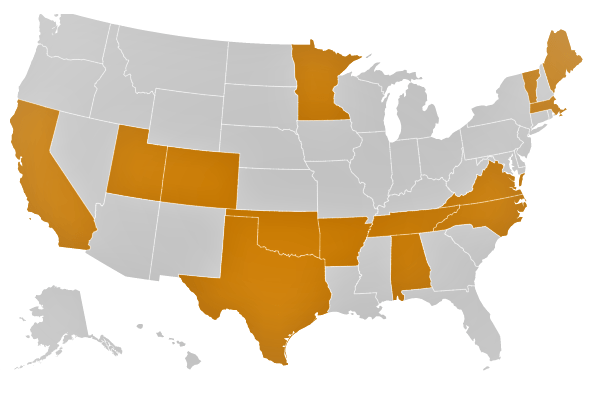
It’s like the Wrestlemania of the primary season for Republicans and Democrats. Since there’s nothing going on with the former party, the latter will be granted the full glare of the spotlight when 14 states (and the American Samoa caucuses) go up for grabs.

What are these states?

There’s Alabama, Arkansas, California, Colorado, Maine, Massachusetts, Minnesota, North Carolina, Oklahoma, Tennessee, Texas, Utah, Vermont, and Virginia.

How many delegates are up for grabs?

A thousand, three hundred and thirty four! To put this in context, 100 have been granted so far (with 54 more shortly as South Carolina is decided) out of a total 3,979. So while it’s not a complete deal breaker, it’s a very strong indicator of where the stars align.

What state has the most?

California with 415.

So should the candidates not put more effort into the likes of California than say, Maine?

Now, now. Maine’s 24 delegates may seem meager in comparison but the little things matter and come the general election, you’ll want to make sure you’ve covered more than just the east and west coast. Hillary learned this the hard way. After all, the electoral college is still a thing.

What is the electoral college?

Ughh… we’ll get to that at another time.

So why is so much emphasis placed on Iowa?

As aforementioned, the media revel in a good post-results analysis and while this may not account for what happens Super Tuesday, it’s important to see who has momentum. Iowa, as the first state, is something of a springboard. When Pete Buttigieg prematurely announced his victory (quite unfairly and somewhat inaccurately), he got the spotlight to shine just a little brighter on him. Sleepy Joe, on the otherhand, with his lack of success, quickly got painted as a candidate in decline.

Who’s leading right now?

Without South Carolina’s results accounted for, Bernie Sanders is leading at the moment with 45 delegates; Mayor Pete’s in 2nd place with 25; Sleepy Joe with 15, Elizabeth Warren with 8, and Amy Klobuchar with 7.

Who’s going to win Super Tuesday?

With a diverse range of states, nobody exactly wins, although a victor will be painted as such. It’s a little hard to call. Bernie Sanders has recently been topping polls nationwide so my money would be on him. This could be a turning point for the trailing Joe Biden however, who’s asserted he has a better chance of winning over Trump supporters and more moderate democrats. Mayor Pete too, is angling this territory whilst Elizabeth Warren’s settled into the gap between Bernie and them. In the end though, it’ll probably be a mix with Pete and Biden (and possibly Warren) hanging on through to the end of March.

What about Bloomberg?

His debate performances thus far have been so terrible that his camp could even do with getting help from Jeb! 2016 (don’t forget the exclamation mark). He has a tonne of money though, so you can’t exactly rule him out.

When exactly will we know who the Democratic nominee is?

The primary season ends in early June, although we should have a good idea by the end of April. Then, of course, there’s the shadowy league of super-delegates to deal with.

What are super-delegates?

Nobody quite knows. It is said they were born from an occult-like, yet beige, experiment in the woods when leading Democratic establishment figures realized they could lose the run of things after several disappointing election results. Actually, we wrote an article back in 2016 about them if you’re interested but what you need to know is that at 775 members (this year), they make up 1/5 of the total delegates and vote after the primary season is over. They’re criticized largely because they can potentially muck up things and could undermine the nomination of, oh let’s say, Bernie Sanders, should he prove problematic to the party’s core members.

When is Super Tuesday?

This Tuesday. We already mentioned this.

Ah.

Indeed. Any other questions?

Yes, why is this site called the Washington Walrus? 

Washington- cause we deal primarily with American politics. Walrus- to suggest a degree of majesty.

I don’t know if they’re all that majestic-

We said a degree of- that concludes this article!


Can Bernie Do It?

Can Bernie Do It?

We are a week out from the Iowa caucus now and my hopeful 2015 self should be starting to re-emerge in full blossom. Bernie Sanders is leading. Not only there. But in New Hampshire. Momentum is growing. The attacks are escalating on him, yes, but they don’t seem to be having the desired effect. And yet, I’m filled with trepidation when anyone speaks the warm and effervescent words “President Sanders”. I should stop them. I raise a finger as if to offer counsel but I just cant. Hardship must be learned in the battle fields.

I speak metaphorically, of course, with a dash of drama thrown in. After all, the 2016 election wasn’t that long ago. I still remember it well. I remember thinking: Holy cheese and crackers, he could really do it. If social media’s anything to go by, nobody’s voting for Hillary. Like that Kevin Spacey character from House of Cards, she can remain a part of the old Washington tapestry. Kevin Spacey sure does seem like a nice guy in interviews though…

What a fool I was. Not only did it turn out that my liberally-infested social media actually accounted for f- all in the grand scheme of things but apparently Kevin Spacey was also somewhat demanding on film sets. Ah, to have that cocky gleam brought back to my eyes; that penchant for hope that made 2008 a magical year for so many. But alas, it is not 2008. It’s not 2016. It’s 2020. We’ve seen the election of Donald Trump. We’ve seen Brexit come to pass. We’ve seen Bolsanaro turn a blind eye to the Amazon fires in Brazil. We’ve seen similar fires ravage the landscape of Australia and be ignored by political leadership. We’ve seen both Game of Thrones and Star Wars butchered to death. We should probably just give up and hope Sleepy Joe doesn’t make a faux pas in the debate against Donald Trump.

It would be easier that way but even though I’m skeptical of what I read on social media these days, I am hopeful to a reasonable degree. Why? Because somethings have changed for the better since 2016. Hillary may have got the nomination back then but the momentum of the party came from the rallies of Bernie Sanders. Three years later, we were given a wide and much more liberal-leaning Democratic field than we could have imagined, debating the best ways to tackle the climate change crisis without a major candidate’s proposal falling below the Greenpeace B grade. The year before, the Democrats also took the House back with cultural change highlighted in the election of representatives like Alexandria Ocasio-Cortez and Ilhan Omar.

Despite becoming a household name, Sanders has had, in some respects, a tougher climb this time around however. Whilst a breath of fresh air in 2015/16, by the time candidates were declaring early last year, he was one of several leftist options. Warren was leading him for the most part. Even, Kamala Harris managed a strong ascent for awhile. Joe Biden, of course, became the presumptive nominee even before he had announced. Plus, the rise of woke culture meant he had to deal with the impossible contention of being “another old white man”; a deal breaker for some people we can’t find a politically correct word for. He also had to account for some volunteers of his sexually harrassing others in 2016, as if he personally shepharded every single person involved in his campaign. The criticism was feeble and his moral consistency never wavered; that’s why he managed to succeed.

In recent weeks, the attacks have gotten more desperate. First, Elizabeth Warren affirmed that in a private meeting in December 2018, Sanders had told her he didn’t believe a woman could be president. She quickly tried to downplay the importance of this, which seemed unfair considering anyone alive would know how big a splash this would make. Sanders outright dismissed the validity of this statement anyways, leaving speculation to hang in the air although to many, Warren’s allegations came across as calculated given her falling poll numbers. Then Hillary Clinton, most calculated of all politicians, said that “nobody likes” Sanders, criticizing the culture around “Bernie Bros” and calling him a “career politician”. This may have boosted his numbers, if anything because a) people saw this as a child-like insult, b) people countered that he had done in excess of 30 rallies for her in 2016 (far more than she did for Obama in 2008), and c) not that many people like her (even Trump probably thought to enter the backlash for a minute before returning to his Mc Cheese Burger). And then, Bernie had the audacity to share a video of popular podcaster Joe Rogan saying he’d “probably” vote for Sanders, which many pointed out, was wrong because Joe Rogan has said made some controversial comments about trans people in the past. Bernie’s team responded by saying that just because he valued the endorsement does not mean he agrees with everything Joe Rogan says. I mean, it was hardly an endorsement from the KKK.

So, the attacks don’t seem to be landing. The latest polls show Bernie leading Buttigieg and Biden in Iowa. There is a good chance he could win the primaries and go onto becoming the Democratic nominee. His battle with Trump will be a whole other challenge thereafter. I don’t believe there are any proper controversies that are worth taking this man down. Unfortunately, I’m not part of the crowd with the loudest voices. Taking into account those cases above, anything seems to be on the cards for a stir. Bernie could lose half of his online California following by dismissing a vegan sandwich as “gross”. Maybe he’ll stand on a grasshopper? Who knows? For now, most people seem to be wising up to the vapid nature of woke criticism but just remember any previous election in US history; things get dirty and viscous. Is it worth discarding an A candidate if we discover a little tip-ex over the minus part that follows? Is it worth jeopardizing the future of the party over impossible standards and loose lips that okay, sometimes say the wrong words (or the right words the wrong way)?

The idea of “President Sanders” is not an impossibility. It is not going to be a walk in the park either. Just as the Republicans have united to win elections when unity was called for, so should the Democrats follow suit. And I mean this too for if Warren or Biden or Buttigieg (somehow) gets the nomination. The hope that defined Obama’s rise twelve years ago was a noble but surface concept; the jaded US of today needs something a little more tangible.

The 2010s: A Premature Evaluation

The 2010s: A Premature Evaluation

Hindsight Is Key

In 1992, Francis Fukuyama’s The End of History… suggested that with the end of the Cold War, humanity had reached an end/block point to the ideological evolution of the 20th century resulting in a broad acceptance of Western liberal democratic values. It was a stupendously general claim to make and one that would be criticised as new problems rose to take the place of the old. But if you take a step back, you’ll see how it is sometimes crucial for our understanding of history to get a broad overview before splitting stones because back then the US had very much started a new chapter of its story.

Hindsight is key for any proper historical evaluation. This article will simply not be able to capture the essence, key themes and ideas of the last decade; at least, not in a lasting way- primarily because, we don’t know what’s going to be important six months from now, let alone in 20 years. New information always becomes available and our core values change with each generation. Obama may be considered left of centre today but for future generations, he could be positively right-wing. Heck, Richard Nixon (the most flabbergasted of Republican presidents) established the Environmental Protection Agency.

Enough dawdling though; this context is important for the purpose of humility but it does not advance the story of the 2010s. What was this decade all about? How did America get from point A to point B? From Hope to Trump.

A New Generation

The millennials came of age this decade. Cast in the shadow of global austerity measures and economic hardship following the Financial Collapse of 2008, theirs (I say theirs, ours really) was a generation fraught with a unique level of anxiety. Many degrees were becoming increasingly less advantageous as job opportunities dried up and the unpaid internship net widened. It’s no wonder why, in this context, a sea of resentment festered; particularly against Boomers who wreaked prosperous opportunities in less tech-automated times whilst ignoring the most pressing issues facing the youth of today. As such, we’ve seen more people living at home for longer, trying for MAs, and adapting to a range of career positions; fluidity and creativity all the more pertinent.

Wall Street

Did the Obama administration fail this generation then by following in Bush’s lead in bailing out the banks? Intentions are certainly important; Obama did save America from the brink of a depression but the seeds of discord were planted in 2009 and the early 2010s. If millennials were to be denied the opportunities of their fathers or grandfathers, they’d at least strive to make their voices heard- which they very much have; for better and worse.

With regards the better, they (and Generation Z) have called for increasingly liberal stances on issues such as student fees, climate change, and health care. Whilst not altogether effective yet, the knocking on the government’s door has been getting louder and louder in recent years. How else would one explain the sensation that is Bernie Sanders; a candidate who probably wouldn’t have prospered this way in the 2000s. In another area, they have been more effective; calling for increased diversity in workplaces, media, and arts. Today’s music, TV, and film scene is a lot less white than it was 20 years ago.

With regards the worse, millennials are often seen (seen, don’t cancel me) as petty and entitled by the older generations (who in turn, have seemingly forgotten their responsibility to rear and guide their children). Is there truth to this? It’s a wild stereotype that’s limited but keeping in mind, the general overview from the intro, I’m inclined to believe that for all the good done with social media justice, there is an equal and lamentable drive for over-reaction. It is far too easy to get a rise out of people on social media or to have their television or film contract reassessed due to some stupid but ultimately unimportant remarks made in the past. On college campuses, speakers are protested for merely holding non-liberal views and as a result, many fear the very idea of free speech is under threat (especially when the term “hate speech” gets added to the mix). Outrage is an industry in and of itself.

Millennials can be said to be tolerant of anything but intolerance. Again, generally. At first glance, this may seem amicable and perfectly reasonable. Look at the strides made by the LGBTQ community this decade; today, people assess sexuality and gender in a far broader context than ten years ago. On the other hand, judgment has become popular and forgiveness is in short supply. This is not meant to advocate some false equivalency of opinion between liberals and conservatives but rather to point out that to effect change among certain groups, it is sometimes wise to speak rather than shout, listen so as to at least be cordial. This is as much a question of generational divide as it is political ideology; a great gulf has split people on subjects ranging from health care to gender neutral bathrooms. I believe we should let decency prevail where political correctness fails because there are numbers to be gained from the other side, especially in 2020.

With all that in mind, I don’t think millennials can be faulted for their intentions. Climate change does need to be addressed and for this reason alone, there is more hope to be found with 20- to 30-somethings than with our elders. The question looming over the 2020s on this issue, among others (like gun control) will be did they manage to tackle the problem effectively as well as righteously.

The Culture Wars (On Steroids)

To explore this generational/ideological gulf further, we must assess why and how everything became so political. What do I mean? What talk show today doesn’t feature a joke about Trump? What books or movies or genres of music do well with one camp or with another? This isn’t exactly a new idea- the culture wars have long been prevalent in American society but nowadays, even a movie like Star Wars: The Last Jedi is read by some as a feminist assault on traditional cinema. The reactions to divisive projects like this are often downright ridiculous but they do have origins tales of their own; for just as diversity promised to enrich America’ cultural experience, there were those who felt the pendulum was moving a little too fast and in places with a little too much force (e.g. female reboots, politically correct re-workings). With the recent reaction to John Legend’s version of “Baby, It’s Cold Outside”, it’s fair to say that “woke culture” (to broaden this horizon) was given a bit of a slap in the face. The condemning of past opinions too (like John Wayne’s on race relations), while right, also seem trivial and petty. Will it be a case that liberals have to learn to pick their battles or will a dignified if self-righteous sense of morality prevail?

John Legend and Kelly Clarkson’s new version of “Baby, It’s Cold Outside” has been criticised as an example of the left pandering to minute sensitivities and PC culture.

Of course, the culture wars don’t matter to most people and outrage (built on Twitter feeds) has never truly reflected the actuality of common opinion. Clickbait journalism and not-even-trying-to-be-objective-anymore news stations have amplified once barely prevalent tensions. Controversy sells and as long as people relinquish their sacred duty for critical thinking (on the left and right), the battleground will continue to get muddier.

It’s also become harder to blend opposing facets of oneself. You vote Blue so you must adhere to every liberal constitution, right? Your favourite movie is Moonlight and you drive a hybrid? Where the divide between Democrats and Republicans has intensified on the actual issues, so too have the values associated with social liberals and conservatives. It may not come across on your social media field but there have been gay republicans and fervently religious but vegan democrats. Contradictions may arise if you take everything literally but people aren’t just what they wear, what they vote, or what they listen to. The idea of groupthink and identity politics may be useful for our understanding of certain privileges and economic disadvantages but it is fundamentally important to remember the individuals (sometimes) trapped within.

From Hope to Trump

So far, we have largely explored the emerging tide of liberal values among millennials as well as their shortcomings. While their voices may be heard across social media and campuses however, the real power now lies with a bizarre authoritarian right wing. Is this a reaction to political correctness? A reaction to an America older white people don’t recognise? To the failure and stalling of democracy? Obama? It’s hard to pin it down to one reason but most people would agree it is indeed a reaction.

Let’s go back to 2010. The economy is poor and health care legislation has been passed. The Republicans have amped up their objection to an 11. Will they undo Obama’s key piece of legislation? No. But they will use it as bait to take back both the House and Senate later that year and for the next six, make Obama’s presidency as much of a struggle as possible. Every time, a shooting occurs, they will keep focused and ensure protection of the NRA… I mean, the 2nd Amendment. Every time, a liberal piece of legislation comes forward from Obama, they will block it because they understand it to be good politics; the attack strategies of the last twenty years have worked, so why not? Thus, Obama is confined to foreign policy measures and acting where he can. To many, he appears weak.

Obama’s team is not willing to give up that easily however. There are cards to play and victories do emerge, even if they take time. One such victory was the assassination of Bin Laden in 2011, which undoubtedly helped push the re-election campaign along nicely. Beating Romney the following year also cemented his popularity, meaning he could argue his case to the public more frequently. The Iran Nuclear Deal and Gay Marriage followed in 2015 and all things considered, Obama had done a pretty good job with what he was given. So why was there such a fundamental shift in 2016?

For one, people underestimated just how important the appeal of Obama, himself, was. Hillarys politics may not have been miles off his but she simply couldn’t inspire the loyalty he did; he was one of the greatest orators of all time. As well as that however, Obama was unable to translate his messages across as those of the Democratic establishment. After all, they lost handily in 2014, even before Trump entered the picture. Perhaps because, for all their gesticulation, they couldn’t advertise themselves half as well as the GOP. Confidence it seems can be as toxic as it is appealing. That’s where Trump comes in.

Trump won, not because of the substance of his arguments but because of the way he projected them and himself. The Republican field toppled in the debates of late 2015 and all the while, throughout the primaries, we fooled ourselves into thinking this was some kind of joke. Brexit should’ve rang alarm bells. Trump getting the nomination should have too. But like an age-old tragedy, we followed the path blindly and suffered as a result.

If Trump wasn’t a traditional conservative, it didn’t matter at all. As stated earlier, Nixon established the EPA; so clearly this party’s open to whatever. And just like that, they all relinquished honesty and their duty for the sake of power (… Paul Ryan). The Democrats, on the other hand, may not have exactly appeased their camp but they did little to persuade voters, who could be turned, why theirs was a better one to join. Many liberals simply took to labelling Trump supporters stupid, racist, misogynistic, homophobic, and so on. This continues to be a mistake, in my view, and a crucial one differentiating many working class people struggling with every day economic opportunities from the elitist self-righteous liberals who know nothing of them.

Trump’s impeachment may get rid of the man but it won’t get rid of the problem because he’s as much a symptom of the ills dominating the bi-polarity of politics this decade as obtuse NRA support or further tax breaks for the 1% are. In a strange way, it’s odd that it’s taken so long for a clown to ascend to the throne considering the acrobatics and pantomime politicians perform but if anything should be clear to the Democrats now, it is that their battle will not end in 2020. Complacency has always been their problem.

A New Left

There is a spark of hope to be found in the Democratic Party however as we end the 2010s. For just as the right has moved beyond any nuance of centrism, the left has recognised its need to stake its own ground too. The campaign of Bernie in 2016 mobilised a movement the corporate Democrats simply didn’t understand; one that has already flourished with the election of candidates like Alexandria Occasion Cortes last year and the adoption of more liberal stances in the election field this year. The party is undergoing a period of transformation, having essentially spent the last 30 years meeting their adversaries in a compromised middle. Whether this will prove wise remains to be seen. Two schools of thought are currently battling it out to see who can take back those Trump voters; the more centrist likes of Joe Biden and the others like Bernie/Warren. Again, we see the political and the cultural dominoes of America falling in tandem.

As I’ve often stated in pieces on this site, I believe the issues should remain central to Bernie’s and other’s campaigns, not the bait Republicans masquerade as issues (e.g. patriotism) nor the scandals that get blown out of proportion (e.g. Hillary’s emails). So far, they seem to be on track but as the other elections of the 2010s have shown, the Republicans aren’t bad at winning.

In Summation

How strange the Clinton-Blair years now seem to us in a world turned upside down. Forests are burning, debts are rising, automation threatens millions of jobs, racism appears more openly acceptable, and James Corden has a chat show. The 2010s have been a scary time and they’ve only gotten more so; the fresh fruit of the Obama years now rotten to its core. Were we misguided by hope as we may be now? Possibly. I think, more likely however, voter apathy and perennial compromise by liberals beset on preaching without acting led to desperation.

In times of economic upheaval and vulnerability, radical ideologies become all the more appealing. That is not to say we will face a direct parallel with the 1930s and devolve into a fight between fascism, democracy, and communism but this sharp split is somewhat reminiscent. It will play out dramatically in next year’s election, which will be about much more than electing a new president; it’ll be about ratifying the course American culture will head in under the auspices of ideological, generational, and human values (or as Joe Biden put it, the “soul of America”).

The 2010s are yet foggy and there was a great deal more I could have explored (e.g. foreign policy, keyboard warriors, police brutality, #metoo, etc.) but a feint trajectory permeates this hew nonetheless; one linking our apathy and disinterest to upheaval and renewed activism. The people of today speak of politics far more than they did ten years ago. This is both a good and bad thing.

The Democrats and Climate Change

The Democrats and Climate Change

The concern surrounding the climate change crisis seems to finally be reaching its target audience, the world. This is in large part thanks to Swedish activist Greta Thunberg and her powerful campaigns as well as a growing consensus on the part of liberals that bold action is needed ASAP. So which Democratic candidate has the most to offer future generations in this debate and which plan should we be standing by? It may be a matter of simply adding the numbers against scientific projections but unfortunately in the world of Washington, political capital is just as important.

Bernie Sanders, the wild haired independent from Vermont, has naturally put up the largest number in his addresses to tackling this issue. His plan would involve spending $16 trillion over the course of 15 years, aiming for zero emissions from transport and power generation by 2030, while supporting the Green New Deal proposed earlier this year. Elizabeth Warren is rated highly by GreenPeace too; she too desires 100% clean energy and has tied her approach into a more general economic restructuring. Some candidates like Andrew Yang and Beto O’ Rourke have also discerned where funds should be appropriated for coastal inhabitants being relocated and measures being implemented like sea walls, acknowledging that the crisis is already at hand. Indeed, most of them agree that clean energy, disaster relief funds, and taxation will be necessary to some degree or another; where they differ is in funds (Bernie’s plan costing the most, Joe Biden’s $1.7 trillion among the least) and attainable goals by time (Bernie’s being the most ambitious with the likes of Julian Castro’s or O’ Rourke’s 2045/2050 in contrast.

They’re all more or less admirable approaches and where specifics arise, like Biden’s plan for half a million renewable power stations, there is some room for hope. But not too much. Yes, there has been a 17% growth since 2013 in Americans seeing climate change as a major threat and yes, there is a rise in renewable energy in parts (e.g. in wind turbines in Texas). Unfortunately, there’s also been an increase in energy consumption, with 2018 seeing a significant spike as a result of post-recession spending (with the last peak year being 2007). As of last year, petroleum and natural gas still dominate this consumption, with renewable sources adding up to a mere 11% (Energy Information Administration). Plus, although 3/4 Americans now believe in climate change (a still embarrassing figure), only 56% Republicans surveyed in August (by AP VoteCast) agreed, with even less (41%) believing human activity was a factor in this.

The odds are not great, especially with the way the Senate is tilted currently and time is running out for the nation that produces 15% of the world’s emissions. To effectively tackle the crisis, a World War 2 level of mobilization will be needed. Perhaps in an economic model of some kind then, we can place our best faith. After all, wind and solar and hydro-electric energy make sense, whether you believe the science or not. Coal is not making a comeback, despite what Trump may have suggested and fracking is coming under an increasing amount of scrutiny. Over half the candidates are for a ban in that area (Castro and Klobuchar support limiting these resources).

The next president, God willing, will face America’s and the world’s greatest challenge. For all the fear-mongering rhetoric the right and idiots would associate with such a statement and what Greta Thunberg has said, the reality is alarming. So should the candidates propose these measures with an air of restraint, lest they alienate voters, or put it out on the line, with the severity it deserves? I hope it will be the latter. After all, the Democrats finally started to impeach Trump, they won the House handily in 2018, and they’ve brought ideas like Sanders and Warren’s into the mainstream (a far cry from five years ago). Hillary tried to walk the line, the same way so many Democrats have in recent decades, positing a centrist alternative to issues the Republicans had the mic on. This time, the Democrats need to be strong and unapologetic because for all the urgency of their other priorities, e.g. health care, climate change is the only one with a non-negotiable time frame.

2020 Looms Already… Tips For the Democrats

2020 Looms Already… Tips For the Democrats

Alas, the 2020 election’s already rearing its ugly head even though there’s still 19 months till it actually happens. With candidates like Kamala Harris and Elizabeth Warren emerging and with the stakes higher than ever, I thought this would be a good opportunity to provide some necessary nuggets of advice because… well, let’s face it- the Democrats kind of… suck. That is, not to say, that their candidates are bad or that their ideas lack gravitas or sense; they just don’t know how to sell themselves or stay the course. So, please take heed because nothing’s guaranteed.

  1. Don’t turn on one another: Bernie Sanders isn’t the enemy, nor is any other candidate who takes the steam away from the party’s star darling. In 1980, the Democrats’ chances were greatly skewered by Senator Ted Kennedy’s challenge against incumbent Jimmy Carter. In 2016, Hillary and Bernie supporters clawed and gnawed at each other to the point that many of Bernie’s ranks became Trump voters while many of Hillary’s bemoaned the sheer gall of a challenge .
  2. Stand by your liberal values: The latest stream of Democrats in the House suggests the Democratic party is moving to the left. Agreeing on a final platform in the summer of 2020 will undoubtedly be a messy affair but at this juncture, there’s no sense in compromising to meet the Republican base’s standards. Trump’s damaging the party in spectacular ways and if the Democrats present a centrist vision, they may lose the value of contrast.
  3. At the same time, don’t be the wrong kind of liberal: The issues are what matters, not the identity politics gripping today’s culture. Yes, they shouldn’t compromise on their values but there’s no need to alienate moderates or even potential conservative turn-abouts with condescending notions of political correctness. Don’t abide racism, sexism, or any other form of prejudice. Yes, these things matter. With that said, sometimes a joke is a joke. Don’t be the kind of candidate who polices language and how “woke” people are with the thin-moustachiod zeal of the PC Principal.pc principal
  4. Attempt a 50-state strategy: Yes, we all know the electoral college system’s stupid but it’s not likely to go away anytime soon, is it? So, do the right thing and engage as many Americans as possible, even if it means a trip to a blood red state. A personal touch really makes a difference. Trump had a horrible platform in 2016 but he didn’t just bring it to Iowa.583c8f6bba6eb67d058b66d9-1136-568
  5. Keep an eye on Social Media: With or without Russian hackers, people flick by a large number of sensationalist headlines every day on Facebook, YouTube, and Twitter. The more and more you see a story or a theme repeated, the more likely you are to believe it or at least, give it some pause for thought. In today’s culture, it’s become very difficult to separate the truth from the bullshit, so if the Republicans are going to play dirty, the Democrats either a) need to as well or b) find an effective way to convey just how wrong these articles/the Republicans’ assertions are. As I write this, I understand that this is of course, a lot easier said than done.
  6. Engage your opponents: This is to further point 3 above; be prepared and willing to engage with those who don’t hold your opinion on say, abortion, or gun control. Even if you strongly disagree with someone, you can still have a conversation with them. You might feel their’s is perhaps a dangerous opinion and that they should not be given a platform (as has happened on university campuses), considering the scores of others who have never had their voice heard. I grant that that is a fair and even practical approach at first glance. When you try to impede someone’s free speech however, you often just strengthen their resolve and help marshal others to their cause. You even appear weak and afraid that perhaps their bluster pertains more nuance and scope than you first imagined. The Republicans, I believe, are fundamentally wrong on a number of issues but that does not make them villains who we must banish to the darkness.
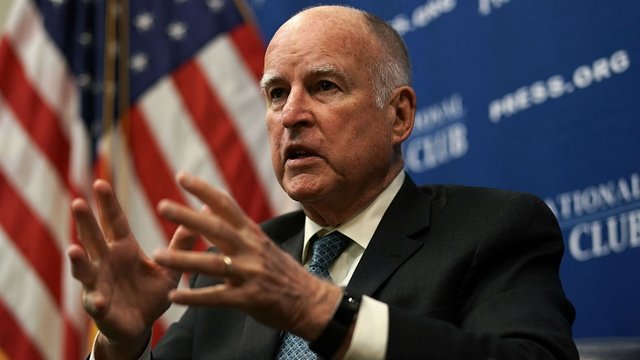
  7. Don’t make age an issue: Chances are rife that a lot of these candidates are going to be in their 60s and 70s. They could easily just keel over and die at any moment, right? Do they really represent the youth? Sure, not every issue affects every age group equally and yes, people die more so later on in age but a) these candidates do preach, by and large, to concerns affecting most Americans (income inequality, climate change, etc.) and b) some of the best Democratic senators and representatives have served well on in life (take Jerry Brown’s work as Governor of California for example or two of the most popular prospective candidates, Sanders and Biden).

    brownjerry_041718
    Jerry Brown, old as time, but a sound Governor (left office earlier this month).
  8. Don’t be passive, inspire: Above, I wrote about how sensationalist articles can cloud people’s better judgment on Social Media. Sometimes, sensationalism is needed to convey a point effectively though. Whoever emerges as the Democratic nominee will need  to take Trump to task with strong, vitriolic language. There is just cause because this is a ridiculous man and a lame-duck, politician type will not be successful in his arena. Why not even take a stab at being a great orator? One who can inspire the way Obama or JFK did?
  9. And lastly, be yourself: There’s probably a good point to be made here, concerning Hillary’s robotic approach but I’m just going to take this opportunity to wish all the candidates good luck. You may not run for president again, after all. So reach for the stars, show ’em what you got, and all that!

Undoubtedly, there’s a lot more these candidates will need to be mindful of but as I’ve already said, it’s a long way away yet. Anything at this point is mere speculation. What we do know for sure if that Elizabeth Warren is seeking to run, Kamala Harris is running, and a number of others are considering it. Like in 1976, it’s a fairly open field and anyone’s guesses are as good (if not better) than mine. I expect we will have at least ten noteworthy candidates by June (perhaps Beto O’ Rourke and Cory Booker) and at least five options. We mustn’t, of course, make the mistake of 2016 and assume anything’s for sure however. Biden’s not 100% definite. Nor is Sanders. Or anyone else. And there’s still a lot of work to be done by the House to keep Trump at bay.

Democratic Voter Mentality & The Midterms

Democratic Voter Mentality & The Midterms

On Tuesday, American voters have the chance to re-frame much of their governmental structure and the issues at play over the next two years. Not only are all House seats and 1/3 Senate seats up for grabs, so are a number of Governorships and Attorney General positions. Historically, voter turnout for midterms have been lower than years when the presidency is up. This year however, early voting seems to indicate a promising shift for the otherwise complacent Democratic party, who’ve seen devastating losses since 2010. Is this purely reactionary to the Trump agenda or have liberals finally learned what it takes to set the tone for a nation so entrenched in right-wing dogma? It’s seemingly both (as you’d imagine) but the issues aren’t all that’s at play.

Let’s take a trip back down memory lane to two years ago when Trump defied the odds and became the 45th US President. Liberals were so beside themselves in trying to explain just what had happened. Was their progressive vision now irrelevant? Had bigotry eclipsed their hopes for further equality and subsumed any focus of their issues? Was all lost? Well, it’s not that simple but they had lost bad. After all, Republicans had taken both houses of Congress as well as the Oval Office. So, as Crooked Hillary’s book asked, what happened?  Here’s a few thoughts, not expressed in that book:

  • The Democrats lost focus on the important issues: Really, most Americans need proper health care, are for sensible gun control, and could do with a decent minimum wage hike. As Bernie Sanders would say though (arms flopping about), these are the issues that are never covered by the mainstream media. But also by some liberals. They take the bait too often and lose themselves in the maelstrom of Trump’s tweets and the latest non-controversies, defined by-
  • Political Correctness. Sigh. We’ve covered this topic, maybe exhaustively, but let’s be clear about this; it’s not that political correctness is in itself bad but it alienates liberals from many potential voters by painting a picture of piety and self-righteousness wildly at odds with most Americans’ mindsets. Most people don’t want to associate themselves with the buzz-killingtons of the world and the liberals SJWs are just that.
  • Identity politics too, for all its value in assessing demographics, should not be religiously standardized to the point that blacks, women’s, gays, and white males get defined by atypical subsets of values. When statements like Hillary’s about Trump’s inaugural address being a “cry from the white nationalist gut” are made, it does very little for reaching out to Trump voters. And liberals should be reaching out. There’s no real reason you have to separate these groups of voters when so many of their concerns are shared in actual issues; job protection, health care, social security, etc.
  • The Democrats have lost vision for their party too. To be fair, it’s gotten more progressive recently but in 2016, there seemed to be two threads being pulled between that side (on behalf of the likes of Sanders and Elizabeth Warren) and the more centrist wave that’s dominated since the 90s. The party needs to consolidate its core principles and its base because for all the terrible ideas the GOP espouse, they do so together. Unlike the Democrats, they’re confident, strong, and on-point.

In many ways, this is a call for the Democratic Party to react to previous losses by moving further to the left, so long as they do so on the issues. It’s no use criticizing and labeling all of Trump’s supporters when in reality, their concerns aren’t so different from liberals’. Trump is a unique phenomenon and his presence is undoubtedly felt in these midterm elections but he’s also best understood as a symptom of a sickness that’s taken hold in American politics; extreme bipartisanship.

As above, I’ve argued that identity politics is limiting to our understanding of how Democrats will vote on Tuesday but that doesn’t mean key issues, primarily affecting womens or blacks won’t play a role. For instance, I think it’s fair to say there’ll be some backlash to the nomination of Brett Kavanaugh. In the era of #metoo as well, there’ll likely be a thirst for progressives and indeed, it is a record year for women running for office (but again, complacency is a great weakness- just ask the last year of women, 1992.) In this respect, individual issues are taking a backseat to greater visions for a new liberal base. If the Democrats lose badly, the party may very well resume its default centrist position but it feels like it’s beginning to get the fire in its gut again.