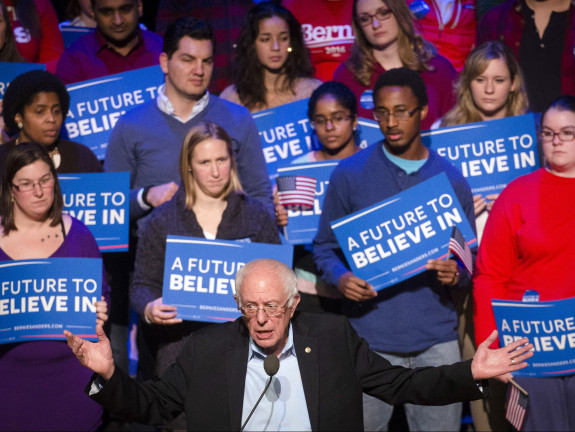
Identity Politics: Resentments & Realities

In the last few years, American politics have become increasingly preoccupied with style over substance, in the avenue of political correctness, the culture wars, and identity politics. The latter issue hasn’t been discussed much yet on this website because hey! who needs to hear from another white male about race and gender issues? This may seem like a cheap joke or key point, depending on your point of view, but it cuts right down to why this has become incontrovertibly linked with political discourse today.

Identity politics (and how it’s stirred in conversation) breeds off a culture of resentment among alienated groups (privileged and disenfranchised, generally) while at the same time remaining all the more relevant, in times when a US president can’t even be bothered to condemn the KKK. Its genesis lies in the history of oppression of minority groups (Blacks, LGBT+, etc.) and the effective silencing of their voices resulting in what many believe to be a necessary template for defense. Its faults, as some would argue, lie in the abuse of where it’s applied and the mentality of “victimhood” it encourages; giving a victim the leverage of identity over an opponent in debate. Naturally, it’s a sensitive topic to discuss because discrimination isn’t some abstract idea for many people but to make some steady progress, let’s examine the criticisms and defense channeling this conversation.

Criticism of Identity Politics

Let’s divide the critics into two types: a) rhetorical and b) practical.

The former have problems with the rhetoric identity politics inspires. They charge that it inspires groupthink, which in turn compromises individual thought on complex issues and furthers the gulf between left and right. In common discourse, we expect minorities to side with liberals all the time, even though many of the matters dividing the Republican and Democratic parties have little to do with identity, e.g. gun control, climate change. We assume race and sexuality plays a major role in a Black or Gay person’s life which may be statistically sound but at times, possibly comes across as condescending and untrue. As the popular political commentator Dave Rubin has noted, “you as an individual are much more than your immutable characteristics.”

Plus, experience does not necessarily establish authority in an argument. We may not be able to fully appreciate another person’s struggles and yes, it may at times appear insensitive to even engage but debates should be run on good ideas, regardless of one’s “immutable characteristics”. This notion blossomed considerably when echoed by Obama in a speech commemorating the 100th anniversary of Mandela’s birth in July (when he said opinions should not be dismissed just because they are white or male).
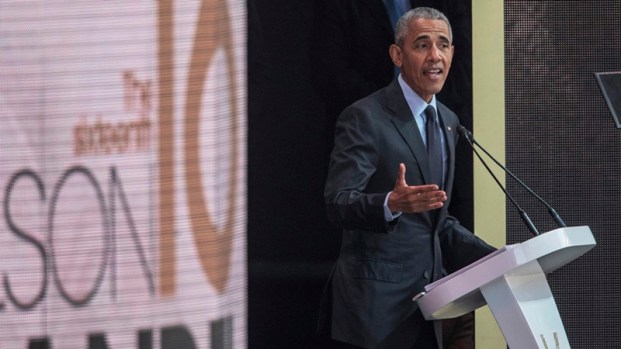
SAFRICA-US-POLITICS-PEOPLE-OBAMA-MANDELA

Practical critics think along these lines too but with goals in mind- i.e. beating Trump in 2020. As Sheri Berman opined in a Guardian piece (“Why Identity Politics Benefits The Right More Than The Left”): “Is our ultimate goal ensuring the compatibility of diversity and democracy? Then promoting the overlapping interests and identification that enable citizens to become more comfortable with differences and thus more tolerant and trusting, is absolutely necessary.” Left and right have been painted as stark opponents in the culture wars. A tough point, some liberals seem unwilling to accept, is that not all Trump’s supporters are racist white males. Okay, there are definitely some racists. And yes, a lot of his support was from white males. Their support did not rest solely on identity politics however. It derived from other places; chiefly, economic misfortune- a shared characteristic for people of all identities in many situations. In short, as Bernie Sanders would hound, the media needs to pay more attention to the issues!

In Defense of Identity Politics

Okay, so that’s all very good but racism, homophobia, and sexism are everyday issues affecting millions of lives. There are oppressive methods in place preventing Blacks from voting (by conservatives gerrymanders and legislators). There is a double standard for women and inequality of opportunities in many job sectors. LGBT groups are routinely subjected to the nastiest treatment and commentary for merely being who they are. So, in many respects, identity politics is something that has been thrust upon these groups rather than something they’ve sought out and just as the right are known to parry off cries of offense with deflections like “oh you’re just being PC”, is it not possible that identity politics helps their cause a little when it comes to such enduring prejudice?

In his article, “In Defense of Identity Politics”, Paul Von Blume writes that American society has been mechanized to the umpteenth degree to reinforce the status quo of white male privilege. When expressions like “just plain American” or “melting pot” are bandied about, he argues that while they may be “well meaning,” they really just brush over the historical “exclusion” of millions of its people. Direct, aggressive racism or prejudice in general does not necessarily tie this altogether. White privilege is maintained out of fear that the promotion of less enfranchised persons may lead to a decline in their quality of life (a concern that pervaded the “turbulence” of the 1960s). Michael Eric Dyson, a professor of Sociology at Georgetown University and Peterson opponent), has noted this much, writing for the New York Times in December 2016 that “the interests of the white working class have often been used by white political elites to stave off challenges to inequality and discrimination by black folk and other minority groups”. (It should be noted however that he’s been criticized for pushing identity politics to the extreme, referring to Jordan Peterson as a “mean mad white man” during a debate on political correctness).

To Conclude

White men like me will never fully appreciate the Black, Women, or Muslim experience, as diversified or as shared as it can be. In many respects, our culture and systemic prejudice has necessitated such labels as identity be used in the mainstream. It catches people’s attention when a meme or hashtag or article goes viral, encapsulating all the frustrations of “mansplaining”, whitewashed history, or privilege. It’s all very understandable but at times, overtly sensitive to the point debate gets shut down; e.g. with the above case between Peterson and Dyson, the former debater was immediately cast under suspicion (or an attempt was made) just because he was a white male arguing against political correctness. At times, this isn’t fair but there will always be exceptions in every case that define how we must study it. For example, a panel of all male commentators discussing abortion would seem ridiculous to most but of all females, rather reasonable. Also, “All Lives Matter”?

It’s a trying discussion which transmogrifies the collective into the personal experience. For all practicalities’ sake though, in light of recent political developments, it has become a “serious nuisance” underlying almost every political debate. In order for the Democrats to make some ground on those stubborn Trump supporters, there needs to be some attempt at reconciling the majority with the minority, whose interests don’t necessarily deviate from one another’s. The 2018 midterms and the 2020 election should return to the boring stuff that makes up most sane countries’ elections; economic opportunity- and that means to help all citizens advance, be it on an individual or group level.

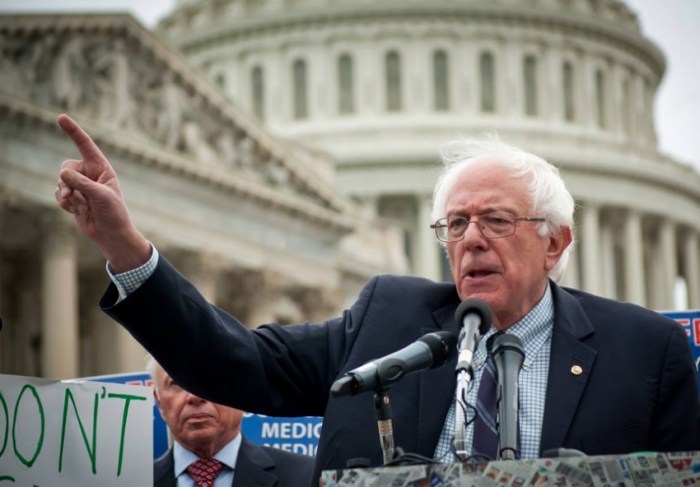
 

The Left’s Chance To Take America

The Left’s Chance To Take America

2016 has been a dark year. We not only lost the man behind “Purple Rain,” but we got more than we could bargain for with the man who believes orange is more than just the new black. Now, with a little more than a week to go before what could be the most decisive day of the decade, we are confronted with what I like to call that last trek of the Fellowship; the part in which Samwise grits his teeth while carrying Frodo up the slopes of Mount Doom. And just as a new age came from the ashes of that fiery climax, so too can we expect a sliver of hope on the horizon, if not a great beacon. But enough Lord of the Rings for now, let’s speak plainly; for if not only the Donald is defeated November 8 but the Republican majority is overthrown in the Senate/House of Representatives, America could begin to herald in a New Deal for the 21st Century- one led by Hillary Rodham but directed by that old favorite maverick, Bernie Sanders.

inperson_bernie4-web__850_592
The Gandalf of US Politics

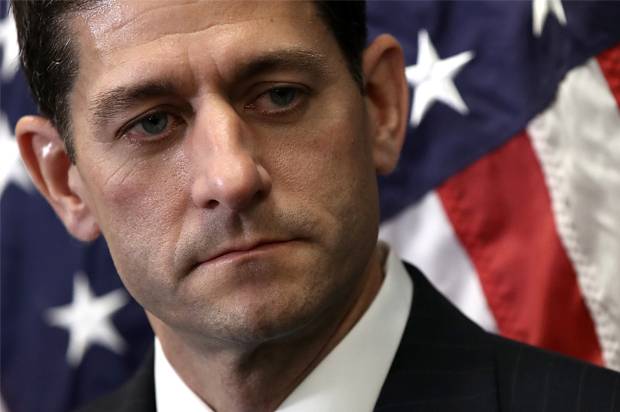
Earlier this year, we wrote a piece on a plausible return to the left for America, in which we explored the possibility that the strength of Bernie’s rhetoric would push the Democratic party far enough to the left, that the next administration would mark the most progressive agenda since the time of Lyndon B. Johnson. Bernie’s eventual defeat was a crushing blow to many, especially among the young, who scattered their way about to Hillary, Jill Stein, and for some incredulous reason, Donald Trump. We figured at the time however that although Bernie had lost the nomination, he had dealt a significant blow to the once centrist stances of Hillary, ensuring that she would be held accountable for the promises she made on the campaign trail. In recent weeks, a lot more focus (though far from enough) has been placed on the Senate though, because of Speaker Paul Ryan’s warning to the GOP base: ‘[if] we lose.., do you know who becomes chair of the Senate Budget Committee?’ Yup!

It must be noted of course that Bernie’s ascension to this highly sought podium is not guaranteed, but it is a strong possibility and thus, a strong opportunity for liberals. The logistics of taking the Senate are not at all daunting either; there are 34 seats up for grab this year (a term in the Senate lasts six years) of which 24 are held by Republicans. (It may interest you to know John McCain, Marco Rubio, and Rand Paul will all be contesting their highly coveted seats). They need to take at least four of those away to bring the Republicans down to 50 seats and another one or two, if they want a majority (accounting for Independents). This miscalculated statement on the Speaker’s part has given rise to the #ThanksPaul emblem now spreading the Sander’s seed once again across the nation. As we all know however, a tweet or Facebook post is nice, but a vote is helpful.

paul_ryan_mtr-620x412
‘What Have I Done…’

Generally speaking, the Republicans have been better at marshaling their cohorts out to vote for mid-term elections and on other less exciting occasions (e.g. for town mayors). The result has been a systematic rightward shift for the country on a national, statewide, and local level, making it particularly difficult for the Democrats to gain any legislative ground, even with a majority. This changing dynamic can be traced back throughout America’s entire history but in 1980, the ball really got rolling with the GOP’s courtship of the Evangelical vote. Reagan’s revolution was not only one against the Soviets and the Carter administration, it was one built on Supply-Side (or ‘Trickle-Down’) economics and a distrust of Big government. The deficit grew but the brainwashing worked- people kept going out to vote Republican. When in 1994, after a particularly heartbreaking mid-term election, the Democratic President Bill Clinton, declared the ‘era’ of such government to be over, an unfortunate belief was ground into the American psyche, that some level of conservatism would always be needed. Obama’s rise then should have dispelled this notion, building on the promise of the Affordable Care Act the so-called audacity of ‘hope.’ He was abandoned in a significant respect however, by those who championed his cause in 2008, but felt deterred and disinterested by the nitty gritty bits of the legislative process- the public. So, three election terms later, will America’s liberals and moderates finally learn the imperative lesson? It’s not enough to solely elect a president, you need to elect his/her network on all levels. A slab of paint may make a wall look nice, but beyond that wall, you’ve still got Mordor.

mordors_duospire
Trump Tower

As it stands, the Senate is split between 54 Republicans, 44 Democrats, and 2 Independents. Polls are currently indicating a strong chance for a Democratic take over, though baffingly Marco Rubio is still leading in Florida, despite losing to Trump, criticizing him, then supporting him. With the House of Representatives then (in which all seats are contested every two years), there are presently 247 Republicans, 186 Democrats, and 3 vacant seats. A Democratic coup here is far less likely, though recent polls suggest they could take an extra 20 seats. President Johnson once said the difference between a Senator and Congressman was the difference between ‘chicken salad and chicken shit.’ It’s a darn good quote but as asserted earlier, every little difference matters. So come November 8, when the world wakes up to a new dawn or a poorly devised Hobbit trilogy, remember that the power to change the United States does not solely belong in one office.

Both As Bad: A False Equivalency

Both As Bad: A False Equivalency

In less than three weeks, the year-and-a-half stench of the 2016 election will begin to fade. With poll numbers increasingly conveying the dominance of the Clinton camp, it seems unlikely that we will see an orange face in the White House come January. But unlikely is just not good enough. Polls can be misleading for a variety of reasons. Voters can be swayed too, depending on their feelings; and whilst we would like to think every eligible voter will bother to get of their beds November 8th, the dismal reality on such occasions has always proven otherwise. Too many people,  disenfranchised with the so-called broken system, often espouse notions of how voting won’t make a difference. There’s something dodgy going on with both Trump and Clinton after all, right? It’s a wash- either’s going to be terrible for the country! It’s easy to say such things but it’s also lazy and irresponsible- because like it or not, Trump and Clinton are not as equally bad and indifference or disgust in the election cycle will not grant you immunity from its consequences.

34805
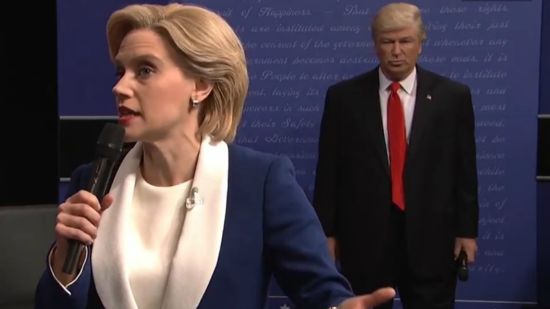
SNL’s interpretation of the 2nd debate

False equivalencies have always speckled their way across political discourse. We believe balance is important because it mitigates bias. That’s why we try to give Republicans and Democrats equal opportunities for speaking when it comes to the issues. On certain occasions however, balance for balance’s sake becomes inconvenient, if not, regressive. For example, in a debate on Global Warming, does an Archbishop really deserve the time of day a qualified scientist receives? Should politicians with ties to the fossil fuel industry really influence environmental progress, where their expertise (if any) lies elsewhere? You might argue that these agents of chaos are only there to reflect the beliefs of a wider population. Does the percentage of climate change deniers then still reflect such a ridiculously humoured viewpoint? Almost every issue has at least two sides to it but they do not always balance on the basis of argument, scientific proof, and popularity. That’s why most schools in enlightened parts of the world teach evolution but not creationism.

With this election, it seems absurd then that false equivalencies are being thrown around so casually. We have Trump, who without fail,has  committed to at least five gaffes every debate without answering a single question coherently, as sentences meander off into the upside-down, perhaps to be rediscovered in the next season of Stranger Things. He has for years navigated his personal and business life with the candour of a silver-back gorilla on cocaine. He has questioned the legitimacy not only of Obama’s presidency but of his citizenship. He has mocked the disabled. He has dimissed sexually aggressive banter as “locker room talk”. He even used the word “bigly.”

Then we have Clinton, who just feels dangerous. Granted, there are plenty of issues to be raised with this woman but in comparison to Trump’s resume, they are minute and rather petty (except for her Iraq vote- that was bad). From the vitriol of her adversaries’ testimonies however, you’d swear she had sold nuclear missiles to North Korea and covered this up with laundered money from several years of work on behalf of the Clinton Global Initiative.  Really, she hasn’t done all that much wrong. She was cleared of Whitewater and Benghazi. The e-mail scandal, whilst irksome and professionally unacceptable, has hardly warranted the level of discussion it’s been given. The truth of the matter is that Clinton’s legacy has been dogged for so long now by conservatives that scandals seem to arise out of thin air. As John Oliver wittily pointed out, before it’s proven that there’s no basis for them (or in fact, that they are just made up), they have already simmered into the subconscious of America’s vague but general distrust of this power-hungry, condescending woman. We know she’s dangerous, we just don’t exactly understand how.

kenbone-4
When you sincerely think this is a tough choice…

With Trump, we know we’d have a disastrous presidency. With Clinton, we suspect we won’t be given the revolution Bernie promised last year. Those are both disappointing outcomes of a desperate election, but they are not equally disappointing. This logic is simple but the Bernie supporters now backing Trump or even the idiot Gary Johnson don’t seem to have grasped it. I am reminded of a quote from the movie Argo in which Bryan Cranston’s CIA operative informs representatives of the Carter administration about the option they have chosen to rescue six hostages from Iran; “there are only bad options. This is the best bad option we have.” So, even if Clinton’s not your choice of spice, isn’t she a whole lot better than putting a piece of human shit onto your chicken?


The Plight of the 3rd Party

The Plight of the 3rd Party

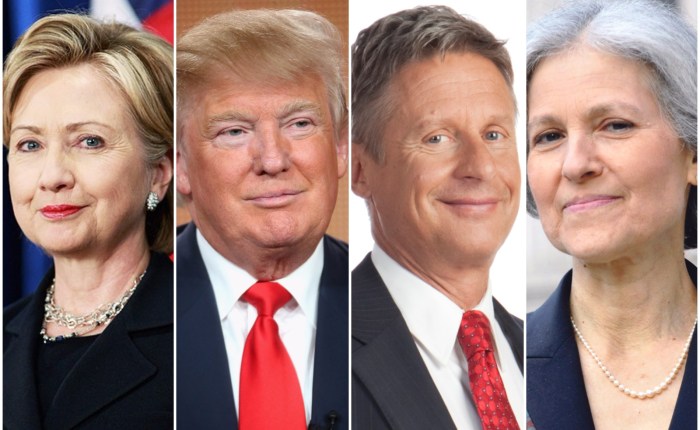
In recent weeks, Green Party candidate Jill Stein and Libertarian, Gary Johnson, have been making the rounds in the media, hoping to draw up the support of the loose stragglers of the Bernie camp, among other disenfranchised souls weary of the Donald and HRC. Chasing that elusive 15% (required to enter the national debates) has so far proved a challenge however, with current polling placing Johnson just under the 10% bracket and Stein at a mere 3%.  Is it that these candidates are lackluster? Do they simply lack the magnitude bestowed upon others by the mainstream media? Or is it that old adage at play that affirms a vote cast for an independent is a vote thrown in the garbage? As always, it’s a bit of everything but history, once again, speaks loudest.

Despite the occasional disruption, America, for the most part of its recent history (20th Century), has championed a two-party system. This has developed as a result of natural inclination and artificial structures placed on its political thresholds. With regards to the former point, these two parties have essentially been afforded the right to prosper, owing to conditional and enterprise funding over the years as well as historical gravitas. The party of FDR, for instance, is an institution in itself and tradition, while valued, is often upheld merely for the sake of its own legacy. With the moral decay of the GOP and its hopeful actual decay in the future, one would think a third-party  could possibly build itself on the crumbling mounds of another, but a three- or four-way battle is rarely as marketable for the media and public. In America, commercial tendencies encroach on all avenues of life.

gop_logo_0
See? Even the RNC had its own ridiculous ad!

In relation to these artificial constructs then, we must remind ourselves of the unfortunate nature of America’s election cycle and government. They do not facilitate a parliamentary-like system, the way ourselves or the UK do. With most of their votes, plurality laws eliminate the point of acknowledging where the minority votes lie- even if that is a very slight minority. Basically, winner-takes-all. This, of course, simplifies the already tedious process of the election cycle but it also obfuscates the diverse range of public opinion. Even with many of the latter Republican primaries for example, this applied so that Donald Trump, though opponent-less later on, would be the unrelenting winner. (Surpassing 50% isn’t even mandatory for this reasoning.) This hardly seems necessary for establishing the preferred candidate, when everything is only officially tallied up at the conventions. Math is not the GOP’s forte however. With single-district representation and plurality at play, the scientific study of Duverger’s law has found that such countries will thus be more likely to develop a two-party system.

Theoretically speaking then, a third-party candidate’s ascension to the White House is not impossible. The climb however is steeper than the one even Bernie had to climb (he was after all, an independent who adopted the Democratic Party to his advantage.) Huge wads of cash won’t do it alone; even with his popular inclusion in the televised debates, Ross Perot wasn’t able to budge a single electoral vote in either the 1992 or 1996 elections. Framing yourself as a genuine alternative may prove appealing to some but as Ralph Nader’s candidacy proved in 2000, without enough steam, you can cause significant damage by taking votes that would have been cast for another candidate. (This humorously led to Bill Maher and Michael Moore begging him not to run in 2004.) In fact, the last actual candidate of a third-party persuasion to make any notable stride was George Wallace in 1968, who took 46/538 electoral votes. And who was the most successful third-party candidate of all time? Well, they fared a great deal better in the 1800s when the two-party system was still in development but the answer is Theodore Roosevelt from 1912, who for obvious reasons, was an exception.

nader-moore-maher
Maher and Moore- liberal mavericks

With Trump and Clinton being the two least popular candidates in decades however, is it not plausible that 2016 could do another flip and present the so-called impossible alternative? Logically speaking, this is a sound theory but as aforementioned, the 15% is still out of reach and the first debate is coming up at the end of this month. After that point, if not already so, most people will have decided if they’re wearing blue or red this November. If a third color is to succeed in breaking this fashion trend (which I do not mean literally, I intend to wear an array of clothes), then it will be because of a strong mass organisation which eschews the notion that a third-party vote is a wasted one. Any other kind of philosophy will continue to hold back the prospect of a third-party president ever existing.


Why Bernie Didn’t Sell Out

Why Bernie Didn’t Sell Out

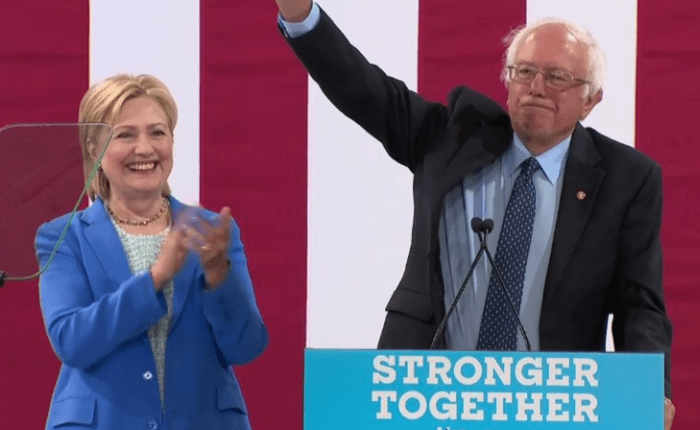
Last week marked the unofficial end of the rivalry between Hillary Rodham Clinton and that ever cantankerous Senator Sanders. In a speech delivered before the people of New Hampshire, who voted in his favour, he addressed the question of his movement’s future and where his loyalty lay. I watched this as it streamed live on Facebook, torn between the body language of the two figures at the podium and the incoming flood of knee-jerk reactions from half-wits and the odd informed. Many complimented this change in tone; it had after all been a long and arduous primary season. Others lamented however Bernie’s decision to stand by the Devil and surrender everything he had ever stood for. And that’s where we stop because (and I’ll put this plainly), Bernie didn’t sell out. Here’s why:

  1. He won on the issues- if you listened to Clinton’s speech, which directly followed Sanders’ endorsement, you will have noticed how clever SNL were with their skit on Clinton becoming more and more Sanders’ like (to the point where Kate McKinnon ended up with a bald cap). At first, I gave her the benefit of the doubt on the assumption that she just isn’t as conservative as the uber-liberals have suggested. When it came to Wall Street however and her bargaining plea to overturn Citizen’s United, it became clear that she was taking note of the issues that prevailed in the debates, brought about because of Sanders’ longstanding rhetoric. She delved into college fees and global warming too, which made for a nice combination, leading me to believe that she has moved far more to the left than even the most hawkish of critics could have guessed.
  2. It’s not just about the Presidency- Sanders’ movement and the rise of the Left cannot solely rely on an office tampered with more than ever. It needs to endure beyond one or two terms into a progressive model by which the future of the Democratic Party can be shaped. Yes, Hillary has, in many senses, won the battle but the future could be Sanders, so long as the issues on which he based his candidacy, continue to resonate. As mentioned above, I think they already have to the point that Hillary can’t afford to ignore them. As well as that however, he can also serve as a highly influential figure outside of the White House. Who, for example, had more of an effect on American culture in the 1960s than Martin Luther King? Has Jimmy Carter not accomplished some of his best work out of office? The presidency is a convenient altar, through which many channels, from foreign aid to educational reform, can be distributed but as Bill Clinton himself has noted, it’s also prey to circumstances beyond a president’s control (e.g. 9/11).
  3. Trump must be defeated- I’ll admit that this is not my favourite argument as I do not believe elections should be contested on the basis of fighting against, rather than for something. It is an important one though and whether it depresses you or not, voting for the lesser of two so-called evils is still worthwhile. Bernie’s candidacy, has gone as far it needs to, in my opinion. With the Democratic National Convention coming up, it has become clear that his issues and supporters will not simply be sidelined but incorporated into the party’s agenda for the coming years. For now, he needs to ensure, if his own visions are to be realised though, that this party does as well as it can come November. Otherwise, the country will head in the exact opposite direction with Trump.
  4. Listen to the speech again- Sanders didn’t have to necessarily endorse Clinton but it was the responsible thing to do; what purpose would their rivalry have served after all? Not enough to sway you? Listen to the speech again then and tell me where exactly he abandons the principles on which he built his campaign? Still not enough? Take a trip through his YouTube interviews and go back to a year ago when he expressed his admiration for Hillary Clinton whilst acknowledging their differences of opinions. Granted, the race heated up and nostrils flared during the primary season but the gulf in rhetoric that existed between their camps, was never as deep as many of Sanders’ less reasonable supporters suggested. He fought a good battle and we can only admire him for what he did but that battle is over now and at some point, you have to concede and look to the positives.

It’s undoubtedly sad to see Bernie leave the race; he shook things up and set the country’s vision towards a better tomorrow, in a manner we just couldn’t have expected over a year ago with the “inevitable” Clinton candidacy. His role however in this race will at least go down in the history books and his role to come will remain that of an inspiring spokesman for a disenfranchised generation.

Superdelegates: Another Obstacle Towards Democracy?

Superdelegates: Another Obstacle Towards Democracy?

If there’s a central theme to the 2016 election, it is outrage against Washington. Whether it’s with the Panama Papers or Campaign Financing, the majority of Americans feel great frustration with an establishment that seems bent on obstructing any meaningful change. The superdelegate system, in this regard, may be seen as just another obstacle in the path of democracy; with its concern rising higher on the agenda as the clash between Sanders and Clinton sparks towards New York. Others however, would argue its significance remains as crucial today as did back in the 1980s when it was conceived for the consolidation of the Democratic Party.

clinton_hands_nh
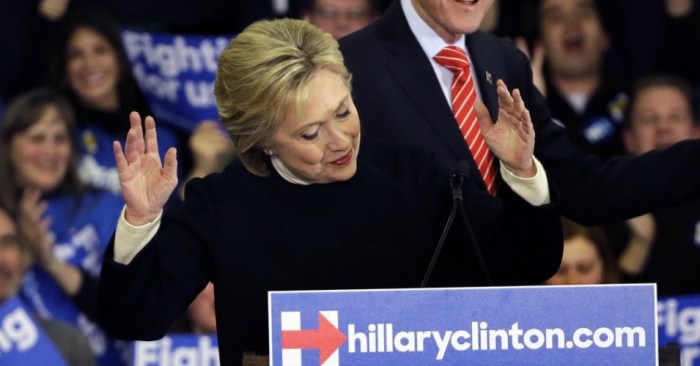
Hillary has the backing of the party’s elites. She even has a former President at her side.

There are 718 superdelegates involved in this year’s DNC. They are essentially unelected delegates, comprised of party leaders, governors, congressmen, and DNC members, who are free to cast their vote of their own volition this July in Philadelphia at the convention. Presently, their pledges therefore don’t count for anything but political pundits and avid supporters are nevertheless paying attention to the 472 pledged to Clinton, 32 to Sanders, and 207 uncommitted. It’s important in that these so-called pledges hold influence over some voters (who may be unwilling to support a ruffian like Sanders) and in that they have been toted up irresponsibly by many as assumed votes already, thus giving the impression that Sanders’ campaign is beyond hope.


The system came about as a result of disappointing election results for the Democrats. As Jim Hunt, the 1982 Chairman of the Democratic Party Commission explained eight years ago in a Washington Post piece, 1972 saw a Democratic Party ‘out of step with mainstream Democratic leaders.’ George McGovern, the nominee that year, lost a devastating defeat to Richard Nixon. Four years later, Carter prevailed but his Presidency and defeat in 1980 proved that it wasn’t even ‘enough just to win;’ clarity and cooperation between all branches of the party was needed. It was a means by which the party’s greater interests could be accounted for with 1984 seeing its first contenders rise to the fore. They exist ‘really to make sure that party leaders and elected officials don’t have to be in a position where they are running against grass roots activists,’ according to today’s Democratic Chairwoman, Debbie Schultz. Today, of course, superdelegates account for 15% of overall votes in the party’s nominating process; a troubling portion to many.

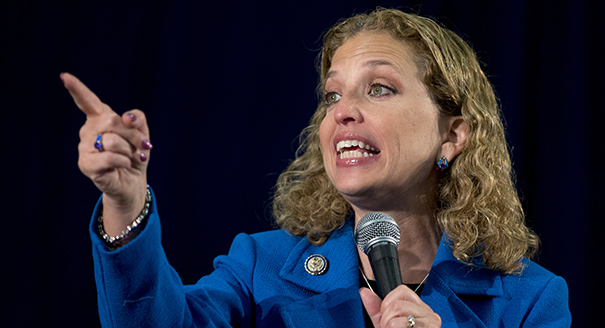
Debbie Wasserman Schultz
Debbie Schultz, Chairwoman DNC

To address its defenders first, it must be acknowledged that in  1980 the Democratic Party was bitterly divided with Carter’s own nomination being called into question by the challenger, Ted Kennedy. To defeat the Republicans, some kind of system was likely needed and this system, whilst democratically questionable, seemed reasonable to many at the time . Indeed their presence could be taken with a grain of salt as the Democratic Party’s rules dictate that these delegates should ‘in all good conscience reflect the sentiments of those who elected them.’ Are they doing that, though?

The Sanders’ campaign is playing a much tougher game today than it was a couple of months ago when the New Hampshire primary resulted in a virtual tie on an account of these premature pledges, despite Sander’s 60% public vote. Since then, reports have circulated that superdelegates are relentlessly being messaged with calls for support on his side. For some superdelegates vowed to Clinton’s side, this is causing great agitation amongst those who believe these delegates aren’t representing the people of their states. As aforementioned though, they are not voted for and their allegiances mainly derive from statehood and past representations; some are merely old stalwarts of the party. Others, like Peggy Schaffer of Maine for example, are less certain on their final decision. Having been a longtime Clinton supporter but witnessed Sanders win her state, she has decided to opt for whichever candidate winds up with the most pledged delegates. And those who have outright ‘offended’ Sanders’ most valiant supporters, like Akilah R. Ensley of the Young Democrats of America, have been bombarded with messages bordering on abuse via Social Media for her support of Clinton.

sanders supporters
Young folk are especially annoyed with the superdelegate system


In many instances, this doesn’t paint a wholly positive picture of the Sanders’ campaign but as many have argued, this system may justify such responses. Sally Kohn of CNN, for example has reiterated the DNC’s account of  the superdelegates’ role as one which exists ‘to preserve the power and influence of the Democratic Party’s elite.’ Naturally in this day and age, online petitions have therefore  begun to gather momentum, with some calling for the removal of superdelegates altogether whilst others simply ask for them to align their vote with the choice of the regular voters. Then, there is Spencer Thayer’s ‘Superdelegate Hit List,’ a sinister sounding but simple website list of superdelegate contact information, which has served to only add fuel to this fire. It will of course remain to be seen whether some of them end up feeling the blame but as it is now,  he will need to muster landslide defeats in the next few contests to secure the 2,383 votes needed for nomination.

The superdelegate system may not be a complete barrier to winning the Presidency but like Citizen’s United, it is hard to argue that it doesn’t make things much more difficult for candidates like Sanders. Many argue that it’s still possible that those pledged to Clinton would change their mind (as they did in 2008) but many more seem to fear, even given success in states like New York and California, the superdelegates would screw Sanders over. The memory of those defeated liberals between 1968 and 1988 remains a sore note for the Democratic Party and Clinton, in the end, may just be the safer bet.

Andrew Carolan