The idea of historical accuracy, when it comes to film, has always struck me as a highly subjective contest of bias and personal preference. After all, how can one ever truly achieve this goal when one accounts for shifting language, cadence, beauty standards, politics, inaccurate retellings, and scarce sourcing? It’s basically impossible. And yet, that is not to say we shouldn’t at least strive for some target, depending on the genre and artistic direction of the project. The question is where we draw compromise in a changing cultural landscape.
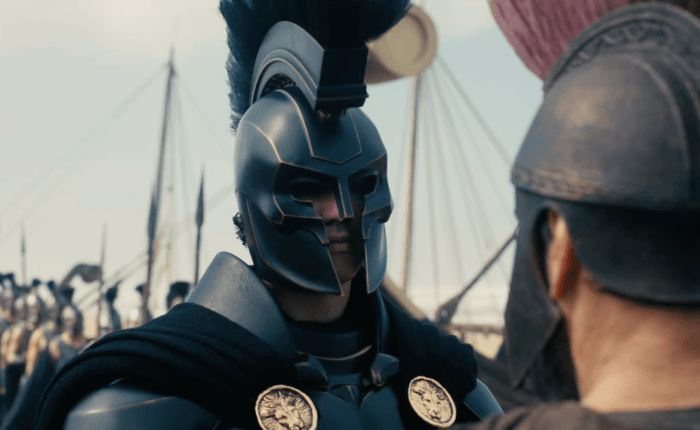
A new trailer for Christopher Nolan’s The Odyssey was released recently, which unsurprisingly set the internet ablaze. How could Tom Holland be saying “dad” in this Bronze Age epic? Would Odysseus really say “let’s go”? What’s with the armour? And the… diversity. Now, part of me would like things to be as true to the period as possible. However, there are two notes worth considering here. Firstly, part of our collective imagination is drawn from the biblical epics of the 1950s, when these movies were more fashionable. They were likely seen as inaccurate then too but have stood the test of time, cementing their legacy atop the minute flaws. Secondly, outside of details like the armour, the time is largely unknowable and inaccessible, if aside from a few general strokes. Suffice to say, they weren’t speaking English. They didn’t have our mannerisms, rhetorics, or way of looking at life, necessarily. They didn’t look like us, even without accounting for races. (Heck, we seem to even look different now from the 1990s). Plus, you know… it’s mythology.
The outrage is quite obviously premised on the debate surrounding DEI in film and television today (i.e. the onslaught of “woke” in our modern culture). I’m not going to delve into a subject that requires a book’s worth of address but in considering the question of compromise, let’s be fair: is it fair to exclude people of colour from one of the rare, prestige Hollywood productions just because you feel it’s not historically accurate? (Especially when it’s one based on mythology that involves a Cyclops.) Perhaps there are subjects and periods where this is best avoided too for other reasons of sensitivity, but given the changing make-up of our population in juxtaposition with the historical great works (frequently revisited, e.g. Shakespeare), historical accuracy can be something of an albatross.
To take “make-up” on another level however, let’s address cosmetic procedures and “iPhone face”. Given they’re such a recent phenomenon, it does seem embarrassing to have someone dolled up with modern aesthetics appear in a 19th-century piece (cough… Enola Holmes 3). Everyone has their own squabbles of course but for me, this is an easy one to avoid. In fact, if anything, people need to look worse if it’s a period piece (cough… Wuthering Heights ’26) or at least as true as possible to the style of that era.
Inevitably, we always seem to fall short despite our efforts. Sometimes, it’s laziness; e.g. with American Hustle, everything feels like a stereotype of 1970s’ styling. Sometimes, it’s a compromise to appeal to a modern audience, most typically with employing modern humour, phrases, and sensibilities (we’re a lot more insincere and referential nowadays). Oftentimes, it’s because the entertainment comes first; after all you have to sell Braveheart to a mass audience to make money. To be historically accurate in telling a story, particularly if it’s biographical, would mean the inconvenience of toning down sensationalism and re-arranging the flow of events. Making a movie is tough work and as they say, you can’t let the truth get in the way of a good story.
When people say they want historical accuracy in their films therefore, I don’t think they entirely mean it. They want a degree of it, for sure, but where that line is drawn simply differentiates by person and by project. It’s crucial to appreciate too that history is always being revised and today’s understanding of, say, the 1920s will differ from the 1960s’. Perhaps, we can only truly capture the times we are living in and to “repeat the past”, as reference to the 2013 adaptation of The Great Gatsby (which says more about its time than the 20s) is a fruitless endeavour.
“You Can’t Repeat The Past”- Historical Accuracy in Film