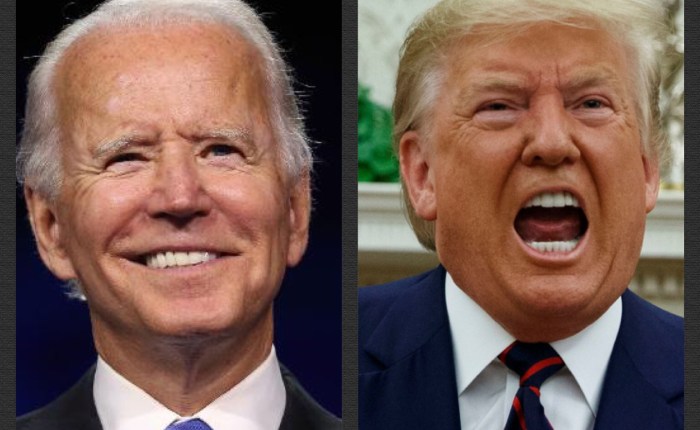
Back in September 2020, myself and a couple of friends discussed whether or not it was worthwhile for Joe Biden to debate Donald Trump. While the former president and clown prince of crime’s theatrics would surely play off the televised medium more fancifully, we felt it was important for Biden to take a stance in establishing normality again. Now, four year later, things have changed. The once-challenger, now incumbent has added much clout to his nickname “Sleepy Joe”, thanks to a number of recent bewildering public appearances, whilst his opponent has racked up an array of criminal charges, already convicted of one. Neither prospect is exactly gleaming in the eyes of the public, with a recent CBS poll showing Trump leading by just 1%. Will Thursday’s debate change much? Given how polarised the country has gotten, probably not. Nevertheless, I thought it worth exploring anyways for the heck of it.
Firstly, we should acknowledge how two rules, crucially, seem to suit Biden more: that there will be no audience and mics will be muted when the other person is speaking. Lame. On the other hand, there will be no pre-written notes either, which is fine for Trump since many of his best zingers seem to have come out of the moment, particularly in 2016. So if he can produce a couple of new greatest hits (in line with “weak-sauce Jeb” and “I should’ve won [the Emmy]”, then Biden may be in trouble. His material simply isn’t as entertaining. Having said that, we didn’t see as much of that as in 2020, when Trump’s maverick status had started to veer from hilarious if dumb to deranged if occasionally hilarious.
Supposing “the issues” come up in this debate, the candidates will likely spar on inflation, immigration, Roe v. Wade, and funding for Ukraine, among other matters. (Undoubtedly, the culture wars will seep into the mix too, since both sides see each other as an existential treat to the country vis a vis the fight for democracy, lawlessness, the far left, and so on.) Biden will make the case for an economic success story, which he can back up with GDP and unemployment figures. Trump will argue inflation has been a disaster for the country and that people’s wages travelled a lot further four years ago (from the book of Reagan). In tandem with this, he may throw his lot in with the Republicans questioning how much money should be put into defending Ukraine. Then, he may move onto the border. It depends how much time is wasted and what questions are asked (maybe that doesn’t even matter).
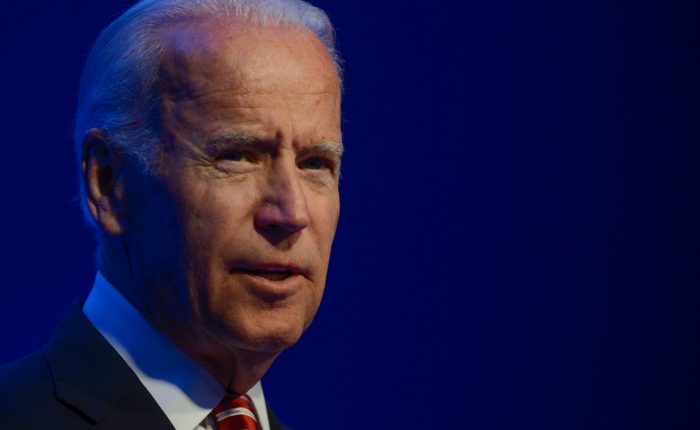
Biden will be on the defensive against a range of broad accusations and probable lies. Since perception becomes reality and the visual spectacle matters as much (if not more) than the content of what they’re saying, combatting them one by one may not prove the most effective strategy. Debates have swung one way or another for a variety of reasons, from JFK wearing makeup in 1960 to George HW Bush checking his watch during a question in 1992. Given the narrative that the president’s not “all there”, he needs to be as sharp as possible and to the point without any stammering or lost gazes.
Should Biden choose to hammer on the point of Trump’s multiple legal troubles, he will of course have to answer for his son, Hunter. Many people will of course come to the lazy false equivalency that both candidates are mixed up in corruption and so “it’s a wash”, but to Biden’s credit, he never tried to intervene or stir the legal course of action with regards Hunter’s mishaps. Perhaps that can be used to his advantage. Perhaps he can point to the kind of accountability he and his family take, which Trump has tried to elude and undermine. Perhaps that will work…. Though perhaps not.
One of the main issues Biden has returned to in his case against Trump is the January 6th Capitol Insurrection. This will likely be a talking point which he can exploit by asking Trump if he will concede the election should he lose again. I’m not sure what Trump’s strategy will be here, other than to deflect to other matters and emphasise the bias of the mainstream media against him. He will have to try wiggle out of it somehow and Biden, in turn, will have to keep the spotlight on this. But again, since everything’s so politicised and since three and a half years have passed since, this also may not matter much.
If I were to advise, without any moral culpability, I’d tell Trump to needle the president on the devastating effects of inflation on the average person and crime in America. For Biden, I would advise trying to keep up his 2020 performance, while pushing Trump on January 6th and how disastrous his first term was, thus resulting in him “losing” (emphasise that word) the last time. At this point, I predict a Biden victory in November (if a lesser one than before). While Trump’s percentage lead is not to be dismissed, he has come down in the last couple of months and come election time, he’ll have been raked through the fire a lot more than he has been the last couple of years, in which he’s been uncharacteristically absent from the spotlight. (Relatively speaking.)
In a recent CBS/YouGov poll, 59% of people questioned described the current economy as “bad”, with nearly 2/3 believing it was stronger during the Trump administration. This stands in sharp contrast to what the experts are saying and what the numbers show: GDP growth was 3.3% last quarter, unemployment down to a record-low of 3.4% (from 6.9% when Biden took office), consumer spending is up, inflation is down, etc. The fact of the matter is, despite these impressive indicators, the “average Joe” just isn’t feeling the good times or benefits. This can likely be attributed to years of price increases prior to recent change, the uncertainty of the Covid years, and staggering interest rates. In tandem with the general politicised air of today, people feel vulnerable to what’s been described as the “vibecession”, an addendum to the “perception becomes reality” thesis.
Needless to say, this is a major problem for the Biden camp as the election approaches. As with our last piece on Biden’s presentation of his age, it’s not necessarily effective to just state that everything is fine or “the economy is strong”. The lapse in credibility comes from the day-to-day reality of gas and grocery prices; the latter of which have remained high despite the slow-down of inflation in the past year. Indeed, the gravest mistake the Biden camp has made in this respect has been to emphasise this improvement, while blatantly ignoring how desperate the rate of inflation was in 2022 (8%). Either side of that (4.7% in 2021 and 4.1% in 2023) aren’t exactly great either, when you compare with the 2010s’ figures (e.g. 1.8% in 2019). So while the economy is on the right path, people are still feeling that 11% increase in grocery prices (2021-22), which normally would have been a 2% annual increase.
As elections are largely media driven, we must remind ourselves that fear is unfortunately a big selling point too. Therein, the anxiety surrounding what may come seems to be more pressing than ever. As the invasion of Ukraine sent energy prices skyrocketing (albeit far more in Europe), people have become wary of international affairs having knock-on effects. The beginning of last year was marked by reports of massive layoffs in the tech industry. AI meanwhile, hovers as a merciless shadow over the proceedings of so many more. The housing market, of course, remains a mess as people resist selling, lest they lose optimal interest rates. And some economists have speculated that recent consumer spending (or splurging) could create vulnerability in the market going forward. It may be a glass-half-empty approach to looking at things, but the notion of a “vibecession” (while cringeworthy as a term) is not a merit-less one.
Again, it takes time for economic improvement to translate into reality. Back in 1992, George HW Bush’s electoral hopes were partially dashed by an 8-month recession (which ended in March 1991). The sluggish recovery cast doubts on his ability to govern domestically, leading to the popular slogan employed by the Clinton camp: “it’s the economy, stupid”. A compromise on his 1988 “no new taxes” pledge had actually helped set the stage for the growth of the 1990s but alas, despite recovery by the election, Bush’s image never faired as successfully.
Will Biden’s? There has been a longer stretch of economic prosperity than in 1992 (unfortunately mired by high inflation rates) but should things keel out and continue as they are, I think there’s cause for optimism in his camp. There’s still eight months to go and the creation of new jobs and businesses are likely to bolster his image. But it’ll take some strategic selling and frankness. As with the matter of age, perhaps Biden needs to acknowledge the perception out there; how devastating inflation’s been, while promising in turn to challenge unjust profits on the parts of certain corporations. He took a step in this direction during a Super-Bowl break, by addressing the scandal that is “shrinkflation” (where product sizes shrink but prices remain high; this is whole other article though so I won’t delve deeper for now.) He needs to continue fighting for an economy that works for low- and middle-income families, via cost of living prices, as well as the bigger picture trends of GDP and employment. Again, it’s the perception that becomes reality.
History is always being rewritten. The heroes of yesterday become the villains of today. We’ve seen this with the toppling of statues recently and the scathing rebukes of once-beloved or admired figures such as Thomas Jefferson and George Washington, After all, our values change and once ignored facts (inconveniences), such as Churchill’s white supremacy , come into greater light with new appreciation (or lack thereof). This revisionism is natural and no historical evaluation is without fault.
But something’s changed as of late. Our fervent grasps for social justice have left us empty-handed too often when it comes to a nuanced appreciation of certain historical figures. We fail to see these figures as a whole because one nibbling, doubtful, pernicious defect often overrides all common sense. In this case, I’m referring to the scandals that detract from the legacy of William Jefferson Clinton, the 42nd president of the United States (1993-2001).
Speculation and Scandals
Now, don’t get me wrong. The man is problematic, if we must indulge that favored millennial word. Some of the decisions made under his administration have had negative consequences, ranging from the short-sighted (crime bills, economic impairments linked to the 2008 crash) to the devastating (initial inaction in Bosnia and Rwanda). But really, what people focus on, in their retribution, is the man’s personal life. How many affairs has he had? Is his marriage an arranged partnership? What exactly was the nature of his relationship with Jeffrey Epstein? At the very least, the latter one should be investigated because of the differences in accounts being brought forward (it’s said he may have taken up to 26 flights on Epstein’s private jet and visited the island, although no affairs with any of the girls have been exposed). As for the other questions, one could defend him and say he has the right to a private life and that it’s unimportant in the larger scheme of things but instead of doing that, I will touch on the nature of speculation that surrounds the Clintons.
Speculation has hindered both Bill and Hillary’s public image more than any other figure in American politics. There’s always been this pervasive feeling that they’ve been up to something, be it through business connections or the Clinton Global Initiative, which arouses suspicion in the form of a lingering, shadowy question mark. The more questions that arise, the darker that shadow gets, even if there’s no substance or merit behind the question. What was Whitewater? I don’t know, man, but there’s something there. What were in Hillary’s emails? Shrug. And why did Vince Foster kill himself? Did he know something the Clintons wanted kept secret?
Indeed, the latter episode was a most shameful one in American history given the man’s longtime friendship to Bill. But when the Deputy White House Counsel committed suicide, Bill wasn’t even afforded a common level of decency in his grief. Ken Starr and the Republicans spent all their energy trying to discredit the man with a new, nasty kind of politics that involved personal injury at whatever cost. When the Whitewater investigation, which began looking into the real estate dealings of the Clintons, proved unfruitful, they simply kept the heat going. The Paula Jones’ sexual harassment allegations also persevered, though the Republicans were quite ready to redirect their focus when the “gift” of Monica Lewinsky came around.
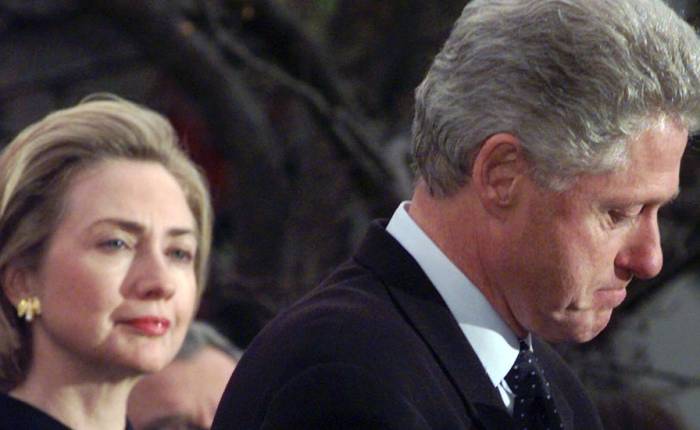
Clinton’s famous “I did not have sexual relations” moment.
In this regard, Bill deservedly brought some of the wrath upon himself. In a deposition, he was blind sighted by Lewinsky’s name being brought up and denied any “sexual relations”, given the legal definition provided by the Starr counsel. It was a technically correct answer but an unwise and immoral move that reinforced his image as a dodgy, snake-like politician. For months, he would deny the nature of their relationship, even to his staff and Hillary, until it became too obvious he was lying, or in his words “misleading” the nation. It was a personal embarrassment and a horrible thing to do to both Hillary and Monica, whose life would be greatly affected as a result (although, this enters the realm of cyber bullying for which many millions more than Bill also deserve a portion of blame).
Many people today, in light of the #metoo movement, point to this scandal as a demonstrable abuse of power. A couple of years back, Clinton’s attempts to salvage himself and take on an interviewer who brought it up, only served to convey a seeming lack of empathy on his part. Lewinksy, too, has been critical of the president, who never apologized directly to her.
That’s something he really should have done, straight away. He should have apologized to Monica and her family because they were given an unwarranted amount of press, that was relentless and downright mean. That’s not necessarily his fault but he could’ve stepped in and said “enough is enough, we’ve all made mistakes, leave her alone.” I think that would’ve helped but I also believe nothing he could have said or done would ever have been enough. Remember, this scandal came about, not because the people were concerned with Clinton’s supposed weakness for women but because the Republicans were attempting to destroy his presidency.
The impeachment which resulted was largely a joke, made in a last-ditch effort to humiliate Bill. Already, the Democrats had won back the House while his and Hillary’s approval ratings shot up. Back then, people had a better understanding of what was actually going on and in a universal middle-finger to the GOP, took to the polls. Ordinary people and leaders of other nations, including Neslon Mandela and Tony Blair, would stand by Clinton with the belief that he was a decent man who had done a bad thing. Today, I can’t imagine the same thing would play out and that’s not an effort to outright dismiss our morals. Integrity is important and we should expect it in our world leaders but let’s face it, there are more important things at play in shaping that integrity than personal scandals and failings.
The Record: A Moderate Democrat
Another interesting nugget you might hear about Bill Clinton was that he was not all that progressive or liberal. Correct. In the 1980s, the Democratic Party weren’t exactly on their A-game. Following the largely besmirched Carter Presidency (and for the record, he’s my favorite president), which was plagued by a struggle between moderacy and liberalism in the 1980 primaries, they had a hard time finding their footing. Eventually, the party’s liberals acquiesced to the more pragmatic middle-ground ideologies of the likes of Clinton, which gave way to a presidential victory after three consecutive Republican terms bolstered by the Reagan revolution and a strong but faltering economy. Reaganomics was good politics but very much the “voodoo economics” George HW Bush had called it when up against Reagan in 1980. By 1990, Bush had to rescind his “no new taxes” pledge for the good of the nation. It was a bold but noble move that damaged him in the 1992 election.
The first baby-boomer president made the economy one of his top priorities and actually left the country with a surplus, three years in a row at the end of his tenure. This had not been achieved since the post-war years under Harry Truman. Given Bush’s concession to the Democrats in 1990 and some of the negative consequences that resulted in 2008 (although that can be attributed to several administrations), this achievement has appropriately been lessened but it still remains a positive in most historians’ eyes. In the following years that would see major tax cuts and costly wars, people would naturally look back on the Clinton Presidency, in this regard, with nostalgia. It was a relatively prosperous time, helped by the rise of the Internet but also by a set of steady hands.
Social unrest was also another major concern which helped Clinton get elected. He pledged to invest in more police forces to keep the streets safe. This was a popular stance to take and received bi-partisanship support, resulting in the lowest crime rate America had in decades. Unfortunately however, this also led to a rise in mass-incarceration with arrests of minorities and low-grade drug offenders. Undoubtedly this has tainted his legacy and deservedly so, with both Bill and Hillary admitting that aspects of the crime bill needing to be revisited. Part of the problem, as most people now see it however, also lies with pervasive racism in certain areas and unaccountable police officers; a common trend that stretches back way before this crime bill passed.
The “Don’t Ask, Don’t Tell” policy of 1993 was another controversial measure. Bill had pledged in his campaign that gays could serve in the military. Many opposed this. So, quite quickly, they compromised. Basically, gays could serve but couldn’t come out as gay. Better than nothing? Possibly but ultimately, a pretty feeble gesture, which Bill was quite happy to get rid of, given the controversy surrounding such a topic at the time.
What’s interesting about “Don’t Ask, Don’t Tell”, along with some of Clinton’s other compromises is that they demonstrated a strategic tactfulness to his administration. Elected as essentially a moderate, he was willing to settle for what he could get, aware that the Republicans (who swept into power in the 1994 midterms) would accept only certain things. Another example: Hillary’s health-care led initiative essentially stalled that same year with fervent opposition. Aware of this, they worked to at least provide health care to children with CHIP (Children Healthcare Insurance Program).
Compromise is often seen as a dirty word. The Clintons were largely pragmatic though, aware of the political game and very much willing to play it. Even in his memoir, My Life, Bill Clinton can’t help but admire the strategy Newt Gingrich employed to lead his party to victory in 1994. The problem arises when people perceive their party as moving away from their traditional values and causes. The Republicans’ success and move to the right in the 1980s didn’t result in the Democrats following suit towards their side. Rather, they also moved to the right. This meant, for many, that a moderate Democrat was essentially an old-style conservative. Of course, now that the Democratic Party has actually started to move to the left, we’re in a whole different scenario, which lends credence to the liberal critics of the Clinton administration.
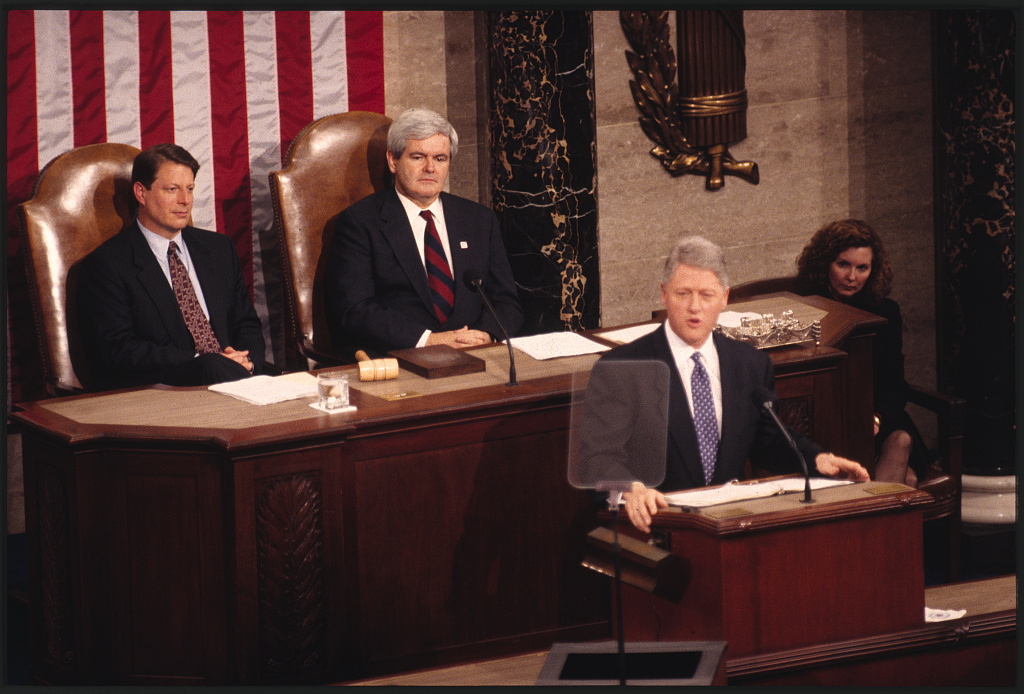
Bill Clinton delivers his State of the Union address in 1995.
Political pragmatism is important though, even if perceived as selling out. Had Ted Kennedy been more willing to work with Jimmy Carter’s more pragmatic approach to health care, then they might have actually gotten something achieved instead of nothing. The Clintons failed to get health care too, as so many before had, but at least they tried and got something done. After all, millions of children as a result were given a safety net they otherwise would not have had.
This pragmatism became all the more crucial however in Clinton’s foreign affairs, which began on a rocky trajectory before steadily improving. First, there was Black Hawk Down, which cast doubt over whether Clinton could really manage a humanitarian crisis. Initially, the US had been successful in their Somalian dealings at the end of Bush’s presidency (Bush being, by most accounts, a masterful player on the world stage). Then Bosnia followed, which saw a massive ethnic cleansing of the Muslim population. At first, the US were hesitant in their approach but by 1995, Clinton came into his own as commander-in-chief, sending in forces. Perhaps he had learned from the Rwandan genocide, which he always regretted inaction about. Part of the problem was public opposition to US intervention elsewhere, given the disaster of Somalia. It seemed navigating the morality of the US’ role in these conflicts was not always that black and white. You were damned if you acted and damned if you didn’t.
By the late 1990s however, Bill Clinton was very much a respected leader around the world. The intervention in Kosovo in 1999 was seen as a prudent step across the board, between Democrats and Republicans, and he had helped negotiate the terms of the Good Friday Agreement the year before, which greatly helped the situation in Northern Ireland. While his efforts to formulate a lasting peace agreement between Israeli prime minister Ehud Barak and Palestinian leader Yasser Arafat at Camp David ultimately stalled in 2000, it was seen later as one of the better attempts made by a US president at resolving the problem.
Legacy
Towards the end of his presidency, when asked about his legacy, Bill Clinton saw it in terms of navigating the shift from one American age (Industrial) to another (the Information Age) as had occurred a century before. He felt the historians would wonder whether he had succeeded in preparing America for the new century but he was realistic even in his thinking, realizing that if George W. was elected and the Republicans regained power, much of what he had achieved could be undone. Indeed, that became the case notably when the Brady Bill (which acquired some gun control legislation) wasn’t renewed.
It may not stand in the mercurial tide of politics as one of the most important presidencies of American history but in my opinion, it was a good one. Despite personal setbacks and a new norm of vitriolic partisanship, Clinton was able to hone in on what could be achieved and act accordingly. While negative consequences arose as tributaries to the main functions of certain bills (like the crime bill), the overall objectives were usually sound and reasoned. His foreign relations too were smart without recklessness (queue an analysis of the Bush II administration) and where he failed (e.g. Rwanda, Somalia), he at least had the decency to learn and make adjustments so he could help (queue an analysis of the Trump administration).
Of course, consensus and absolute certainty make for a dismal appreciation of any historical figure when discussing nuance. Most US presidents have been imperfect with wildly mixed legacies. It can’t be helped when you’re playing chess on such a massive scale. I decided to write this long piece and read his ridiculously long memoir (958 pages) because I felt we were in danger of simplifying this man’s legacy. In the years that have passed since his presidency, he’s gone from one of the most respected world leaders to a figure of disdain, even for many from his own party. I wouldn’t go so far as to point to Hillary’s loss in 2016 as a referendum on their legacy but in this new age of evaluation, I feel the constraints of examining history through a modern lens should be acknowledged.
Context is key to any historical understanding and we can learn from history. But just as the problems of today don’t necessarily require the attitudes and solutions of years before, so too did the problems of those years not necessarily requite the outlook we would hold now.

 The Washington Walrus