Back in September 2020, myself and a couple of friends discussed whether or not it was worthwhile for Joe Biden to debate Donald Trump. While the former president and clown prince of crime’s theatrics would surely play off the televised medium more fancifully, we felt it was important for Biden to take a stance in establishing normality again. Now, four year later, things have changed. The once-challenger, now incumbent has added much clout to his nickname “Sleepy Joe”, thanks to a number of recent bewildering public appearances, whilst his opponent has racked up an array of criminal charges, already convicted of one. Neither prospect is exactly gleaming in the eyes of the public, with a recent CBS poll showing Trump leading by just 1%. Will Thursday’s debate change much? Given how polarised the country has gotten, probably not. Nevertheless, I thought it worth exploring anyways for the heck of it.
Firstly, we should acknowledge how two rules, crucially, seem to suit Biden more: that there will be no audience and mics will be muted when the other person is speaking. Lame. On the other hand, there will be no pre-written notes either, which is fine for Trump since many of his best zingers seem to have come out of the moment, particularly in 2016. So if he can produce a couple of new greatest hits (in line with “weak-sauce Jeb” and “I should’ve won [the Emmy]”, then Biden may be in trouble. His material simply isn’t as entertaining. Having said that, we didn’t see as much of that as in 2020, when Trump’s maverick status had started to veer from hilarious if dumb to deranged if occasionally hilarious.
Supposing “the issues” come up in this debate, the candidates will likely spar on inflation, immigration, Roe v. Wade, and funding for Ukraine, among other matters. (Undoubtedly, the culture wars will seep into the mix too, since both sides see each other as an existential treat to the country vis a vis the fight for democracy, lawlessness, the far left, and so on.) Biden will make the case for an economic success story, which he can back up with GDP and unemployment figures. Trump will argue inflation has been a disaster for the country and that people’s wages travelled a lot further four years ago (from the book of Reagan). In tandem with this, he may throw his lot in with the Republicans questioning how much money should be put into defending Ukraine. Then, he may move onto the border. It depends how much time is wasted and what questions are asked (maybe that doesn’t even matter).
Biden will be on the defensive against a range of broad accusations and probable lies. Since perception becomes reality and the visual spectacle matters as much (if not more) than the content of what they’re saying, combatting them one by one may not prove the most effective strategy. Debates have swung one way or another for a variety of reasons, from JFK wearing makeup in 1960 to George HW Bush checking his watch during a question in 1992. Given the narrative that the president’s not “all there”, he needs to be as sharp as possible and to the point without any stammering or lost gazes.
Should Biden choose to hammer on the point of Trump’s multiple legal troubles, he will of course have to answer for his son, Hunter. Many people will of course come to the lazy false equivalency that both candidates are mixed up in corruption and so “it’s a wash”, but to Biden’s credit, he never tried to intervene or stir the legal course of action with regards Hunter’s mishaps. Perhaps that can be used to his advantage. Perhaps he can point to the kind of accountability he and his family take, which Trump has tried to elude and undermine. Perhaps that will work…. Though perhaps not.
One of the main issues Biden has returned to in his case against Trump is the January 6th Capitol Insurrection. This will likely be a talking point which he can exploit by asking Trump if he will concede the election should he lose again. I’m not sure what Trump’s strategy will be here, other than to deflect to other matters and emphasise the bias of the mainstream media against him. He will have to try wiggle out of it somehow and Biden, in turn, will have to keep the spotlight on this. But again, since everything’s so politicised and since three and a half years have passed since, this also may not matter much.
If I were to advise, without any moral culpability, I’d tell Trump to needle the president on the devastating effects of inflation on the average person and crime in America. For Biden, I would advise trying to keep up his 2020 performance, while pushing Trump on January 6th and how disastrous his first term was, thus resulting in him “losing” (emphasise that word) the last time. At this point, I predict a Biden victory in November (if a lesser one than before). While Trump’s percentage lead is not to be dismissed, he has come down in the last couple of months and come election time, he’ll have been raked through the fire a lot more than he has been the last couple of years, in which he’s been uncharacteristically absent from the spotlight. (Relatively speaking.)
On January 6th 2021, things got a little shaky in Washington. Without getting into details, one president was preparing to take office while another’s feelings were hurt. The latter may have said some things that shouldn’t have been said; maybe suggested his followers descend on the Capitol in defiance of a “rigged” election with “fake” results. And yeah, sure, if you want to be technical with it, they may have done just that in a blatant disregard for democracy. It’s hard to remember.
Well, against type, old “Sleepy Joe” remembers. In one of his most defining moments yet, he made a speech last week regarding the “web of lies” the former, “defeated” president had spread resulting in this insurrection. While his rhetoric and performance may have been lauded by his side however, it begs the question as to how prominent Trump and “Trumpism” remains in defining this presidency.
Indeed, a year on now, the battle for the “soul of America” (as Biden put it) rages on. Despite a multitude of major spending bills, the picture being framed by the media is still one of left-and-right friction, via the nitty-gritty of negotiating these bills, mask mandates, and vaccine uptake; its narrative spins every accomplishment or historical event under this paralysis.
For example, the withdrawal from Afghanistan (and the immediate return of the Taliban) was set in motion under the Trump presidency but Biden’s been saddled with much of the blame (not that he should be wholly exonerated from it). The vaccination program, depending on who you ask, has been a disaster. Either Trump had already done “the best job” he could have with it and set everything in place, or else Biden was extolling authoritarian virtues by implementing a federal mandate or even taking credit for what Trump had done before him. Trump criticised Biden’s action and then (at a rally) encouraged his followers to get vaccinated. It’s a little confusing. I think the official position they’ve landed on is that “vaccinations are fine but you shouldn’t have to get one but they’re also a scam”. Plus, masks are “lame”.
Naturally enough, most governments have had to readjust their strategies somewhat to contend with new variants, like Omicron. To a degree, Joe Biden was naive to suggest life would be back to normal by now though. Alas, that’s run-of-the-mill politics at its laziest and yet, he’s taken bold action in this department with the $1.9-trillion stimulus “American Rescue Plan” (passed in March). Unfortunately, with a cling-film, flimsy thin majority, the Democrats have struggled to follow up on the other two parts of the “Build Back Better Plan”- the II) “American Jobs Plan” and III) “American Families Plan”. (Although, parts of II made their way into the $1.2 trillion “Infrastructure Investment and Jobs Act”, passed in November.) The pressure to regain ground in this debate (publicly contested by Senator Joe Manchin) may play a role in establishing Democratic credibility in the mid-terms.
On that note, what is “Democratic credibility”? For while the Republicans still largely stand by Trump (2/3 even still believe his lies about the election), the Democrats remain tentative in deciding just how progressive they want their party to be and where its future lies. Indeed, many feel Biden’s as-of-yet unrealised plans don’t go far enough- an age-old adage for progressives. Plus, there’s a general feeling that Biden is serving as a temporary, caretaker president with many eyes turning to Kamala Harris for 2024. Biden has stated he plans to run for re-election but even his supporters’ doubts haven’t been assuaged. This, unfortunately, reflects the notion that great, transformative change cannot be expected in these next few years, even if they are needed.
As mid-terms have historically been a disaster for Democrats and many of the same contentions from the Trump years remain, Joe Biden may simply have to contend himself with dulling the rancorous hate that’s divided America. Sadly, it’s not just down to him. It’ll take a degree of bi-partisanship, an acknowledgment on the GOP’s part that Trump lied, and the media to stop droning on about Trump all the time. It’ll take some time for us to acknowledge the success rate of the Biden presidency with a clear filter.
There’s no easy way to do this. Each US President existed in a different context of the young nation’s history and had unique challenges to face; be it economical (with the Panic of 1837 or The Great Depression after 1929), wartime (World War 2), or domestic (slavery). Each had external factors preying on their ability to do the job; from congressional layout to crises (e.g. 9/11) and world-changing dynamics (inflation in the ’70s). Each had different cabinets of support and varying levels of opposition (publicly, politically, and commercially). Really, one could argue it’s not even fair to judge the likes of Washington (from a simpler but creative period for government) against say, Bill Clinton, operating under a much more complex system. However… we’re going to anyways.
How exactly? Well, by accounting for their successes in foreign policy, economics, domestic policy, agenda set, public persuasion, and so on and so forth… Yes, all that, but mainly by addressing the central question: did they live up to the challenges of their time? And don’t worry, we’ll provide justification for these rankings- some may shock you given past rankings on other sites (sorry Andrew Jackson fans) but know this- plenty of thought has been given for each choice- this wasn’t some mere cut and paste job with a few throw-arounds for controversy.
Also, we will be excluding two presidents from this list: Joe Biden and William Henry Harrison. Joe; because, well, he’s not completed a year yet- although if push came to shove, I’d rank him around 15 for a strong response to Covid 19, with partial responsibility for the disastrous end to the Afghanistan war. And William H. Harrison? He served only 30 days in office, dying from pneumonia which he likely contracted after giving a tediously long inauguration speech in the cold. A lot of lists place him around 40, which I consider harsh. So let’s do the honourable thing and just bash his grandson who later became president.
Anyways, without further ado:
43. Andrew Johnson (1865-1869)
One of three impeached presidents, Andrew Johnson assumed the job in the wake of Lincoln’s assassination and made a perpetual fool of himself by attempting to go back on much of what just been achieved in the Civil War. He opposed the 14th Amendment which granted citizenship to former slaves and acted in a cantankerous manner, causing great friction with Congress, who passed the Tenure of Office Act (restricting Johnson’s ability to fire Cabinet officials). He was only acquitted because no one saw any chance of his re-election (which they were right about).
42. Donald J. Trump (2017-2021)
The former Apprentice host sowed a great deal of division in the country, inspiring renewed racist fervour and idiocy amongst his cohorts and followers. His outlandish statements aside, he will be remembered for making the pandemic far more devastating than it needed to be by spreading misinformation; corruption and nepotism; and refusing to take election results seriously, leading to a national insurrection on the Capitol building in January of this year.
41. James Buchanan (1857-1861)
At a time when decisive leadership was needed, James Buchanan essentially sat out the slavery issue, setting the stage for the secession of the southern states upon Lincoln’s election.
40. Franklin Pierce (1853-1857)
Theodore Roosevelt wrote of him as a “servile tool of men worse than himself… ever ready to do any work the slavery leaders set him”. Pierce is best remembered for failing to secure sectional conciliation, supporting the Kansas-Nebraska Act of 1854, and aiding the downfall of the Democratic Party for decades to come.
39. Herbert Hoover (1929-1933)
Named after something that literally sucks, Herbert Hoover failed to address one of the great calamities of the 20th Century: The Great Depression. His perceived lack of concern resulted in shanty towns being called “Hoovervilles” while his tariff act (fuelling an international trade war) only served to make things worse.
38. Andrew Jackson (1829-1837)
There was a time when this (literal) mad-man was once considered a top 15. In recent years, historians have re-addressed his legacy as that of an American Caesar whose Native Removal policy stands as one of the most heinous of policies ever committed to American soil. Sure, he was the father of the Democratic Party but that doesn’t acquit him of these horrendous charges. Sure, he was a “man of the people” and not one of the elites but his assault on the banks contributed to the Panic of 1837. So beyond these basic labels, why is he held to such lofty heights? (Also, Trump admired him.)
37. John Tyler (1841-1845)
John Tyler succeeded the month-long presidency of William H. Harrison, seeking to establish the legitimacy of his leadership. He even believed the President should set policy rather than Congress. To this end, he was referred to as “His Accidency” by the Whigs. Sick burn.
36. George W. Bush (2001-2009)
Iraq. The economic crash. Besides that, seems an affable enough fellow.
35. Warren G. Harding (1921-1923)
Harding is usually ranked in the bottom three but beyond his innate incompetence (which he at least admitted to), I don’t consider his (albeit corrupt) administration to be particularly damaging to the US. (He, at least, acknowledged that democracy was a “lie” without political equality for black citizens. He didn’t do anything about it but he acknowledged it.)
34. Millard Fillmore (1850-1853)
Another spineless leader in the vein of Buchanan, Fillmore’s support of the 1850 compromise opened up the territories of the Mexican Cession to slavery and allowed for the return of escaped slaves to those who claimed ownership. Harry Truman called him a “weak, trivial thumb-twaddler who would do nothing to offend anyone”.
33. Martin Van Buren (1837-1841)
More like Van Burden, am I right? Van Buren continued Andrew Jackson’s policy of Native Removal and denied the application of Texas to the Union. His presidency was also mired by the Panic of 1837. (Interesting bit of trivia for you: Van Buren was a member of the Old Kindergarten Club for which to gain access you had to say “okay”, thus originating the term.)
32. Rutherford B. Hayes (1877-1881)
Hayes’ era essentially marked an end to Reconstruction and inconsistent civil service reform. He also championed the Gold Standard and broke the Great Strike of 1877. Nothing particularly striking or memorable or interesting here.
31. Zachary Taylor (1849-1850)
A mess of contradictions: owned slaves but wanted to ban the expansion of slavery into western territories conquered from Mexico; a military triumph in that war who wasn’t particularly keen on Manifest Destiny (expanding US borders); a decisive commander in battle who avoided tough decisions as President. Given his strong commitment to the union, historians wonder (had he lived) whether the Compromise of 1850 or the Civil War would have occurred.
30. Benjamin Harrison (1889-1893)
The grandson of former President William H., he was committed to voting rights for African Americans but economically uncertain of how to handle the nation’s affairs, resulting in the 1893 crash.
29. William Howard Taft (1909-1913)
Once the promising successor to Teddy Roosevelt, committed to 80 antitrust suits against large industries, he disappointed his predecessor by reneging and falling into place among the more conservative members of the Republican Party. This led to old Teddy mounting a race against him in 1912 under the “Bull-Moose” party. Both would lose, leading to the Democrat Woodrow Wilson’s rise.
28. Grover Cleveland (1885-1889 and 1893-1897)
Two non-consecutive terms? Oh, you better believe it happened! If people expected Cleveland to have improved in his off-years, they were sorely disappointed though when he was dealt the hand of the 1893 crash which he failed to deal with adequately. This resulted in Democrats losing support everywhere but the Deep South.
27. Calvin Coolidge (1923-1929)
Harding’s successor has attained some historical reassessment on the part of classic Republicans who admired his small-government and laissez-faire economic approach. He helped restore the reputation of the White House following the corruption scandals of Harding’s cohorts but largely detached himself from the job; infamously sleeping during the day and avoiding mingling with guests. Upon his death, Dorothy Parker remarked “how can they tell?’
26. Chester A. Arthur (1881-1885)
Given some of his past associations in business dealings, people expected him to be more corrupt than he was. He fought the spoils patronage system he’d supported in New York and advocated tariff relief for businesses and tackled civil service reform. It doesn’t say much though when your reputation, at best, surmounts to: “well, I guess he wasn’t that bad”.
25. James Garfield (1881)
He only served a few months but contemporaries were impressed by his handling of Roscoe Conkling; a New York senator trying to push his agenda and men in high positions. Historians call him a “what if?”
24. Gerald Ford (1974-1977)
Ford’s rise to power was particularly incidental, taking over for Spiro Agnew as VP before taking over the main post when Nixon resigned. A generally decent and uncontroversial politician, Ford, unfortunately wasn’t a great communicator, even if his pardon of Nixon was intended to help move a damaged nation on.
23. Richard Nixon (1969-1974)
Besides that whole Watergate thing, Nixon wasn’t a terrible president. Strategically minded, he approached the Cold War in a more pragmatic way than his predecessors or successors ever did, resulting in the first SALT treaty and the opening of relations with China. He even tried his hand at a health care plan and established the Environmental Protection Agency.
22. John Quincy Adams (1825-1829)
The son of John Adams served as Secretary of State and a senator before becoming president and as a representative after. It’s fair to say he’s best remembered for his later achievements there, focusing on the anti slavery movement. As the nation’s leader, he was generally considered to be too uncompromising to achieve much in an increasingly political age.
21. Jimmy Carter (1977-1981)
Alas. My favourite president in essence and character but unfortunately not one with the most impressive record, even though he was the only post WW2 leader to not launch a missile. A true Washington “outsider”, Carter’s reign was beset by out-of-control issues like inflation and (more in control issues like) poor congressional relations. In my opinion, he was ahead of his time but legacies rest on effective, perceptible changes and not just rhetoric.
20. John Adams (1797-1801)
Being one of the OGs is a surefire way to knock yourself up the list but Adams paled in comparison to Washington and Jefferson, signing the controversial Alien and Seditions Act which included powers to deport foreigners and make it harder for new immigrants to vote; strange cause for a newly built nation but then it’s hard to find a footing in those early days. He gets marks for not expanding the naval war with France into a greater conflict, however.
19. James Polk (1845-1849)
A lot of land acquisition went on during Polk’s term; Oregon, California, and New Mexico, notably. He also settled the Texas border dispute, established the federal depository system, and lowered tariff rates. Simply put, one of the most accomplished presidents there ever was. Critics charge however that his underestimation of the Mexican War’s effects paved the way for sectional conflict and the troubles that ensued over the next decade.
18. James Madison (1809-1817)
The war of 1812 was seen as unnecessary by some and as something of a 2nd war of independence to others. The new nation, either way, cemented its foundations in this test.
17. Ronald Reagan (1981-1989)
Reagan’s often ranked in the top ten and I can see why… kind of. A great communicator, Reagan brought hope to a nation deflated by inflation, Vietnam, Watergate, and perceived ineffective leadership. He amped the Cold War back up in its last days, oversaw a more prosperous era (while setting the stage with his trickle-down economics for a latter recession) and delivered some great jokes. Let’s face it though; he stumbled when it came to talking specifics, didn’t handle the AIDS epidemic well, and of course, that whole Iran-Contra thing. Sorry Reagan fans. If it’s any consolation, I still like him! What a character.
16. Ulysses S. Grant (1869-1877)
Grant’s administration was wrought by scandals involving bribes and a whiskey ring, tarnishing his image for years to come (even though he didn’t personally benefit from the crimes). If we look beyond that, he was actually a pretty effective president who worked to stabilise the post-war national economy, support reconstruction, and crush the KKK.
15. William McKinley (1897-1901)
McKinley’s presidency marked the emergence of an imperial era for the US as he declared war with Spain over Cuban independence. He was also the first president to actively engage the media by holding press conferences and he went on national tours to speak with voters. A new day had come.
14. James Monroe (1817-1825)
Monroe helped further the nationalistic cause by reaching out to all parts of the then smaller US, separating their course and interests from Europe’s with the Monroe Doctrine. Florida was also acquired during his tenure.
13. Woodrow Wilson (1913-1921)
Despite being one of America’s most well educated leaders, Wilson held regressive viewpoints for race relations (even for his time). He’s ranked lowly in that regard but otherwise highly for guiding America through World War One and establishing the League of Nations, as well as banking reform, supporting labour and collective bargaining, and more.
12. John F. Kennedy (1961-1963)
I give some props for rhetoric and inspiring people but when it comes to actual legislative achievement, there’s not much to be said for JFK. And while, yes, he resolved the Cuban Missile Crisis with dramatic flair, he played a major role in starting it. And he set the stage for Vietnam. A great deal of his mythos has been born out of his untimely assassination. Again though, that inspiring stuff does count for something and let’s face it- it’s endured.
11. George H.W. Bush (1989-1993)
The senior Bush’s reputation has improved in recent years, probably as a result of people’s nostalgic yearning for a conservative who could be flexible. His 1990 tax hike might have irked his supporters after the reticence of his “no new taxes” election pledge but it was the right and responsible thing to do. Plus, on the world stage, he was very well respected for his even tempered, strategic diplomacy- too humble for most when the Berlin Wall fell and too cautious for others who wanted the Gulf War victory to lead onto further gains in Iraq (we later learned how that would work out). A very underrated president, in my opinion; he simply couldn’t sell himself well enough.
10. Bill Clinton (1993-2001)
Clinton’s impeachment was largely based on petty partisan squabbles so I’m not factoring that in as much as others would like. On the whole, he did the job successfully, steering the economy to a surplus for the first time since Truman’s years. While he was initially slow on Bosnia and Rwanda, he later found his footing on the international stage, earning support from the likes of Mandela and helping to establish NATO.
9. Lyndon Johnson (1963-1969)
Vietnam escalated to disastrous levels under LBJ so why is he at number 9? Well, under the auspices of Communist Containment, one could argue he was merely maintaining a longstanding foreign policy of the US but really, it’s because his domestic agenda was so progressive and realised. Only a year after pushing the Civil Rights Bill, he got the Voting Rights Act passed. Then, a flurry of the most impressive legislation committed by a liberal president, including Medicare. He was an intimidating, foul-mouthed beast of a man but he knew how to play the political game better than almost any other US president.
8. Thomas Jefferson (1801-1809)
One of the OGs, Jefferson promoted a western expansionist policy with the Louisiana Purchase, effectively doubling the nation’s grounds. He also put an end to the long-standing problem of Tripoli pirates from North Africa, who were disrupting American trade in the Mediterranean. His passing of the Embargo Act of 1807, which suspended all trade with Europe, unfortunately wrecked the US economy and paved the way for the War of 1812 with Britain.
7. Barack Obama (2009-2017)
While many supporters were frustrated with the gridlock of congressional relations in Obama’s years and the supposed let-down in the wake of his meteoric rise, there’s no denying the achievement that was the Affordable Care Act. Not perfect, sure, but something that had eluded America’s leaders for decades. Besides that, Obama helped restore America’s image abroad and took some tough but much needed measures to restore the US economy after the 2008 crash.
6. Harry Truman (1945-1953)
Truman was never given an easy hand to play. He had been virtually kept in the dark by FDR while VP, not even knowing about the development of the Atomic Bomb. To drop that in August of 1945 was perhaps one of the gravest decisions a US President ever had to make. Shortly thereafter, he had to take quick measures to ensure the containment of communism where he could, mostly with success, though a period of uncertainty loomed at the end of his tenure with the Korean War. Initially not popular upon leaving office, his reputation was restored by the time of Vietnam due to the accountability with which he had held himself- a sign upon his office reading “the buck stops here”.
5. Dwight D. Eisenhower (1953-1961)
A military hero who ended the Korean War. A republican who continued the legacies of the New Deal and Fair Deal. Apatriot who opposed communism but would not give the red scare-mongering likes of Joseph McCarthy any time of his day. Yes, Ike was a popular leader who came as a natural choice for many in the post-war era. Perhaps his previous lack of political ambitions paved the way for him being the kind of president who could rule with sense, partisanship aside.
4. Theodore Roosevelt (1901-1909)
We’re into the major leagues now. Roosevelt ushered in the Square Deal which aimed to conserve natural resources, control corporations, and protect consumers. And… he was a Republican. Yes,, of the old sort- the kind that believed in containing big government and capitalism where it got dangerous. While something of a bloodthirsty scoundrel, apparently always itching for a fight and building up the US navy, he also brokered the end of the Russo-Japanese War (earning him the Nobel Peace Prize).
3. George Washington (1789-1797)
The first president is often ranked number one or two. While I admire his dedication to the job and setting the tone for the office by stepping down after two terms (where many wanted to make him essentially a king), it must be said that he operated in a time of widespread support and creativity for the new nation. He didn’t have the binds facing other presidents. Still, can’t really fault him on much.
2. Franklin D. Roosevelt (1933-1945)
Elected a record-breaking four times (dying early into his fourth term), FDR brought America through both the Great Depression and World War 2. His legacy is closely tied to the New Deal agenda, which set the course for liberal economic ambitions since, if never fully realised. Plus, he was also inspiring- helping to raise morale with his fireside chats and proclamations such as “we have nothing to fear but fear itself”. Upon his death, the people weren’t quite sure how another leader could occupy such a space.
1. Abraham Lincoln (1861-1865)
No president has ever faced a test quite like the Civil War. Upon election, several southern states seceded resulting in America’s darkest hour. Lincoln was responsible not only for winning this war and reuniting the broken nation but for passing the 13th Amendment which abolished the original sin of America’s foundation: slavery. This would mark the great turning point in the nation’s history. Managing such a hefty task required a man of great intellect and greater moral fibre.
Following on from my last piece about Gen X’s low-profile status when juxtaposed against Boomers and Millenials, I thought it was worth revisiting the murky subject of generational struggle. This time however, I will be focusing on the generation that just won’t die off: The Boomers.
These illustrious, seemingly all-powerful beings were born roughly between the early 40s and early 60s and came into their own at a time of great economic improvement and opportunity, greater music, and massive cultural change (i.e. the ’60s). Indeed, the popular picture that’s been painted of this era is one of revolutionary zeal, free spiritedness, and tremendous progress on Civil Rights; a time of renewed hope for mankind, following the bleakness of the Silent Generation. Of course, theirs was not a time without struggle as Vietnam and race riots dominated the news in the late ’60s while the ’70s saw staggering oil inflation, a decline in respect for politics (following Nixon), and the continuation of the Cold War. By the time of the 1980s however, the Boomers had found a sure footing in America as the dominant electorate and net of cultural values. And… that’s where things changed.
Now, it goes without saying that an entire generation cannot “sell out”; at least not in terms of its populace. With that self-evident notion hovering above us however, let’s consider how the radiant plumage of the ’60s got withered away and replaced with the shoulder pads, dodgy hair-dos, and new right or neoliberal values of the ’80s. Gone were the days of the “Hippie Revolution”; it was in with the “Commercial Revolution”, the “Reagan Revolution”, and a new mentality for an a generation graduating into their mid life.
What happened?
We’ve already touched on the struggles of the ’70s, if not the psychological and cultural repercussions they bore. Most people’s idealism will at some point be compromised by the practicalities of adult life when children, careers, and other factors come into the equation. The teens and young adults of the late ’60s simply grew up at some point. They were jaded, with that said, by the experiences of their time. While 1967 boasted the so-called “Summer of Love”, 1968 brought the “Summer of Hate” with revolutionary spirits leading to protests and then quashed protests. The loveable druggies of the Hippie era became, in part by reality (but also by the Media and politicians) the junkies of the following decade. Lyndon Johnson’s progressive agenda was torn asunder when Vietnam clouded his resume, not to mention the rise of Nixon (who hated Hippies and started the War on Drugs). With the sullen decline of this spirit in the ’70s (the decade of “Malaise”), it was no wonder why many Boomers were ready for a fresh start with the ’80s.
Ronald Reagan was able to sell that “fresh start” for many. Whilst his administration pushed America on a right-wing trajectory (it’s largely followed since) that would actually (in years to come) negatively affect the majority of Americans, he was able to sell it with a winning smile and the profile of a true leader. Enough Americans believed things were improving (having faced the “tough love” years of the Carter Administration) and voted him back in in 1984 as well as his successor, George H.W. Bush in 1988. The Democrats, in meek response, basically followed the New Right to the centre, whereby they could get a New Democrat-type politician into power with Bill Clinton in 1992 and so on… Politics aside, the point is that Boomers, having taken the largest share of the electorate by the 1980s were the ones to benefit from the initial economic upturn. Thus, even a mantra like “Greed is Good” (meant as a warning from Oliver Stone in 1987’s Wall Street) came to exhibit a twisted kind of wisdom for its age.
Ronald Reagan, keeping it real
Bruce Gibney, author of A Generation of Sociopaths has been particularly critical of this turn of events. Speaking in an interview with Vox at the time of the book’s release, he said:
“Starting with Reagan, we saw this national ethos which was basically the inverse of JFK’s ‘Ask not what your country can do for you, but what you can do for your country.’ This gets flipped on its head in a massive push for privatised gain and socialised risk for big banks and financial institutions. This has really been the dominant bomber economic theory, and it’s poisoned what’s left of our public institutions.”
The “Trickle-Down” economic model has been something of a “greatest hits” piece for the GOP since the 1980s. It would be foolish to state however that Boomers knew what they were in for with such changes. Even the politicians of the time, bent on conservative policies, couldn’t have known. With that said, that particular decade did set a damaging tone for what was to follow. The future of subsequent generation’s retirement funds, college loans, mortgages, and more were determined by what was set out then. At least in the 1970s, when there were economic struggles, there was some measure of co-ordination between Republicans and Democrats to balance out the extremes of either side that have increasingly flourished since. In many ways, it was a time of more liberal economic and political thinking.
The ’80s saw the rise of modern commercialism and a quasi-sanitised media too. Malls replaced high streets and new kinds of products lined the window faces of the shops built within. Movies of the ’70s, built on morally ambivalent antiheroes and dark realities faded from popularity as likeable heroes again took the screen. “Just Say No” and other family-friendly values and slogans helped push cheesy sitcoms to the fore. CDs saw the introduction of “Parental Advisory” stickers with censorship prevailing in the MTV era. Language and content were closely monitored on TV. It was a different kind of political correctness, to what we’re used to today, buoyed mostly by the New Right with puritanical leanings. All that is not to say great art wasn’t born out of that decade because it was but it was certainly symptomatic of a new way of refining the cultural values of the time.
American culture naturally moved on from the ’80s, with some persuasion from Gen X and subsequently Millenials in the following decades but by the mid-late ’90s, Boomers had effectively seized the reigns of power, which they still have tremendous persuasion over.
It is a harsh indictment, yes, and perhaps one a millennial, such as myself should be careful about castigating. As aforementioned, it’s generally the case that people will have different concerns in their 20s to what they have in their 40s. And the latter group, having moved up the career ladder, will have more money and more likely to grow conservative. People in their 20s want to see change. People in their latter years, less so. Plus, we’re not the first generation to think we know better or are “with it”. As Holly Scott put it in The Washington Post, of this generationaldivide:
“Young radicals believed they were ushering in a new America, and those over 30 were hopelessly out of touch and not to be trusted. Today’s youths have ‘Ok, boomer’. The youths of the 1960s had a different taunt: Mr. Jones, derived from the Arron saint of the youths, Bob Dylan, who sang, ‘ something is happening here but you don’t know what it is, do you, Mr. Jones?'”
Perhaps, like the Boomers, we are destined to meet a dead end, to hit a brick wall? Perhaps each generation is bound to retrace the same, familiar patterns if within a different context? And perhaps still, as Thomas Jefferson put it, “every generation needs a new revolution”.
In the pantheon of presidential historical evaluation, the first 100 days has never been an accurate indicator of what is to come. Often referred to as the “Honeymoon period”, it tends to reflect a more restrained take on the presidency, given its freshness, initial public support, and change of power dynamics. In a sense, everyone’s testing the water and willing (on some part) to give the benefit of the doubt. This is doubly true for the Biden administration, who have come into their own with a long-suppressed sigh of relief following the turmoil of the Trump years.
This is perhaps the most evident thing about the new president; his normality and candour in juxtaposition to the raging clown prince of crime, whose final days saw siege upon the Capitol. Joe Biden has been effective, thus far, in restoring a sense of normalcy and decency in how America tackles its problems. A naturally empathetic man, he’s struck the right tone in addressing mass shootings and the pandemic, in a time when true leadership has been needed.
His words have been supported to by action too; namely, the $1.9 trillion Covid Bill set to alleviate the economic offsets of the pandemic. More liberal commentators, worried that he would prove too moderate, have been surprised by this bold course of action. Thankfully, Biden understands that dramatic times call for dramatic responses and having paid witness to the gridlock of the Obama years, he’s done his base right by practically ignoring the Republicans’ attempts to slim down this bill.
The pandemic has, at this point, reached a turning in the tides with over 200 million Americans vaccinated at this point (a goal set out by the administration). As always, I would be reluctant to give Trump any credit since he only ever served to aggravate the World Health Organization, undermine Dr. Anthony Fauci, and meander wildly on the severity of the virus but it is worth at least noting, that some structure was in place for Biden to capitalise on this reversal of fortunes. As a leader, he’s set a good standard however, asking Americans to continue wearing masks while paying respect to the scientists Trump so callously questioned.
The Covid Bill hasn’t been the only bold proposal put forth too. Biden has also unveiled a $2 trillion infrastructure plan which has long been overdue (Trump had actually been correct in 2016, assessing this as one of America’s gravest issues but failed to deliver in appropriate fashion). To his critics, this may be overreaching. They’d have a point too, since the buck has to stop somewhere. With that said, with the awesome power of the presidency, it is gratifying to see these major issues tackled with some gravitas. Just remember, that any leader’s going to be popular when spending.
Elsewhere, Biden has marked a contrast with the Trump administration by suspending the Keystone pipeline and rejoining the Paris Climate Accord. He’s also gotten the first notable gun control package in three decade (though limited) and boasted the fastest cabinet appointee approvals in four presidencies. On the surface, it seems like this has thus been a highly successful, action-oriented start. Beneath the surface however…
Well, not to quash people hopes but yes, the tough days are ahead. As eluded to earlier, spending makes one popular but bills have to be settled and the economic downturn of the last year’s events has yet to manifest. (We can only hope this massive investment will curb the worst of this.) The immigration problem, too, is rearing its head, as Biden struggles to set out a new policy, differentiating from Trump’s. (Even George W. Bush has called on his party to act in Congress to work on this.) Plus, while justice was exacted in the George Floyd trial, we’re still seeing disgusting instances of police brutality against Black Americans. Now that a Democrat is in power (and the party has a slight majority), some legislative action will be expected. The Republicans, momentarily out of sorts for now, will return with their combative stances and make this presidency increasingly more difficult.
So, while a dark cloud looms on the horizon, we can at least be thankful that Biden has proven more radical than expected in his approach to the immediate major problems facing him. With his conciliatory inaugural address too, he has hopefully set out a renewed air of compassion for the politics of compromise in Washington. In a sense, reversing the hateful rhetoric of 2016-2020 may prove his greatest feat.
With the start of a new administration and change in power in the Senate, we here at the Washington Walrus thought we’d take the time to recalibrate our takes on the key players of the House of Representatives and the Senate. Basically, a who’s who of the big cheeses; the ones pulling the strings, be it with their positions or influence in the media and political landscape. So without further ado.
Nancy Pelosi, Speaker of the House, pictured (D)
The 80-year old Speaker looks like she owns a formidable hard candy collection and is known for keeping her party in check. She proved she still had it by taking on Donald Trump, upon retaking the majority in the House in 2019. Now, she is pursuing impeachment against the former President, despite initially holding out on the first one until they had a solid case with evidence. How old school of you, Nancy.
At present, she is navigating a tough transition for the Democratic Party. Despite keeping the majority last election, they lost a number of seats to Republicans. Is it because they’re perceived as moving in too liberal a direction or holding onto old cronies like her? It’s hard to say but most seem glad to have her steady-hand and salon-tempered hair at the wheel in these uncertain times.
Mitch McConnell, Senate Minority Lead (R)
What if a bullfrog wished he could be transformed into human form? Now, what if that bullfrog was also kind of a dick? Well, then you’ve got Mitch McConnell. Also ancient in age, he’s proved himself to be one of the least likeable Republicans in American history, by hawkishly prioritising politics over the good of the country at almost every turn; one of the key figures responsible for the gridlock of Washington during the Obama administration. If he had a chance to redeem himself, he sure squandered it during the Trump era, again mindful of what anything but appeasement would cost him (even if he truly abhorred him).
The Senate is roughly 50-50 at present (with Kamala Harris coming in as the deciding vote) but McConnell’s influence unfortunately doesn’t look like it’s going to wane any time soon. To an extent, I suspect he’s glad to be the minority leader because he gets to still effectively oppose new legislation without feeling the burden to present any of his own (or indeed any solutions, as evidenced when both parties’ leaders were brought together in late 2008 to discuss the financial crash).
Ted Cruz, Senator (R)
The Senator’s electability apparently hasn’t suffered despite the fact he is one of the least liked members of the Senate, even in his own party. Like McConnell, he’s all about politics but he’s just that bit more weasel-like to the point he resembles some sort of rat or otter.
Cruz’ immediate test is moving beyond his association with Donald Trump, who once called him a “sleaze” who nobody liked. Cruz helped goad the Trump supporters who stormed the Capitol last month without taking any responsibility for his part. If I might liken him to a Harry Potter character, I’d have to choose Wormtail.
Chuck Schumer, Senate Majority Lead (D)
He’s a key player in that he’s the Senate majority lead but there’s not much to say about him. Decent, I guess. Where Nancy’s a bit more collected and elegant, he’s a bit more rough and ready with the odd controversial remark on Gaza or immigration. The bulldog of the Senate, why not?
“The Squad”, House Members (D)
Netflix’s casting dream consists of Alexandria Ocasio-Cortex, Ilhan Omar, Ayanna Pressley, Rashida Tlaib, Jamaal Bowman, and Cori Bush. The former four were elected to the House in 2018 and the latter two in 2020. They’re generally painted as the progressive wing or “future” of the party to some and can’t be criticised, lest you face the wrath of Twitter. So let’s just leave it at they’re excellent and brave and speak your truth and stay true to yourself, cause they are “fire” and move on. Quite quickly.
Elizabeth Warren, Senator (D)
But you don’t have to be young and hip to be progressive, just ask 71-year old Elizabeth Warren who ran the 2nd-most progressive presidential campaign after Bernie Sanders. While undoubtedly impressive, she probably lacked the charisma necessary to ever mount a notable bid. Still, we need someone who’s economically minded like her and just doesn’t speak in platitudes or empty gestures.
Bernie Sanders, Senator (Independent)
Bernie Sanders is both no nonsense and a master of memes; something that should be paradoxical but just works. In a sense, it’s a shame he didn’t get the nomination in either of his bids but with the might of the Democratic Party at hand, it’s hard to move that last boulder. Still, the energy of America’s youth was behind him and there’s no one else who’s been so consistent in his or her values. Thankfully, he’s stayed on long enough that his ideas have become more mainstream and even though he’s not a part of Biden’s administration, it looks at least as if he’ll have some influence.
Amy Klobuchar, Senator (D)
Honestly, I kind of find her annoying. Anyone else? Well, apparently not Joe Biden or Kamala Harris, since she introduced the inaugural proceedings last month.
Lindsey Graham, Senator (R)
Joe Biden admitted his old friend’s allegiances had been something of a “personal disappointment” in an interview with Stephen Colbert. Once described as pretty amiable, even by former Democratic Senator Al Franken, Lindsey Graham’s lowered his standing by association and defence of Trump.
Mitt Romney, Senator (R)
There’s something quite likeable about Mitt Romney, although it may just be a desire to see a Republican act anything other than reprehensible. The 2012 nominee is something of a new McCain, in a sense. He’s conservative in his principles but entirely anti-Trump and willing to to go outside what one would consider regular party behaviour, marching in solidarity with BLM last summer. If there’s a way to restore some dignity to the morally compromised GOP and toe a more centrist line, perhaps Mitt Romney could be looked on as a potential future candidate (again).
With just over a week to go until the official start of a new administration, we thought it would be a good time to reflect on the accomplishments of the incumbent, as we fondly did for Barrack Obama four years ago. Now, Donald J. Trump hasn’t exactly been everyone’s cup of tea for various reason including political bribery, racism, sexism, and an innate ineptness but in the tradition of a dignified transition, it’s only fair that we give him his dues.
Of course, upon completion of the above paragraph, we immediately remembered just how terrible a president and person this man was (and still is). So in the more appropriate spirit of actually qualifying the times we live in, we thought we’d instead list the ten worst things he’s done or affected in his tenure. There’s a lot so apologies if we missed out on anything. And while these are indeed numbered, we’re not necessarily ranking them.
1. The Muslim Ban
Trump ordered a ban on flights from seven Islamic majority nations straight away upon taking office. Having touted on the campaign trail that the Obama administration hadn’t called out “radical Islam” for what it was, he wanted to make an impression quickly on this issue. He faced backlash for this decision but handled it in good grace, firing the Attorney General Sally Yates, when she refused to uphold it on some vague, liberal human rights’ basis.
2. Withdrawal From The Paris Climate Agreement
Nobody was exactly surprised when this came to pass in June 2017 but it is worth reminding ourselves that Climate Change is still very much the most serious threat our species face. So, this wasn’t a step in the right direction.
3. Law & Order Rhetoric
Trump was endorsed by the KKK in 2016. This was something he really should have disassociated himself from but instead following Charlottesville in 2017, he remarked that there were “very fine people” on both sides. This ultimately made Joe Biden run for president, which thankfully worked out.
Trump’s rhetoric has, without a doubt, seriously enflamed the racial divide in America. Following the George Floyd protests of last year, he perhaps could have taken a stand and tried to heal a broken nation, as leaders should do. Instead, he resolved to run for re-election on a law and order basis, firmly signalling where he stood on civil rights.
4. Separation Of Migrant Children From Parents
Trump’s Great Wall agenda never took off in the way he promised, despite this being the centrepiece of his campaign in 2016. Nevertheless, keeping with his “no BS” image, he still managed to preside over the shameful separation of children from their parents at the border. The image of cages and lives permanently affected by the deluded sense of paranoia associated with immigration will remain intangible with his legacy.
5. Russia/Ukraine & General Undermining of Democracy
Although the Mueller Report didn’t result in the firework display we all hoped it would, it still proved what we knew all along; that there was a connection between the Trump campaign and Russian interference in the 2016 election. Whether he was personally aware of it or not, Trump made every effort to contain this story, belittling the dignity of the investigative process at every step, even going so far as to fire the FBI director, James Comey.
Seeking to consolidate his preposterous image, he went too far in 2019, by trying to get Ukraine in on a deal to dig up dirt on Biden. Anyways, upon that leaking, the Democrats (who took power of the House in 2018) finally had the concrete case they needed to pursue impeachment. It may not have removed Trump from office but it gave him the black mark previously only posted on two other presidents’ folders.
6. Nepotism & Other Terrible Hires
Has an administration ever had so much turnover? From Sean Spicer to Anthony Scaramucci, nobody was able to keep their job in this White House. Even Steve Bannon, one of the “brilliant” architects of his 2016 campaign was cast aside. Trump has put the blame on their own individual incompetences and loyalty but really the common denominator is the boss who appointed them.
These people were also dumped for running afoul the special counsels, that are Trump’s family members (particularly Ivanka and Jared Kushner). One of the most obvious signs your democracy’s in the toilet is when your president starts appointing family members to privileged positions.
7. The Longest Shutdown
Upon retaking the House in the midterm elections, one of the first things in order was for the Democrats and the Trump Administration to agree on a budget. What resulted was a prolonged he-said, she-said situation with both sides refusing to budge, a slurry of Trump tweets, and the longest shutdown in US history, affecting pay checks for many from December 2018 trough January 2019. Again, in light of Trump’s need to appear mighty and triumphant, others had to suffer.
8. Appointments To The Supreme Court
Trump had the privilege of appointing three separate judges to the Supreme Court and on an ironic basis too. The first was Neil Gorsuch, who came about because the Republicans felt it was unfair for Obama to appoint a new judge in an election year. The third was Amy Coney Barrett, who was quickly shoehorned in a few weeks out from election.
The second was Brett Kavanaugh, who was trialled over accusations of sexual misconduct by Christine Blasey Ford in 2018. After a (frankly) crazy testimony in which he defended himself, he was sworn in, but with no end to ridicule over his temperament. Trump’s picks have come under fire for just how extremely right-wing they are and although he will leave office, the impact of his decisions on the Supreme Court will unfortunately reside for decades to come.
9. Handling of Corona
Both George W. Bush and Barack Obama recognised the potential threat of a pandemic in their time. Obama had the framework in place to deal with one should it occur. It’s a good thing Trump kept it in place, right?
Perhaps the worst thing Trump has done in mishandling the Coronavirus is in making the restrictions a matter of political allegiance. His followers don’t wear masks and they congregate in large crowds. The other side do the opposite because they don’t respect freedom or something to that stupid effect.
In case that’s not enough to disqualify him as a medical expert however, let’s remember that he withdrew the US from the World Health Organisation, advised people to drink bleach, and got the virus, himself.
10. Inciting A Riot
It should be clear by now that Trump really isn’t all that keen on law and order but if it isn’t, just last week he decided to go out with a flare, by suggesting his minions march on the Capitol. In what amounted to the most bizarre, atrocious, and frightening moment in his presidency, the historic building and symbol of democracy in America was basically besieged, resulting in the death of four people.
Since then, he’s finally been suspended from social media, members of his cabinet have resigned, and Nancy Pelosi has called for Mike Pence to invoke the 25th Amendment or in lieu, a second impeachment. With so little time left, I suspect neither will happen but I’d be happy to be proven wrong.
Dishonourable Mentions
It was pretty clear upon taking office that Trump would become the worst US president of all time. We have qualms with others but never has a president been so inept on so many levels, with so much disdain for democracy. These have been just a few selections of his worst moments and tendencies however. Feel free to comment your own, as weprovide a few more dishonourable additions:
Time has a way of changing how we see things. With an ever speculative media and lowering of the bar in our general cultural zeitgeist, it’s only natural that our hearts soften and we yearn for an escape to the past, blissfully ignorant of the fires once ignited in us. We see things differently because we forget, we forgive, we re-evaluate, and re-prioritise our claims to what holds important today. In a broad sense, this has helped out former President George W. Bush a great deal.
Once the ire of liberals and humanitarians around the world, George W. Bush has managed to shift his appeal and image to that of a happy-go-lucky, maybe he wasn’t-so-bad-after-all kooky figure. Perhaps one of the most controversial US leaders of all time has somehow become the least controversial of the former living occupants of the Oval Office.
That might sound a little extreme but when you consider the current climate of divisiveness in the US, it makes sense. Obama and soon Trump represent polar opposites and are each pinatas for the other side due to their current relevance (and in Obama’s case, race). Bill Clinton… well, we wrote a piece on him earlier this year delving into his legacy but to surmise briefly- Epstein, Clinton Global Initiative, Hillary, women, etc. And then there’s Jimmy Carter. While he’s my favourite president, he’s few others’ and has remained a punching bag for “ineptitude” in conservatives and some liberals’ minds since he left office (unfairly I might add).
The Likability Factor
George, like his father, has mostly stayed out of the limelight since leaving office and for this reason, doesn’t grate people as much. (Absence makes the heart grow fonder, etc.) When he does appear in public, it’s usually for a non-partisan cause like supporting veterans or promoting humanitarian relief. When interviewed, he will explain and reassert his opinion that what he did in Iraq was important but he also seems content that “history will judge” his efforts. In other words, he’ll defend himself without becoming too defensive, like Bill Clinton has. Plus, he’s able to joke about himself (“most people didn’t think I could read, let alone write a book”) and has shown he’s not as partisan as once believed, becoming friends (or at least friendly) with Bill and Michelle Obama. Plus, he’s taken up painting which seems a bit quirky for someone like him.
So, in that sense, he’s re-established his likability factor which was probably his strongest asset against the rather dry Al Gore in 2000. This successful rehabilitation rendered a 61% approval rating in a CNN poll in 2018, compared to 33% upon leaving office. And he’s even been able to appear on Jimmy Kimmel and Ellen. I can only imagine Trump being invited to some wretched right-wing podcast in the coming years.
Iraq
Likability is just one thing, however. Have his actual acts as commander-in-chief been vindicated? The answer is basically no, although the emphasis has shifted away from what was important in the 2000s. Where the war on terror once occupied the headspace of many Americans there is now a miasma of issues relating to what side you are on. While partisanship has developed bitterly over the last three decades, it’s so much more intrinsic to the nature of politics than even then. Basically, concerns for warfare abroad have been replaced with grisly notions of civil war at home.
That doesn’t mean Iraq is forgiven. In the 2016 Republican primaries, no candidate (except poor Jeb) backed their former leader’s venture into democracy. Four years before that, George wasn’t even present at their convention. So, the Republicans have basically tried to make their supporters forget he was ever a thing. The Democrats meanwhile, have pushed against their own for supporting the war effort back in 2002-3, using it as bait against the likes of Joe Biden and Hillary Clinton. All in all, it would be fair to say, Iraq probably wasn’t a great idea.
On the other hand, some of Obama’s critics have argued he withdrew from Iraq too soon and that helped facilitate the rise of ISIS. His defence would counter some sort of pushback was inevitable and he was merely fulfilling the obligation of the American people but ultimately, enough room has been left for some blame there.
Afghanistan was a less controversial affair so that’s not been as much of an issue for George, besides relaying the popular assertion that he was a warmonger. And to many, he is seen as a war criminal who should have been trialed or impeached for what he did, particularly with regards interrogative measures in Guantanamo. He and his team have always asserted that they took any necessary precautions to avoid another attack on America, which they point out, didn’t happen. Critics remember the one time it did, of course, and argue that his administration took advantage of the patriotic frenzy following September 11th to pursue goals that were long in place, particularly with Saddam Hussein.
Ten years before, the Gulf War had been a triumphant effort. George H.W. Bush’s approval ratings had skyrocketed for the way he handled foreign affairs but he had played his cards with more caution, not moving beyond a liberation of Kuwait (to the dismay of many). Sanctions and warnings were placed against the Iraqi dictator and a resolution passed with bi-partisan support later on in the 90s which suggested there was actual cause for war should they put a toe in the wrong place (which Saddam did). Of course, principles and ambitions don’t mean much without proper strategy and when your intelligence amounts to nothing. In this regard, even George W. Bush admits things could’ve gone better. No WMDs were found and in 2007, he decided to send a surge of troops in order to relieve the chaos that developed in the aftermath of the liberation effort.
Establishing democracies is not easily done and the absence of a dictatorship does not immediately resolve all problems. Iraq developed into a mess, whatever the president’s intentions, and for this, it’s highly unlikely he will be forgiven.
Other Agendas
With that said, it wouldn’t be fair to omit some of the accomplishments of George W. Bush. For one, his PEPFAR (AIDS’ relief) program in Africa was one of the greatest relief efforts America ever heralded, making him especially popular there. His Medicare expansion proved a fruitful endeavour. So too did his No Child Left Behind program, which aimed to hold schools with sluggish standards to account (though criticised for making teachers teach for the exam).
Anyways that’s that. So… there was also his slow response to Hurricane Katrina in 2005 which brought his approval ratings to an all-time low and led to accusations of racism on his part. Gay marriage also became a red-hot subject for the 2004 elections under his tutelage, but not in a positive sense. And yes, the 2008 financial crash. Now, of course it’s not fair to place the blame solely on his administration. That bubble had been expanding since the 90s. However… only a year into his presidency, after successive years of a surplus, America was in recession. And he provided, as Republicans always dream of, a massive tax cut, going against much of the work Clinton had built on. Some of this comes down to political perspective but surrounding yourself with controversy and chaos rarely bodes well for one’s resume.
The Legacy
Historians, in their presidential rankings, generally place George W. Bush close to the bottom 10, if not among them. As briefly touched on, this was not an easy or steady presidency. In his defence, it never was going to be with the attacks of September 11th. He was dealt, undoubtedly, a tougher card than his predecessor and had to make some tough decisions, that could’ve gone either way. In this respect, I’m more sympathetic than most. If we think of these world leaders as playing on a chess board, partially obscured with fog, then it can be pretty difficult to navigate your next move.
With that said, it hasn’t gotten any worse since 2009 for George. His party may have severed ties with him (on an official capacity) but the majority seem to have taken a shine to this man. Maybe it’s because they forget easily. Maybe they think he was a good guy, waylaid in his efforts. Maybe they suspect Cheney was really in power. Maybe it’s because he seems so amiable compared to the current occupant. Maybe his candour, since leaving office, appreciated by the likes of Obama, has become symptomatic of something lost in US politics today. There’s all sorts of possibilities.
It’s not necessarily a good or bad thing that this legacy is changing so quickly. Commonality and closing the political divide is certainly important; in that respect, when he teams up with Bill Clinton, it’s understandable why people are happy to see him. On the other hand, he who forgets history is likely to repeat it and in some measure, it feels a bit insulting to trivialise this man’s legacy given the death toll and destruction afflicted under his watch. Popularity, in other words, is no replacement for competency.
Maybe, to toe the line, it’s as simple as one of us thinking what we would have done in his shoes since unlike so many other world leaders, he seemed like one of us.
In just over a week, Americans will cast their ballots and decide once and for all who has the grit and guts to lead their nation into the mid 2020s- Fat Don or Sleepy Joe. As well as that, they will also be voting on 1/3 of the Senate, all of Congress, district attorneys, and more. Basically, a lot is up for grabs. Now, I don’t want to simply state that this is the most important election of all time because people say that every election. But I do want to highlight what lies in the balance when Joe Biden says “the soul of the nation” is in question this year because he’s absolutely right on that count.
First of all, with regards the Senate and House of Representatives, plus other lower-scale governmental jobs, there is an ongoing tug of war between cultural liberalism and conservatism. This applies to policy, how forces such as the police are dispensed (i.e. Black Lives Matter), and even the attitudes propelled into the zeitgeist. Will they ratify the President’s assertion that law and order has never been more important or challenge the systemic models by which racism thrives? Will a calm tone be struck that attempts to offer compromise on these counts or will the flames of vitriol be stoked? Remember Trump is as much a symptom of the divisiveness of politics and increasingly entrenched cultural welfare as he is a perpetuator of it. Defeating him alone won’t restore faith in government. Many souls folded in his backing last election across the GOP.
Second of all, there’s the question of the Supreme Court. With Trump’s nominee Amy Coney Barrett at the forefront now, it may already be too late for the Democrats to do anything. Even in the case of a Blue sweep in November, a change in power wouldn’t occur until late January. On the other hand, perhaps there will be a chance to delay this and vindicate the process proposed by Republicans when Obama had a chance to nominate six months out from election (as opposed to a mere six weeks). You know, play fair?
Thirdly, there’s the honour of the electoral process at hand. With Trump already lambasting mail-in voting, a sinister suggestion hangs in the air that he may not accept the results of the election or perhaps will declare victory before some votes are accounted for. Indeed, the suspense could last a lot longer than a single night. We could be seeing the next Gore v. Bush and if it comes to the Supreme Court as it did in December 2000, God help us all.
To those who say, well he will have to leave if he loses, I would extend a message of warning. What exactly has this man done by the books so far? How many times should he have been foiled but managed to slip by? Do you even remember this year started with an impeachment? With Republicans gerrymandering districts for congressional advantage, I simply wouldn’t be surprised if the whole electoral process becomes mired in deceit and controversy. Even the Carter Centre is monitoring the US election now and usually, they keep an eye on the most corrupt governments in Africa. So, where exactly are the standards? Let’s stop being surprised all the time.
Lastly and most obviously- yes, the person in charge really does make a difference. In the past, I used to think speeches and rhetoric were not actually all that important to a president’s legacy; that that was fluff for the media and history books. I don’t feel that way anymore. Trump has changed America in many ways but the damage begun before he was even elected, when he descended that escalator in the summer of 2015 and made a speech referring to Mexicans as “rapists” pillaging the good nature of the US.
This is a president who’s refused to criticise white supremacy; whose campaign staff has colluded with Russia; who’s basically followed the 2nd act of The Interview, failing to finish the movie and realise he’s being groomed by the North Korean dictator; and who’s enflamed anti-Asian sentiment with his use of terms like “Kung Flu”. And of course, “grab them by the pussy”. All that, without even touching on his Twitter.
For all his faults and stammers, Joe Biden is a compassionate human being. He’s made mistakes with regards his support of Iraq and his handling of the Anita Hill trial in the early 90s, but I honestly believe he’s learned from them. And even if he doesn’t pass a single credible bill during his tenure as president, his election would mark a notable shift from an aggressive leadership to an empathic one. He’s lost close family members, including his first wife, in tragic circumstances and has learned lessons in life Trump can’t possibly relate to.
For those who would defend the President on the basis that nice men don’t necessarily get the job done, consider exactly what job this man has done and what job it is he should be doing. Leadership used to involve, whether you liked the leader or not, at least some measure of respect or dignity. It wasn’t all about postulating and being stubborn for the sake of strength of appearance. Compromise, whether you like it or not (and this applies to liberals as much as it does conservatives), has always been key to politics. It’s very rare that a great leader has been born out of iron-clad or extremist ideology. Tact and strategy is a far more valuable asset in a president than a hilarious Twitter account.
I can’t argue Joe Biden will be a great president but if elected, he will strike a conciliatory tone where it matters, take foreign policy seriously, put public health above “freedom” with the Coronavirus, and yes (cheesy as it may sound) “restore the soul of America”. For now, that’s more than enough.
History is always being rewritten. The heroes of yesterday become the villains of today. We’ve seen this with the toppling of statues recently and the scathing rebukes of once-beloved or admired figures such as Thomas Jefferson and George Washington, After all, our values change and once ignored facts (inconveniences), such as Churchill’s white supremacy , come into greater light with new appreciation (or lack thereof). This revisionism is natural and no historical evaluation is without fault.
But something’s changed as of late. Our fervent grasps for social justice have left us empty-handed too often when it comes to a nuanced appreciation of certain historical figures. We fail to see these figures as a whole because one nibbling, doubtful, pernicious defect often overrides all common sense. In this case, I’m referring to the scandals that detract from the legacy of William Jefferson Clinton, the 42nd president of the United States (1993-2001).
Speculation and Scandals
Now, don’t get me wrong. The man is problematic, if we must indulge that favored millennial word. Some of the decisions made under his administration have had negative consequences, ranging from the short-sighted (crime bills, economic impairments linked to the 2008 crash) to the devastating (initial inaction in Bosnia and Rwanda). But really, what people focus on, in their retribution, is the man’s personal life. How many affairs has he had? Is his marriage an arranged partnership? What exactly was the nature of his relationship with Jeffrey Epstein? At the very least, the latter one should be investigated because of the differences in accounts being brought forward (it’s said he may have taken up to 26 flights on Epstein’s private jet and visited the island, although no affairs with any of the girls have been exposed). As for the other questions, one could defend him and say he has the right to a private life and that it’s unimportant in the larger scheme of things but instead of doing that, I will touch on the nature of speculation that surrounds the Clintons.
Speculation has hindered both Bill and Hillary’s public image more than any other figure in American politics. There’s always been this pervasive feeling that they’ve been up to something, be it through business connections or the Clinton Global Initiative, which arouses suspicion in the form of a lingering, shadowy question mark. The more questions that arise, the darker that shadow gets, even if there’s no substance or merit behind the question. What was Whitewater? I don’t know, man, but there’s something there. What were in Hillary’s emails? Shrug. And why did Vince Foster kill himself? Did he know something the Clintons wanted kept secret?
Indeed, the latter episode was a most shameful one in American history given the man’s longtime friendship to Bill. But when the Deputy White House Counsel committed suicide, Bill wasn’t even afforded a common level of decency in his grief. Ken Starr and the Republicans spent all their energy trying to discredit the man with a new, nasty kind of politics that involved personal injury at whatever cost. When the Whitewater investigation, which began looking into the real estate dealings of the Clintons, proved unfruitful, they simply kept the heat going. The Paula Jones’ sexual harassment allegations also persevered, though the Republicans were quite ready to redirect their focus when the “gift” of Monica Lewinsky came around.
Clinton’s famous “I did not have sexual relations” moment.
In this regard, Bill deservedly brought some of the wrath upon himself. In a deposition, he was blind sighted by Lewinsky’s name being brought up and denied any “sexual relations”, given the legal definition provided by the Starr counsel. It was a technically correct answer but an unwise and immoral move that reinforced his image as a dodgy, snake-like politician. For months, he would deny the nature of their relationship, even to his staff and Hillary, until it became too obvious he was lying, or in his words “misleading” the nation. It was a personal embarrassment and a horrible thing to do to both Hillary and Monica, whose life would be greatly affected as a result (although, this enters the realm of cyber bullying for which many millions more than Bill also deserve a portion of blame).
Many people today, in light of the #metoo movement, point to this scandal as a demonstrable abuse of power. A couple of years back, Clinton’s attempts to salvage himself and take on an interviewer who brought it up, only served to convey a seeming lack of empathy on his part. Lewinksy, too, has been critical of the president, who never apologized directly to her.
That’s something he really should have done, straight away. He should have apologized to Monica and her family because they were given an unwarranted amount of press, that was relentless and downright mean. That’s not necessarily his fault but he could’ve stepped in and said “enough is enough, we’ve all made mistakes, leave her alone.” I think that would’ve helped but I also believe nothing he could have said or done would ever have been enough. Remember, this scandal came about, not because the people were concerned with Clinton’s supposed weakness for women but because the Republicans were attempting to destroy his presidency.
The impeachment which resulted was largely a joke, made in a last-ditch effort to humiliate Bill. Already, the Democrats had won back the House while his and Hillary’s approval ratings shot up. Back then, people had a better understanding of what was actually going on and in a universal middle-finger to the GOP, took to the polls. Ordinary people and leaders of other nations, including Neslon Mandela and Tony Blair, would stand by Clinton with the belief that he was a decent man who had done a bad thing. Today, I can’t imagine the same thing would play out and that’s not an effort to outright dismiss our morals. Integrity is important and we should expect it in our world leaders but let’s face it, there are more important things at play in shaping that integrity than personal scandals and failings.
The Record: A Moderate Democrat
Another interesting nugget you might hear about Bill Clinton was that he was not all that progressive or liberal. Correct. In the 1980s, the Democratic Party weren’t exactly on their A-game. Following the largely besmirched Carter Presidency (and for the record, he’s my favorite president), which was plagued by a struggle between moderacy and liberalism in the 1980 primaries, they had a hard time finding their footing. Eventually, the party’s liberals acquiesced to the more pragmatic middle-ground ideologies of the likes of Clinton, which gave way to a presidential victory after three consecutive Republican terms bolstered by the Reagan revolution and a strong but faltering economy. Reaganomics was good politics but very much the “voodoo economics” George HW Bush had called it when up against Reagan in 1980. By 1990, Bush had to rescind his “no new taxes” pledge for the good of the nation. It was a bold but noble move that damaged him in the 1992 election.
The first baby-boomer president made the economy one of his top priorities and actually left the country with a surplus, three years in a row at the end of his tenure. This had not been achieved since the post-war years under Harry Truman. Given Bush’s concession to the Democrats in 1990 and some of the negative consequences that resulted in 2008 (although that can be attributed to several administrations), this achievement has appropriately been lessened but it still remains a positive in most historians’ eyes. In the following years that would see major tax cuts and costly wars, people would naturally look back on the Clinton Presidency, in this regard, with nostalgia. It was a relatively prosperous time, helped by the rise of the Internet but also by a set of steady hands.
Social unrest was also another major concern which helped Clinton get elected. He pledged to invest in more police forces to keep the streets safe. This was a popular stance to take and received bi-partisanship support, resulting in the lowest crime rate America had in decades. Unfortunately however, this also led to a rise in mass-incarceration with arrests of minorities and low-grade drug offenders. Undoubtedly this has tainted his legacy and deservedly so, with both Bill and Hillary admitting that aspects of the crime bill needing to be revisited. Part of the problem, as most people now see it however, also lies with pervasive racism in certain areas and unaccountable police officers; a common trend that stretches back way before this crime bill passed.
The “Don’t Ask, Don’t Tell” policy of 1993 was another controversial measure. Bill had pledged in his campaign that gays could serve in the military. Many opposed this. So, quite quickly, they compromised. Basically, gays could serve but couldn’t come out as gay. Better than nothing? Possibly but ultimately, a pretty feeble gesture, which Bill was quite happy to get rid of, given the controversy surrounding such a topic at the time.
What’s interesting about “Don’t Ask, Don’t Tell”, along with some of Clinton’s other compromises is that they demonstrated a strategic tactfulness to his administration. Elected as essentially a moderate, he was willing to settle for what he could get, aware that the Republicans (who swept into power in the 1994 midterms) would accept only certain things. Another example: Hillary’s health-care led initiative essentially stalled that same year with fervent opposition. Aware of this, they worked to at least provide health care to children with CHIP (Children Healthcare Insurance Program).
Compromise is often seen as a dirty word. The Clintons were largely pragmatic though, aware of the political game and very much willing to play it. Even in his memoir, My Life, Bill Clinton can’t help but admire the strategy Newt Gingrich employed to lead his party to victory in 1994. The problem arises when people perceive their party as moving away from their traditional values and causes. The Republicans’ success and move to the right in the 1980s didn’t result in the Democrats following suit towards their side. Rather, they also moved to the right. This meant, for many, that a moderate Democrat was essentially an old-style conservative. Of course, now that the Democratic Party has actually started to move to the left, we’re in a whole different scenario, which lends credence to the liberal critics of the Clinton administration.
Bill Clinton delivers his State of the Union address in 1995.
Political pragmatism is important though, even if perceived as selling out. Had Ted Kennedy been more willing to work with Jimmy Carter’s more pragmatic approach to health care, then they might have actually gotten something achieved instead of nothing. The Clintons failed to get health care too, as so many before had, but at least they tried and got something done. After all, millions of children as a result were given a safety net they otherwise would not have had.
This pragmatism became all the more crucial however in Clinton’s foreign affairs, which began on a rocky trajectory before steadily improving. First, there was Black Hawk Down, which cast doubt over whether Clinton could really manage a humanitarian crisis. Initially, the US had been successful in their Somalian dealings at the end of Bush’s presidency (Bush being, by most accounts, a masterful player on the world stage). Then Bosnia followed, which saw a massive ethnic cleansing of the Muslim population. At first, the US were hesitant in their approach but by 1995, Clinton came into his own as commander-in-chief, sending in forces. Perhaps he had learned from the Rwandan genocide, which he always regretted inaction about. Part of the problem was public opposition to US intervention elsewhere, given the disaster of Somalia. It seemed navigating the morality of the US’ role in these conflicts was not always that black and white. You were damned if you acted and damned if you didn’t.
By the late 1990s however, Bill Clinton was very much a respected leader around the world. The intervention in Kosovo in 1999 was seen as a prudent step across the board, between Democrats and Republicans, and he had helped negotiate the terms of the Good Friday Agreement the year before, which greatly helped the situation in Northern Ireland. While his efforts to formulate a lasting peace agreement between Israeli prime minister Ehud Barak and Palestinian leader Yasser Arafat at Camp David ultimately stalled in 2000, it was seen later as one of the better attempts made by a US president at resolving the problem.
Legacy
Towards the end of his presidency, when asked about his legacy, Bill Clinton saw it in terms of navigating the shift from one American age (Industrial) to another (the Information Age) as had occurred a century before. He felt the historians would wonder whether he had succeeded in preparing America for the new century but he was realistic even in his thinking, realizing that if George W. was elected and the Republicans regained power, much of what he had achieved could be undone. Indeed, that became the case notably when the Brady Bill (which acquired some gun control legislation) wasn’t renewed.
It may not stand in the mercurial tide of politics as one of the most important presidencies of American history but in my opinion, it was a good one. Despite personal setbacks and a new norm of vitriolic partisanship, Clinton was able to hone in on what could be achieved and act accordingly. While negative consequences arose as tributaries to the main functions of certain bills (like the crime bill), the overall objectives were usually sound and reasoned. His foreign relations too were smart without recklessness (queue an analysis of the Bush II administration) and where he failed (e.g. Rwanda, Somalia), he at least had the decency to learn and make adjustments so he could help (queue an analysis of the Trump administration).
Of course, consensus and absolute certainty make for a dismal appreciation of any historical figure when discussing nuance. Most US presidents have been imperfect with wildly mixed legacies. It can’t be helped when you’re playing chess on such a massive scale. I decided to write this long piece and read his ridiculously long memoir (958 pages) because I felt we were in danger of simplifying this man’s legacy. In the years that have passed since his presidency, he’s gone from one of the most respected world leaders to a figure of disdain, even for many from his own party. I wouldn’t go so far as to point to Hillary’s loss in 2016 as a referendum on their legacy but in this new age of evaluation, I feel the constraints of examining history through a modern lens should be acknowledged.
Context is key to any historical understanding and we can learn from history. But just as the problems of today don’t necessarily require the attitudes and solutions of years before, so too did the problems of those years not necessarily requite the outlook we would hold now.
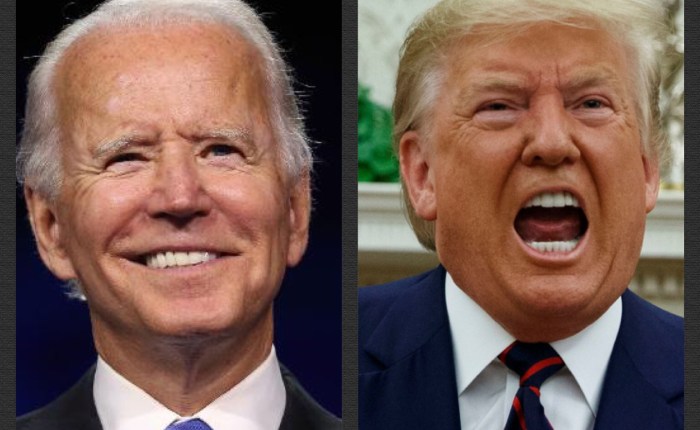
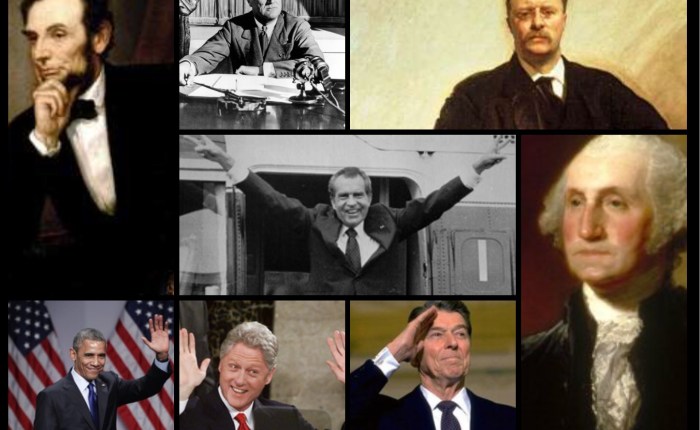

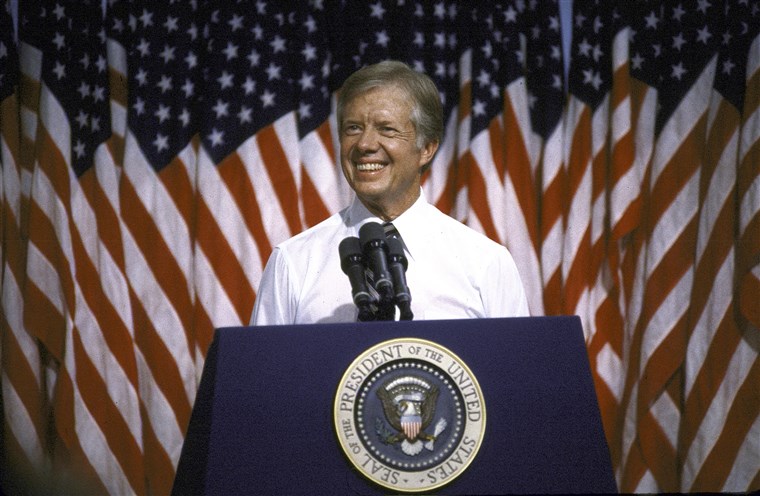
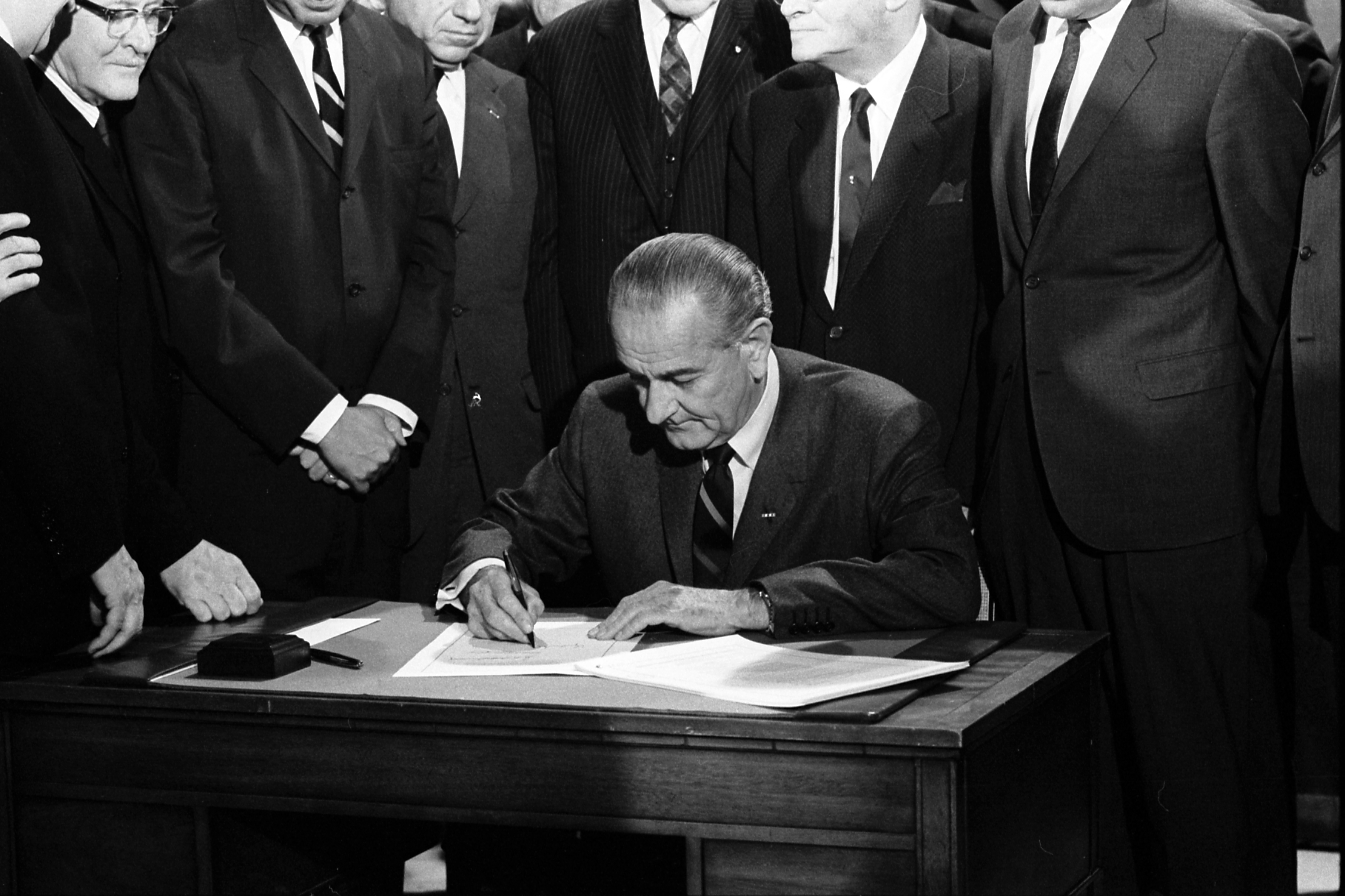
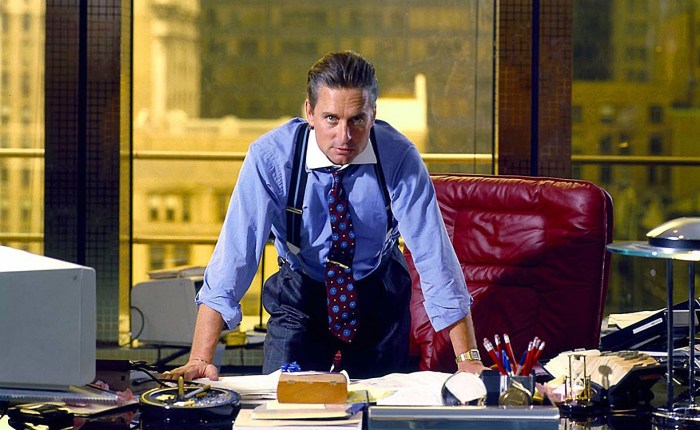
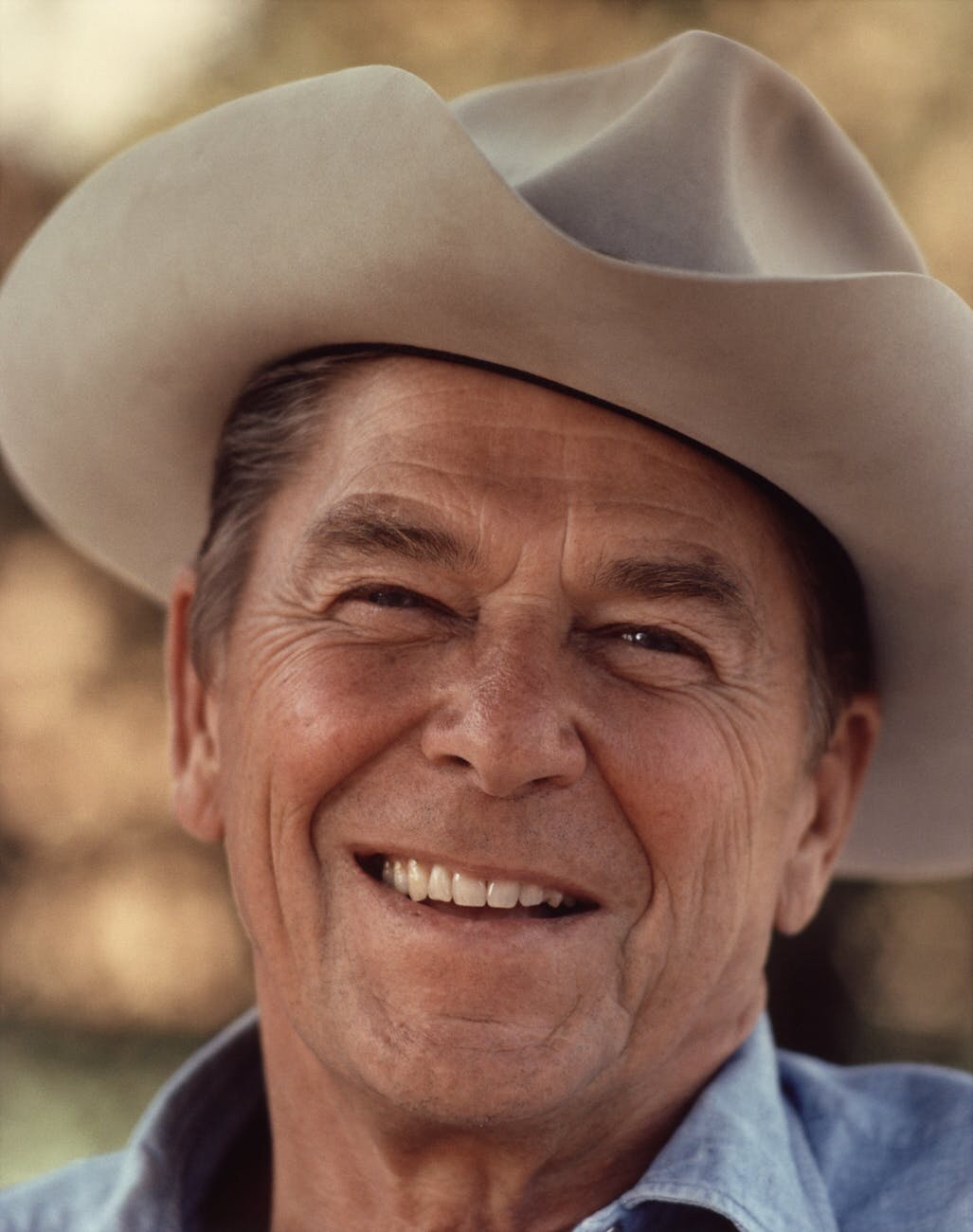

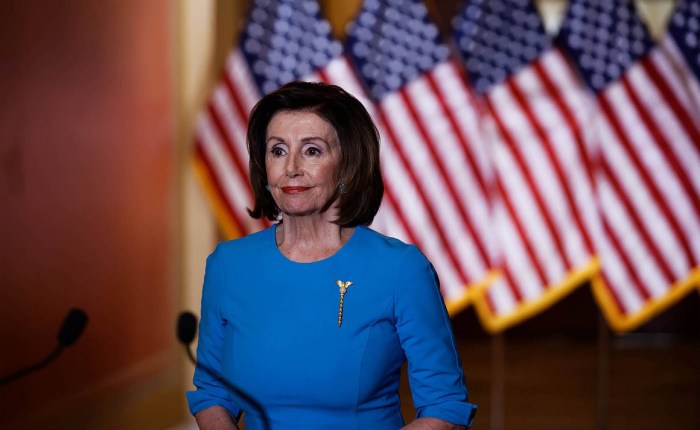
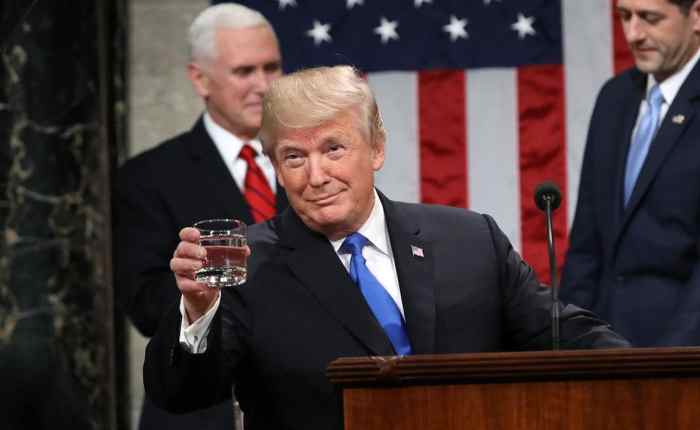
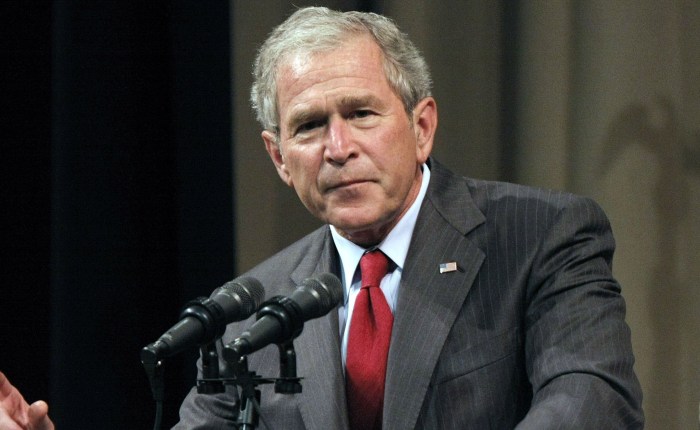
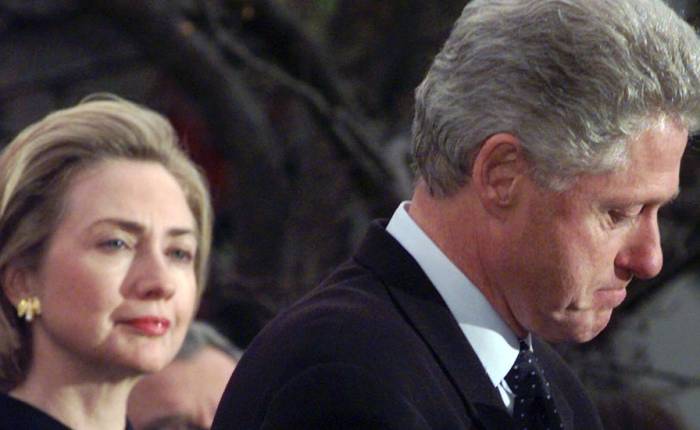

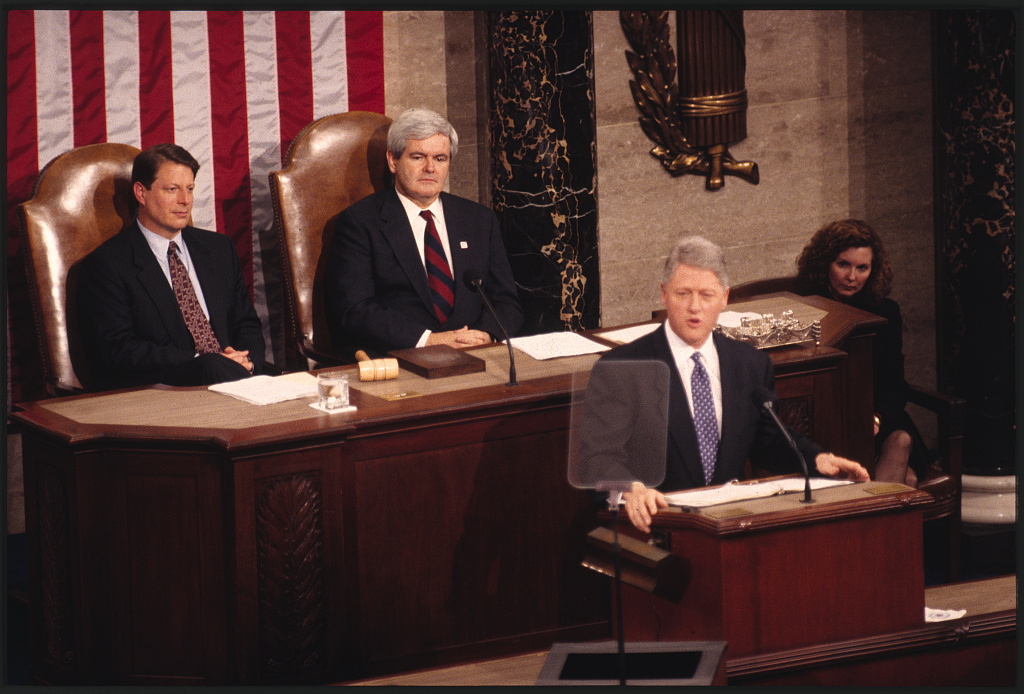
 The Washington Walrus