“You Can’t Repeat The Past”- Historical Accuracy in Film

“You Can’t Repeat The Past”- Historical Accuracy in Film
The idea of historical accuracy, when it comes to film, has always struck me as a highly subjective contest of bias and personal preference. After all, how can one ever truly achieve this goal when one accounts for shifting language, cadence, beauty standards, politics, inaccurate retellings, and scarce sourcing? It’s basically impossible. And yet, that is not to say we shouldn’t at least strive for some target, depending on the genre and artistic direction of the project. The question is where we draw compromise in a changing cultural landscape.

A new trailer for Christopher Nolan’s The Odyssey was released recently, which unsurprisingly set the internet ablaze. How could Tom Holland be saying “dad” in this Bronze Age epic? Would Odysseus really say “let’s go”? What’s with the armour? And the… diversity. Now, part of me would like things to be as true to the period as possible. However, there are two notes worth considering here. Firstly, part of our collective imagination is drawn from the biblical epics of the 1950s, when these movies were more fashionable. They were likely seen as inaccurate then too but have stood the test of time, cementing their legacy atop the minute flaws. Secondly, outside of details like the armour, the time is largely unknowable and inaccessible, if aside from a few general strokes. Suffice to say, they weren’t speaking English. They didn’t have our mannerisms, rhetorics, or way of looking at life, necessarily. They didn’t look like us, even without accounting for races. (Heck, we seem to even look different now from the 1990s). Plus, you know… it’s mythology.

The outrage is quite obviously premised on the debate surrounding DEI in film and television today (i.e. the onslaught of “woke” in our modern culture). I’m not going to delve into a subject that requires a book’s worth of address but in considering the question of compromise, let’s be fair: is it fair to exclude people of colour from one of the rare, prestige Hollywood productions just because you feel it’s not historically accurate? (Especially when it’s one based on mythology that involves a Cyclops.) Perhaps there are subjects and periods where this is best avoided too for other reasons of sensitivity, but given the changing make-up of our population in juxtaposition with the historical great works (frequently revisited, e.g. Shakespeare), historical accuracy can be something of an albatross.

To take “make-up” on another level however, let’s address cosmetic procedures and “iPhone face”. Given they’re such a recent phenomenon, it does seem embarrassing to have someone dolled up with modern aesthetics appear in a 19th-century piece (cough… Enola Holmes 3). Everyone has their own squabbles of course but for me, this is an easy one to avoid. In fact, if anything, people need to look worse if it’s a period piece (cough… Wuthering Heights ’26) or at least as true as possible to the style of that era.

Inevitably, we always seem to fall short despite our efforts. Sometimes, it’s laziness; e.g. with American Hustle, everything feels like a stereotype of 1970s’ styling. Sometimes, it’s a compromise to appeal to a modern audience, most typically with employing modern humour, phrases, and sensibilities (we’re a lot more insincere and referential nowadays). Oftentimes, it’s because the entertainment comes first; after all you have to sell Braveheart to a mass audience to make money. To be historically accurate in telling a story, particularly if it’s biographical, would mean the inconvenience of toning down sensationalism and re-arranging the flow of events. Making a movie is tough work and as they say, you can’t let the truth get in the way of a good story.

When people say they want historical accuracy in their films therefore, I don’t think they entirely mean it. They want a degree of it, for sure, but where that line is drawn simply differentiates by person and by project. It’s crucial to appreciate too that history is always being revised and today’s understanding of, say, the 1920s will differ from the 1960s’. Perhaps, we can only truly capture the times we are living in and to “repeat the past”, as reference to the 2013 adaptation of The Great Gatsby (which says more about its time than the 20s) is a fruitless endeavour.

The Culture Of Anti-Ageing

The Culture Of Anti-Ageing

Perhaps it’s my early balding or perhaps (more optimistically) it’s my principles but the culture of anti-ageing has taken on a sinister and repugnant undertone. An obsessive zealousness now marks social media with regards filters, facial tweaks, fitness, and beauty standards. What were once the (albeit hushed) hallmarks of Hollywood and the elite (Botox, cosmetic surgeries, etc.) now seem to have become all-too-common, begging the question of when our desires become our expectations; and where we go from here.

One only has to compare photos of one’s parents or grandparents in their 30s or 40s or 50s compared to today to see that stylistically, things have changed. And not just fashion wise (although that has some effect). People use moisturisers a lot more nowadays and proper UV protectant suntan lotion and hydrate. Nutritional advice is a lot more varied. Supermarkets stock a wider selection of foods. Dietary requirements are better met. There’s many natural, progressive, and clever changes resulting in a more youthful complexion across all generations. So to some degree, we are all bound to look a little fresher than the boomers did back in the day.

However… while such changes are reasonable and encouraged, they’re inevitably bound to this notion that beauty ideals are an ever-changing target. When does taking care of oneself with the appropriate supplements and foods cross the line from being healthy to being health-obsessed? When do once extravagant routines become the norm? Well, with Botox, it seems as if we’re reaching that point. As Amanda Hess wrote in her New York Times’ piece “The Art of Botox” (last year), “[it] once suggested vanity, delusion, and self-consciousness, but now it has fresh associations; with confidence, resilience, even authenticity, as the idea of ‘having work done’ has come to be seen as a legitimate form of work.”

This is eye-brow raising stuff. Well, not for people with Botox. For others however, the idea of regularly injecting yourself with a needle to stiffen facial muscles seems extreme. At least, it did to me but again, it’s becoming increasingly common. So, maybe the taboo is based on ignorance. After all, if it promotes confidence and makes someone happy, who are we to judge? Well… there’s two points I’d counter with here: 1) does such a procedure then encourage one to follow onto the next step, e.g. plastic surgery and 2) is it use as a preventative not reflecting the very issues we try to tackle with the mental health of young women? With the latter point, Botox is increasingly being used from a young age (early 20s) to prevent the appearance of lines or wrinkles ever appearing. For all the horrible beauty standards advertised on social media, is this not us directly heading the wrong way? That’s a whole other level of pressure to contend with. And what does it say about how we treat older women with regards the ability to express themselves freely?

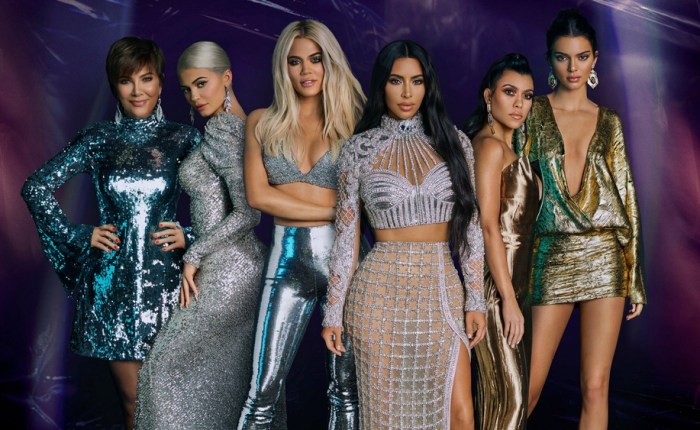
We live in a strange time as regards the discourse of beauty standards and mental health. Celebrities and influencers (like any dumb Kardashian) promote self-actualisation with cheesy quotes, while looking, themselves, like ageless narcissists. What follows is an uncanny-valley like, cognitive dissonance in rectifying the gulf between inner confidence and outer beauty. If you’ve spent hours on the make-up chair, gotten Botox, and surgeries, and applied filters, well then your message promoting such confidence or fighting unrealistic standards kind of rings hollow.

It may be an obvious point but Hollywood deserves blame. For how long now, has a male lead been coupled with a female two decades younger than him? Why are there so few roles for women past their 30s? (By which I mean women who actually look their age?) The same could be said for men, to some degree. It may all be a case of good genes but really how many men in their 60s do you know keep a full head of coloured hair? A lot of them look better in their 40s and 50s than they did in their 20s. That wasn’t the case back in the 70s or 80s. Something fishy’s going on there too…

Or how about beauty brands actively going out of their way to promote falsehoods. When Cara Delevigne was 25, she was chosen by Dior as the face of its “Capture Youth” line for which the target audience was women in their 30s? I won’t even try breach the nonsense of Kylie cosmetics or anything else that loathsome family promotes (to save you time, have millions and go to a plastic surgeon, then add some blush or something, I don’t know). Let’s, at least, not presume innocence on the part of these companies. The beauty industry thrives on the insecurities of its consumers and when you campaign against something as common as ageing, the possibilities are endlessly toxic.

Look, one can’t determine what’s right or what’s best for anyone else. In many cases, exercise and proper dieting will do you wonders. In many other cases, tweaks are (not needed) but implemented to instil confidence. Sometimes the buck ends there and sometimes it’s a shallow confidence that can never be satisfied. The bigger, albeit darker picture that emerges from this train of thought is that, consciously or not, we are pushing the boundaries of what’s expected with beauty standards. And in this culture of anti-ageing, ugly perversions emerge that undercut a so-called “healthy” lifestyle.