Trump v. Biden: The First Debate (2024 ed.)

Trump v. Biden: The First Debate (2024 ed.)

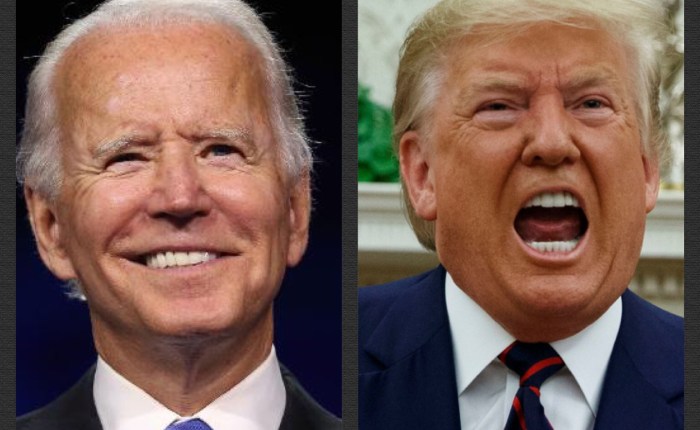
Back in September 2020, myself and a couple of friends discussed whether or not it was worthwhile for Joe Biden to debate Donald Trump. While the former president and clown prince of crime’s theatrics would surely play off the televised medium more fancifully, we felt it was important for Biden to take a stance in establishing normality again. Now, four year later, things have changed. The once-challenger, now incumbent has added much clout to his nickname “Sleepy Joe”, thanks to a number of recent bewildering public appearances, whilst his opponent has racked up an array of criminal charges, already convicted of one. Neither prospect is exactly gleaming in the eyes of the public, with a recent CBS poll showing Trump leading by just 1%. Will Thursday’s debate change much? Given how polarised the country has gotten, probably not. Nevertheless, I thought it worth exploring anyways for the heck of it.

Firstly, we should acknowledge how two rules, crucially, seem to suit Biden more: that there will be no audience and mics will be muted when the other person is speaking. Lame. On the other hand, there will be no pre-written notes either, which is fine for Trump since many of his best zingers seem to have come out of the moment, particularly in 2016. So if he can produce a couple of new greatest hits (in line with “weak-sauce Jeb” and “I should’ve won [the Emmy]”, then Biden may be in trouble. His material simply isn’t as entertaining. Having said that, we didn’t see as much of that as in 2020, when Trump’s maverick status had started to veer from hilarious if dumb to deranged if occasionally hilarious.

Supposing “the issues” come up in this debate, the candidates will likely spar on inflation, immigration, Roe v. Wade, and funding for Ukraine, among other matters. (Undoubtedly, the culture wars will seep into the mix too, since both sides see each other as an existential treat to the country vis a vis the fight for democracy, lawlessness, the far left, and so on.) Biden will make the case for an economic success story, which he can back up with GDP and unemployment figures. Trump will argue inflation has been a disaster for the country and that people’s wages travelled a lot further four years ago (from the book of Reagan). In tandem with this, he may throw his lot in with the Republicans questioning how much money should be put into defending Ukraine. Then, he may move onto the border. It depends how much time is wasted and what questions are asked (maybe that doesn’t even matter).

Biden will be on the defensive against a range of broad accusations and probable lies. Since perception becomes reality and the visual spectacle matters as much (if not more) than the content of what they’re saying, combatting them one by one may not prove the most effective strategy. Debates have swung one way or another for a variety of reasons, from JFK wearing makeup in 1960 to George HW Bush checking his watch during a question in 1992. Given the narrative that the president’s not “all there”, he needs to be as sharp as possible and to the point without any stammering or lost gazes.

Should Biden choose to hammer on the point of Trump’s multiple legal troubles, he will of course have to answer for his son, Hunter. Many people will of course come to the lazy false equivalency that both candidates are mixed up in corruption and so “it’s a wash”, but to Biden’s credit, he never tried to intervene or stir the legal course of action with regards Hunter’s mishaps. Perhaps that can be used to his advantage. Perhaps he can point to the kind of accountability he and his family take, which Trump has tried to elude and undermine. Perhaps that will work…. Though perhaps not.

One of the main issues Biden has returned to in his case against Trump is the January 6th Capitol Insurrection. This will likely be a talking point which he can exploit by asking Trump if he will concede the election should he lose again. I’m not sure what Trump’s strategy will be here, other than to deflect to other matters and emphasise the bias of the mainstream media against him. He will have to try wiggle out of it somehow and Biden, in turn, will have to keep the spotlight on this. But again, since everything’s so politicised and since three and a half years have passed since, this also may not matter much.

If I were to advise, without any moral culpability, I’d tell Trump to needle the president on the devastating effects of inflation on the average person and crime in America. For Biden, I would advise trying to keep up his 2020 performance, while pushing Trump on January 6th and how disastrous his first term was, thus resulting in him “losing” (emphasise that word) the last time. At this point, I predict a Biden victory in November (if a lesser one than before). While Trump’s percentage lead is not to be dismissed, he has come down in the last couple of months and come election time, he’ll have been raked through the fire a lot more than he has been the last couple of years, in which he’s been uncharacteristically absent from the spotlight. (Relatively speaking.)

Joe Biden at 100 (Days)

Joe Biden at 100 (Days)

In the pantheon of presidential historical evaluation, the first 100 days has never been an accurate indicator of what is to come. Often referred to as the “Honeymoon period”, it tends to reflect a more restrained take on the presidency, given its freshness, initial public support, and change of power dynamics. In a sense, everyone’s testing the water and willing (on some part) to give the benefit of the doubt. This is doubly true for the Biden administration, who have come into their own with a long-suppressed sigh of relief following the turmoil of the Trump years.

This is perhaps the most evident thing about the new president; his normality and candour in juxtaposition to the raging clown prince of crime, whose final days saw siege upon the Capitol. Joe Biden has been effective, thus far, in restoring a sense of normalcy and decency in how America tackles its problems. A naturally empathetic man, he’s struck the right tone in addressing mass shootings and the pandemic, in a time when true leadership has been needed.

His words have been supported to by action too; namely, the $1.9 trillion Covid Bill set to alleviate the economic offsets of the pandemic. More liberal commentators, worried that he would prove too moderate, have been surprised by this bold course of action. Thankfully, Biden understands that dramatic times call for dramatic responses and having paid witness to the gridlock of the Obama years, he’s done his base right by practically ignoring the Republicans’ attempts to slim down this bill.

The pandemic has, at this point, reached a turning in the tides with over 200 million Americans vaccinated at this point (a goal set out by the administration). As always, I would be reluctant to give Trump any credit since he only ever served to aggravate the World Health Organization, undermine Dr. Anthony Fauci, and meander wildly on the severity of the virus but it is worth at least noting, that some structure was in place for Biden to capitalise on this reversal of fortunes. As a leader, he’s set a good standard however, asking Americans to continue wearing masks while paying respect to the scientists Trump so callously questioned.

The Covid Bill hasn’t been the only bold proposal put forth too. Biden has also unveiled a $2 trillion infrastructure plan which has long been overdue (Trump had actually been correct in 2016, assessing this as one of America’s gravest issues but failed to deliver in appropriate fashion). To his critics, this may be overreaching. They’d have a point too, since the buck has to stop somewhere. With that said, with the awesome power of the presidency, it is gratifying to see these major issues tackled with some gravitas. Just remember, that any leader’s going to be popular when spending.

Elsewhere, Biden has marked a contrast with the Trump administration by suspending the Keystone pipeline and rejoining the Paris Climate Accord. He’s also gotten the first notable gun control package in three decade (though limited) and boasted the fastest cabinet appointee approvals in four presidencies. On the surface, it seems like this has thus been a highly successful, action-oriented start. Beneath the surface however…

Well, not to quash people hopes but yes, the tough days are ahead. As eluded to earlier, spending makes one popular but bills have to be settled and the economic downturn of the last year’s events has yet to manifest. (We can only hope this massive investment will curb the worst of this.) The immigration problem, too, is rearing its head, as Biden struggles to set out a new policy, differentiating from Trump’s. (Even George W. Bush has called on his party to act in Congress to work on this.) Plus, while justice was exacted in the George Floyd trial, we’re still seeing disgusting instances of police brutality against Black Americans. Now that a Democrat is in power (and the party has a slight majority), some legislative action will be expected. The Republicans, momentarily out of sorts for now, will return with their combative stances and make this presidency increasingly more difficult.

So, while a dark cloud looms on the horizon, we can at least be thankful that Biden has proven more radical than expected in his approach to the immediate major problems facing him. With his conciliatory inaugural address too, he has hopefully set out a renewed air of compassion for the politics of compromise in Washington. In a sense, reversing the hateful rhetoric of 2016-2020 may prove his greatest feat.

America, Stop Putting Yourself First

America, Stop Putting Yourself First

For those of you unfortunate enough to have caught the 45th President’s inaugural address, you will not need reminding of the fact that America would be putting itself ‘first’ henceforth. (Seriously, he pretty much just repeated that again and again for twenty minutes.) Americans, however, should consider the question of when their nation has ever done anything but this. After all, even though they produce only 5% of the world’s energy, they consume 24%. Their defense spending outranks the next top seven nations. They owe China over $1 trillion. And they have a dubious habit of invading wherever the globe may stop spinning at, depending on what’s for dinner. So Trump, if you or your idiot supporters are reading, please heed this blog.

The first week of the Trump administration has stirred about as much controversy as George W. Bush did in his first four years. Aiming to move against abortion (women’s) rights and the Department of Energy whilst reinstating interest in controversial pipelines have merely been the cream of this crop. This past weekend saw the 36% approval-rated President (and usually the first week is a popular one for any president) signing another executive order to place a temporary ban on immigrants from select countries (Iran, Iraq, Syria, etc.- the usual suspects). The shit hit the fan immediately with a New York judge, Ann Donnelly, ruling to prevent the removal of approved refugee applicants, people with valid visas, and “other individuals… legally authorised to enter the United States”. This did not impede on the constitutionality of the President’s order but it did send a strong message that will undoubtedly be interpreted as ‘the law being out to get him.’ The public, strangely enough, sided with the judge, in another devastating blow to the unpopular oligarch (whose approval rating, again, is 36%).

1479063984937

This is significant. We cannot repeat the mistakes of the past and turn a blind eye to the refugee crises. Shutting down national borders may be a means to consolidating national security but is there a point to proudly claiming this as one’s nation then? Remember the Holocaust. Remember the breakdown of Yugoslavia. Do not let this be another instance of when humanity failed to look after its own. Do not make me look up quotes to illustrate this message better. Just accept that there are times when the right thing could have been done.

Immigration is not the only instance where Trump aims to look out for his beloved country, however. He’s also bringing the jobs back. Whilst this is undoubtedly an appealing notion (which anyone could get on board with), he seems a little bit naive. America is a strong nation with an innovative market but it’s also, like every other country, part of a global network of commerce. Many established brands such as Apple have held bases abroad for years now, to the point that turning back seems inconvenient, if not, inconceivable. I will not claim to be an economics’ expert but on a basic level of logic, do these companies need America more than they need the rest of the world? Are their images not enhanced by the fact that they employ in other countries? Is that not, in turn, beneficial for US relations with these countries? America needs to establish more manufacturing jobs, undoubtedly. They should also invest more in green energy. There are ways to thus get these jobs. On a practical level though, Trump’s ideology falls through.

wq2e

Of course, this notion of putting America ‘first’ cannot be solely attributed to Trump. It has always been in the lexicon of their culture and history. It stems from that age old idea of American exceptionalism which has in turn, always had to be taken with a grain of salt (or in Trump’s case, whatever they put in a KFC bucket). It’s true that the US retains this image of mysticism; a land periled by the optimist hard-worker who could go from rags to riches and turn their life around. Whether that’s ever been the case, well… we’re getting off topic – the point I am trying to make here, is that Americans need to readjust their attitude about what their nation represents. If you said, “only in Ireland..,” you would likely be referencing some disappointing anomaly in the system. In America, it would likely be with a chirrup of prevailing encouragement. To an extent, it is admirable that they believe anyone can grow up to be President. When you spout nothing but ideological fanfare however, there is a tendency to avoid self-doubt, which is a key ingredient, to any great mind. Self-doubt (or skepticism) makes you think; question yourself and your underlying principles. It makes you consider other factors; other people and other countries. In conclusion, it is imperative that America recognises the importance of acknowledging and practicing self-doubt on a world stage.