A Bridge Collapsed: The Biden Presidency

A Bridge Collapsed: The Biden Presidency

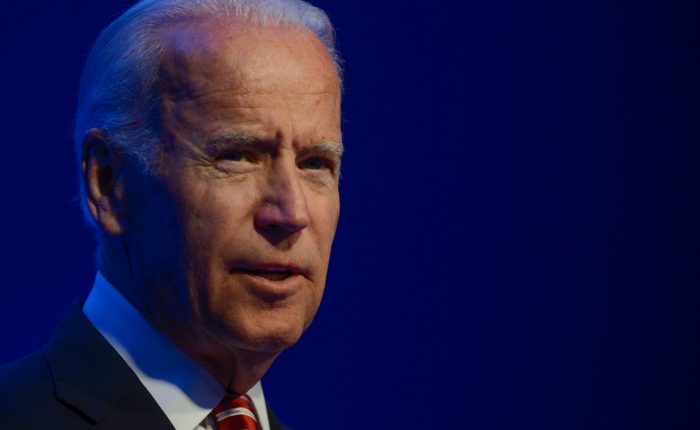
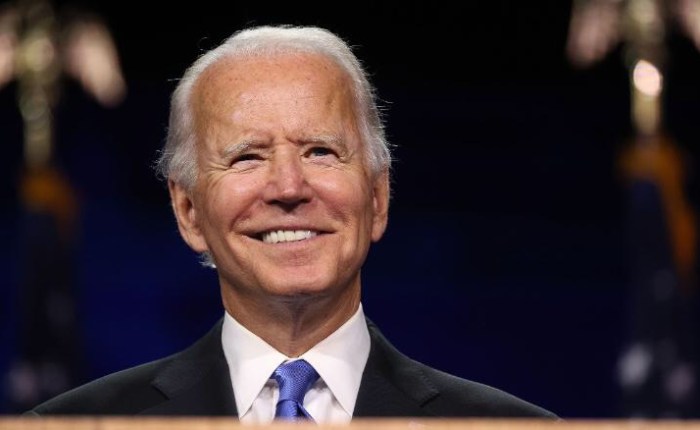
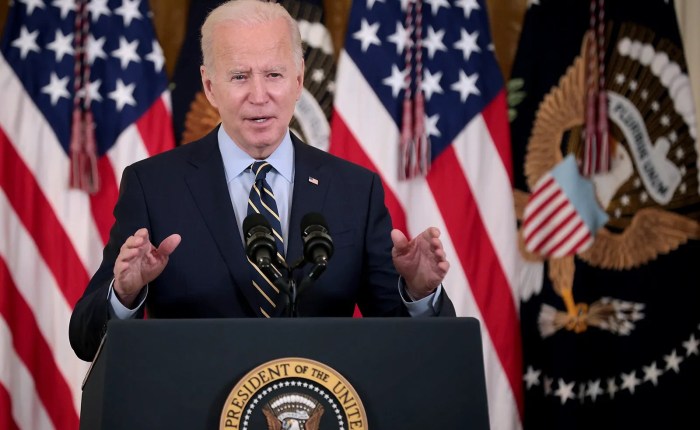
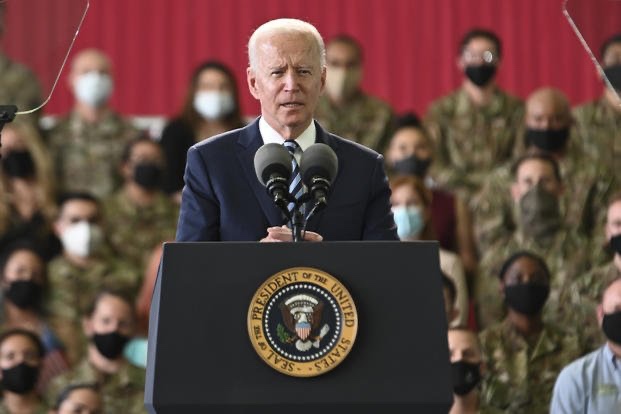
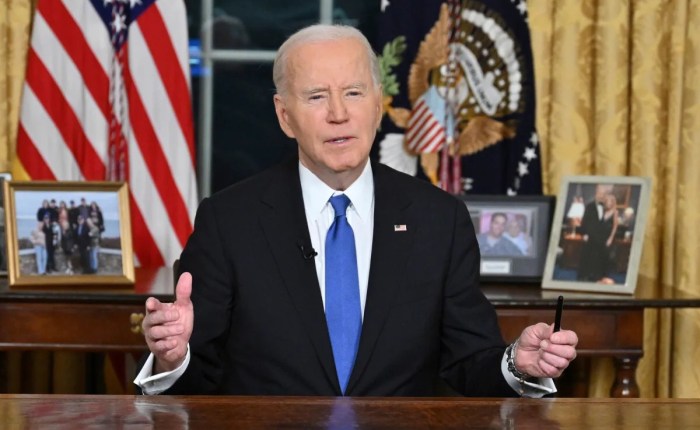
Had President Biden made the decision to withdraw from the 2024 race earlier, we might’ve been writing a much different story. Alas, his refusal to do so (in conjunction with his initial proposal that his presidency would mark a “bridge”- like transition to a new generation) will likely be the first thing people recount when asked about his legacy. As it stands, this legacy looks on the grim side of things; at least, according to a Gallup poll which showed 54% of Americans viewed him as a “below average” or “poor” leader. But… history has a way of changing perspectives and so in complete folly, we’re going to (already) try and take the longview in assessing this administration.

Well, it’s a bridge of some kind, albeit between two terms of Donald Trump. So assuming the historians hold true on their negative assessment of Trump’s tenure, they’re not going to be too pleased with Biden for enabling his comeback. Granted, a lot of that blame can be placed at the feet of top Democrat party heads too but the story of a fractured party, torn by generational and cultural values, doesn’t exactly help Biden’s case. Had a more effective coalition been built, there might’ve been proper competition for the MAGA crowd. Instead, this party floundered and yielded way for the return of a stronger Trump backing. 

Granted, some of this was beyond Biden or Trump’s control. The chaos of the pandemic, for instance, was always going to have severe economic repercussions and this came in the shape of a massive 9% inflation rate in 2022. Like Jimmy Carter or any other unfortunate president before him, Biden simply had to take the hand he was dealt. To his credit, he passed sweeping legislation such as the Inflation Reduction Act to tackle this but since prices never went down, the average person was unable to see the benefits of such actions. In actuality, the economy has improved, with record-low employment and a record amount of applications for new businesses. In the next couple of years, Trump will undoubtedly take credit for the changes in fortune as they manifest more clearly. Unfortunately, sound economic policies just can’t be waved as a flag until everyone has else got theirs.

For that matter, the major achievements of the Biden presidency, such as the CHIPS act, his supports of unions, and infrastructure bill seem to pale against the half-glass empty analyses, i.e. the revelation that there are still some ways to go. This will always be true with regards any measures taken by a sitting president (who can only face tough decisions). For example, while the “Plan B” proposals of his student-loan forgiveness scheme were withdrawn, he still managed to achieve $180 billion in loan forgiveness. 

And then there is foreign policy, where there are domestic differences to contend with. Given another era, there probably would’ve been a consensus in the US against Russia. In the 2020s however, there’s even a faction of Republicans who favour their former adversaries over the Democrats, complicating the funds appropriated for Ukraine’s defence. Biden has been steadfast in his support of NATO and a strong ally of Zelensky, but as Trump prepares to take office again, a question mark lingers over how this will resolve. With the Palestine-Israel war then, we have seen divided opinions in the US on an ethnic and generational level. This has marked a shift away from the broad support Israel was once guaranteed there, with critics of Biden’s (and continued US foreign policy) arguing he’s helped facilitate war crimes in the Gaza Strip, failing to ever hold Prime Minister Netanyahu’s government to account. Should the very recent ceasefire hold, Biden might be looked on with some deference eventually, though it’ll be eternally countered with questions of why he couldn’t have pushed for peace sooner. This will also likely go down as the most contentious foreign policy decision of any president since George W Bush. We’re also going to have to contend with speculation on whether the incoming Trump administration was a greater factor in allowing this to pass.

Whichever way you look at the Biden presidency, Donald Trump seems to hover over it at every turn. The return to “normalcy” or the goal of “restoring the soul of the nation” has either fallen flat or been dismissed as liberal hogwash. Trump has, in a sense, been legitimised this time around; by virtue of winning the popular vote and the Democrats’ own flawed power dynamics leading to their own downfall. And despite a relatively decent farewell address, one can’t help but roll their eyes when Biden warns against the abuse of power, weeks after pardoning his own son (who apparently was above the law). The problem remains that the top Democratic Party members appear too elitist, slow, and out of touch with the people. And for much of Biden’s term, that image was capitalised on, with every stutter and pause exemplified to the Republicans’ benefit. As it stands, the Democrats are weakened and down on their luck. Of course, they’ve been handed major defeats in the past and come back before but it’ll take a proper chance to mobilise their base next time; a new generation with some authenticity. If one thing can be learned from these last few years, whether with the election or Biden’s cognitive decline, it is that you can’t pull the wool over the people’s eyes forever.
Lessons for the Left

Lessons for the Left

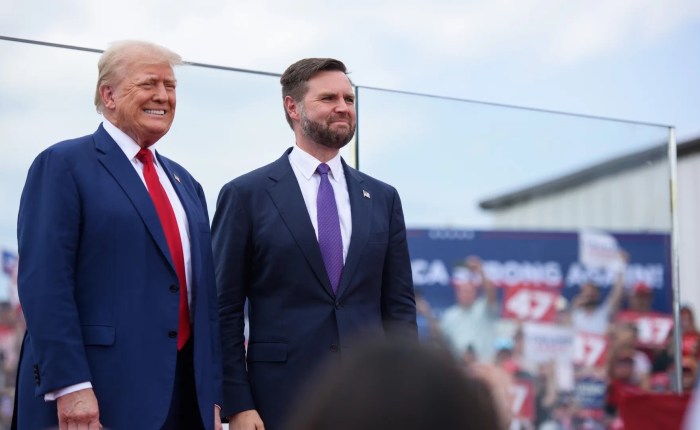
One week ago, the Democrats were handed an unambiguous defeat. A royal smackdown. Not just in the presidential race (across the electoral college and popular vote), but in the house and senate too. While many have been quick to suddenly attain 20-20 hindsight, it remains important for the Democrats to actually undergo proper penance, learn some lessons, and knuckle down for some hard work. 

Lesson 1: Democratic Process Matters

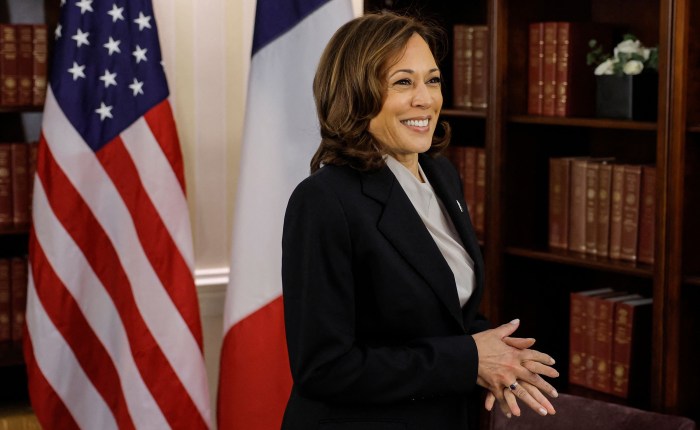
Up until a month ago, I thought Kamala might just pull through. Given the game-changing nature of her succession to the ticket, it felt like that wave of momentum might hold on (as discussed in our last article). Unfortunately, it crashed a little early from the shore and became a somewhat hollow experiment, in the wake of media appearances and interviews on her part, contrasted with a series of PR grabs for Trump (the McDonald’s gig and “garbage people” alliance). Ultimately, it became apparent that she just wasn’t the best candidate for the job (on the Democrats’ side). This leads us to a crucial point: the gulf in credibility between this party’s supposed defence of democratic values and their practice in nominating leaders.

In 2015-16, Bernie Sanders was one of the most exciting and promising voices of the left. Many (including myself) felt he would’ve done better than Hillary against Trump. Of course, history went one way and much of the older generation and establishment didn’t agree. They weren’t exactly honest in their tactics however, with the DNC swaying things in favour of Hillary. But okay, that might have been excused… if it were not for the race of 2020 coalescing around Joe Biden, seemingly just to speed things up. (I will never forget Pete Buttigieg dropping out after just his fourth primary, despite winning the first major one or Bernie’s shots being dashed by the onset of the pandemic; even if it understandably changed matters.) The point of the matter is that the party’s leaders were and have been directing the flow of this so-called democratic process.

Had Joe Biden withdrawn earlier (as he should have), there might’ve been time for a full primary season and open convention. Instead, it was purported that Biden was totally fine and capable of running again. When it became clear (during the debate) that he wasn’t, the Democrats began to panic. This meant taking quick action and… well, we’ve explored this all too recently. I’m not saying there was any easy path to be taken here. An open convention at this point probably would’ve been messy too but in the name of saving democracy, the Democrats didn’t exactly follow through with the public’s wishes. (Kamala’s approval ratings were pretty low before her big boost.) It’s a simple lesson but an important one for them to remember: practice what you preach. Let the cream rise to the top in 2028, without meddling.

Lesson 2: Retire The Vanguard

This will be brief. It’s time for a new generation of leadership. Joe Biden did well in 2020 but was never considered by anyone to be a serious contender for a two-term presidency. In those four years, the party should’ve been looking for their next Barack Obama… okay, that’s a little optimistic but they should’ve been looking for their next Bill Clinton or someone who could actually inspire voters. Instead, they’ve plodded along with Nancy Pelosi (retired from her speaker role but) retaining enormous influence. (She’s also just been elected for another term at age 84 by the way). I’m not saying these boomers have done a bad job or are unable to continue their roles in some capacity but they’ve dominated the political sphere of influence since the 90s at this point. It’s a different world now and it’s time for new faces.

Lesson 3: Re-Connect With The Working Class

Why the party of big business, led by a billionaire, has managed to secure all the swing states and won the allegiance of the working class should be mystifying. Economically speaking, the Democrats have been much better for the low-wage earner and yet as Bernie Sanders put it, “they feel abandoned” and have thus abandoned their party. Some of this was inevitable with inflation shaping the election. Tragically though, Joe Biden and Kamala Harris just never managed to find a way to assure the public that things would improve. To start with, Biden stated (albeit accurately) that the economy was in good shape, with inflation rates coming down, when he should have empathised with people struggling with grocery prices, which never came down or matched the average wage hike. When Kamala came to acknowledge this struggle, it was all too late. Trump had swept up the disenfranchised who believed his rule had contributed to a more prosperous times (with Obama missing out on credit).

This was always going to be Kamala’s greatest struggle (besides interviews). She had relatively little time to make up the ground Trump had in the swing states. But let’s face it: he was also just better at getting out there.

Lesson 4: Embrace New Media

Trump made great waves by appearing on long-form podcasts, such as Theo Von’s and Joe Rogan’s. This chiefly helped to consolidate the male vote but also showed he had nothing to hide and could hold up in a more relaxed, conversational environment. Similar to Hillary in 2016, Kamala played it too safe by (at first) limiting her media appearances and then by not following Trump in this vein.

In 2008, Obama became the first presidential candidate to really understand the internet and social media, taking advantage of it to propel himself to success. Well, social media has changed quite a bit since then and people are a lot more attuned to being “sold” something. Podcasts like these don’t rely on cheap chat show bits or celebrity cameos to entice someone. Apparently with the coaching aid of his son, Barron, Trump was able to tap into an aspect of online culture ignored previously in these election cycles. Given the uselessness of big news’ media outlets with polls, it might be worth re-examining where the pulse of this nation lies. (And yes, also stop with the celebrity endorsements. Per this point and the lesson above, they don’t connect you with the people.)

Lesson 5: Control the Outrage

The first few weeks of Trump’s first term were exhausting with multiple decrees garnering fresh cries of outrage from the Democrats and media. Clearly the controversies didn’t matter that much in the end. The simple thing about Trump that the Democrats have never been fully able to appreciate is that he’s a disruptor. Therein lies his appeal. He is a kind of antidote to traditional politics and corruption; albeit not a man who plays by the book.

Naturally, there’s going to be a lot to be outraged with over the next four years. Not everything will necessitate a battle. Two impeachments and multiple court cases didn’t eliminate Trump so it’ll be important to tackle him in a different way. Granted, I don’t know what that way is but since the Democrats have so far been playing a losing strategy, it’s worth considering what’s worth their energy.

Conclusion

As Jon Stewart stated in his latest episode of The Daily Show a Democratic comeback is plausible. Reagan won every state but one in 1984 and Nixon trounced McGovern in 1972. The senate and house will always swing back and forth. Indeed, the history of the electorate is basically a game of ping-pong. As George HW Bush’s team put it, in analysing his defeat in 1992, “change is the only constant of politics”. So on and so forth. There’s hope there but to be frank, for at least a few years, the Democrats will have to contend with Republican power, will, and legislation; via the presidency, the house, the senate, the majority of governors, and the Supreme Court. So… good luck and take what you will from those lessons.

The Last Stretch for the Kamala Wave

The Last Stretch for the Kamala Wave

With less than a month now to the election, the forecast remains murky. Depending which poll you look at, either candidate could be nabbing it. Some say Kamala Harris has a 3% lead. Others say Trump’s support is underestimated. Many argue it will simply come down to the battleground states (particular Pennsylvania). Yada yada.

It’s become so difficult to predict a US election accurately for a number of reasons; top of my list being the polarised nature of the media. It thrives on biases and in recent years has escalated to caricature-like proportions. Indeed, till CNN’s (still spliced) “60-minute” feature on the Vice President, I felt like I was witnessing the most softball interviews ever, bordering on propaganda. That is not to say Trump’s not got his own echo chamber; indeed, he would not exist if not for them. But the liberals are getting their hands dirty too and despite my preference for her eventual victory, it is worth critiquing the “Kamala Wave”. If just for pure honesty’s sake.

First, there’s an element of contrivance. Not wholly, but in comparison to say… Obama’s rise in 2008, it feels like the carpet has been rolled out for her. If we cast our minds back to the 2020 election, Kamala had an early surge in popularity before dropping off after the early debates. Months later, she became Biden’s running mate, on the basis / accusations of picking (pandering with) a female VP. The ticket won and she largely remained in the background, with some coverage (then criticism) given to her handling of immigration and the border. Indeed, as Biden’s advancing years began to show, many wondered whether he was being stubborn or doing what was necessary, in refusing to step down and hand the baton over to her. Kamala’s approval ratings weren’t great, even at the start of this year. (Even by June, really.) To many, Biden still seemed the more sensible prospect. Then that debate happened and the emergency klaxons started ringing. Sleepy Joe had to go.

Now the story being written is that Joe Biden’s decision to drop out of the race in July 2024 was a “courageous” and “selfless” one, bordering on George Washington-like sacrifice for the country. This has been one of the most embarrassing declarations on chat shows and interviews with Kamala Harris (if not necessarily by her). Let’s not forget he insisted on staying the course even after that debate, quite adamantly, until people like Nancy Pelosi “may or may not have” held discussions with him. To be fair, he may have eventually concluded what others had (with respect to his chances) but let’s face it, the Democrats played this one beautifully (at least from the point on of assuring he couldn’t win). They ousted him and got Kamala in at the perfect moment.

Biden endorsed Kamala and everyone promptly forgot he was president. Then a range of support from high-profile figures and past presidents came in. Any notions of an open-convention were quickly swept aside in the fervour of this tide. And just as Trump’s very recent assassination attempt faded quickly into the background, a star was born. It was Kamala Harris’ time to shine and in the weeks that followed, there weren’t many questions to darken the mood. 

Admittedly, there’s some sourness to this coverage; necessary but not indicative of the full picture. While Kamala is no Obama, there is some genuine encouragement to be found in the camps of supporters who believe she could be their first female president, without that encroaching as the only quality she brings to the table. She’s not a great orator or interviewee but she’s also not clueless, as some of her detractors would put it. She’s relatively engaged and relatable (i.e. no Hillary Clinton), given the right environment (see her interview with Howard Stern). She’s also able to handle Trump, as evidenced by the first (and probably only) debate they had. And she made a good choice in running mate, in Tim Walz. Most importantly for the Democrats and her supporters, she’s rode this wave to maximum potential. Unfortunately, October may prove a different kettle of fish.

Kamala’s opponents believe her greatest weakness lies in facing the media (via tough interviews). While Trump reels off a litany of bizarre anecdotes and conjectures, he comes across… stridently? Or at least confident. Kamala has been somewhat meandering, in her rare appearances.Part of the problem stems from her promotion of an image of change and not repeating the past. Her calls for action on any issue are met with derisive snorts that “she and Biden” could act right now. Of course, neither candidate’s alien to the White House but as the closing weeks clock in, Kamala will have to make sure she’s distinguished just enough from the (actually still) president. With the media’s always-fervent dreams of an “October surprise” (e.g. Comey reopening the investigation to Hillary’s emails last minute), their general flair for dramatics, and the last rounds of public and world events in concurrence, the narrative could be spun again. For while riding the Kamala Wave has proved fruitful for many so far, boredom can quickly set in. And I’m afraid that’s the level we’re at.

The Economy Is Strong But Nobody’s Buying It

The Economy Is Strong But Nobody’s Buying It

In a recent CBS/YouGov poll, 59% of people questioned described the current economy as “bad”, with nearly 2/3 believing it was stronger during the Trump administration. This stands in sharp contrast to what the experts are saying and what the numbers show: GDP growth was 3.3% last quarter, unemployment down to a record-low of 3.4% (from 6.9% when Biden took office), consumer spending is up, inflation is down, etc. The fact of the matter is, despite these impressive indicators, the “average Joe” just isn’t feeling the good times or benefits. This can likely be attributed to years of price increases prior to recent change, the uncertainty of the Covid years, and staggering interest rates. In tandem with the general politicised air of today, people feel vulnerable to what’s been described as the “vibecession”, an addendum to the “perception becomes reality” thesis.

Needless to say, this is a major problem for the Biden camp as the election approaches. As with our last piece on Biden’s presentation of his age, it’s not necessarily effective to just state that everything is fine or “the economy is strong”. The lapse in credibility comes from the day-to-day reality of gas and grocery prices; the latter of which have remained high despite the slow-down of inflation in the past year. Indeed, the gravest mistake the Biden camp has made in this respect has been to emphasise this improvement, while blatantly ignoring how desperate the rate of inflation was in 2022 (8%). Either side of that (4.7% in 2021 and 4.1% in 2023) aren’t exactly great either, when you compare with the 2010s’ figures (e.g. 1.8% in 2019). So while the economy is on the right path, people are still feeling that 11% increase in grocery prices (2021-22), which normally would have been a 2% annual increase. 

As elections are largely media driven, we must remind ourselves that fear is unfortunately a big selling point too. Therein, the anxiety surrounding what may come seems to be more pressing than ever. As the invasion of Ukraine sent energy prices skyrocketing (albeit far more in Europe), people have become wary of international affairs having knock-on effects. The beginning of last year was marked by reports of massive layoffs in the tech industry. AI meanwhile, hovers as a merciless shadow over the proceedings of so many more. The housing market, of course, remains a mess as people resist selling, lest they lose optimal interest rates. And some economists have speculated that recent consumer spending (or splurging) could create vulnerability in the market going forward. It may be a glass-half-empty approach to looking at things, but the notion of a “vibecession” (while cringeworthy as a term) is not a merit-less one.

Again, it takes time for economic improvement to translate into reality. Back in 1992, George HW Bush’s electoral hopes were partially dashed by an 8-month recession (which ended in March 1991). The sluggish recovery cast doubts on his ability to govern domestically, leading to the popular slogan employed by the Clinton camp: “it’s the economy, stupid”. A compromise on his 1988 “no new taxes” pledge had actually helped set the stage for the growth of the 1990s but alas, despite recovery by the election, Bush’s image never faired as successfully.

Will Biden’s? There has been a longer stretch of economic prosperity than in 1992 (unfortunately mired by high inflation rates) but should things keel out and continue as they are, I think there’s cause for optimism in his camp. There’s still eight months to go and the creation of new jobs and businesses are likely to bolster his image. But it’ll take some strategic selling and frankness. As with the matter of age, perhaps Biden needs to acknowledge the perception out there; how devastating inflation’s been, while promising in turn to challenge unjust profits on the parts of certain corporations. He took a step in this direction during a Super-Bowl break, by addressing the scandal that is “shrinkflation” (where product sizes shrink but prices remain high; this is whole other article though so I won’t delve deeper for now.) He needs to continue fighting for an economy that works for low- and middle-income families, via cost of living prices, as well as the bigger picture trends of GDP and employment. Again, it’s the perception that becomes reality.

How Joe Biden Should Approach The Age Question

How Joe Biden Should Approach The Age Question

Depending on your source, an alleged 3/4 Americans have “concerns” about President Biden’s age (81), including 50% of Democrats. As the oldest president in American history, it was inevitable that this would become bait for opposition. After all, it’s easy and it’s sort of fair… just as a general observation of humanity and what old age does to people. Unlike in 2020 too, the Republicans now have years of press conferences and interviews to pick a part then cut back together as presentations and memes of cognitive decline. The Democratic establishment have held steady on their candidate but even with a slew of legal landslides coming against Trump, we can still see many sweating. This is why I’ve taken it upon myself to offer some practical advice for Biden’s team in how they respond to these criticisms because so far it’s not been great.

To offer some additional context here: at a press conference earlier this month, he angrily rebutted a journalist’s claims that these were valid concerns before going on to mix up Egypt and Mexico on another topic. He also recently mixed up the president of France with a former president, Francois Mitterrand, who died in 1996. So… not great. This week, he stopped by “Late Night with Seth Meyers” for what was a fairly softball interview. Seth asked about his age and while Biden was relatively strident in his response, he immediately began to offer comparisons between himself and the mad man, Donald J. Trump; in effect, saying “you know what’s old? Trump’s ideas”. Fair enough. The ideas are what are most important. But is that really the way to handle this? It’s a pivot which shows he’s not really capable of debunking the wider criticism of cognitive decline. It’s a pivot away from a question of character to one of policy. The kind of answer that irritates rather than impresses.

Biden simply needs to accept and address this question more gracefully. He can’t outrun it. So what I would propose is that he leans into it as Ronald Reagan so expertly did in 1984 against Walter Mondale: “I will not exploit for political purposes, my opponent’s youth and inexperience.” Now obviously, don’t say that verbatim; Trump’s already been president, but you get the gist. Employ a little humour. Hire some joke writers. Take control of the story. Then… as he’s already done, you can reiterate that while you are indeed old, your ideas are not. On top of that, you’ve got a great team behind you and have a successful term already behind you. A record you can exploit. And why not; with wisdom comes age. 

By trying to manipulate this narrative or avoid answering the question directly, Biden can be painted as distracted, if not delusional. While he’s always been prone to gaffes and the odd stutter however, part of his appeal lies in his kooky grandfather persona. Occasionally not with it but ultimately, empathetic and kind-hearted. He’s the nice candidate, where Trump’s the bullish blowhard. Having a president at 81 isn’t exactly anyone’s ideal situation but in a contest of character and policy, this should be a lot easier than it’s proven thus far. Sometimes you just have to take the card your dealt. With cost of living prices still proving problematic and crises abroad, you can’t convince the public that the economy or international security is strong but what you can do is reassure them that the right man is at the wheel.

One Year Out… Does Biden Still Look Good?

One Year Out… Does Biden Still Look Good?

To answer quite literally; yes, I think Joe Biden looks dashing for a man pushing 81… But the ellipsis begs the further question of how he will look when he’s 82- which he would be upon commencing his 2nd term in January 2025. Well…

Running the country is different from running for the presidency. If we were to chalk this up to the record, Biden would look quite good (at least with Democrats). He’s gotten the US out of Afghanistan, lowered drug costs, made a start on cancelling student debt, and passed an inflation-reduction act, to name a few things. But… those measures simply aren’t painting the larger picture, which is that of an old man struggling to load up a restaurant’s QR-code menu on his phone (I know, frustrating for all). He’s old news. Past it. Out to pasture. Bamboozled by the times. Pork chops for dinner. Why, he’s even older than the president who was elected 31 years ago. The man’s ancient. Now, wisdom is acquired and in theory, having an older leader is no bad thing. But at some point, perception trumps (sorry) reality and if the latest polls are anything to go by (39% approval; Trump supposedly leading in 5/6 swing states), Biden’s not looking like a promising prospect anymore.

Biden’s detractors and supporters both fear he will struggle in the debates. While he held his own reasonably well against Trump last time, he may struggle in 10 months. Trump’s only several years younger but he just doesn’t wear his age the same way. It’s like his ego has sustained him with an unnatural propensity for spewing entertaining nonsense. Sure, Biden can fact-check him but I’m inclined to agree with Dave Chapelle’s analysis that Trump comes across as an “honest liar”. He may not know what he’s talking about but he’s not playing to the weary cringe-inducing politic-speak Biden or Hillary indulge in. Plus, last time Trump was running, the pandemic was hampering his support. This time around, virtually nobody will care about that and Biden will have four years of political baggage to account for. Basically, he’ll be playing defence this time around. 

And the defence will likely be centred around his son; Hunter Biden. That’s a whole other kettle of fish but again, since perception trumps reality, and the Republicans have been beating this drum for years now, it’ll be tough for Biden to avoid this. Perhaps too, it stings his supporters to admit that this was newsworthy, even if slight against the plethora of lawsuits dogging Trump. To the vaguely uninformed, the messaged received is: there’s some dodgy stuff with Biden, some dodgy stuff with Trump, it’s a wash; we’re all in the swamp. And thanks to the preposterous level of subjectivity in news media today, it’s hard to put things back in perspective.

Outside of all this conjecture however, two issues may affect Biden’s rating in the next 12 months; foreign policy and inflation. Typically, the former doesn’t have as much of an impact on the average voter but foreign aid and support directed towards Ukraine and Israel may weigh something. Republicans have opposed Biden’s allocation of “too much in funds” for Ukraine while support amongst Democrats for Israel has decreased somewhat. Since these are contentious matters (also worthy of a lot more exploration), I won’t dig in deeper (or cast judgement), other than to say there is a tangible level of resentment directed at the government for taking this capital from home. This leads us to inflation.

Inflation actually peaked in June of last year at 9% and is now 3.7%, but in day-to-day life, prices are still rising on the likes of personal care products, groceries, restaurants, rent, and more. It’s also speculated that it won’t keel out until 2025, which will prove a major factor in the election. Even though it’s not totally in Biden’s control, the “buck ends” at the Oval Office (as foolishly accounted for by Harry Truman). While statistically wages are up and unemployment is down, inflation will make the largest impression on Biden. It takes time for the appropriate measures to lead to results; for example, the economy was on the mend in 1992 but hadn’t yet shown, affecting Bush Sr’s campaign. As with the “controversy everywhere” analysis aforementioned, it’s hard for people to know where to direct their anger but the Republicans will beat this drum as the Democrats play defence.

So, as Biden languishes in the polls, with the possibility of the Dark Lord’s return, many have suggested it might be time for someone else to step in and run in his place. This seems unlikely at this point but not without precedence. In March 1968, Lyndon Johnson announced he would not seek re-election, mostly owing to his lack of favourability with the Vietnam War. His VP, Hubert Humphries, went on to lose to Nixon later that year, though one of history’s great “what ifs” remains in if Robert Kennedy hadn’t been assassinated that summer. And you know what, we have Robert Kennedy’s son running as an independent this year, so a Trump v. RFK Jr v. Kamala Harris ticket could materialise. Maybe another Republican could clinch the nomination, especially if one of those lawsuits leads to something with Trump. Maybe Kamala somehow gets popular? Well, there’s a long stretch ahead still but as it stands, it looks to be a rematch in November 2024 and that’s… terrifying.

The Kamala Harris Problem: Meritocracy vs. Identity

The Kamala Harris Problem: Meritocracy vs. Identity

The nature of the vice presidency is typically one of brief significance, ridicule, and vague adaptability. They’re briefly significant in the election cycle because they can be used to give some momentum to a candidate’s campaign, as the final months close in. They’re ridiculed because, while seemingly senior in management, they’re often sidelined next to other key positions such as Chief of Staff or Secretary of State. And then their actual role remains vague, depending on the administration, and adaptable, because their responsibilities may change depending on the issues at hand, their credibility, or image.

All of these things are as true for any VP as they’ve been for the current incumbent, Kamala Harris. And yet, with an approval rating hovering in the 30s (a few points below Joe Biden’s), she seems to be suffering the brunt more unjustly. To the left, this is because she is a woman and mixed race. To the right (and many others aside), this is kind of for the same reasons, if with a twist. They see Kamala Harris’ very appointment in terms of affirmative action; a choice made solely to appeal on the grounds of identity politics. To reel in those wide-eyed liberals.

This is a tough ordeal for Harris because she can’t exactly deny such criticisms. Indeed, it was always Biden’s plan to choose a woman as his running mate but given she’d been relatively tough on him in the debates, she also might’ve drawn some early intrigue for her strength in challenging a potential “yes man” agenda. This might’ve mattered to some. To most, it probably didn’t.

But say, Harris was just what many expected; a choice to appease Democratic voters. This is hardly different (beyond the issues of gender and race) in making such a decision. Kennedy picked Johnson (despite disliking him) to win the South. Roosevelt was forced to go with Truman for his fourth round, to appease his party. Mike Pence was hardly a regular at Trump’s various resorts but yielded an opportunity to appeal to more traditional, evangelical Republicans. This kind of appointment is nothing new. And yet…

Well, things have changed a bit. The cultural and political wars of today are more toxic than ever. There is increasing skepticism and frustration with the Democratic Party and liberals today (from within and outside the party) on how important identity politics has become in electing and appointing important positions. Credibility is at play on the level of perception and media coverage. Plus, more tangibly, there’s the matter of Sleepy Joe’s age. He’s 80. And while relatively fit for the job, one can’t help but hover over the matter of mortality. Indeed, the question of whether he’ll run again in 2024 has been springing up at every occasion (he plans to, by the way). This is awkward for Harris because (already labelled an affirmative action pick), she’s been perceived as a forced successor; a more likely leader than most VPs have been before her. The optics are concerning.

The gullible (or innocent) response to this quagmire would be to posit that Harris need only prove herself in the role she has to attain credibility. If you regard most the criticisms of Harris however, they’ve been mostly vague: weak on immigration (not exactly a simple issue to tackle); not doing enough to support Biden and conversely, out there too much or hidden in the background; and “dysfunctions” in her office (as if Trump’s cabinet didn’t changed a thousand times in his first year). Again, this role is largely symbolic and without definition. Harris’ main prerogative seems to be addressing immigration, voting reform, and other issues (e.g. the destruction of Roe v. Wade) with an ambassadorial-type approach, which granted hasn’t yielded any phenomenal results. But the same people who’d argue how disastrous she’s been would likely be hard-pressed to define the legacy of past VPs such as Pence or Biden, himself. The point is that most people simply don’t care about the actual job, whatever they think it may be.

To return to the matter of image then, Harris faces a challenge there may be no solution to. It seems to me that she’s been given a raw deal on one hand but on the other, having watched her give several interviews, I’m not exactly impressed by her traditionally political, say-a-bunch-without-saying-anything approach either (see her on Colbert recently; cringe). The 2024 election is looming and where the question of Biden’s age lingers, so too does a tangent on Harris’ continued suitability. At the end of the day, is she worth the hassle? Would offing her prove cowardly or tactically smart? If Biden’s credibility is at stake, I think he’d be better off sticking with her; the image of loyalty supersedes political meanderings. They may be no Obama-Biden, but they can at least stick it out and maybe one day, Harris’ legacy will be revised to reflect her support of this administration rather than her attributes as a candidate.

Do The People Want An Interventionist America?

Do The People Want An Interventionist America?

President Joe Biden has issued some major economic sanctions against Russia in the midst of the ongoing invasion of Ukraine. These measures have largely been supported by the public, both in America and across the world, as strong displays of condemnation, without taking the next dire step. The question arises everyday then: will such a step be taken? If we consider the trajectory of America’s recent interventionist past, I would say it’s unlikely. (Of course, such postulation may be emboldening Putin so there’s a caveat to consider there.)

Anyways, to take the first view, let’s look back at Syria in 2013. Obama was concerned that if the US didn’t intervene, it would undercut the severity of chemical weapons’ usage there. Rather than go in all-guns blazing like his predecessor had with Iraq though, he instead went to the Capitol to seek approval. It was determined America wouldn’t intervene. Years later, a divide remains over whether they should have with a Guardian piece in 2018 entitled “The Epic Failure Of Our Age: How The West Let Down Syria”. I mention this, not to weigh in on any specific view, but to show that it’s not always clear-cut when, where, and why America should intervene.

Had Syria’s crisis come ten or twenty years before, America may very well have sought a different approach. As it happened, George W. Bush had led the nation into two costly wars in 2002-3 with Afghanistan and Iraq. We know all about how those went but it’s interesting to consider that at the beginning, support for the Afghanistan War was close to unanimous (90% according to Gallup). Iraq wasn’t ever quite as popular but it got a whole lot less so in the following years. But what if it hadn’t gone so wrong? Yes, I understand and completely agree that the invasion of Iraq was wrong from the get-go but in the eyes of the American public, what if there had been less casualties and more success associated with it? Like with the Gulf War a decade before?

George H.W. Bush sent the military in to liberate Kuwait from an Iraqi invasion. It was a quick, bold, and decisive victory that skyrocketed his approval ratings to 90%. The mission was complete but a lot of his supporters felt he should have gone further (into Iraq) and removed the problem of Saddam Hussein there and then. He declined, though years later (under the auspices of the War on Terror), his son determined America could not hold its head high while Saddam continued to violate international laws (and maybe have nuclear weapons???) Perhaps, an invasion in the early 90s would have gone just as poorly, even with the senior Bush proving a formidable foreign policy strategist. Indeed, his interventions in Panama and Somalia (while contested and dubious to many) were well planned out and successful. Well…

With regards Somalia (which began just after Bush had lost election), the people were initially thankful for his swift intervention. His record would then turn out positively when Bill Clinton took over and Somalia descended into chaos (with Black Hawk Down and more). Bush didn’t have to deal with the eventualities such interventions can bring, where Clinton was faced with an uphill battle he hadn’t even sought. The rest of his presidency would be tested on the question of when American intervention should and shouldn’t occur with critics (and himself, later on) citing a late entry to Rwanda and Bosnia as unfortunate, if not shameful, chapters in history.

In 1996, Eric Carson wrote a piece for the Rand Organisation entitled “Public Support For US Military Operations” exploring the factors that restrained presidents, in this sphere. Having come out of the Cold War just a few years ago, America had entered a “more confusing world” where the objective wasn’t always clear as had been with something like World War 2 (where people acknowledged the gravity of the situation). Further to that, political divisions or disagreements were having a knock-on effect on public perception. To bring this back to the present, we can see the potential of this political divide crinkling American support for a “next step” as many Republicans weren’t long ago flaunting a “rather be Russian than Democrat” motto.

Public support is essential when a president has a paper-thin political majority or faces contentions. This is another reason why I feel a strong intervention from the US is less likely today than it was years ago. After 9/11, George W. Bush had the nation’s support, even if he would quickly squander it. Back in World War 2, Franklin D. Roosevelt was a president in his third term. Even though Truman’s reputation would for years be bashed by the Korean War, there was still general support for a policy of Communist Containment.

Vietnam, the follow-up to Korea, truly took on its perception as an abject failure when the public started seeing what was going on through the medium of television. With public marches and demonstrations, bolstered by the counter-cultural movement, a new picture of American interventionism and soldiers themselves (quite harshly) was ingrained in the public’s psyche. What if Vietnam had happened ten years before, however? Well, as already mentioned, Korea was a contentious affair, though the South remained free of Russian influence but it is reasonable to assert it wouldn’t have been as unpopular or ended in quite the fashion it had, heavily influencing an election cycle.

Is it bleak to conclude that Americans will support American intervention then only if success is assured? It seems to be the case though such luxuries are never realistically afforded them. Popular support, as a result of today’s media, rancour in politics, and recent dubious interventions, has become nigh-on impossible. The best a president can do, in this age, is justify the chances of success should an intervention occur, answer how the nation is a threat to US interest, exert all means of diplomacy, and run the usual course of air strikes. Though as much as history has taught us how any conflict resolves in the public’s imagination, it is also worth remembering how easily people forget history. In a 2019, YouGov poll, the people were vary much split on whether the Gulf War was justified, for example. So as an addendum, one must note that we can’t even assume a clear or factual basis for public perception when such crises arise.

The Washington Walrus’ Guide To The Supreme Court

The Washington Walrus’ Guide To The Supreme Court

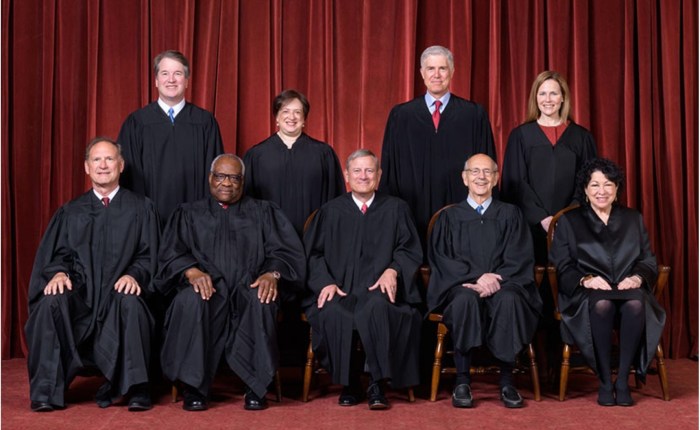
Joe Biden has announced his first pick for the Supreme Court: Ketanji Brown. She would become the first Black woman appointed, should she be confirmed. Yes, the should has become a most dubious matter of late, since the Democratic majority hangs by a thin thread, as if taken from a cat-ravaged sweater. They’ll need every Democrat in the Senate on board and likely Kamala Harris too (as the deciding tie-breaker) should no Republicans offer support. Which they won’t.

Sadly, the Supreme Court nominating process has become embroiled in the same petty politics that dominates basically every other major appointment or campaign in Washington. And it’s much more consequential since Supreme Court justices don’t have terms limits (Clarence Thomas has been serving for 30 years now). So a lot is on the line. Plus, this is just replacing one Democratic appointee (Stephen Breyer) with another. The Republican appointees (i.e. conservative judges still hold a majority of 6:3 which is unlikely to change anytime soon. Can anything be done and what’s the best course of action? There’s really no clear-cut answers but we’ll delve into it, after first taking a look at the justices:

  1. John G. Roberts (Chief Justice; appointed by George W. Bush; 2005; confirmed 78-22 vote)
  2. Clarence Thomas (appointed by George H.W. Bush; 1991; confirmed 52-48 vote)
  3. Stephen G. Breyer (appointed by Bill Clinton; 1994; confirmed 87-9; to be replaced)
  4. Samuel Alito Jr (appointed by George W. Bush; 2006; confirmed 58-42)
  5. Sonia Sotomayor (appointed by Barack Obama; 2009; confirmed 68-31)
  6. Elena Kagan (appointed by Barack Obama; 2010; confirmed 63-37)
  7. Neil Gorsuch (appointed by Donald Trump; 2017; confirmed 54-45)
  8. Brett Kavanaugh (appointed by Donald Trump; 2018; confirmed 50-48)
  9. Amy Coney Barrett (appointed by Donald Trump; 2020; confirmed 52-48)

Just at a glance, a couple interesting points can be drawn:

  • The votes have become increasingly contentious (for the most part)
  • Donald Trump has secured three appointments in a single-term without even winning the popular vote

It would be incorrect to say this process hasn’t always involved politics or clashes over nominees. Indeed, history shows that as far back as Washington, there’s been rejection and compromise (when he failed to make John Rutledge the Chief Justice in 1795). John Tyler (the first VP to ascend to the top job) only had one of his five men appointed by the Whig-majority Senate. So, it’s nothing new exactly. But… it has gotten pettier and that bit more combative. In 2017, Trump appointed Gorsuch even though it was Obama’s duty to replace the conservative judge Antonin Scalia (the Republicans basically blocked Obama and delayed). Amy Coney Barrett was then quickly rushed through in the wake of Ruth Badger Gisberg’s death in 2020; appointed only a week out from election. (Her nominating process, between hearings and other such matters, took only 28 days, where it’s taken 2-3 months on average the last 50 years for other justices).

The short-circuiting and politicisation of this process has not been lost on the public. From August 2019 to January 2022, a PEW Research Center poll found favorability ratings of the court had fallen from 69% to 54%. Democrats are naturally more miffed , considering the general ideological imbalance. Many conservatives, unsurprisingly, find the court to be closer to neutral in their judgment. For Jack Schafer (writing in January for Politico), the differences of perspective are irrevocably hard to reconcile. He writes that Joe Biden’s declaration of Black female justice (motivated by endorsement of S. Carolina representative Jim Clyburn) parallels Reagan’s promise of a female justice in 1980. He also feels that judicial philosophies cannot easily be separated from personal ones (if at all) as evidenced by rulings which “track so closely with the positions of the parties whence they came”. Basically, nobody’s buying Amy Coney Barrett’s bullshit statement of apolitical duty and everyone has an agenda or bias anyways.

Had Joe Biden opted for a moderate justice then, would the path towards a more levelled Supreme Court be paved? It would be entirely naive to think so. Plus, he doesn’t have the luxury of experimenting since (again) they’re at a 6:3 disadvantage. Certainly though, it’s clear that the appointment of Brown has riled up conservatives who will paint her as ultra-liberal counterweight. And unless the current political discourse (as a whole) is tempered, we’re unlikely to see much change in the courts. Perhaps, Pete Buttigieg’s proposal of 15 justices (10 affiliated across both parties with 5 selected by them or something similar) would help dilute matters but it’d likely result in a bureaucratic mess too and given the popular perception of Washington as indecisive, one can’t imagine that playing out well.

Unfortunately, it may be a matter of simple expectations and hopes placed on the justices we have at present. Should Joe Biden add more, one can only imagine what a Republican president would do, in turn (even though they cheated with Gorusch and Barrett). Really, all he can do is try his best to get Brown through and maybe rally public support behind the values of his causes. Of course, then we go down the rabbit-hole of how liberal the Democrats should present themselves, among other things. And so we leave another article on another, nice ambiguous …

One Year In: The Joe Biden Presidency

One Year In: The Joe Biden Presidency

On January 6th 2021, things got a little shaky in Washington. Without getting into details, one president was preparing to take office while another’s feelings were hurt. The latter may have said some things that shouldn’t have been said; maybe suggested his followers descend on the Capitol in defiance of a “rigged” election with “fake” results. And yeah, sure, if you want to be technical with it, they may have done just that in a blatant disregard for democracy. It’s hard to remember.

Well, against type, old “Sleepy Joe” remembers. In one of his most defining moments yet, he made a speech last week regarding the “web of lies” the former, “defeated” president had spread resulting in this insurrection. While his rhetoric and performance may have been lauded by his side however, it begs the question as to how prominent Trump and “Trumpism” remains in defining this presidency.

Indeed, a year on now, the battle for the “soul of America” (as Biden put it) rages on. Despite a multitude of major spending bills, the picture being framed by the media is still one of left-and-right friction, via the nitty-gritty of negotiating these bills, mask mandates, and vaccine uptake; its narrative spins every accomplishment or historical event under this paralysis.

For example, the withdrawal from Afghanistan (and the immediate return of the Taliban) was set in motion under the Trump presidency but Biden’s been saddled with much of the blame (not that he should be wholly exonerated from it). The vaccination program, depending on who you ask, has been a disaster. Either Trump had already done “the best job” he could have with it and set everything in place, or else Biden was extolling authoritarian virtues by implementing a federal mandate or even taking credit for what Trump had done before him. Trump criticised Biden’s action and then (at a rally) encouraged his followers to get vaccinated. It’s a little confusing. I think the official position they’ve landed on is that “vaccinations are fine but you shouldn’t have to get one but they’re also a scam”. Plus, masks are “lame”.

Naturally enough, most governments have had to readjust their strategies somewhat to contend with new variants, like Omicron. To a degree, Joe Biden was naive to suggest life would be back to normal by now though. Alas, that’s run-of-the-mill politics at its laziest and yet, he’s taken bold action in this department with the $1.9-trillion stimulus “American Rescue Plan” (passed in March). Unfortunately, with a cling-film, flimsy thin majority, the Democrats have struggled to follow up on the other two parts of the “Build Back Better Plan”- the II) “American Jobs Plan” and III) “American Families Plan”. (Although, parts of II made their way into the $1.2 trillion “Infrastructure Investment and Jobs Act”, passed in November.) The pressure to regain ground in this debate (publicly contested by Senator Joe Manchin) may play a role in establishing Democratic credibility in the mid-terms.

On that note, what is “Democratic credibility”? For while the Republicans still largely stand by Trump (2/3 even still believe his lies about the election), the Democrats remain tentative in deciding just how progressive they want their party to be and where its future lies. Indeed, many feel Biden’s as-of-yet unrealised plans don’t go far enough- an age-old adage for progressives. Plus, there’s a general feeling that Biden is serving as a temporary, caretaker president with many eyes turning to Kamala Harris for 2024. Biden has stated he plans to run for re-election but even his supporters’ doubts haven’t been assuaged. This, unfortunately, reflects the notion that great, transformative change cannot be expected in these next few years, even if they are needed.

As mid-terms have historically been a disaster for Democrats and many of the same contentions from the Trump years remain, Joe Biden may simply have to contend himself with dulling the rancorous hate that’s divided America. Sadly, it’s not just down to him. It’ll take a degree of bi-partisanship, an acknowledgment on the GOP’s part that Trump lied, and the media to stop droning on about Trump all the time. It’ll take some time for us to acknowledge the success rate of the Biden presidency with a clear filter.