A Bridge Collapsed: The Biden Presidency

A Bridge Collapsed: The Biden Presidency

Had President Biden made the decision to withdraw from the 2024 race earlier, we might’ve been writing a much different story. Alas, his refusal to do so (in conjunction with his initial proposal that his presidency would mark a “bridge”- like transition to a new generation) will likely be the first thing people recount when asked about his legacy. As it stands, this legacy looks on the grim side of things; at least, according to a Gallup poll which showed 54% of Americans viewed him as a “below average” or “poor” leader. But… history has a way of changing perspectives and so in complete folly, we’re going to (already) try and take the longview in assessing this administration.

Well, it’s a bridge of some kind, albeit between two terms of Donald Trump. So assuming the historians hold true on their negative assessment of Trump’s tenure, they’re not going to be too pleased with Biden for enabling his comeback. Granted, a lot of that blame can be placed at the feet of top Democrat party heads too but the story of a fractured party, torn by generational and cultural values, doesn’t exactly help Biden’s case. Had a more effective coalition been built, there might’ve been proper competition for the MAGA crowd. Instead, this party floundered and yielded way for the return of a stronger Trump backing. 

Granted, some of this was beyond Biden or Trump’s control. The chaos of the pandemic, for instance, was always going to have severe economic repercussions and this came in the shape of a massive 9% inflation rate in 2022. Like Jimmy Carter or any other unfortunate president before him, Biden simply had to take the hand he was dealt. To his credit, he passed sweeping legislation such as the Inflation Reduction Act to tackle this but since prices never went down, the average person was unable to see the benefits of such actions. In actuality, the economy has improved, with record-low employment and a record amount of applications for new businesses. In the next couple of years, Trump will undoubtedly take credit for the changes in fortune as they manifest more clearly. Unfortunately, sound economic policies just can’t be waved as a flag until everyone has else got theirs.

For that matter, the major achievements of the Biden presidency, such as the CHIPS act, his supports of unions, and infrastructure bill seem to pale against the half-glass empty analyses, i.e. the revelation that there are still some ways to go. This will always be true with regards any measures taken by a sitting president (who can only face tough decisions). For example, while the “Plan B” proposals of his student-loan forgiveness scheme were withdrawn, he still managed to achieve $180 billion in loan forgiveness. 

And then there is foreign policy, where there are domestic differences to contend with. Given another era, there probably would’ve been a consensus in the US against Russia. In the 2020s however, there’s even a faction of Republicans who favour their former adversaries over the Democrats, complicating the funds appropriated for Ukraine’s defence. Biden has been steadfast in his support of NATO and a strong ally of Zelensky, but as Trump prepares to take office again, a question mark lingers over how this will resolve. With the Palestine-Israel war then, we have seen divided opinions in the US on an ethnic and generational level. This has marked a shift away from the broad support Israel was once guaranteed there, with critics of Biden’s (and continued US foreign policy) arguing he’s helped facilitate war crimes in the Gaza Strip, failing to ever hold Prime Minister Netanyahu’s government to account. Should the very recent ceasefire hold, Biden might be looked on with some deference eventually, though it’ll be eternally countered with questions of why he couldn’t have pushed for peace sooner. This will also likely go down as the most contentious foreign policy decision of any president since George W Bush. We’re also going to have to contend with speculation on whether the incoming Trump administration was a greater factor in allowing this to pass.

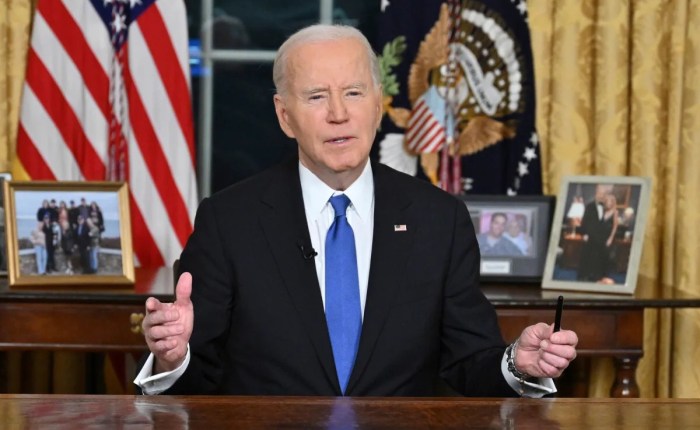
Whichever way you look at the Biden presidency, Donald Trump seems to hover over it at every turn. The return to “normalcy” or the goal of “restoring the soul of the nation” has either fallen flat or been dismissed as liberal hogwash. Trump has, in a sense, been legitimised this time around; by virtue of winning the popular vote and the Democrats’ own flawed power dynamics leading to their own downfall. And despite a relatively decent farewell address, one can’t help but roll their eyes when Biden warns against the abuse of power, weeks after pardoning his own son (who apparently was above the law). The problem remains that the top Democratic Party members appear too elitist, slow, and out of touch with the people. And for much of Biden’s term, that image was capitalised on, with every stutter and pause exemplified to the Republicans’ benefit. As it stands, the Democrats are weakened and down on their luck. Of course, they’ve been handed major defeats in the past and come back before but it’ll take a proper chance to mobilise their base next time; a new generation with some authenticity. If one thing can be learned from these last few years, whether with the election or Biden’s cognitive decline, it is that you can’t pull the wool over the people’s eyes forever.
Lessons for the Left

Lessons for the Left

One week ago, the Democrats were handed an unambiguous defeat. A royal smackdown. Not just in the presidential race (across the electoral college and popular vote), but in the house and senate too. While many have been quick to suddenly attain 20-20 hindsight, it remains important for the Democrats to actually undergo proper penance, learn some lessons, and knuckle down for some hard work. 

Lesson 1: Democratic Process Matters

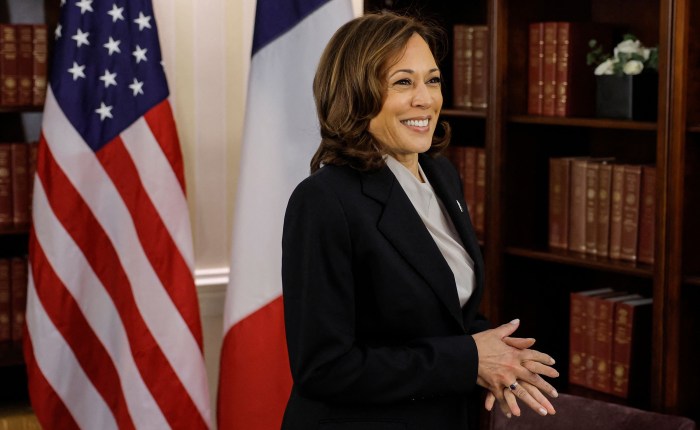
Up until a month ago, I thought Kamala might just pull through. Given the game-changing nature of her succession to the ticket, it felt like that wave of momentum might hold on (as discussed in our last article). Unfortunately, it crashed a little early from the shore and became a somewhat hollow experiment, in the wake of media appearances and interviews on her part, contrasted with a series of PR grabs for Trump (the McDonald’s gig and “garbage people” alliance). Ultimately, it became apparent that she just wasn’t the best candidate for the job (on the Democrats’ side). This leads us to a crucial point: the gulf in credibility between this party’s supposed defence of democratic values and their practice in nominating leaders.

In 2015-16, Bernie Sanders was one of the most exciting and promising voices of the left. Many (including myself) felt he would’ve done better than Hillary against Trump. Of course, history went one way and much of the older generation and establishment didn’t agree. They weren’t exactly honest in their tactics however, with the DNC swaying things in favour of Hillary. But okay, that might have been excused… if it were not for the race of 2020 coalescing around Joe Biden, seemingly just to speed things up. (I will never forget Pete Buttigieg dropping out after just his fourth primary, despite winning the first major one or Bernie’s shots being dashed by the onset of the pandemic; even if it understandably changed matters.) The point of the matter is that the party’s leaders were and have been directing the flow of this so-called democratic process.

Had Joe Biden withdrawn earlier (as he should have), there might’ve been time for a full primary season and open convention. Instead, it was purported that Biden was totally fine and capable of running again. When it became clear (during the debate) that he wasn’t, the Democrats began to panic. This meant taking quick action and… well, we’ve explored this all too recently. I’m not saying there was any easy path to be taken here. An open convention at this point probably would’ve been messy too but in the name of saving democracy, the Democrats didn’t exactly follow through with the public’s wishes. (Kamala’s approval ratings were pretty low before her big boost.) It’s a simple lesson but an important one for them to remember: practice what you preach. Let the cream rise to the top in 2028, without meddling.

Lesson 2: Retire The Vanguard

This will be brief. It’s time for a new generation of leadership. Joe Biden did well in 2020 but was never considered by anyone to be a serious contender for a two-term presidency. In those four years, the party should’ve been looking for their next Barack Obama… okay, that’s a little optimistic but they should’ve been looking for their next Bill Clinton or someone who could actually inspire voters. Instead, they’ve plodded along with Nancy Pelosi (retired from her speaker role but) retaining enormous influence. (She’s also just been elected for another term at age 84 by the way). I’m not saying these boomers have done a bad job or are unable to continue their roles in some capacity but they’ve dominated the political sphere of influence since the 90s at this point. It’s a different world now and it’s time for new faces.

Lesson 3: Re-Connect With The Working Class

Why the party of big business, led by a billionaire, has managed to secure all the swing states and won the allegiance of the working class should be mystifying. Economically speaking, the Democrats have been much better for the low-wage earner and yet as Bernie Sanders put it, “they feel abandoned” and have thus abandoned their party. Some of this was inevitable with inflation shaping the election. Tragically though, Joe Biden and Kamala Harris just never managed to find a way to assure the public that things would improve. To start with, Biden stated (albeit accurately) that the economy was in good shape, with inflation rates coming down, when he should have empathised with people struggling with grocery prices, which never came down or matched the average wage hike. When Kamala came to acknowledge this struggle, it was all too late. Trump had swept up the disenfranchised who believed his rule had contributed to a more prosperous times (with Obama missing out on credit).

This was always going to be Kamala’s greatest struggle (besides interviews). She had relatively little time to make up the ground Trump had in the swing states. But let’s face it: he was also just better at getting out there.

Lesson 4: Embrace New Media

Trump made great waves by appearing on long-form podcasts, such as Theo Von’s and Joe Rogan’s. This chiefly helped to consolidate the male vote but also showed he had nothing to hide and could hold up in a more relaxed, conversational environment. Similar to Hillary in 2016, Kamala played it too safe by (at first) limiting her media appearances and then by not following Trump in this vein.

In 2008, Obama became the first presidential candidate to really understand the internet and social media, taking advantage of it to propel himself to success. Well, social media has changed quite a bit since then and people are a lot more attuned to being “sold” something. Podcasts like these don’t rely on cheap chat show bits or celebrity cameos to entice someone. Apparently with the coaching aid of his son, Barron, Trump was able to tap into an aspect of online culture ignored previously in these election cycles. Given the uselessness of big news’ media outlets with polls, it might be worth re-examining where the pulse of this nation lies. (And yes, also stop with the celebrity endorsements. Per this point and the lesson above, they don’t connect you with the people.)

Lesson 5: Control the Outrage

The first few weeks of Trump’s first term were exhausting with multiple decrees garnering fresh cries of outrage from the Democrats and media. Clearly the controversies didn’t matter that much in the end. The simple thing about Trump that the Democrats have never been fully able to appreciate is that he’s a disruptor. Therein lies his appeal. He is a kind of antidote to traditional politics and corruption; albeit not a man who plays by the book.

Naturally, there’s going to be a lot to be outraged with over the next four years. Not everything will necessitate a battle. Two impeachments and multiple court cases didn’t eliminate Trump so it’ll be important to tackle him in a different way. Granted, I don’t know what that way is but since the Democrats have so far been playing a losing strategy, it’s worth considering what’s worth their energy.

Conclusion

As Jon Stewart stated in his latest episode of The Daily Show a Democratic comeback is plausible. Reagan won every state but one in 1984 and Nixon trounced McGovern in 1972. The senate and house will always swing back and forth. Indeed, the history of the electorate is basically a game of ping-pong. As George HW Bush’s team put it, in analysing his defeat in 1992, “change is the only constant of politics”. So on and so forth. There’s hope there but to be frank, for at least a few years, the Democrats will have to contend with Republican power, will, and legislation; via the presidency, the house, the senate, the majority of governors, and the Supreme Court. So… good luck and take what you will from those lessons.

The Last Stretch for the Kamala Wave

The Last Stretch for the Kamala Wave

With less than a month now to the election, the forecast remains murky. Depending which poll you look at, either candidate could be nabbing it. Some say Kamala Harris has a 3% lead. Others say Trump’s support is underestimated. Many argue it will simply come down to the battleground states (particular Pennsylvania). Yada yada.

It’s become so difficult to predict a US election accurately for a number of reasons; top of my list being the polarised nature of the media. It thrives on biases and in recent years has escalated to caricature-like proportions. Indeed, till CNN’s (still spliced) “60-minute” feature on the Vice President, I felt like I was witnessing the most softball interviews ever, bordering on propaganda. That is not to say Trump’s not got his own echo chamber; indeed, he would not exist if not for them. But the liberals are getting their hands dirty too and despite my preference for her eventual victory, it is worth critiquing the “Kamala Wave”. If just for pure honesty’s sake.

First, there’s an element of contrivance. Not wholly, but in comparison to say… Obama’s rise in 2008, it feels like the carpet has been rolled out for her. If we cast our minds back to the 2020 election, Kamala had an early surge in popularity before dropping off after the early debates. Months later, she became Biden’s running mate, on the basis / accusations of picking (pandering with) a female VP. The ticket won and she largely remained in the background, with some coverage (then criticism) given to her handling of immigration and the border. Indeed, as Biden’s advancing years began to show, many wondered whether he was being stubborn or doing what was necessary, in refusing to step down and hand the baton over to her. Kamala’s approval ratings weren’t great, even at the start of this year. (Even by June, really.) To many, Biden still seemed the more sensible prospect. Then that debate happened and the emergency klaxons started ringing. Sleepy Joe had to go.

Now the story being written is that Joe Biden’s decision to drop out of the race in July 2024 was a “courageous” and “selfless” one, bordering on George Washington-like sacrifice for the country. This has been one of the most embarrassing declarations on chat shows and interviews with Kamala Harris (if not necessarily by her). Let’s not forget he insisted on staying the course even after that debate, quite adamantly, until people like Nancy Pelosi “may or may not have” held discussions with him. To be fair, he may have eventually concluded what others had (with respect to his chances) but let’s face it, the Democrats played this one beautifully (at least from the point on of assuring he couldn’t win). They ousted him and got Kamala in at the perfect moment.

Biden endorsed Kamala and everyone promptly forgot he was president. Then a range of support from high-profile figures and past presidents came in. Any notions of an open-convention were quickly swept aside in the fervour of this tide. And just as Trump’s very recent assassination attempt faded quickly into the background, a star was born. It was Kamala Harris’ time to shine and in the weeks that followed, there weren’t many questions to darken the mood. 

Admittedly, there’s some sourness to this coverage; necessary but not indicative of the full picture. While Kamala is no Obama, there is some genuine encouragement to be found in the camps of supporters who believe she could be their first female president, without that encroaching as the only quality she brings to the table. She’s not a great orator or interviewee but she’s also not clueless, as some of her detractors would put it. She’s relatively engaged and relatable (i.e. no Hillary Clinton), given the right environment (see her interview with Howard Stern). She’s also able to handle Trump, as evidenced by the first (and probably only) debate they had. And she made a good choice in running mate, in Tim Walz. Most importantly for the Democrats and her supporters, she’s rode this wave to maximum potential. Unfortunately, October may prove a different kettle of fish.

Kamala’s opponents believe her greatest weakness lies in facing the media (via tough interviews). While Trump reels off a litany of bizarre anecdotes and conjectures, he comes across… stridently? Or at least confident. Kamala has been somewhat meandering, in her rare appearances.Part of the problem stems from her promotion of an image of change and not repeating the past. Her calls for action on any issue are met with derisive snorts that “she and Biden” could act right now. Of course, neither candidate’s alien to the White House but as the closing weeks clock in, Kamala will have to make sure she’s distinguished just enough from the (actually still) president. With the media’s always-fervent dreams of an “October surprise” (e.g. Comey reopening the investigation to Hillary’s emails last minute), their general flair for dramatics, and the last rounds of public and world events in concurrence, the narrative could be spun again. For while riding the Kamala Wave has proved fruitful for many so far, boredom can quickly set in. And I’m afraid that’s the level we’re at.

The Re-Framing of Donald Trump

Something has shifted in the perception of Donald J. Trump. Even before the assassination attempt last weekend, there seemed to be a quelling of the crime and dystopian associations being levied his way in the media and online. It is perplexing in a sense, given his loss in the Stormy Daniels’ court case and the the amping up of rhetoric by the Biden campaign (vis a vis Project ’25 and January 6th), but it seems those matters just aren’t registering the way many would hope. Instead what’s emerging is the picture of a strong leader ready to get business done. Is this a genuine re-evaluation? Collective amnesia? Or simply, the more interesting narrative to be pushed forward?

Well, it’s always going to be a mix of the three isn’t it? With regards this re-evaluation, I’d argue some are falsely equating the stronger economy of the late 2010s with his successes, even though these changes take years to manifest. Since everything’s so polarised nowadays however, one can see why confusion would abound when Biden points to the deficit Trump established as an excuse for the poor state of things now. Inflation’s been covered suitably in the last several articles so I won’t delve into it here but basically “perception becomes reality”. So even though it’s unfair, Biden will undoubtedly be associated with the high inflation rates of 2022 where Trump will be with pre-Covid.

Then with the collective amnesia, there’s a tendency to forget the details of the past and look to the present and future with any president. Despite George HW Bush’s success with the Gulf War for example (leading to a 90% approval rating), it didn’t much matter a couple of year later when (again), the economy took priority. So many of the controversies of the Trump presidency have faded into the background; with his handling of Covid almost wilfully dismissed as a “strange anomalous time for everybody,… who knows what was going on then”. January 6th is more surprising. The democrats have relentlessly pursued that in making a case against Trump but to seemingly less effect each year. Maybe it just wasn’t consequential enough for the average voter to care: shocking to be seen but nothing to be concerned about on a day-to-day basis. I would argue this remains a concerning moment, in building on (rather than diminishing) the cult of Trump but alas, it seems things will have to escalate for that to become clear. It’s always a matter of urgency with these things.

Tied into January 6th now is of course the assassination attempt. The shooter’s motives remain ambiguous (registered Republican, otherwise liberal?) but Trump’s supporters will nevertheless have a point of contention when arguing for extremism on both sides; e.g. Biden calling for a “cooldown of rhetoric is rich given the existential threat he keeps pushing with Trump”. And given Trump survived and emerged for that photo op, it’s very difficult for anyone to portray him as anything but a fighter. It fits a narrative so well that it feels like the race is essentially over. His proclamation that “God was on his side” (despite someone dying at the same rally) should ring alarm bells but instead it seems to have struck a chord at the Republican National Convention this week, where a party stands unified. 

Naturally, we can’t talk about the narrative of Trump’s survival then without touching on the decline of Joe Biden. That’s where the media has pivoted most, even with those who traditionally backed him. Until that debate, I still believed Biden had a chance at re-election, had he given a strong performance and exposed Trump for his lies. But… well, let’s just say that last article on the debate has already aged like milk. Biden’s cognitive decline has been spotlighted everywhere from CNN to The Daily Show and he’s highly unlikely to recover. As it stands, he looks to be heading down the Ruth Bader Ginsburg road of leaving the stage well after he should’ve, securing a goal for the other side. With that said… to offer a glimpse of hope for a Democratic victory; the election is not over. And just as things have so dramatically shifted in the last month or so, there’s time for them to make a comeback. But it won’t be with Joe Biden and likely, not Kamala Harris either. Rather, with an open convention next month, they could introduce a new (younger) candidate to stand up and take the cameras away from Trump and offer something fresh and exciting. It would be the “twist” the media would devour; a necessary move in my opinion, for if nothing else, Trump knows how to play the media.

Trump v. Biden: The First Debate (2024 ed.)

Trump v. Biden: The First Debate (2024 ed.)

Back in September 2020, myself and a couple of friends discussed whether or not it was worthwhile for Joe Biden to debate Donald Trump. While the former president and clown prince of crime’s theatrics would surely play off the televised medium more fancifully, we felt it was important for Biden to take a stance in establishing normality again. Now, four year later, things have changed. The once-challenger, now incumbent has added much clout to his nickname “Sleepy Joe”, thanks to a number of recent bewildering public appearances, whilst his opponent has racked up an array of criminal charges, already convicted of one. Neither prospect is exactly gleaming in the eyes of the public, with a recent CBS poll showing Trump leading by just 1%. Will Thursday’s debate change much? Given how polarised the country has gotten, probably not. Nevertheless, I thought it worth exploring anyways for the heck of it.

Firstly, we should acknowledge how two rules, crucially, seem to suit Biden more: that there will be no audience and mics will be muted when the other person is speaking. Lame. On the other hand, there will be no pre-written notes either, which is fine for Trump since many of his best zingers seem to have come out of the moment, particularly in 2016. So if he can produce a couple of new greatest hits (in line with “weak-sauce Jeb” and “I should’ve won [the Emmy]”, then Biden may be in trouble. His material simply isn’t as entertaining. Having said that, we didn’t see as much of that as in 2020, when Trump’s maverick status had started to veer from hilarious if dumb to deranged if occasionally hilarious.

Supposing “the issues” come up in this debate, the candidates will likely spar on inflation, immigration, Roe v. Wade, and funding for Ukraine, among other matters. (Undoubtedly, the culture wars will seep into the mix too, since both sides see each other as an existential treat to the country vis a vis the fight for democracy, lawlessness, the far left, and so on.) Biden will make the case for an economic success story, which he can back up with GDP and unemployment figures. Trump will argue inflation has been a disaster for the country and that people’s wages travelled a lot further four years ago (from the book of Reagan). In tandem with this, he may throw his lot in with the Republicans questioning how much money should be put into defending Ukraine. Then, he may move onto the border. It depends how much time is wasted and what questions are asked (maybe that doesn’t even matter).

Biden will be on the defensive against a range of broad accusations and probable lies. Since perception becomes reality and the visual spectacle matters as much (if not more) than the content of what they’re saying, combatting them one by one may not prove the most effective strategy. Debates have swung one way or another for a variety of reasons, from JFK wearing makeup in 1960 to George HW Bush checking his watch during a question in 1992. Given the narrative that the president’s not “all there”, he needs to be as sharp as possible and to the point without any stammering or lost gazes.

Should Biden choose to hammer on the point of Trump’s multiple legal troubles, he will of course have to answer for his son, Hunter. Many people will of course come to the lazy false equivalency that both candidates are mixed up in corruption and so “it’s a wash”, but to Biden’s credit, he never tried to intervene or stir the legal course of action with regards Hunter’s mishaps. Perhaps that can be used to his advantage. Perhaps he can point to the kind of accountability he and his family take, which Trump has tried to elude and undermine. Perhaps that will work…. Though perhaps not.

One of the main issues Biden has returned to in his case against Trump is the January 6th Capitol Insurrection. This will likely be a talking point which he can exploit by asking Trump if he will concede the election should he lose again. I’m not sure what Trump’s strategy will be here, other than to deflect to other matters and emphasise the bias of the mainstream media against him. He will have to try wiggle out of it somehow and Biden, in turn, will have to keep the spotlight on this. But again, since everything’s so politicised and since three and a half years have passed since, this also may not matter much.

If I were to advise, without any moral culpability, I’d tell Trump to needle the president on the devastating effects of inflation on the average person and crime in America. For Biden, I would advise trying to keep up his 2020 performance, while pushing Trump on January 6th and how disastrous his first term was, thus resulting in him “losing” (emphasise that word) the last time. At this point, I predict a Biden victory in November (if a lesser one than before). While Trump’s percentage lead is not to be dismissed, he has come down in the last couple of months and come election time, he’ll have been raked through the fire a lot more than he has been the last couple of years, in which he’s been uncharacteristically absent from the spotlight. (Relatively speaking.)

The Economy Is Strong But Nobody’s Buying It

The Economy Is Strong But Nobody’s Buying It

In a recent CBS/YouGov poll, 59% of people questioned described the current economy as “bad”, with nearly 2/3 believing it was stronger during the Trump administration. This stands in sharp contrast to what the experts are saying and what the numbers show: GDP growth was 3.3% last quarter, unemployment down to a record-low of 3.4% (from 6.9% when Biden took office), consumer spending is up, inflation is down, etc. The fact of the matter is, despite these impressive indicators, the “average Joe” just isn’t feeling the good times or benefits. This can likely be attributed to years of price increases prior to recent change, the uncertainty of the Covid years, and staggering interest rates. In tandem with the general politicised air of today, people feel vulnerable to what’s been described as the “vibecession”, an addendum to the “perception becomes reality” thesis.

Needless to say, this is a major problem for the Biden camp as the election approaches. As with our last piece on Biden’s presentation of his age, it’s not necessarily effective to just state that everything is fine or “the economy is strong”. The lapse in credibility comes from the day-to-day reality of gas and grocery prices; the latter of which have remained high despite the slow-down of inflation in the past year. Indeed, the gravest mistake the Biden camp has made in this respect has been to emphasise this improvement, while blatantly ignoring how desperate the rate of inflation was in 2022 (8%). Either side of that (4.7% in 2021 and 4.1% in 2023) aren’t exactly great either, when you compare with the 2010s’ figures (e.g. 1.8% in 2019). So while the economy is on the right path, people are still feeling that 11% increase in grocery prices (2021-22), which normally would have been a 2% annual increase. 

As elections are largely media driven, we must remind ourselves that fear is unfortunately a big selling point too. Therein, the anxiety surrounding what may come seems to be more pressing than ever. As the invasion of Ukraine sent energy prices skyrocketing (albeit far more in Europe), people have become wary of international affairs having knock-on effects. The beginning of last year was marked by reports of massive layoffs in the tech industry. AI meanwhile, hovers as a merciless shadow over the proceedings of so many more. The housing market, of course, remains a mess as people resist selling, lest they lose optimal interest rates. And some economists have speculated that recent consumer spending (or splurging) could create vulnerability in the market going forward. It may be a glass-half-empty approach to looking at things, but the notion of a “vibecession” (while cringeworthy as a term) is not a merit-less one.

Again, it takes time for economic improvement to translate into reality. Back in 1992, George HW Bush’s electoral hopes were partially dashed by an 8-month recession (which ended in March 1991). The sluggish recovery cast doubts on his ability to govern domestically, leading to the popular slogan employed by the Clinton camp: “it’s the economy, stupid”. A compromise on his 1988 “no new taxes” pledge had actually helped set the stage for the growth of the 1990s but alas, despite recovery by the election, Bush’s image never faired as successfully.

Will Biden’s? There has been a longer stretch of economic prosperity than in 1992 (unfortunately mired by high inflation rates) but should things keel out and continue as they are, I think there’s cause for optimism in his camp. There’s still eight months to go and the creation of new jobs and businesses are likely to bolster his image. But it’ll take some strategic selling and frankness. As with the matter of age, perhaps Biden needs to acknowledge the perception out there; how devastating inflation’s been, while promising in turn to challenge unjust profits on the parts of certain corporations. He took a step in this direction during a Super-Bowl break, by addressing the scandal that is “shrinkflation” (where product sizes shrink but prices remain high; this is whole other article though so I won’t delve deeper for now.) He needs to continue fighting for an economy that works for low- and middle-income families, via cost of living prices, as well as the bigger picture trends of GDP and employment. Again, it’s the perception that becomes reality.

How Joe Biden Should Approach The Age Question

How Joe Biden Should Approach The Age Question

Depending on your source, an alleged 3/4 Americans have “concerns” about President Biden’s age (81), including 50% of Democrats. As the oldest president in American history, it was inevitable that this would become bait for opposition. After all, it’s easy and it’s sort of fair… just as a general observation of humanity and what old age does to people. Unlike in 2020 too, the Republicans now have years of press conferences and interviews to pick a part then cut back together as presentations and memes of cognitive decline. The Democratic establishment have held steady on their candidate but even with a slew of legal landslides coming against Trump, we can still see many sweating. This is why I’ve taken it upon myself to offer some practical advice for Biden’s team in how they respond to these criticisms because so far it’s not been great.

To offer some additional context here: at a press conference earlier this month, he angrily rebutted a journalist’s claims that these were valid concerns before going on to mix up Egypt and Mexico on another topic. He also recently mixed up the president of France with a former president, Francois Mitterrand, who died in 1996. So… not great. This week, he stopped by “Late Night with Seth Meyers” for what was a fairly softball interview. Seth asked about his age and while Biden was relatively strident in his response, he immediately began to offer comparisons between himself and the mad man, Donald J. Trump; in effect, saying “you know what’s old? Trump’s ideas”. Fair enough. The ideas are what are most important. But is that really the way to handle this? It’s a pivot which shows he’s not really capable of debunking the wider criticism of cognitive decline. It’s a pivot away from a question of character to one of policy. The kind of answer that irritates rather than impresses.

Biden simply needs to accept and address this question more gracefully. He can’t outrun it. So what I would propose is that he leans into it as Ronald Reagan so expertly did in 1984 against Walter Mondale: “I will not exploit for political purposes, my opponent’s youth and inexperience.” Now obviously, don’t say that verbatim; Trump’s already been president, but you get the gist. Employ a little humour. Hire some joke writers. Take control of the story. Then… as he’s already done, you can reiterate that while you are indeed old, your ideas are not. On top of that, you’ve got a great team behind you and have a successful term already behind you. A record you can exploit. And why not; with wisdom comes age. 

By trying to manipulate this narrative or avoid answering the question directly, Biden can be painted as distracted, if not delusional. While he’s always been prone to gaffes and the odd stutter however, part of his appeal lies in his kooky grandfather persona. Occasionally not with it but ultimately, empathetic and kind-hearted. He’s the nice candidate, where Trump’s the bullish blowhard. Having a president at 81 isn’t exactly anyone’s ideal situation but in a contest of character and policy, this should be a lot easier than it’s proven thus far. Sometimes you just have to take the card your dealt. With cost of living prices still proving problematic and crises abroad, you can’t convince the public that the economy or international security is strong but what you can do is reassure them that the right man is at the wheel.

One Year Out… Does Biden Still Look Good?

One Year Out… Does Biden Still Look Good?

To answer quite literally; yes, I think Joe Biden looks dashing for a man pushing 81… But the ellipsis begs the further question of how he will look when he’s 82- which he would be upon commencing his 2nd term in January 2025. Well…

Running the country is different from running for the presidency. If we were to chalk this up to the record, Biden would look quite good (at least with Democrats). He’s gotten the US out of Afghanistan, lowered drug costs, made a start on cancelling student debt, and passed an inflation-reduction act, to name a few things. But… those measures simply aren’t painting the larger picture, which is that of an old man struggling to load up a restaurant’s QR-code menu on his phone (I know, frustrating for all). He’s old news. Past it. Out to pasture. Bamboozled by the times. Pork chops for dinner. Why, he’s even older than the president who was elected 31 years ago. The man’s ancient. Now, wisdom is acquired and in theory, having an older leader is no bad thing. But at some point, perception trumps (sorry) reality and if the latest polls are anything to go by (39% approval; Trump supposedly leading in 5/6 swing states), Biden’s not looking like a promising prospect anymore.

Biden’s detractors and supporters both fear he will struggle in the debates. While he held his own reasonably well against Trump last time, he may struggle in 10 months. Trump’s only several years younger but he just doesn’t wear his age the same way. It’s like his ego has sustained him with an unnatural propensity for spewing entertaining nonsense. Sure, Biden can fact-check him but I’m inclined to agree with Dave Chapelle’s analysis that Trump comes across as an “honest liar”. He may not know what he’s talking about but he’s not playing to the weary cringe-inducing politic-speak Biden or Hillary indulge in. Plus, last time Trump was running, the pandemic was hampering his support. This time around, virtually nobody will care about that and Biden will have four years of political baggage to account for. Basically, he’ll be playing defence this time around. 

And the defence will likely be centred around his son; Hunter Biden. That’s a whole other kettle of fish but again, since perception trumps reality, and the Republicans have been beating this drum for years now, it’ll be tough for Biden to avoid this. Perhaps too, it stings his supporters to admit that this was newsworthy, even if slight against the plethora of lawsuits dogging Trump. To the vaguely uninformed, the messaged received is: there’s some dodgy stuff with Biden, some dodgy stuff with Trump, it’s a wash; we’re all in the swamp. And thanks to the preposterous level of subjectivity in news media today, it’s hard to put things back in perspective.

Outside of all this conjecture however, two issues may affect Biden’s rating in the next 12 months; foreign policy and inflation. Typically, the former doesn’t have as much of an impact on the average voter but foreign aid and support directed towards Ukraine and Israel may weigh something. Republicans have opposed Biden’s allocation of “too much in funds” for Ukraine while support amongst Democrats for Israel has decreased somewhat. Since these are contentious matters (also worthy of a lot more exploration), I won’t dig in deeper (or cast judgement), other than to say there is a tangible level of resentment directed at the government for taking this capital from home. This leads us to inflation.

Inflation actually peaked in June of last year at 9% and is now 3.7%, but in day-to-day life, prices are still rising on the likes of personal care products, groceries, restaurants, rent, and more. It’s also speculated that it won’t keel out until 2025, which will prove a major factor in the election. Even though it’s not totally in Biden’s control, the “buck ends” at the Oval Office (as foolishly accounted for by Harry Truman). While statistically wages are up and unemployment is down, inflation will make the largest impression on Biden. It takes time for the appropriate measures to lead to results; for example, the economy was on the mend in 1992 but hadn’t yet shown, affecting Bush Sr’s campaign. As with the “controversy everywhere” analysis aforementioned, it’s hard for people to know where to direct their anger but the Republicans will beat this drum as the Democrats play defence.

So, as Biden languishes in the polls, with the possibility of the Dark Lord’s return, many have suggested it might be time for someone else to step in and run in his place. This seems unlikely at this point but not without precedence. In March 1968, Lyndon Johnson announced he would not seek re-election, mostly owing to his lack of favourability with the Vietnam War. His VP, Hubert Humphries, went on to lose to Nixon later that year, though one of history’s great “what ifs” remains in if Robert Kennedy hadn’t been assassinated that summer. And you know what, we have Robert Kennedy’s son running as an independent this year, so a Trump v. RFK Jr v. Kamala Harris ticket could materialise. Maybe another Republican could clinch the nomination, especially if one of those lawsuits leads to something with Trump. Maybe Kamala somehow gets popular? Well, there’s a long stretch ahead still but as it stands, it looks to be a rematch in November 2024 and that’s… terrifying.

American History In The Washington Walrus’ Time: 2016-Present

American History In The Washington Walrus’ Time: 2016-Present

The Washington Walrus has finally hit 100 articles! And in the 7 years since its inception (January 2016; okay, we don’t post regularly), a lot has changed in America. So to commemorate this momentous… moment, we thought it’d be fun to try and summarise and maybe evaluate some of the things that have happened since then. How has the character (or “soul”, as Joe Biden would put it) of this nation changed? What distinguishes today from back then… Well, there’s only one place to start.

2016: The Rise Of Donald Trump

In his final Last Week Tonight segment of that year, John Oliver blew up the cursed numbers themselves in a therapeutic gesture of frustration and disappointment with what seemed like a terrible year, marked by numerous high-profile celebrity deaths (David Bowie, Prince, Alan Rickman, etc) and the election of Donald J. Trump. The latter point marked the most significant shift of this period of time.

While most of us were certain of Hillary Clinton’s victory, in hindsight, the writing was on the wall. Many Americans felt betrayed by the system and disappointed in the not so perceptible “changes” promised by the Obama administration. In truth, Obama had to sweep up the mess of the economic downfall that occurred in 2008 and was largely gridlocked in his domestic agenda, against increasingly combative Republicans. Hillary Clinton, it seemed, was not the answer. Perhaps, no run-of-the-mill Democrat was.

In the 2015-16 Democratic campaign, Bernie Sanders had emerged as an unlikely favourite amongst the youth. An independent with a noble, if not particularly successful track record, he seemed to capture something of the same spirit that led to Trump’s shocking election; a feeling that corruption was ripe is Washington and lobbyists, billionaires, and special interest groups were calling the shots. For quite awhile, he was a great challenge to the Clinton campaign, but ultimately lost. (Many assert that had he succeeded, he might’ve beaten Trump. I’m not exactly convinced he wouldn’t…) This is besides the point however. The point is that a rot had set in and politics would not proceed as usual.

2017-19: “Chaos Is A Ladder”- Littlefinger

Upon releasing her memoir, Becoming, the following year, Michelle Obama wrote that she “stopped smiling” upon listening to Trump’s inaugural address because she simply couldn’t pretend any longer. For those who hoped he would rise above the petty insults and divisive rhetoric of his campaign, it became immediately clear that things were about to get wild. First, there was the ban on people flying in from predominantly Islamic nations. Then, a series of cabinet upheavals. Scandals galore. Then, an insensitive summary of Charlottesville, in which he deemed there were fine people on both sides; both sides being white supremacists and protestors. It was in this moment, Joe Biden apparently decided he should run, in order to “save the soul” of America.

The fact that Trump was so emboldened in his office and able to get away with (seemingly) anything perhaps emboldened the left, in turn. If the battle couldn’t be won in Washington, then perhaps it could be in the culture wars. Indeed, the values of left and right had polarised increasingly throughout the decade with right-wing commentators arguing the left were pushing a politically correct agenda across America, particularly in universities while the left challenged the right’s reticence on civil rights’ issues including gay marriage, trans identification, and more.

The breakthrough of the Harvey Weinstein case in 2017 marked a major cultural shift in the dynamic of women dealing with powerful men. With the colossal expose, a number of issues and transgressions were brought to light, helping to widen the scope of what was and wasn’t acceptable behaviour (or had always been). In the following years, Hollywood would amp up their promotion of diverse works and female-led stories, again sparking the ire of many who felt politics (or liberal politics) had become more important than art and story. At the same time, a parallel was being drawn by critics of the Democratic Party, who felt identity politics and the optics of diversity were becoming ever more prioritised in electoral agendas. This was dismissed by some as generational blindness. “OK boomer” became a de facto response for many.

The battleground for the culture wars had traditionally been fought in news media. By the 2010s though, social media had become the dominant source of information for most. Where misinformation and been brought to light with the 2016 election and the ensuing trials of Facebook, there now also lay the problem of a new level of sensationalism in misleading click bait headlines, yellow journalism, and (often) straight-out lies. Trump’s rise to power was seen as being emblematic of a post-truth world, in which both sides claimed ownership of whatever the “truth” was. Annoying celebrities started confessing their stories as “speaking [their] truths”. There was much cringe-worthiness to be found. Most crucially, it seemed beyond political differences, the left and right had come to hate each other outright.

Let’s not forget the dual disappointments of Game of Thrones season 8 and The Rise of Skywalker (both 2019) either. I’ve nothing to say about them. Just don’t forget.

2020: The Boiling Point

The fact that this year started with an impeachment barely anyone remembers shows how crazy the Trump years had gotten by this point. Somehow, 2020 would become the year all hell broke loose for a couple of reasons. First, the beginning of lockdowns in response to the emergence of Covid-19. Second, the protests and unrest that resulted from the murder of George Floyd in the summer. Both of these factors influenced the culture and politics of the US enormously this year, with the mania perhaps lending some desire for normalcy, found in the wrinkled hands of old Sleepy Joe.

How Covid became a political issue may be question for future historians but by 2020, when everything else had, there was no reason this shouldn’t have been. Indeed, Trump mocked Biden in the debates for “wearing the biggest mask” before getting Covid himself. Beyond his pantomime, it was drawn as a debate on the nature of civil liberties for many; with some arguing against big government limiting their freedom through mandated governmental worker vaccines and lockdowns. Others felt that these opponents were questioning science itself in the name of partisanship or wilful ignorance.

As regards the second factor, the Black Lives Matter movement had become increasingly visible throughout the 2010s since social media allowed for the sharing and exposure of police brutality. With the shocking violence and boiling point of George Floyd’s death, the truth was driven home once again that black lives were treated as second class in America. Critical Race Theory became more prominent in the years that followed, with a wider net cast for those learning of the systemic oppression caused by economic and power models in US history. And while some progress had been made since the 1992 riots, Americans were reminded of the lived realities of many Black Americans. Unfortunately, this lesson has needed repeating throughout history.

2021-Present: Conflict At Home & Abroad

2021 started off with a little hiccup at the Capitol. A misunderstanding or something. Then a new leader was sworn in. So… Joe Biden’s presidency has and hasn’t marked a return to normalcy. I, for one, no longer feel the need to google the president’s name every day to see what wackiness he’s gotten up to. On the other hand, America remains deeply divided and though Trump is presently indicted, I don’t think his loss in 2024 is guaranteed. The same seeds of discontent fester and not even under the surface. To many, these legal proceedings are a “witch hunt”. Increasingly the idea of a “national divorce” seems pushed to the forefront, even if in political jest.

The Biden presidency (post Covid), outside this sphere, has chiefly been defined by the Ukraine-Russia war and inflation. The expansion of NATO and America’s involvement in this conflict may define the coming years, if no resolution materialises soon. As Trump had been (shall we say) cozy with Putin, things would likely change should he succeed in getting a second term. For most Americans however, economic burdens will distinguish this decade (even more so) than the last. To go back to where we began, it seems Bernie Sander’s concerns have only become more pertinent and fully understood with the passing years. As billionaires control social media and politicians fail to close the left-right divide, the country lies in a precarious position.

The Washington Walrus Thanks You…

Thanks to all for reading this or any of the articles we’ve put out in the last 7 years. It’s been an interesting blog to attend to, even if not attended to regularly. While it started out as an exercise in writing about current politics and American history, it transformed to something that could address all sorts of cultural, social, and even entertainment-based issues. No subject’s too light or heavy to cover, so long as something lies beneath the surface (e.g. Rotten Tomatoes’ scoring not accurately reflecting viewers’ interests and appreciation of art).

The Kamala Harris Problem: Meritocracy vs. Identity

The Kamala Harris Problem: Meritocracy vs. Identity

The nature of the vice presidency is typically one of brief significance, ridicule, and vague adaptability. They’re briefly significant in the election cycle because they can be used to give some momentum to a candidate’s campaign, as the final months close in. They’re ridiculed because, while seemingly senior in management, they’re often sidelined next to other key positions such as Chief of Staff or Secretary of State. And then their actual role remains vague, depending on the administration, and adaptable, because their responsibilities may change depending on the issues at hand, their credibility, or image.

All of these things are as true for any VP as they’ve been for the current incumbent, Kamala Harris. And yet, with an approval rating hovering in the 30s (a few points below Joe Biden’s), she seems to be suffering the brunt more unjustly. To the left, this is because she is a woman and mixed race. To the right (and many others aside), this is kind of for the same reasons, if with a twist. They see Kamala Harris’ very appointment in terms of affirmative action; a choice made solely to appeal on the grounds of identity politics. To reel in those wide-eyed liberals.

This is a tough ordeal for Harris because she can’t exactly deny such criticisms. Indeed, it was always Biden’s plan to choose a woman as his running mate but given she’d been relatively tough on him in the debates, she also might’ve drawn some early intrigue for her strength in challenging a potential “yes man” agenda. This might’ve mattered to some. To most, it probably didn’t.

But say, Harris was just what many expected; a choice to appease Democratic voters. This is hardly different (beyond the issues of gender and race) in making such a decision. Kennedy picked Johnson (despite disliking him) to win the South. Roosevelt was forced to go with Truman for his fourth round, to appease his party. Mike Pence was hardly a regular at Trump’s various resorts but yielded an opportunity to appeal to more traditional, evangelical Republicans. This kind of appointment is nothing new. And yet…

Well, things have changed a bit. The cultural and political wars of today are more toxic than ever. There is increasing skepticism and frustration with the Democratic Party and liberals today (from within and outside the party) on how important identity politics has become in electing and appointing important positions. Credibility is at play on the level of perception and media coverage. Plus, more tangibly, there’s the matter of Sleepy Joe’s age. He’s 80. And while relatively fit for the job, one can’t help but hover over the matter of mortality. Indeed, the question of whether he’ll run again in 2024 has been springing up at every occasion (he plans to, by the way). This is awkward for Harris because (already labelled an affirmative action pick), she’s been perceived as a forced successor; a more likely leader than most VPs have been before her. The optics are concerning.

The gullible (or innocent) response to this quagmire would be to posit that Harris need only prove herself in the role she has to attain credibility. If you regard most the criticisms of Harris however, they’ve been mostly vague: weak on immigration (not exactly a simple issue to tackle); not doing enough to support Biden and conversely, out there too much or hidden in the background; and “dysfunctions” in her office (as if Trump’s cabinet didn’t changed a thousand times in his first year). Again, this role is largely symbolic and without definition. Harris’ main prerogative seems to be addressing immigration, voting reform, and other issues (e.g. the destruction of Roe v. Wade) with an ambassadorial-type approach, which granted hasn’t yielded any phenomenal results. But the same people who’d argue how disastrous she’s been would likely be hard-pressed to define the legacy of past VPs such as Pence or Biden, himself. The point is that most people simply don’t care about the actual job, whatever they think it may be.

To return to the matter of image then, Harris faces a challenge there may be no solution to. It seems to me that she’s been given a raw deal on one hand but on the other, having watched her give several interviews, I’m not exactly impressed by her traditionally political, say-a-bunch-without-saying-anything approach either (see her on Colbert recently; cringe). The 2024 election is looming and where the question of Biden’s age lingers, so too does a tangent on Harris’ continued suitability. At the end of the day, is she worth the hassle? Would offing her prove cowardly or tactically smart? If Biden’s credibility is at stake, I think he’d be better off sticking with her; the image of loyalty supersedes political meanderings. They may be no Obama-Biden, but they can at least stick it out and maybe one day, Harris’ legacy will be revised to reflect her support of this administration rather than her attributes as a candidate.