On Rotten Tomatoes

On Rotten Tomatoes

There’s something rotten about Rotten Tomatoes. The film review aggregate has dominated the face of recent film criticism with an air of unwarranted legitimacy that needs challenging. Why? Because a) it’s reducing complex opinions down to simple yes’s and no’s and b) it may not even be doing so without some front or agenda on the part of its so-called “top critics”.

First and foremost, let’s be clear because I don’t think a lot of people know this. A movie with a 90% score does not indicate an A-grade consensus on the part of its critics. It means 90% of the certified critics eligible to be granted inclusion gave it a positive review of 60% or more (3 stars plus); therein deeming it “Fresh”. This, in turn, means you can make a pretty decent movie and get close to 100% without making anything particularly phenomenal, especially so, if you touch on the hot issues of the today which critics lap up greedily. Thus, you can market it with its score which so many producers have taken notice of recently.

But wait? Isn’t it just a case that if you make a bad movie, the people will then know about it and if you make a good one, albeit without much budget, you can build a prospective audience? There’s no denying RT has its advantages and for the most part, I’d say even the critics’ scores align with my own (even though the metric, as stated above, is sometimes misunderstood). Art, however, is not so easily digested and that’s where the problem lies; in the simplification and homogenization of such criticism.

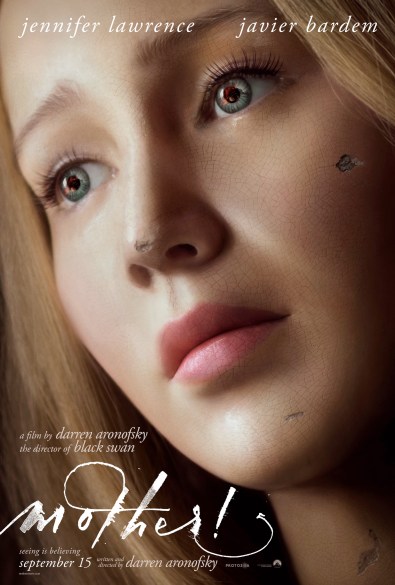
For instance, Darren Aronofsky’s Mother! (2017) was given an F grade on CinemaScore, affecting its box-office performance on release. While it’d eventually climb to 69% on RT, the damage was done because of reports of audience members walking out, perturbed by the uncomfortable imagery of the movie. The director intended it to be a challenge. Anyone, with any sensibility, could tell this was something different and yet, a broad picture was painted before it was given a proper chance. Martin Scorsese, in a 2018 op-ed for the Hollywood Reporter, lamented the rise of this form of criticism, writing that “[they] rate a picture the way you’d rate a horse at the racetrack… They have everything to do with the movie business and absolutely nothing to do with either the creation or the intelligent viewing of the film.” We should always pay heed to Martin Scorsese. He’s a proper director. And he has a good point too. There was a rush to judgment on a movie that needed a bit more time for reflection. Has anyone else’s opinion of a movie they’ve seen changed over the course of a week, a month, or even a year?

MV5BMzc5ODExODE0MV5BMl5BanBnXkFtZTgwNDkzNDUxMzI@._V1_

Of course, film criticism cannot be wholly objective. Meryl Streep had a good point when noting the disproportionate representation of male opinions clouding viewership of her film Suffragette (directed primarily at a female market). There are other cases too where certain markets are targeted; where broad critical praise is not mandated. That’s where RT audience score comes in and where the gulf between snobbery and entertainment value becomes apparent.

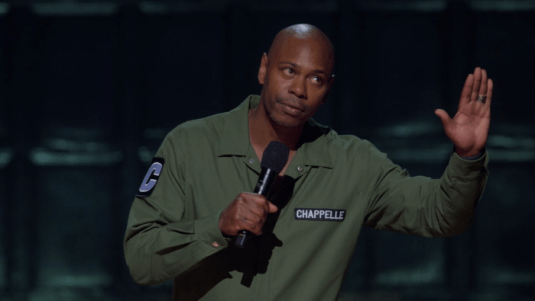
I refer now to Dave Chappelle’s new Netflix special, Sticks and Stones, a title reference completely lost on the 12 critics who gave it 25% on RT. The problem, they saw, was in its “nastiness” and its mean-spirited treatment of the Michael Jackson accusers, “cancel” culture, equality, and the LGBT community. They weren’t happy because it wasn’t “woke” enough and although Dave Chappelle is a comedian, tackling controversial subjects, they couldn’t appreciate the comic value of it. Does that make me narrow-minded like him? Well, the 25,000+ audience reviewers who certified it 99% Fresh on the Audience meter would disagree.

Dave-Chappelle-Sticks-and-Stones-Netflix-thumb-700xauto-215716

This led me to reconsider whether the “haters” of years gone by had a point in saying Marvel gets a degree of favoritism from critics that the DCEU crowd do not. Then, I remembered how bad Batman v. Superman, Suicide Squad, and Justice League were and I thought, okay… no, the critics were right on those ones. A part of me suspects though that they are afraid to criticize the Marvel movies. Like Captain Marvel, that’s a pretty meh affair all in all and yet 78% of critics gave it a “Fresh” score (against 54% audience). Are they afraid to criticize it, I wonder, because it’s a female-led superhero movie, which is something we feel we should be encouraging as a society? Similarly, there’s a bit of a contrast in the 69% vs. 45% critic-to-audience dichotomy of Ocean’s 8 and 74% vs. 50% of Ghostbusters (2016 female reboot). Maybe the critics are just more progressively-minded than the audience reviewers (who are a majority male).

We can find ourselves in complex and controversial territory here, considering the male-majority influence on criticism in both aisles and to that end, there may be no solid conclusion. In recent years however, I have noticed an increasing trend in reviews focusing on the subject matter rather than the entertainment value of a film however. For example, with Quentin Tarantino’s Once Upon A Time In Hollywood, most the reviews I read started with an essay on the depiction of Bruce Lee (5 minutes of a nearly 3 hour long movie) or lack of lines given to Margot Robbie’s Sharon Tate or the explicit use of violence, as if to dictate what they felt should be the movie. Similarly, this year’s best picture winner, Green Book, was widely evaluated for whether it was culturally appropriate or revised enough for today (despite being set in the 60s).

It’s not a case that these critics are stupid or ignorant of good art. They just seem to be afraid to speak their mind at times, wary of a social media audience that will tackle them on each and every transgression less they commit the crime of not acknowledging how great and inclusive some recent films have been. For all this clambering, the lack of authenticity is becoming crystal clear to audiences though. You can tell someone what they should like all day long but in the end, nobody’s going to stop loving Love Actually because the Prime Minister gets with his PA or The Breakfast Club because Judd Nelson chases Molly Ringwald around or Psycho because its treatment of the mentally-ill is problematic. 

On Talk Shows

On Talk Shows

At the Washington Walrus, we usually focus on politics and the more immediate issues concerning government. Every now and then however, we like to dip our toes in the murky waters of culture and entertainment; in this particular case, one of the more shallow bodies of such water.

It’s not that I dislike talk shows (or chat shows) or their hosts. It’s not that I even bemoan the format, rather what it’s been reduced to in this day and age. You see, there was a time when these shows didn’t desperately grasp for whatever little nugget of attention was left out there, lost in the cracks of YouTube and Prime and Netflix. There was a time when actual proper conversation was involved, unburdened by pre-rehearsed garbage and bit jokes resulting in a pie in the face. There was a time when it wasn’t all so juvenile and pandering, when Americans tuned in for a bit of humor, yes, but also out of genuine interest.

Johnny Carson was of course, the “King of Late Night”. He hosted the Tonight Show from 1962 to 1992 and became an icon in the American world of entertainment. If you wanted a movie plugged, you wanted his show. If you were looking to get your big break as a comedian and possibly bag a sitcom, you hoped to impress Carson himself. Even politicians like Ronald Reagan found their way onto the couch, though Carson, himself, never declared any political allegiance (a far cry from the suitors of today). By the end of his tenure, he garnered north of 10 million viewers a night on average, which is over three times what Colbert did in 2018. He had the business at his command in many respects and he did it with great timing and affability, that never gave way to piousness or crude frivolity. He had the numbers and the respect of the masses.

So what went wrong? Carson may have dominated the late night sphere for the longest time but he was not the only talk show host out there. Day-time hosts like Oprah, of course, made more than a splash in the 1980s and in the decade before, Dick Cavett interviewed some of the world’s biggest stars and directors, including Orson Welles. But just as the news networks began to multiply, so did the demand for content in the talk show format. You didn’t need 10 million viewers every to become a success. You could be a Leno or Letterman fan or after that, someone who watched Jimmy Kimmel, Jimmy Fallon, Seth Meyers, or a splash of all. Some unique talents came about in the 1990s and 2000s who just wouldn’t have had a shot before like Bill Maher, Conan O’ Brien, and Craig Ferguson. For awhile, it all worked out quite well… before TV began to matter less and less.

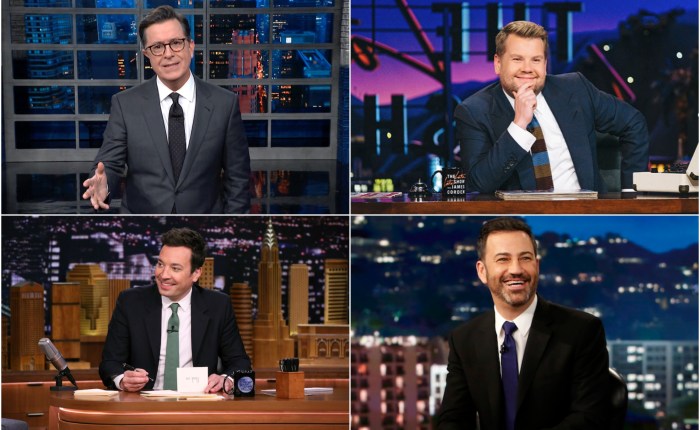
Jimmy Fallon may not have been the first to recognize the value of “viral bits” spreading across social media and YouTube but he was the most diligent host in the late 2000s and early 2010s to capitalize on this trend. His show, today, barely resembles a chat show at all because of this, successful though he may be. And like him, Jimmy Kimmel, James Corden, and others have become increasingly reliant on bits like “Carpool Karaoke”, “Mean Tweets”, etc. for gaining viewership/followers/subscribers.

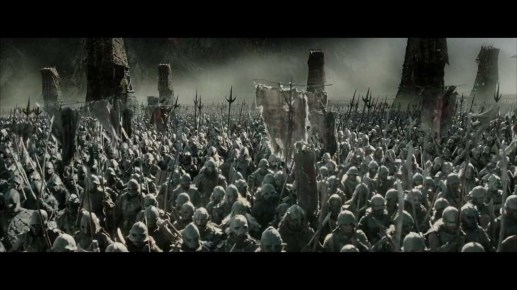
It’s a different market in many ways and not one without its plaudits. Some of these bits are funny. I enjoy watching the Matt Damon-Jimmy Kimmel feud. I like the odd “Wheel of Musical Impressions”. I may even have chuckled at one or two Corden sketches (the Shape of Water one, though I felt pretty guilty afterwards… cause it’s Corden.) The problem (okay, not a real problem) however is that most these bits are desperate and stupid and bringing what could be an interesting format right down to the bottom of the barrel. When actual conversation is conducted too, it’s painfully rehearsed, concerned with the most trivial schlep (did you actually eat a pizza at the Oscars???) and disingenuous/cringe-worthy ass-kissing to the point that I contort and fold in on myself, much like the Witch King of Angmar’s death in Return of the King. Especially with Fallon and Corden. Especially with Corden to further that bracket.

D_yeSgqU4AMs93W
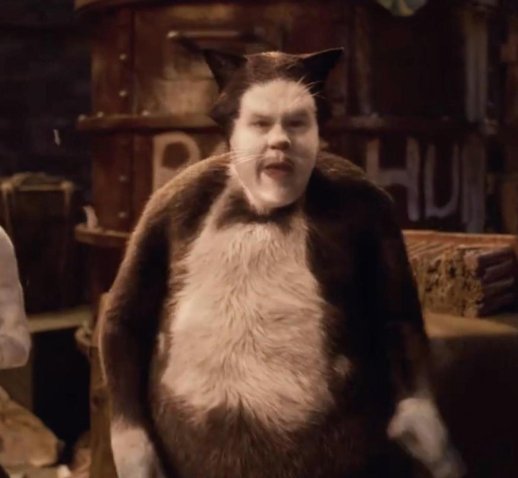
Why do I dislike Corden the most of these hosts? To surmise briefly, he’s everywhere. He hosts the Late Late Show four nights a week, does A League of Their Own in the UK, and still manages to dress up as creepy cat for the upcoming movie Cats. His laugh is also annoyingly fake.

I also agree with the mega-chinned Jay Leno who believes too many hosts are “one-sided” nowadays. In 1993, when Politically Incorrect with Bill Maher aired, the host opining their political persuasion was pretty different and bold. Today however, every dumb comedian with a desk goes for the low-hanging fruit that is Donald Trump with the result being sheer weariness among viewers and a decrease in general intellect. Undoubtedly, we inhabit a far more outrageous political climate than any in recent memory but is there anything to be gained in the preaching-to-the-choir mantra of Stephen Colbert or Seth Meyers? It all seems so trite and easy for such clever comedians. If that wasn’t enough too, even the likes of Fallon, Kimmel, and Corden are going after the president despite their complete lack of political “wokeness” five years ago. It’s not challenging and it’s not funny anymore. Part of me even suspects it tilts those on the fence in a rightward direction, just as that “Fight Song” (for Hillary) did in 2016… sigh…

Today, people are looking elsewhere for a decent interview, on the radio with Howard Stern or on podcasts with the likes of Joe Rogan (though everything leads back to MMA with him). The decline of the chat show is hardly a crisis, given all the other actual crises we face today, but it is something which sheds a rather depressing light on our cultural mindset today. Our attentiveness is shorter than ever. We need jokes and we need them now. Celebrities are awesome. You were hoping to hear about Tom Cruise’s filmography? Well, too bad cause his dog did something crazy! I know you’re running for president but what is your favorite flavor of ice cream? Is it strawberry? How did Trump’s latest foreign visit affect the premise of the new Pitch Perfect movie… etc.

We can do better than this. We can plug a movie or album and have an actual conversation with a celebrity without forcing them to play hop-scotch. Call me a crazy optimist but if general broadcasting’s going to die in the face of streaming services like Netflix, at least do it with some dignity and not on all fours in a ball pit with James Corden.


.

Can Democrats Win On Gun Control?

“Thoughts and prayers” has become synonymous with inaction and insensitivity in America today. With the advent of yet another cycle of half-clout wills and hollow debate in the wake of the El Paso and Dayton shootings, people skipped ahead to the numb realization that no, nothing would be done and what was worse, their president couldn’t even pretend to consider this issue seriously, much less get the names of the places right.

At least one president had some constructive advice to lend however. Bill Clinton called for the reinstatement of the 1994 “Violent Crime Control and Law Enforcement Act”, which lasted for a decade before its failure to be renewed. This bill has been reassessed a great deal lately, since Sandy Hook in 2012, as at least a partial means to assailing the sales and production of assault weapons which do the bulk of damage in these massacres. Citing a 2015 study by Everytown for Gun Safety, Clinton pointed out that 155% more people were shot and 47% more killed in shootings that involved assault weapons. The Dayton killer, himself, fired 41 bullets in 30 seconds. It would seem common sense to most that time is of essence in these attacks and that police response measured against the type of weapons being used calls for some restrictions.

bill-clinton-assault-weapons-column-social.jpg
Bill Clinton signing the act which came into effect before the midterms of 1994 and was said to have cost some supporting Democrats their seats.

Even that matter can’t be closed so easily however because the 1994 bill wasn’t perfect enough: only 18 types of assault weapons were listed under it; Columbine occurred in this era; there were loopholes; people couldn’t quite figure out what defined an “assault” weapon, etc. So was it prone to a system bent on ignoring it; a nation not willing to give up its guns under the banner of that richly invested 2nd amendment? Or was it possibly too mild to inspire anything effective to begin with?

The solution’s not easy and Democrats are fighting for the soul of their country in many avenues. If they felt too meek in 2004, another election year in which the act expired (even though 2/3 Americans supported it), do they really have the guts to stand up to the gun lobbyists in 2020 when so much else is at stake? Like it or not, politics will undoubtedly be at play on this issue.

The funny thing is (in the least funny way imaginable) that the people are on the side of the Democrats. In A Quinnipiac poll in 2018, it was found that 67% of Americans (including 53% of gun owners) favored at least some partial ban of assault weaponry sales. Time and time again, Gallup has also shown a majority backing stricter laws too. There are naturally fluctuations to the specified questions but what’s more interesting and crucial and ultimately sad is that the peaks of support follow crises like Parkland (67% for stricter laws- Gallup) before dropping a few months later (to 61%). People forget too quickly. Why? It’s difficult to determine but political lobbying undoubtedly plays a key role.

The NRA, founded in 1871, has a history of questionable spending. In 2008, they spent $10 million against Obama alone. In 2016, they spent over $400 million on various political activities. They hold a lot of sway and they pick their targets well. In 2012, for example, 88% of Republicans and 11% of Democrats in Congress were found to have received an NRA PAC contribution at some point in their career. Taking that into account, it’s hard to imagine the Republican controlled Senate wanting to do anything. They’re bought out.

Of course, some Democrats have become emboldened in an increasingly liberal party. Joe Biden has proposed a national buy-back program, which echoes Australia’s 1996 plan (although they had 600,000 guns bought up, whereas in America, there’s over 200 million on the market). Cory Booker has a plan for federal licensing. Elizabeth Warren has a more comprehensive plan, which would aim through executive action and legislation, to reduce gun deaths by 80%. This seems optimistic but with incentives like raising taxes from 10% to 30% on guns and 11% to 50% on ammunition and a $100m research into gun violence, she has at least conveyed some specificity.

elizwarren
Democratic candidate Elizabeth Warren

With the increased polarity of the Democratic party itself between the new “woke” liberals and moderate dinosaurs like Joe Biden, I think it should be remembered that compromise isn’t always a dirty word. Yes, it would be a moral failing of the umpteenth degree to not get as progressive a ban passed as possible but what’s more important is that something needs to be passed to get the ball rolling. The 1994 Act could be a great stepping stone; one which could be built on by eliminating the old loopholes, expanding on the number of weapons banned, and incorporating some level of taxes, even if not as much as Warren’s.

The issue of gun violence will not be resolved so simply of course. It’s embedded into the fabric of America across many lines, including the normalization of White Supremacy and racial hatred under the Trump administration. A modest proposal of sorts could lessen the impact of these attacks, as Bill Clinton noted, even if it doesn’t decrease the number of them. Naturally too, you might consider the obvious solution of reaping the rewards of a possible Democratic majority in 2020 by going as far as possible with gun control but then there would also be the possibility of a major pushback if the Republicans gained back control. Compromise, of a kind, is best built on both party’s shoulders. It’s a more stable, if less desirable, foundation.

The Battle of the Democrats Begins

The Battle of the Democrats Begins

17 months yet remain till the deciding vote is cast for the next president of the United States, if indeed, there is one (and if there is indeed still a democracy). Just about every key Democrat figure you’ve heard of has their thrown their name into the ring with over 20 candidates now declared. With this wild assembly threatening the already weakened image of the excuse-me-sir-is-this-gluten-free party, a plan is now more important than ever. This is why there will be two Democratic debates held this week… yes, two… and with 10 candidates apiece. Will they resolve some differences and set a standard goal with which to hammer the incumbent? Or will they sully the already murky waters of their objectives and philosophies? Let’s investigate.

Debate #1 (Wednesday, 26 June)

Candidates: Elizabeth Warren; Beto O’ Rourke; Cory Booker; Amy Klobuchar; John Delaney; Tulsi Gabbard; Julian Castro; Tim Ryan; Bill de Blasio; Jay Inslee

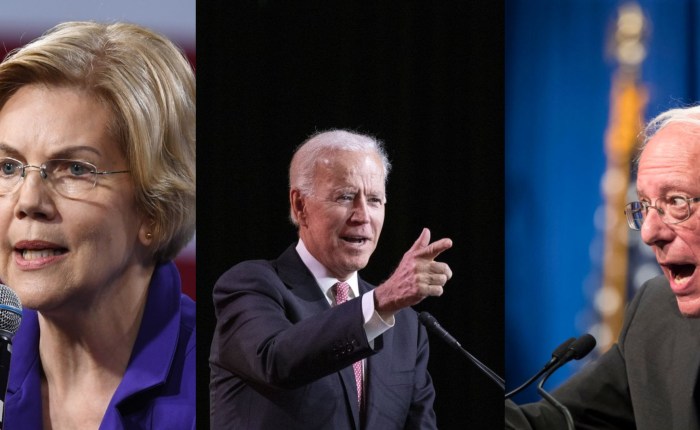
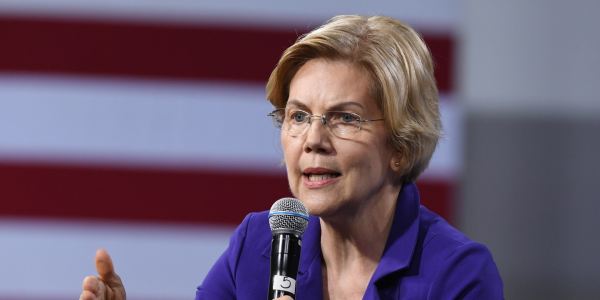
Essentially the B-side to the following night’s debate, this is Warren’s chance to shine among a field of relative obscurities (on the national stage). She is seen as a far-left choice by some and too economically-minded by others but her rising stardom coupled with her no-nonsense resolve makes her an inviting alternative to Sanders, whilst also carrying the torch of those determined to see their first female president. In my opinion, she could make for an excellent president (polling behind Biden and Sanders) but her anti-Wall Street sentiments and lack of (let’s say) wackiness gives her a challenge of image for the undecided. Unfortunately, I could see Trump painting her as a weak-minded loopy socialist of some sort.

GettyImages-1145519920-1561060547-e1561060634447

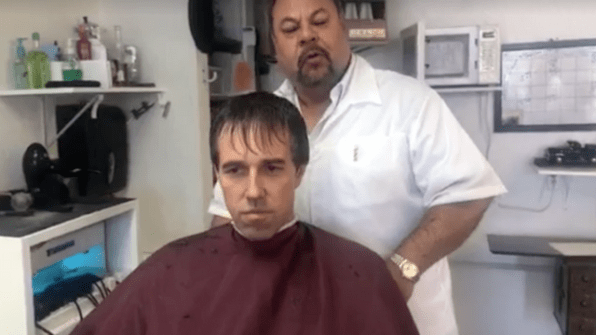
As for the others, I don’t want to exactly disparage or dismiss them but when your strongest challenger shoots for Dukakis-like photo ops (see below) and just lost a Senatorial race to slimy Ted Cruz, it’s difficult to see them going far. Still, Beto O’Rourke is an affable candidate, in many people’s minds, and his youthful image could provide a much desired contrast to the dinosaurs dominating American politics today.

orourkebetohaircut_051519fb
Like Hugh Grant after an emotional confession in the rain

Debate #2 (Thursday, 27 June)

Candidates: Marianna Williamson; John Hickenlooper; Andrew Yang; Pete Buttigieg; Joe Biden; Bernie Sanders; Kamala Harris; Kirsten Gillibrand; Michael Bennett; Eric Swalwell

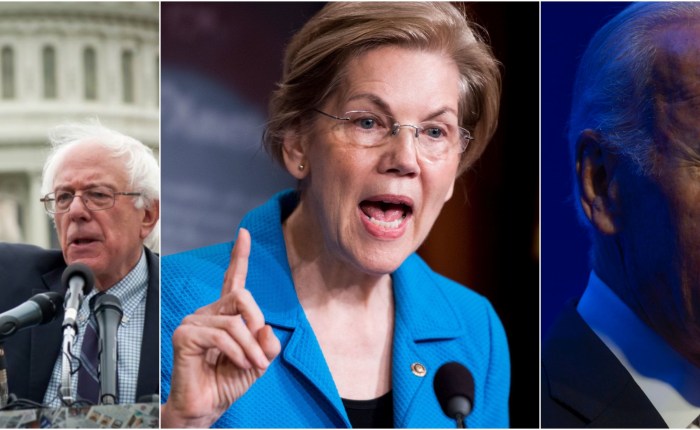
The media’s attention will undoubtedly be placed on drawing distinctions between Biden and Sanders; the two front-runners wrestling for the soul of the party. Will the more centrist slick politics of the former VP fare well or will the should-have-been nominated choice of the left topple him? For many, it’s essentially Clinton-vs.-Sanders part two. Biden, however, is no Clinton. Yes, he is not as liberal as Sanders or Warren but he’s also not as rehearsed and guarded as the former Secretary of State. Biden’s appeal lies in his compassion and relatability; something someone who’s been as involved as he has (and for as long as he has) should not have. People like him. He could probably hold his own against Trump the way others might not. His main problem, in these debates and the primaries, will be in overcoming controversies relating to past decisions (certain votes, Anita Hill) and behavior (the whole massaging people’s shoulders thing) but these are essentially overblown by the woke no-context trolls of the internet. Let’s remember, before we injure another promising candidate, that people’s attitudes were different in the ’80s and ’90s and that whatever any of these people have said simply does not compare to what the current president is actually doing.

joe-biden_1-1920x1080

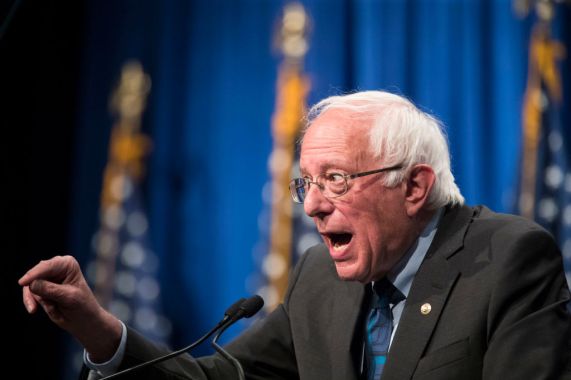
Enough about Joe though. Let’s move onto Sanders. He was my own preferred candidate back in 2016 and a part of me would love to see him become the next president but honestly (and sorry), some of the magic has worn off. It may be the fact that the democratic base has become more liberal (thanks in large part to himself), making him just another voice among the throngs; it may be that some of his ideas (free tuition) just don’t seem practically attainable; it may even be that I’ve just heard his message too often- but the level of excitement surrounding his run just isn’t what it felt like four years ago. Perhaps, I’ve become jaded. I don’t know. The important thing to remember is, and you can find this in the polls, that he stands a very good shot. Some liberals need to be reminded that although yes, he is another white old man, he has been the most committed champion of their causes (something his team keeps prodding about on social media). His fans, then, also need to be reminded that it does no good to act like a whiny little bitch and refuse to support whoever beats him. Let’s also not make age an issue. Biden’s one year younger than him and Trump is 73.

Bernie Sanders Delivers Policy Address On Democratic Socialism In Washington DC

Besides those two, some of these candidates are intriguing, if not yet convincing. Pete Buttigieg, for instance, is a 37-year old gay/veteran/liberal mayor, who’s drawn a lot of attention for his eloquence. He sounds smart and he can’t be pinned down to one specific picture; almost the perfect contrast to Trump. The problem is nobody really knows what he’s all about. Remember kids, identity politics isn’t everything. Then there’s Kamala Harris, one of the earliest candidates to declare. A former prosecutor, she’s a tough one, who for all her law experiences, gains all the more credibility in her attacks against Trump. Andrew Yang has meanwhile discerned himself from the rest, putting ideology aside, to focus on universal basic income and the decreasing number of jobs available in America. This seems common sense but pundits and commentators sometimes forget how crucial economic matters are to voters’ minds. This is worrying, of course, because the economy is actually doing well, thanks to Obama, but credited by Trump to Trump. Democrats can’t let the president seize this victory.

akrales_190411_3346_0152.0

And lastly…

It’s early days yet. Although I’ve only focused on a few candidates, everyone has a chance to shine up on stage. Nothing’s guaranteed. Someone could, for instance, fart and break down right there and then. Someone could do a George Bush and run two words into the one. Someone could do an Al Gore and look smarmy for just a moment too long. Anything’s possible.

In some ways, it’s ridiculous that these debates are happening as early as they are and in some ways, it’s a good thing. The Democratic party has not tended to unify as solidly as the Republicans have in the past. After all, look how quickly everyone abandoned their principles and got behind Trump in 2016? Despicable but remarkable. The democrats need to stop shooting their own. If Biden’s a little too centrist for you, so what? He’s a lot better for your country than Trump is. Is Warren not exciting enough? It doesn’t matter. She’ll get the job done well. Democrats failed to resolve the conflict between their own ideals and the bigger picture back in 2016 again. If they fail this time, then America will truly be granted the president it deserves.

The Awkward Joe Biden

The Awkward Joe Biden

There are nearly 20 declared Democratic candidates for next year’s election and yet one key figure remains aloof and undecided. Yes, hanging out there, somewhere in the horizon with a winning smile but a shadow cast in a question mark is none other than Joe Biden. You know him best as Obama’s other half but he’s also served in the past as a Senator for 36 years with a host of positions including Chair of the Senate Foreign Relations Committee and Chair of the Senate Judiciary Committee. He’s got the best experience of any of these Democratic hopefuls, charisma, and something most politicians lack; a genuine personality. So why not declare? Well, let’s get straight to the first and most pertinent stumbling block and fair warning, it’s a touchy subject…. okay, sorry.

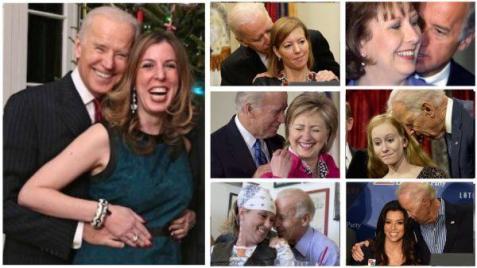
Joe Biden’s been caught in a whirlwind of controversy this last week over a number of women claiming his “personal touch” to be a little invasive and inappropriate. This is by no means an explosive or recent discovery. In the past, many commentators and comedians like Jon Stewart have squirmed at Biden’s holding of shoulders, heads, and hugs for prolonged periods. It’s never been described as sexual harassment as such but rather just uncomfortable and strange. In the context of the #metoo era, perceptions have of course shifted however and Biden is now being asked to account for these instances.

joe biden 2

In a statement last Wednesday, he explained that any handshakes or hugs were always given as marks of “affection, support, and comfort”. He said he was not sorry for his “intentions” but acknowledged that “social norms are changing” while promising to be “more mindful” in the future. On Friday however, at the International Brotherhood of Electrical Workers Construction Conference, after hugging the IBEW president, he joked that “he had permission” and then later made the same joke when others joined him on stage. (A bit sloppy, yes.) Well naturally, some people took this in jest and others with more affront, such as Tarana Burke (founder of #metoo movement) who said the jokes were “disrespectful and inexcusable” and that it was not enough for him to be “mindful,” he needed to make an effort to apologize properly.

Is this an overreaction? Part of me wants to say yes and defend Biden outright. After all, sensationalism in today’s media is driven by headlines rather than analysis. Most people who catch a whiff of these headlines, I hope, would delve deeper and read a bit into it. But words like “allegations,” “accusations”, and so forth have such a weight to them now that I fear Biden will be dragged into the company of far worse offenders. He certainly did himself no favors with his jokes but he did, at least, respond and yes, I do think “intentions” matter. I don’t think most people honestly consider this man to be a true creep like say, the President of the United States.

Biden’s of a different generation and age; a fact some commentators don’t think matters given the gravitas of this cultural change we’re experiencing but context is always crucial. Our backgrounds shape us, for better or worse. Biden, has suffered the loss of a wife, a daughter, and son in his tragic past and often made a connection with people in hard times through words or hugs. Most politicians do this, albeit to lesser extents. He’s 76 as well so his customs and mannerisms may be off tilt with younger generations.

That’s all just pause for thought, more than anything though. Before we #cancel Biden, we need to examine what value is to be attained in judging people’s morals and conduct retrospectively. If it’s for the cause of attaining a better 2020 candidate for the Democrats, then maybe there is something there. After all, the party has become more liberal and with so many alternatives on board, why should we accept the obvious choice like so many did with Hillary in 2016? There’s a few reasons:

  1. Some of these candidates suck, are disingenuous, and do nothing but pander to the liberal waves like Kirsten Gillibrand
  2. The aforementioned level of experience
  3. He has the highest polling
  4. He can appeal to moderates who might otherwise side with Trump
  5. He’s charismatic and likable; marketable too
  6. Association with Obama

There’s definitely reasonable debate on whether or not he should run. I would agree with Ross Douhat (New York Times) that, if he does, he should run on his record rather than against it. Any sharp left-wing moves will be preyed upon by the media, his fellow candidates, and online trolls and then mocked by Trump. There is a section of Trump’s base to be swayed too who actually do care about labor unions, health care, and other important issues, which Biden can speak to with precision as others might vaguely address. Plus, if nothing else, it’ll at least give Democratic voters some alternative to the growing liberalism represented by candidates like Booker, Sanders, Warren, and O’Rourke. Then, they can’t whine come November 2020.

Biden has always been “awkward”, prone to gaffes, and toneless remarks (e.g. wishing he “could” have done something about the Anita Hill sexual harassment trial in the early 90s, despite then being chair of the Judiciary Committee.) His record is not squeaky clean. He’s even run twice before and failed. In the Democratic Party’s quest for greater wokeness however, it can’t be worthwhile to decry and discard every ally who’s ever done wrong. When the bar is set this high, the likelihood for success becomes increasingly narrow and the bigger picture gets lost. The Republicans understand this much, if anything. I also don’t want to see Trump re-elected because his opponents couldn’t find their Messiah.

“You’re #cancelled Bro”-Cancel Culture

“You’re #cancelled Bro”-Cancel Culture

Part One- John Wayne Rediscovered

Recently, an old Playboy interview with John Wayne from nearly 50 years ago was rediscovered which revealed some horrendous beliefs he held about race relations, white supremacy being a good thing, and homosexuality. This sparked outrage with the usual suspects who a) don’t contextualize anything and b) know nothing about John Wayne. Now, let me preface this with the painfully obvious but excruciatingly important detail that I am, by no means, defending John Wayne or what he said. In fact, I’d even go so far as to posit that his opinions were particularly racist for a racist white guy in the early 1970s. They were vile, stupid, and yes, offensive but- they were not made by someone alive or of our generation or even the two before it.

john wayne

If you have ever watched a single one of Wayne’s movies, you simply wouldn’t figure him for some kind of liberal. You might even, to take a very minuscule leap, gather that he was of a very old, patriarchal, white-bred kind of background. That doesn’t make what he said okay but to be shocked or outraged by someone’s words, I would at least attest that you’d have to have thought of them in some other kind of context. Basically, it’s not that surprising to learn an old white star, who was by then in his 60s, held some bigoted beliefs. And it doesn’t make much sense (and this is the fundamental point) to make a career of sifting through an old star’s interviews from decades ago with a modern lens of morality. Years from now we will undoubtedly be judged for what we did, yes, but for the likes of Wayne, we should probably still be able to enjoy his output while acknowledging that he wasn’t exactly a symbol of tolerance.


Part Two- The Rise of Cancel Culture

The modern trend of social justice, in the forms of #metoo, political correctness, and cancel culture has risen and taken storm as a result of frustrations built upon years of a lack accountability on the part of powerful figures. The courts can be slow to deliver proper punishments, if any, in even the most high profile cases. Political systems have been infected with a slew of problems, so cumbersome that they’ve become almost insurmountable. And even shows like The Big Bang Theory continue to thrive despite the fact that they are clearly dreadful. In such times, the mantle of social media can appear attractive. It has given a voice to the voiceless. It has helped promote awareness of issues we never would have thought of. It even gets you quick customer service where all other avenues fail. It’s also dangerous however.

The problem with social media is not so much that it can present biased, clickbait visions or news pieces, without much resistance, but that it’s populated with the worst kind of people you could ever listen to. Any given day on Facebook, I can scroll through my newsfeed, and find a barrage of comments on an article that has obviously not been read in full or countered. Too many people don’t want to have their viewpoints challenged so they cling to familiar publications or channels (like liberals for the Huffington Post and conservatives for Breitbart) and ignore that which falls between, taking in sensationalist headlines which eventually build up a picture of someone or some idea without much shade or nuance.

I don’t want to get into bi-partisanship however. I’ve impressed the above point only to account for the lack of accountability people afford themselves when they interact with others on Twitter, Facebook, etc. They react instinctively and without good measure when allegations arise, which brings us back the way of cancel culture. Let’s take the not-so-comfortable example of notorious racist Liam Neeson. The thing about Neeson is he’s not our classic idea a notorious racist. Some say he’s just another human being who admitted to a detestable moment in his life, when he sought vengeance for a friend of his who had been raped, by roaming the streets and looking for a “black bastard to kill.”
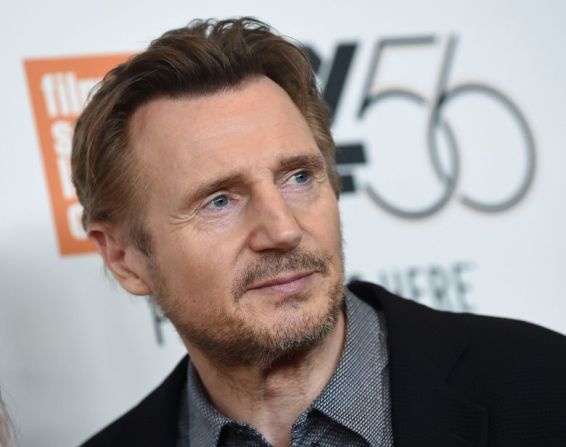
2018 NYFF - "The Ballad of Buster Scruggs" Premiere, New York, USA - 04 Oct 2018

Let’s unpack this slowly and carefully. First of all, it was racist and horrible and I don’t think anyone can expect any black person to take this account without offense or anxiety. After all, this is the kind of hate many have had to deal with their whole lives, resulting in unwarranted arrests of murders. Neeson’s story, however, was not happened upon by some journalist. He told it himself, as a way of admitting his own guilt, clearing his conscience perhaps, and illustrating the the deep-rootedness of bigotry in society. He felt shame, yes, but he also said he could’ve killed someone. So, do we #cancel him or at least, evaluate the details of his story first?- because it if both a typical and untypical example of prejudice influencing a person’s mindset.

Putting aside whatever conclusions you may come to, the problem for me with this story, was how it got reported and discussed by the majority of people in social and regular media. For one, many seemingly missed the point where Neeson asked for the details of his friend’s attacker (height, hair, etc.) as well as the details of the story as a whole, and focused immediately on the headlines. For another, people called him an “idiot” for simply bringing the story up which granted was stupid, given he was promoting a movie. If we can’t discuss difficult topics like this however with some grace, how can we begin to actually solve them?


Part Three- Art and Morality

Woven into the tapestry of this debate on cancel culture is the thread of modern morality and “wokeness”. Can we separate art from the artist or do we need to stop making excuses for facilitating the careers of harmful individuals like R. Kelly?

Undoubtedly, a few good things have arisen in this current climate of social justice. The #metoo movement, for instance, finally got a great many people to pay attention to the rampant culture of sexual harassment dominating work spaces. It impressed upon men, in particular, that if you behaved a certain way, you would be held to account (not that it’s been wholly effective or noticed everywhere). We’ve come to appreciate that racism is systematic beyond the plain and obvious insults and attacks of past generations. We tolerate less so that more are accepted. We’ve also come to confront an issue that never seemed like much of an issue too; toxic fandom.

In a sense it’s easy enough to cancel a celebrity like Neeson or Kevin Spacey by refusing to entertain any more of their work. With someone like R. Kelly, it’s tougher because he had a large fan base and produced many hits, for himself and an array of other artists. A radio station can withdraw “Ignition” from the airwaves but they can’t exactly strip it of its appeal. And what about Michael Jackson then? The controversial Leaving Neverland documentary, which aired in our parts last week, saw two fresh allegations presented over the course of four hours against the late King of Pop. Are people really going to forget or condemn songs like “Billie Jean”? Some radio stations have already begun to stop playing these, on the basis of this wound being “too fresh”. Many of his fans however, on the opposite end of this spectrum, are flat out denying the validity of these allegations. Their concerns aren’t without logic but as documentary favorite Louis Theroux has pointed out, they can act “willfully blind” in the name of their hero.

MJ

That’s where we come to the idea of toxic fandom as a tide fighting against #cancel culture. It’s a lot easier to stand by an artist like Michael Jackson who’s greatly influenced you than it is to accept the allegations leveled against him. It’s almost too much to bear for people who want everything about this icon to be pure and unquestionable. In this sense, perhaps the trend of social justice is doing us a necessary, if painful service, like ripping a bandage off. We need to learn to accept our favorite stars might not be as great in their personal lives as they are in their art which has been true throughout the course of history.

Balance will be the key to all of this and it will take some time but I don’t think it’s necessary to discard the works of these fallen giants. After all, MJ opened a lot of doors for black artists in the industry. That can’t be taken away from him, just as Cosby’s influence on comedy can’t be eradicated. The fans don’t need to feel guilty for enjoying these people’s work but they should accept that deification of such figures gives way to a toxic and irresponsible culture, where abuse of power rests comfortably and heartache inevitably follows. In extreme cases such as theirs, we cannot turn a blind eye to their conduct (alleged or proven) but we should also not shackle ourselves to the notion that every celebrity, politician, or Twitter provocateur deserves to be cancelled and erased from history. Nuance is key, redemption is possible, and forgiveness is not at all a weak act.
What If There Was A Mount Rushmore For The Shit Presidents?

What If There Was A Mount Rushmore For The Shit Presidents?

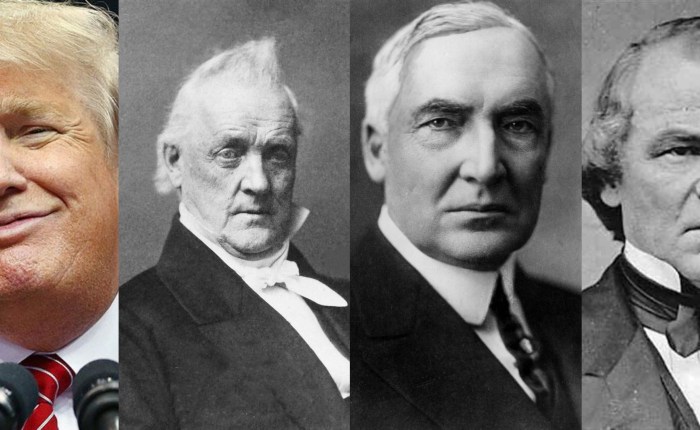
Why pose such a question? Well, it’s Presidents’ Day and while in the past we have taken to ranking the modern presidents on their historical achievements, this year; we thought we’d put a negative spin on things. So if there was a Mount Rushmore to commemorate the lowest of the low, the ones that just plainly didn’t know what they were doing or acted against the interests of the nation, who would they be? There are worthy cases to be made for the likes of Franklin Pierce and Hebert Hoover. Many believe that George W. Bush’s two terms were damaging beyond repair. Some radicals might even posit that Nixon took a misstep or two. Dig down deep enough into the barrel however and you’ll find that there is a loose chip of wood which barely contains the cess pit beneath that is these four individuals. (And guess what “woke” millennials, they’re all white males!)

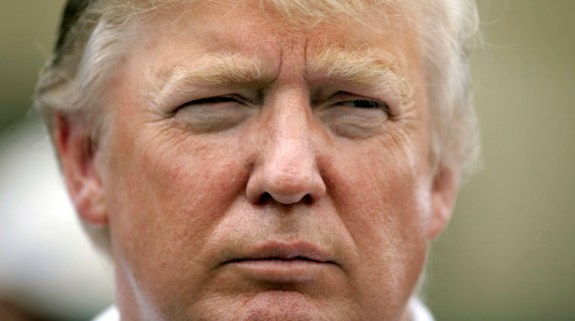
Donald J. Trump (2017- )

Donald Trump


The incumbent recently declared a National Emergency so that he could get his border wall built. The emergency, many retorted, was his presidency. And the wall is (let’s face it) one of the stupidest ideas ever proposed by anyone on the face of the Earth… but there are just too many other reasons why Trump will go down as one of the worst leaders of anything ever to ignore, so here’s a few more:

  • his lack of respect for democracy and a free press
  • his indifference to injustices committed against Black Americans
  • his rhetoric and how it’s inflamed tribalism/division
  • his narcissism and inability to criticism
  • his respect for authoritarians
  • the whole Putin thing / basically betraying the US

But hey! It’s only been two years! There’s still time to get your engorged face off of this mountain. (One could imagine Trump actually demanding his face be bigger than the others, even in such a scenario.)

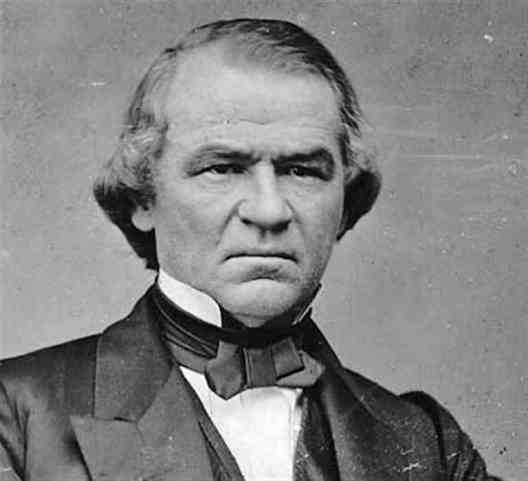
Andrew Johnson (1865-1869)

Andres-Johnson-17th-U-S-president

Lincoln’s successor was one of only two presidents to ever be impeached (pending). He was acquitted on the basis that everyone supposed he would lose election (having not won one before; Lincoln died but a month into his second term). His legacy rests mainly (and quite strangely) on fighting against the kind of advances made by the president he served, opposing the 14th Amendment (which addressed citizenship rights for former slaves) while fighting fellow Republicans (who sought to oppose seceded states from instating old, pro-slavery leaders). Like Trump, he also had a penchant for firing cabinet members which led to the Tenure of Office Act. He even got drunk at Lincoln’s second inauguration!

In a time of national mourning for such an inspiring leader as Lincoln, it is quite perplexing that Johnson sough to appease Confederates with the ball in his court. He also just looks like a bit of grump, in general.

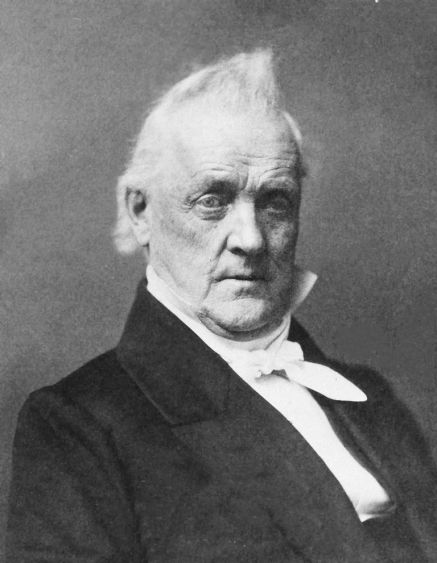
James Buchanan (1857-1861)

793px-James_Buchanan_-_post_presidency-5962f8da3df78cdc68bb315f

Lincoln’s presidency (the most highly appraised by historians) is nestled between two of the worst. Buchanan came before and basically did nothing to address the shifting tides of the national consciousness and the growing unrest that led to the secession of the Confederate States in 1861. He managed to alienate Northern Democrats and Republicans in an attempt to administer Kansas as a Slave State and provoked one of the greatest moral failings of any president in supporting the outcome of the Dred Scott case (which determined that Scott, a slave, could not sue for his freedom in a Free State). Although he supported the North in the Civil War, his partiality to the South in the preceding years did more damage than he ever could admit.

It is said that he declared the day before his death that “history [would] vindicate my memory”. He was… well, you get where I’m going with this.

Warren G. Harding (1921-1923)

Harding-56a48c9f3df78cf77282ef21.jpg

Like Trump, this guy didn’t really know what he was doing. To be fair though, he did at least acknowledge how incompetent he was in saying “I am not fit for this office and should never have been here”. So, there’s that.

Although strongly mourned upon his death just two years into office, a series of scandals emerged which shaped historical revisionism in the immediate years following. These basically amounted to Harding’s cronies looting the treasury with dodgy deals such as the Teapot Dome Scandal. Elsewhere, he was also seen as an ineffective and uninspiring leader, one whose popularity drove him to prominence rather than any intellectual stances posited for helping the nation.


2020 Looms Already… Tips For the Democrats

2020 Looms Already… Tips For the Democrats

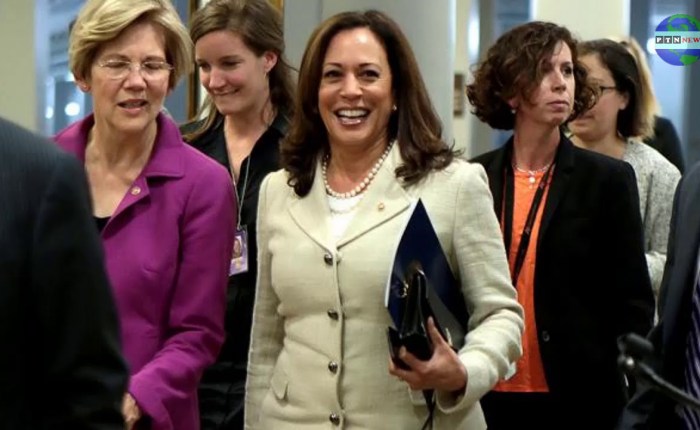
Alas, the 2020 election’s already rearing its ugly head even though there’s still 19 months till it actually happens. With candidates like Kamala Harris and Elizabeth Warren emerging and with the stakes higher than ever, I thought this would be a good opportunity to provide some necessary nuggets of advice because… well, let’s face it- the Democrats kind of… suck. That is, not to say, that their candidates are bad or that their ideas lack gravitas or sense; they just don’t know how to sell themselves or stay the course. So, please take heed because nothing’s guaranteed.

  1. Don’t turn on one another: Bernie Sanders isn’t the enemy, nor is any other candidate who takes the steam away from the party’s star darling. In 1980, the Democrats’ chances were greatly skewered by Senator Ted Kennedy’s challenge against incumbent Jimmy Carter. In 2016, Hillary and Bernie supporters clawed and gnawed at each other to the point that many of Bernie’s ranks became Trump voters while many of Hillary’s bemoaned the sheer gall of a challenge .
  2. Stand by your liberal values: The latest stream of Democrats in the House suggests the Democratic party is moving to the left. Agreeing on a final platform in the summer of 2020 will undoubtedly be a messy affair but at this juncture, there’s no sense in compromising to meet the Republican base’s standards. Trump’s damaging the party in spectacular ways and if the Democrats present a centrist vision, they may lose the value of contrast.
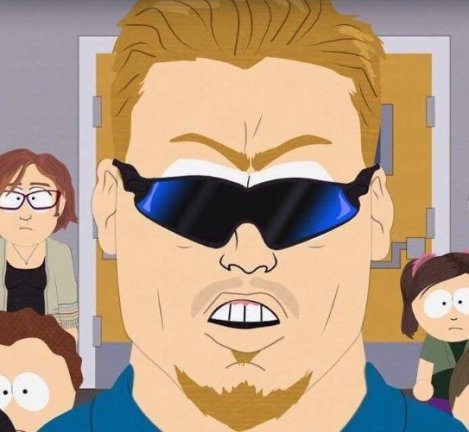
  3. At the same time, don’t be the wrong kind of liberal: The issues are what matters, not the identity politics gripping today’s culture. Yes, they shouldn’t compromise on their values but there’s no need to alienate moderates or even potential conservative turn-abouts with condescending notions of political correctness. Don’t abide racism, sexism, or any other form of prejudice. Yes, these things matter. With that said, sometimes a joke is a joke. Don’t be the kind of candidate who polices language and how “woke” people are with the thin-moustachiod zeal of the PC Principal.pc principal
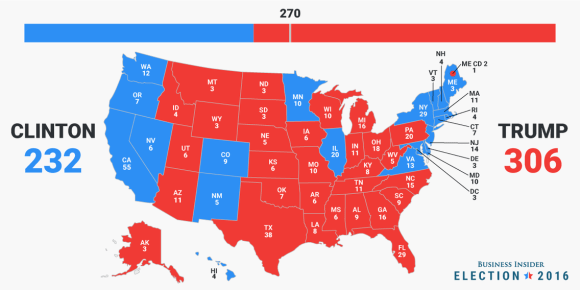
  4. Attempt a 50-state strategy: Yes, we all know the electoral college system’s stupid but it’s not likely to go away anytime soon, is it? So, do the right thing and engage as many Americans as possible, even if it means a trip to a blood red state. A personal touch really makes a difference. Trump had a horrible platform in 2016 but he didn’t just bring it to Iowa.583c8f6bba6eb67d058b66d9-1136-568
  5. Keep an eye on Social Media: With or without Russian hackers, people flick by a large number of sensationalist headlines every day on Facebook, YouTube, and Twitter. The more and more you see a story or a theme repeated, the more likely you are to believe it or at least, give it some pause for thought. In today’s culture, it’s become very difficult to separate the truth from the bullshit, so if the Republicans are going to play dirty, the Democrats either a) need to as well or b) find an effective way to convey just how wrong these articles/the Republicans’ assertions are. As I write this, I understand that this is of course, a lot easier said than done.
  6. Engage your opponents: This is to further point 3 above; be prepared and willing to engage with those who don’t hold your opinion on say, abortion, or gun control. Even if you strongly disagree with someone, you can still have a conversation with them. You might feel their’s is perhaps a dangerous opinion and that they should not be given a platform (as has happened on university campuses), considering the scores of others who have never had their voice heard. I grant that that is a fair and even practical approach at first glance. When you try to impede someone’s free speech however, you often just strengthen their resolve and help marshal others to their cause. You even appear weak and afraid that perhaps their bluster pertains more nuance and scope than you first imagined. The Republicans, I believe, are fundamentally wrong on a number of issues but that does not make them villains who we must banish to the darkness.
  7. Don’t make age an issue: Chances are rife that a lot of these candidates are going to be in their 60s and 70s. They could easily just keel over and die at any moment, right? Do they really represent the youth? Sure, not every issue affects every age group equally and yes, people die more so later on in age but a) these candidates do preach, by and large, to concerns affecting most Americans (income inequality, climate change, etc.) and b) some of the best Democratic senators and representatives have served well on in life (take Jerry Brown’s work as Governor of California for example or two of the most popular prospective candidates, Sanders and Biden).

    brownjerry_041718
    Jerry Brown, old as time, but a sound Governor (left office earlier this month).
  8. Don’t be passive, inspire: Above, I wrote about how sensationalist articles can cloud people’s better judgment on Social Media. Sometimes, sensationalism is needed to convey a point effectively though. Whoever emerges as the Democratic nominee will need  to take Trump to task with strong, vitriolic language. There is just cause because this is a ridiculous man and a lame-duck, politician type will not be successful in his arena. Why not even take a stab at being a great orator? One who can inspire the way Obama or JFK did?
  9. And lastly, be yourself: There’s probably a good point to be made here, concerning Hillary’s robotic approach but I’m just going to take this opportunity to wish all the candidates good luck. You may not run for president again, after all. So reach for the stars, show ’em what you got, and all that!

Undoubtedly, there’s a lot more these candidates will need to be mindful of but as I’ve already said, it’s a long way away yet. Anything at this point is mere speculation. What we do know for sure if that Elizabeth Warren is seeking to run, Kamala Harris is running, and a number of others are considering it. Like in 1976, it’s a fairly open field and anyone’s guesses are as good (if not better) than mine. I expect we will have at least ten noteworthy candidates by June (perhaps Beto O’ Rourke and Cory Booker) and at least five options. We mustn’t, of course, make the mistake of 2016 and assume anything’s for sure however. Biden’s not 100% definite. Nor is Sanders. Or anyone else. And there’s still a lot of work to be done by the House to keep Trump at bay.

Collusion & Shit Storms: Trump’s 2018 In Summary

Collusion & Shit Storms: Trump’s 2018 In Summary

At the Washington Walrus, we recognize that it can sometimes be difficult to keep up with the latest in baffling tweets, nonsensical decisions, and eh… “reverse psychology” employed by the Trump Administration. One story may change from one end of the day to the next. So, we thought, it’d be handy to save you the hassle of sorting through this all and give you the main talking points that dominated this presidency in 2018 (year 2) with some colorful commentary.

January

  • Fire and Fury is released. Although Michael Wolff’s first-hand account is un-sourced and speculative, it manages to grind Trump’s gears immediately. Mike Pence, who believes gays can be cured with shock therapy, decries it as a “work of fiction.” Later on this year, his family will release a book about his rabbit, Marlon Bundo.

    marlon bundo
    The Pence’s book was met with John Oliver’s rival companion, A Day in The Life of Marlon Bundo, which told the story of a gay rabbit.
  • Trump presents the “Fake News Awards” via Twitter. The New York Times and CNN dominate the evening.
  • Government Shutdown 1/3- this time over government funding.

February

  • Government Shutdown 2/3- over funding again. Eventually, things clear and a budget proposal is launched with major tax cuts for the rich.
  • Former Trump lawyer, Michael Cohen, starts facing a tough year when he acknowledges payment (on his own behalf) to Stormy Daniels in 2016.

March

  • Trump fires Rex Tillerson and hires former CIA director, Mike Pompeo, as new Secretary of State. Gina Haspel takes over his role meanwhile.
  • Trump, against advice, calls Putin to congratulate him on his re-election.
  • White House issues memorandum on Mattis’ military policies to the effect that they support disqualifying transgender people from military service.

April

  • Increased scrutiny on Stormy Daniels’ affair. She files a lawsuit on claims Trump’s made.

May

  • Ends temporary protected status for Hondurans.

June

  • Department of Homeland Security reveals that between April 19 and May 31, nearly 2,000 children were separated from adults at the Mexican border. Trump tries to blame others, including Democrats for what easily ranks in his top 3 evil policies to date.
  • Describes Canadian Prime Minister, Justin Trudeau, as “very dishonest and meek” after G7 summit.

July

  • Scott Pruitt resigns as EPA head.
  • Robert Mueller indicts 12 Russian intelligence officers over hacking Democratic emails.
  • Trump advises Theresa May to sue the EU over Brexit negotiations. It’s quite a month for him.
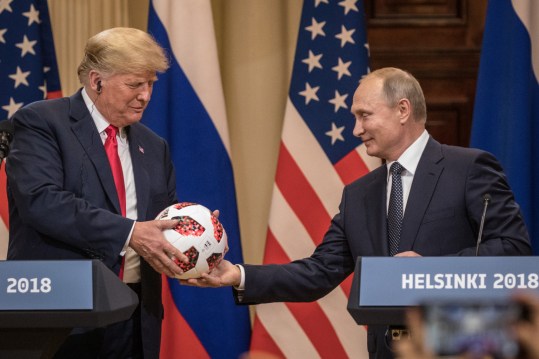
  • Trump and Putin meet at a summit in Helsinki. Trump states he knows no reason why Russia would’ve interfered in the 2016 election. Putin gives Trump a football as a present. Trump throws it to Melania, saying it’ll be a present for Barron. The world watches stunned.

    President Trump And President Putin Hold A Joint Press Conference After Summit
    Perhaps the most shocking moment witnessed on live TV since Janet Jackson’s nip-slip at the 2004 Superbowl.
  • Iran’s President, having said a war between the US and Iran would be the “mother of all wars” is hit with Trump’s latest constipation tweet: “To Iranian President Rouhani: NEVER, EVER THREATEN THE UNITED STATES AGAIN OR YOU WILL SUFFER CONSEQUENCES THE LIKES OF WHICH FEW THROUGHOUT HISTORY HAVE EVER SUFFERED BEFORE. WE ARE NO LONGER A COUNTRY THAT WILL STAND FOR YOUR DEMENTED WORDS OF VIOLENCE & DEATH. BE CAUTIOUS!” It was all caps, so you know he means business.
  • Cohen claims Trump knew of June 2016 meeting in Trump Tower between campaign officials and Russian lobbyists promising “dirt” on Clinton.

August

  • Press Secretary, Sarah H. Sanders calls the press the “enemy of the people”.
  • Manafort and Cohen are both found guilty of 5 counts of tax evasion.
  • Trump says in an interview with Fox that if he was to be impeached, the market would most surely crash. He’s taken a lot of credit for the economy this year.

September

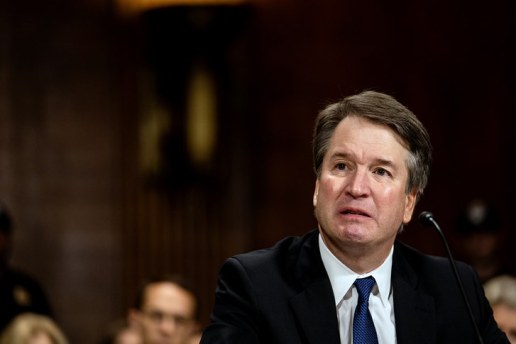
  • The Senate Confirmation hearings begin for Trump’s Supreme Court nominee, Brett Kavanaugh. This lasts through to October. We learn he likes beer and studiously marks his calendars.

    Lista-The-Tears-of-Brett-Kavanaugh
    “I like beer!” The impassioned plea of a former frat boy and Supreme Court Justice. He also has the Ronald Reagan hair-do going on.
  • Trump claims before the UN General Assembly that his administration has, in less than 2 years, accomplished more than “almost any other” in history. They laugh at him. Trump says he wasn’t expecting that reaction but that it’s okay. It’s not really though, is it?

October

  • Kavanaugh’s confirmation by a hefty 51-49 affirms for many that the #metoo movement still faces limits.
  • Trump campaigns in anticipation of the mid-term elections.

    maxresdefault (5)
    A campaign rally for Trump supporters.

November

  • Jeff Sessions resigns and is replaced by Matthew Whitaker.
  • Trump fails to attend a WW1 memorial ceremony in Paris with other world leaders due to weather.
  • Despite expressing concerns over the disappearance of journalist Khashoggi, Trump declares loyalty to Saudi Arabia.
  • Defends Ivanka’s use of private email.
  • Cohen pleads guilty to lying to Congress over Mueller/Russia investigation.

December

  • George H.W. Bush’s funeral reminds us that the president doesn’t have to be a villain. Not by virtue of Trump however. He looks strikingly out of place.
  • Cohen sentenced to 3 years for tax evasion, violation of campaign finance laws, and deceiving banks and Congress.
  • Secretary of Defense, Jim Mattis, resigns, after Trump tweets that troops will return home from Syria with victory over ISIS being assured.
  • Government Shutdown 3/3 over funding for the Border Wall.

    pelositrumpap_hdv
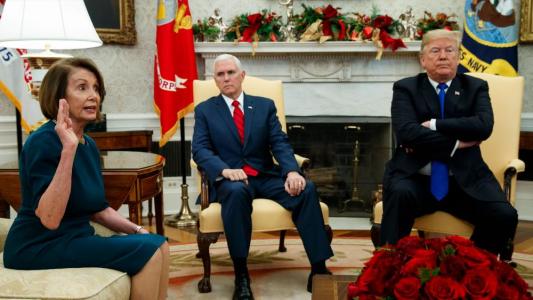
    Pelosi and Schumer (not pictured) has a meeting before the press with Trump. It went supremely well. Meanwhile, Pence contemplates the possibilities of a Marlon Bundo movie.


And there you have it! Quite a year, huh? Of course, this only scratches the surface. There was also the beginning of a trade war with China and many other resignations/firings. Or how about that meeting with Kim Jong Un? Yes, even though it was one year, a lot happened but what seemed to dominate thematically and quite literally were:

  1. Trump and his team’s lies unfurling under the weight of the exhaustive Mueller investigation.
  2. Trump’s sense of indignation and hostility growing exponentially with any who disagreed with him.
  3. Trump’s needs for appraisal at any cost- be it by others lying to him or by him lying to others about things he has (but hasn’t actually) accomplished.

These themes will probably course over into 2019, a year in which the stakes will undoubtedly be amplified considering the momentum of Mueller’s investigation and the fact that the Democrats will take lead in the House of Representatives. But will it be an easy road for liberals then? Or will Trump’s base fight back, feeling the victims of persecution in both a political and cultural war? And what can Trump do/say to shock us at this point. Well, here’s a few things for 2019 we predict:

  • The “Fake News Awards” become an actual 3-hour long televised event on Fox with in-memoriam slides for celebrities Trump feels were wrongly accused of sexual misconduct.
  • Trump tweets spoilers for the Game of Thrones’ finale having gotten Eric to secure a copy. Eric, meanwhile, feels he has done his father proud and gets a gold star.
  • Attacks nations that don’t pay their dues on the international stage, like Wakanda, which he mistakes for a real country. Marvel play ball.
  • Promotes Barron to an advisory role. Eric looks on with jealousy.
  • Delays the 2020 election on account of “important things” needing taken care of first. Democrats, gridlocked on the issue of whether Harry Potter promoted a diverse-enough school experience, fail to challenge him on this.
  • Claims the wall has been built but is invisible. It’s best not tested though because while it will not prevent you crossing as such, it will inflict a terrible curse on you and your family.


George H.W. Bush: A Legacy

George H.W. Bush: A Legacy

George H.W. Bush one said in an interview that the “L” word was banned from his household in regards to defining his legacy and part played in history. His humility, today, seems all the more gratifying and admirable for the Sasquatch who now occupies the White House and the incessant stranglehold of political tribalism gripping America. Bush was, in many respects, a classic conservative but like McCain (who passed earlier this year), he tempered the extremists of his party. (He could also take a joke- inviting Dana Carvey, who impersonated him on SNL, to perform at the White House upon re-election defeat in 1992.) He raised taxes at great political cost. He formed a lasting friendship with the man who beat him in his re-election bid. He even voted for Hillary Clinton in 2016. This man, to many, seems like the last of a dying kind.

In 1989, the world transformed with the fall of the Berlin Wall. What seemed an unlikely reality mere years ago quickly materialized and a steady hand was needed to oversee the end of the Cold War. Bush was the perfect man for this. His mother had instilled in him from an early age the idea to never brag and take any successes as a team’s, not his own. To be fair, Bush wasn’t responsible for what transpired across Eastern Europe or in Russia, credit or fault (depending on who you ask) belongs to a great many but for a US president to not drag this out as a triumphal moment took remarkable tact and restraint. “I’m just not an emotional kind of guy” he remarked, almost disinterested, when pressured by the press. Gorbachev certainly appreciated this. Relations between the US and Russia had never before (or since) been so cordial. This respectful line of diplomacy would prove instrumental in German reunification in the succeeding couple of years.

bubiwc

While he may have averted the world’s gaze from his own mantle however, he wasn’t ready to let America slip by the wayside in its foreign policy. The New World Order, as defined by the end of the Cold War, would see America stand up for sovereign nations being aggrieved across the world. To the World War 2 Generation, this may have seemed admirable, especially with despots like Noriega (in Panama) and Saddam Hussein pushing their luck. To many others however, this marked the beginning of a sinister role for their nation; world police.

The Gulf War of 1991 however was no Vietnam. It was a quick and altogether successful operation, as set out by the Bush administration, which resulted in the liberation of Kuwait. Critics on the left may have questioned the legitimacy of this war (albeit to a lesser extent than his son’s) and pointed to instances of civilian casualties as war crimes. Critics on the right may have argued that the US should have gone into Iraq and overthrown Saddam. Both voices of dissent were largely drowned though by the majority when Bush’s approval ratings shot to an unprecedented 91%.

So how, just over a year later, did such a popular president lose re-election? There were a wide variety of reasons, chief among them; a recession caused by Reaganomics, the entry of a third-party candidate into the race- Ross Perot, and the perceived image of Bush as a man out of touch. Particularly in the case of the latter factor, the Bush Administration’s take on the AIDS crisis and the War on Drugs are remembered unfavorably but he was also seen as a president far more interested in foreign policy than domestic. This is understandable given the Gulf War, Panama, and Somalian interventions, as well as all the changes occurring across Eastern Europe but Bush deserves a little more credit here, in my opinion. There was for one instance, a Clean Air Act, which seems out of place in a Republican’s administration. There was the tax compromise, aforementioned, which eschewed politics in favor of national interest (earning him years later, a Profile in Courage award from the Kennedy Center.) Then there was also the American with Disabilities Act of 1990 which gave legal protections to people with disabilities, previously unaccounted for. This doesn’t often get mentioned but is a key piece of Civil Rights legislation.

Despite all this,  Slick Willy Clinton really was able to capture the spirit of the country at the time with his “I feel your pain” moments, saxophone solos, and direct intern management. The 1992 election got fierce and Bush felt the blow personally for years after but he always refrained from criticizing his successor, wishing him the best of luck from day one with a now viral letter (below).  He spent the rest of his life, mostly out of the spotlight, save a couple humanitarian relief efforts with Bill and parachute jumps on his birthdays (the last one on his 90th in 2014).

george-h-bush-letter-to-bill-clinton-on-in

Historians, he once noted, “will point out what we did wrong” and “perhaps, some of the things we got right.” Has a former president ever put it so simply yet brilliantly? One can certainly argue the proportions of these wrongs and rights and yes, one certainly should not do it, merely by comparison to Trump (a benchmark set so low it goes without bothering with) or his son (their approach to Iraq was fundamentally different). It’s definitely a mixed bag, as is the case with most presidents. The impression, I always got of this man however, was that he truly wasn’t obsessed with his legacy or bragging rights. He served 58 air missions in World War 2 (when with his rich connections, he probably could’ve avoided service), took some thankless tasks (chairing the RNC under Nixon, fathering “weak-sauce” Jeb), and acted as a public servant, rather than a typical calculative politician. Even putting aside today’s dark climate, this is the kind of leader we’re unlikely to ever see again.