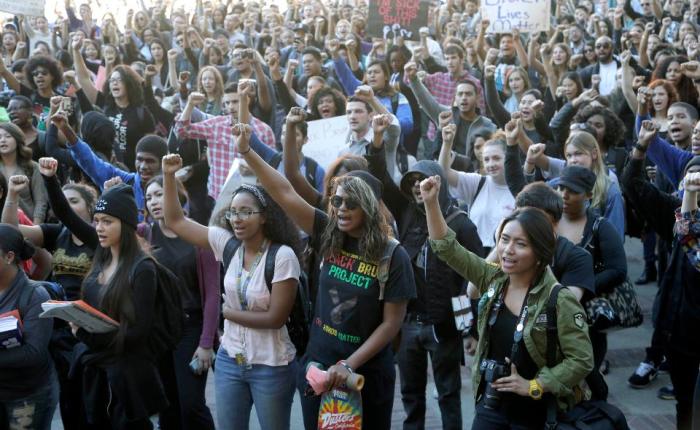
The divide of cultural thinking in America is becoming more and more apparent with every passing day of the dystopian Trump administration. On one side, we have the so-called backwards’ thinking red-necks keeping Kid Rock clocking in the millions and on the other, we have high-minded intellectuals who will take down anything even approaching the shade of intolerance in the comments’ section of their Facebook newsfeed. A few months back, we discussed this latter conglomerate in relation to Clint Eastwood’s denouncement of the millennial generation. Today, we will delve into that ever-relevant subject in the context of the student body and protests at universities; not for any particular instance but because in this new environment, liberals (whose ideas such as health care are widely more popular with the public) must realize that not every little thing is worth losing their minds over.
Colleges should be bastions of free speech and open-mindedness. Third-level education is about exploring new ideas which not only intrigue but challenge you. You do not necessarily have to agree with someone’s line of thought (even the professor’s) but you should be exposed to it because intellectual thought gains credence when it is tested and critical thinking, as we have also discussed before, is pertinent to keeping power and established notions in check.
So how come in many cases, colleges have come to exhibit the exact opposite philosophy?
Well, let’s take a look first at how many students’ intolerance of perceived intolerance has manifested:
In 2014, Condoleeza Rice (US Secretary of State under Bush II) was supposed to deliver the commencement address at Rutgers University in New Jersey but was protested over her administration’s handling of the Iraq War. Although the university’s president Robert L. Barchi defended their choice of speaker on the grounds of her being ‘one of the most influential intellectual and political figures of the last 50 years’, she decided to drop out, stating that the occasion should be a ‘joyous’ one and that her involvement might prove a distraction.
Later on that same year, comedian and political pundit Bill Maher was opposed by the students of Berkeley for criticizing Islam. In a viral debate with Sam Harris and Ben Affleck, he contested that as a set of ideas, Islam was a tough one to tackle because of the connotations associated with attacking a religion. In a change.org petition, signed by nearly 6,000 people, the student body objected to his ‘blatant [bigotry] and [racism]’, furthering that Maher’s kind of beliefs only served to conflate the ideas of extremists with the greater Islamic population. Maher went on to deliver the commencement address anyways but not before commenting that ‘liberals should own the First Amendment the way conservatives own the second’.
Women’s rights’ activist Ayaan Hiris Ali, meanwhile, was scheduled to receive an honorary degree from Brandeis University until the throngs came out against her. The offer was rescinded owing to the fact that past statements of hers against Islam were not compatible with the ‘core values’ of the university. Her activism, of course, can be attributed to a more controversial nature than Bill Maher’s but the student body’s disavowal of her, in light of the other causes she has promoted, spoke volumes for the culture in which we live.
Richard Dawkins, the famed biologist and atheist, has posited that political correctness has been replaced by an ‘unofficial’ Orwellian Thought Police. With instances such as the ones mentioned above, he believes that we have seen a ‘betrayal’ of the free speech movement which grew out of Berkeley. This philosophy, for many, undermines the values of a true democracy and lends gravity to the arguments of conservatives who conjecture that the left are out of touch with the common man.
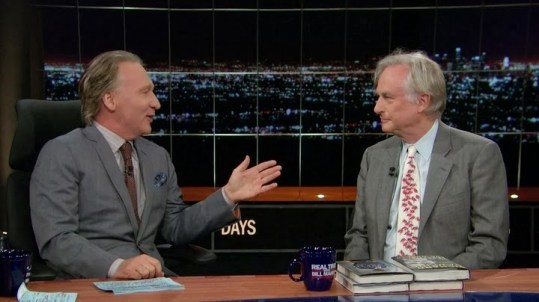
Maher (left) and Dawkins on HBO’s Real Time…
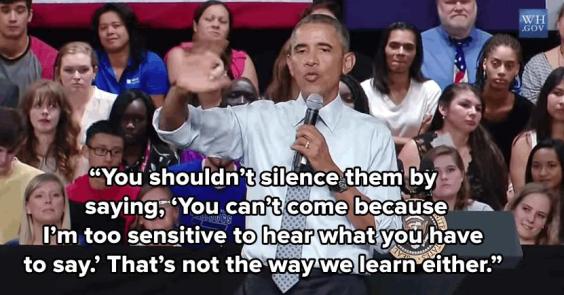
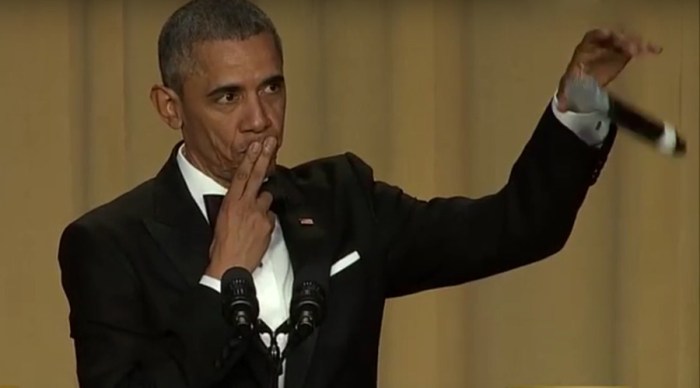
Not all liberals are ‘regressive leftists’ however (to borrow a phrase popularised by Sam Harris.) Many, like former President Obama, have espoused the need for students to balance their ideals with an open-mind. Militant political correctness, he stated in an interview with ABC’s George Stephanopolous, serves as nothing more than a ‘recipe for dogmatism’. Even the leadership of the Civil Rights’ movement, he furthered, ‘sought to understand the views… of the other side,’ no matter how appalling. Students have become ‘coddled’ in today’s world, he asserted; a view shared by the likes of Robert L. Shibley, the vice-president of the Foundation for Individual Rights in Education (a non-profit organisation), who stated: ‘Colleges and universities are teaching students to think like censors… [fueled by] overboard harassment policies, free speech zones that render most of campus a censorship zone, and a focus on civility and comfort at the expense of lively debate’.
On the flip-side to be fair, one can argue political correctness has been born out of necessity. After all, hateful or embittered rhetoric can be influential- just look at the effect it had in driving anti-semetic practice in the 1930s. Plus, the need for racism or any alternative forms of exclusiveness is about on-par with the need for two more season’s of The Big Bang Theory. (Seriously, cancel the f*#$ing thing already… not to make light of this…) Let’s face it however; universities err on the side of caution a stretch too far. It may be because they have always been havens of progressive thought; it may be because the media thrives off sensationalist stories; it may be the power of a group mentality; and it may be because even the slightest association of a racist, homophobic, or sexist thought is enough to ruin one’s social standing today, but such thinking does not always precipitate action.
Free speech is ‘indivisible’ for Mick Hume, the author of Trigger Warning: Is the Fear of Being Offensive Killing Free Speech? When one makes it a ‘privilege’ and not a right, ‘who are you going to trust to make the decision about where to draw the line through [it]?’ That does not mean we should allow bigotry, sexism, or any other forms of discrimination to thrive but if their preachers or their ideas have gained enough momentum, why not give them a forum from which to be challenged? Why not ask Condoleeza Rice, herself, about Iraq? Because her answer will offend you? It’s high time we ditched the emotional baggage of our PC culture and adopt an idea so foreign to America today, that you would swear its visa had been suspended- reason.
“Kim K. wore WHAT to this Holacaust remembrance dinner?-”
A black dress… or something like that. I’ll be honest though- this headline is made up. I merely employed the use of this not-so sensational teaser to entice you to click on- or in this case, read on- so that I may gather more views and thus more revenue from advertisements to continue this farce of what is now largely accepted to be online journalism.
Of course, this kind of miserly trickery is not proper journalism and we must distinguish between quality and crass. The problem is however that clickbait and its affiliate tropes are infecting the mainstream media we rely on. Not only do these types of articles diminish the once respected nature of the profession but with their often inaccurate projections, they blur the lines between real, fake, and satirical news, thus giving credence to claims like Trump’s that the media, as a whole, cannot be trusted. How did we let this happen?
Firstly, journalism is a lot more flexible than it used to be. Yes, it is still a college course and yes, there are still exceptional reporters in Iraq but there are also many more freelancers and bloggers, who slunk through when the floodgates of social media opened. Some of them have been exceptionally innovative and clever, outside the old model but just as Youtube has allowed for the best (kind of) and worst of today’s entertainment, so has the blog-o-sphere given rise to the truly inhibited. So how does one get their voice to be heard then in such a swirling vortex? As a BBC piece on clickbait put it; ‘[it] is a golden rule of journalism [taught from the beginning that]… your introduction should grab the reader straight away.’ This is nothing new- you sensationalize and provoke with an outrageous title. Tabloids have been doing it for decades. Tabloids, however, could never wholly surmise what exactly the rabid gossipers were flicking through to. Online articles can.
Even sensationalism alone won’t do it now however. The public have grown accustomed to bank robberies and murders. What works better, as Wired put it, is ’emotional arousal.’ We click on to many of these articles, whether they deal with some phony hair regrowth method or how to tell if someone ‘can’t even’ in a specified situation, because they provoke our curiosity and elicit a response in us. Mankind, by its very nature, is uncomfortable with not knowing, especially when the answer is just a click away. Yet, we are manipulated easily and many online sites capitalize on this, resulting in fast-food journalism.
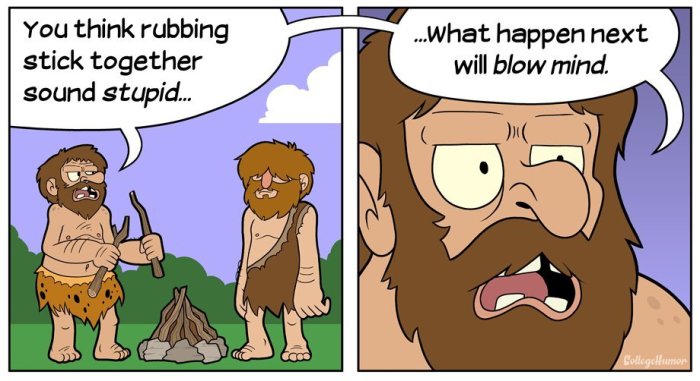
CollegeHumor gets it… They know what this is all about.
This could have been just a silly side-show to the dominant force of actual journalism. In recent years however, newspaper sales are down, broadcast ratings have fallen, and people have increasingly been getting their news online, via their Facebook newsfeed. This is very dangerous. With Facebook, we can choose to follow and unfollow whatever suits us. News is not designed to tickle our fancy and play to what we agree with though. It’s designed to inform on important subject matter. This partly explains why 2016 was such a politically divisive year. The people stuck to either the Republican or Democratic camps and whatever fell between became no-man’s land. The mainstream media, too, when it was most needed, played to wherever the action followed. Why else was Trump given so much coverage, even before the Primaries rolled out? Why else were the most important issues such as the Wealth Gap and Global Warming continually ignored? They are not alone to blame of course; we too, chose to accept the framework in which this circus operated because otherwise, we would have been forced to think critically and engage with complex, adult dialogue.
The results stand as such; the US now has a demagogic sociopath for a leader and a media with no sure confidence. They lost their credit, according to Bill Maher, because they became ‘eyeball-chasing click-bait whores’ and to restore that, they will need to go through a period of self-examination and self-improvement. As Jon Stewart put it, they should ‘take up a hobby. I recommend journalism.’ I agree with Jon. Alexis DeTocqueville wrote in Democracy in America, the press is one of the most integral facets of a free society. They are needed to hold those in power to account. Even, George W. Bush has asserted this lately and he hardly had a rapport with them.
The remedy to this ailment is simple but it will take time. The press needs to focus on reporting the important and proper news, even if it means losing a few hits. The public need to mature their interests and curb moronic list-based articles, Buzzfeed exposés, which peripheral Friends’-character-are-you based quizzes, and Facebook videos explaining brief, trivial news (by the way, Emma Watson was ‘very excited’ to take on Beauty and the Beast). Real news is often grim and unpleasant but burying our heads in the sand is never an acceptable solution; not when there is so much at stake, as there is now. Curb your outrage too- headlines like Christopher Hitchens’ famous ‘Why Women Aren’t Funny’ may elicit instantaneous backlash but when you read the actual article, you may find something deeper and more intellectual afoot. Outrage, as a form of sensationalism, is a self-multiplying currency and even three angry comments can eclipse a hundred measured responses. Use this currency well. Do not comment some diatribe about whitewashing with Matt Damon in The Great Wall. There are giant lizards. Save it. Please. Clickbait may seem insignificant but you know what?-
We here at the Washington Walrus feel passionately about US presidents in a way that can only be described as ‘slightly obsessive.’ And while the Oval Office has been hijacked by a demented Sasquatch, we still felt it was worthwhile taking a look back at better times. Unlike C-SPAN however, we will only be ranking the leaders of the post-war years. Besides a list of 45 being exhaustive and frankly tedious to most (have you even heard of Rutherford B. Hayes? oh… you have?), the position as we know it today really began to take shape in the wake of the New Deal and with the Cold War.
How did we decide? Well, we evaluated each president against the others on an extensive range of factors including: economics; foreign policy; domestic policy; leadership qualities; the tone they set for their times; the context in which they led; bi-partisanship; lasting legacy within these factors; chat show appearances; and more. Some of our choices may raise eyebrows but we didn’t choose frivolously, there was a very definite consensus reached. So, without further ado, to celebrate Presidents’ Day- the United States Presidents from worst to best as ranked by Andrew Carolan (AC) and Matthew O’Brien (MOB):
13. Donald J. Trump (2017-hopefully 2017)
It hardly seems right to rank a president of one month but then nothing he’s done has been fair. Even if the current president (shudder) was ranked on the hilarity of memes alone, he would still lose to Obama and Biden. Also, his policies are over-rated. Sad. AC & MOB
12. George W. Bush (2001-2009)
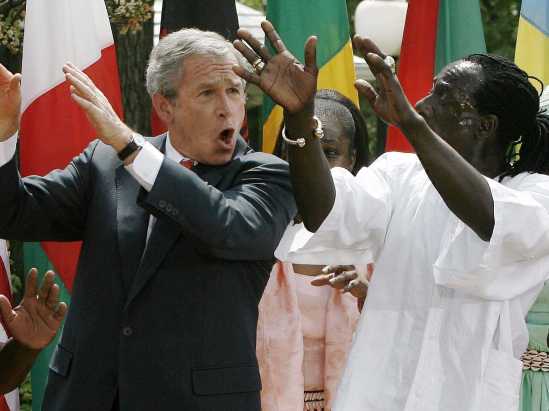
How Bush spends his spare time
The affable younger Bush never ranks highly in these lists and… well, do we need to justify this one? The invasion of Iraq, notwithstanding, he had already turned a surplus into a defecit by the time of 9/11 and his slow, baffled response to Hurricane Katrina proved he was anything but fit for the job. America lost its stature of respect across the world where most people could not have imagined this man getting re-elected, much less, surviving another four years without impeachment. And yet, he hung on, leaving the US in the ‘mess’ Trump thinks Obama brought about. It’s easy to criticize Bush though, so for the sake of some balance, we should note that his Medicaid package has proved very popular and PEPFAR has made him nothing short of a hero to Africans, even if it was at the cost of the American taxpayer. AC
11. Gerald Ford (1974-1977)
The ghosts of John Tyler, Millard Fillmore, Andrew Johnson, and Chester Arthur welcomed a new member to their exclusive club on August 9, 1974, the equally unexceptional, equally un-elected, Gerald Ford. It’s hard to postulate as to whether Ford would have ever considered running for president but there is no doubt that he inherited a poisoned chalice. Perhaps his biggest claim to fame came at the beginning of his presidency as he granted Richard Nixon a presidential pardon for the trials and tribulations of Watergate. This would set the tone for the next three years. Yet, many historians have credited Ford with strengthening the frayed fibers of the country through projecting a positive outlook for the American future. His foreign policy was marked by the signing of the Helsinki Accords, which aimed to strengthen the relations between Europe and the Soviet Union. Domestically, Ford struggled to work bilaterally with Democratic majorities in Congress, which tested his parliamentarian ability. Ford, unlike so many of his predecessors, was never destined for the White House. MOB
10. Jimmy Carter (1977-1981)
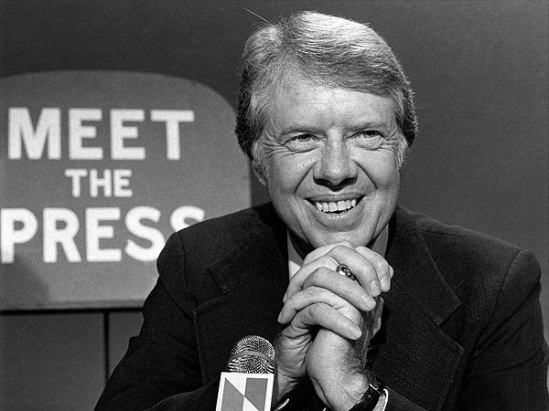
Carter, with his trademark dazzling smile
It pains me to put Jimmy Carter so far down the list. He’s my own personal favorite because I wrote my MA dissertation on him and he has the most moral fibre of any of these fellas (no shots fired during his time). He set a tone of restraint and fiscal conservatism for America, for energy conservation, and for the promotion of human rights internationally. While this may have seemed amicable on the surface; combined with his unfruitful relations with the Democratic base, it only served to corroborate the popular image of him as a weak leader. This, along with the Hostage Crisis, paved the way for a resurgence of the Right in 1980 and his eventual defeat. Carter’s batting average with Congress, on the otherhand, was not bad but many of his measures and examples for the country (including solar panels on the White House) were promptly abandoned in the following administration. Thankfully though, he has gone on to boast perhaps the finest post-presidency. AC
9. John F. Kennedy (1961-1963)
The iconography will never be dispelled but I’m sorry, the ‘what if he had survived…’ postulation is not enough to have him deemed a great president. Man landed on the moon by the close of that decade and yes, the Cuban Missile Crisis was resolved but Kennedy merely made an epic speech in the former’s case and with the latter, helped spark the fuse in the first place with the Bay of Pigs operation. I like him and the image of his presidency remains a great inspiration for many politicians today but I’m sorry, he’s over-rated. There’s no two ways about it. AC
9. Richard M. Nixon (1969-1974)
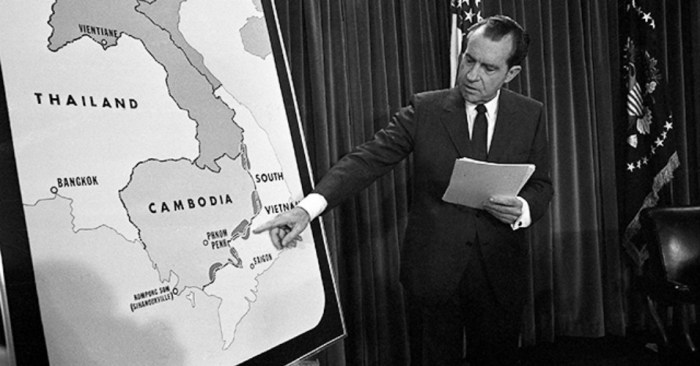
Nixon’s favourite subject in school was Geography
For Richard Nixon, it was nearly a case of “always the bridesmaid, never the bride.” He had served as Eisenhower’s VP for eight years, and lost out to JFK in the Presidential election of 1960. Yet, he emerged as perhaps one of the most misunderstood presidents in U.S. history. There is no doubt that if you remove Watergate from the equation, Nixon would rank higher. Tricky Dicky assumed control of a country that was deeply bifurcated. Nixon’s domestic record is chequered, yet while he is credited with the progressive initiatives of ‘New Federalism,’ such as Affirmative Action, he is criticized for his economic policy in which inflation drastically increased during his time in office. Unequivocally, his greatest achievement lay in his foreign diplomacy as he opened a previously moribund diplomatic channel with China, and simultaneously eased tensions with the Soviet Union through Détente. Nixon also had to deal with the national dilemma of Vietnam, exercising a policy of Vietnamization. While this was an admirable move, the Christmas bombing campaign in 1972 would set a morose tone for the remainder of his presidency. MOB
7. Harry Truman (1945-1953)
When Truman took over from FDR, he had only been vice-president for three months and had no prior knowledge of the Manhattan Project. He had big shoes to fill and daunting decisions to make; perhaps the toughest of any US president. He’s often ranked highly in these lists for that reason as well as setting the tone for US morale and policy in the Cold War, with the Berlin Airlift, Marshall Plan, and Domino Theory. From an outside perspective, these measures can be interpreted as a signs of an increasing American aggression however. The Atomic Bomb and Korean War too, while necessary to many, are hotly contended by others as sinful acts. In my opinion, the former may never have been needed to defeat Japan (they were on the verge of surrender) but Truman saw no need for further American loss (and a sneaky chance to show Russia what’s what). For that reason, he is a patriot but his values of leadership elsewhere are (let’s say) controversial. AC
6. Dwight D. Eisenhower (1953-1961)
Dwight Eisenhower can be cast in the old American romanticism of a military hero turned Commander in Chief. A denizen of European battlefields, Eisenhower was a progressive Republican that continued the legacies of both the New Deal and the Fair Deal, which placated Congress. His domestic policy advanced the Social Security Program and increased the minimum wage while creating the Interstate Highway System. He brought an end to the Korean War and strengthened the mandate of NATO. Ike fostered a staunch anti-communist policy both at home and overseas with various counter-communist CIA operations. Through the ‘Red Scare’ anti-communist sentiment reached fever pitch, aided by the unchecked actions of Senator Joseph McCarthy who was only silenced when he targeted a sacred U.S. institution, the Army. Eisenhower also loses face for the apathetic national implementation of Brown Vs. Board of Education Supreme Court ruling, which found that segregated schools were unconstitutional. MOB
5. William Jefferson Clinton (1993-2001)
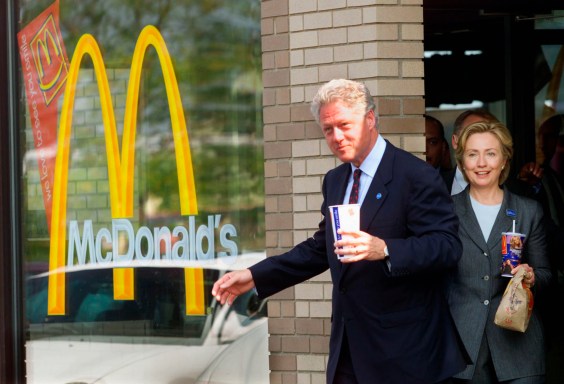
‘I’m lovin’ it… no, not her’
Clinton’s sexual forays remain much of what he is remembered for, unfortunately. The context in which his impeachment arose, however,sheds light on the environment of Washington at the time. Much like Obama, his was a presidency mired by what Hillary referred to as a ‘vast right-wing conspiracy.’ Unlike Obama however, he managed to eventually hammer out a relationship with New Gingrich and the Republican-run Congress, leading to a productive if unintersting string of bills tackling issues like crime. In terms of foreign policy, he is remembered for early blunders in Somalia and failing to act more decisively in Bosnia and Rwanda, but he even found his footing there, leading a substantive effort in the late ’90s in Kosovo. Plus, the country was left with its first surplus since Truman and the North American Free Trade Agreement. It was a time of steady progress which brought America into the Globalized Information Age. AC
4. Ronald Reagan (1981-1989)
“You know there’s a ten-year delay in the Soviet Union on the delivery of an automobile…,” so went the intro to one of Ronald Reagan’s Soviet jokes. Known as the ‘Great Communicator,’ Reagan’s rhetoric resonated with the average American. Inheriting a rotten economy, Reagan went about his policy of supply-side fiscal reform, appeasing many while neglecting minorities. The detriment of ‘Reagenomics’ later manifest in swollen national debt that was bequeathed to H.W. Bush. Foreign policy under Reagan rapidly evolved to establish America as the only dominant global force. Military spending was increased in tandem with the Reagan Doctrine. The faux-pas of the Iran Contras damaged the reputation of the president and exposed the ugly, insidious actions of political back-channeling. However, through escalated efforts to tackle the de-escalation of tensions, Reagan and Gorbachev signed the ground-breaking INF Treaty, eliminating short and intermediate range missiles. A man who, even by his own admissions, was not the brightest, shone like a beacon for many Americans who believed that he had instilled a sense of pride and reignited the flames of patriotism. Just as with JFK, image was important to the successes of Reagan. His unique eloquence restored a nations confidence in an office that had lost all credibility. MOB
3. George H.W. Bush (1989-1993)
By 1992, the elder Bush’s image was one of a jaded veteran fazed by the economic troubles of the MTV generation. Perceptions change however. Historians now, have come to recognize the importance of a steady hand like his in a time of great international upheaval. When the Berlin Wall fell, he acted cautiously, mindful of the consequences this left for Gorbachev. When the more militant hearts called for an invasion of Iraq after the liberation of Kuwait, he thoughtfully withdrew, claiming the mission had been accomplished. When a recession encroached, he put the country ahead of his own political credit, abandoning his pledge to not raise taxes while working with Democrats. And while it may be hard to envisage such a policy with a Republican today, he actually passed a Clean Air Act. In a word- underrated. AC
2. Barrack Obama (2009-2017)
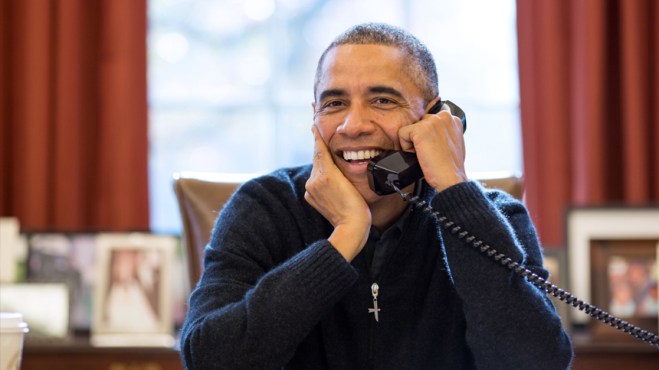
A giddy Barack Obama, clearly on the phone with Joe Biden
A popular sentiment that emerged in the aftermath of Obama’s historic election in November 2008, was that America had transitioned to post-racial era. This, of course, has not been the case. Elected on a wave of optimism and hope, Obama would face vicious partisanship with a Republican controlled Capitol. Obama initially took the pragmatic approach, but later was forced to use executive powers as he tried to implement his agenda. A historic stimulus package was signed within his first two months of his presidency, much to the chagrin of his friends in the emerging Tea Party. There can be no doubting that his Magnum Opus, the Affordable Health Care Act, is now deeply in jeopardy, and with it, a large portion of his presidential legacy. Obama has been criticized as being weak on foreign policy issues; Benghazi, Russia, Syria, and yet he excelled in restoring diplomatic relations with Cuba, and reaching agreements with China to substantially reduce carbon emissions. We at the Walrus are admirers of Obama, not quite in the same category as the doughy-eyed former VP, Joe Biden, though. Through his presidency, he exemplified integrity speaking to Americans as if they were adults rather than children – perhaps an error, retrospectively. MOB
1. Lyndon Johnson (1963-1969)
Cut the crap; LBJ was a notorious straight talker
There was almost immediate consensus in establishing LBJ as the number one on this list– particularly when we decided that FDR wouldn’t feature because it just simply wouldn’t be fair. In recent years, there has been a rekindling of LBJ’s presidency in television series, and films, namely relating to his landmark racial domestic policies. First the Civil Rights Act of 1964, followed by the commensurate Voting Rights Act in 1965. While some historians are critical of Johnson’s motives, I believe that he was a moral man (at least in regards to civil rights), who had seen the perniciousness of segregation first hand as a school teacher in Texas. Johnson was a spectacular bully, who, unlike Ford when he inherited the White House in freak circumstances, could assert his dominance over just about anybody. The legacy of his domestic agenda was the herculean vision of the Great Society. This encompassed many socially progressive streams such as the War on Poverty, and a plethora of Welfare programs. Johnson’s vision was to provide Americans in need with a hand up, not a handout. The Vietnam War dominated Johnson’s foreign policy and rapidly escalated through his presidency. It remains the major black mark on his presidential record, and discouraged him from seeking re-election in 1968. MOB
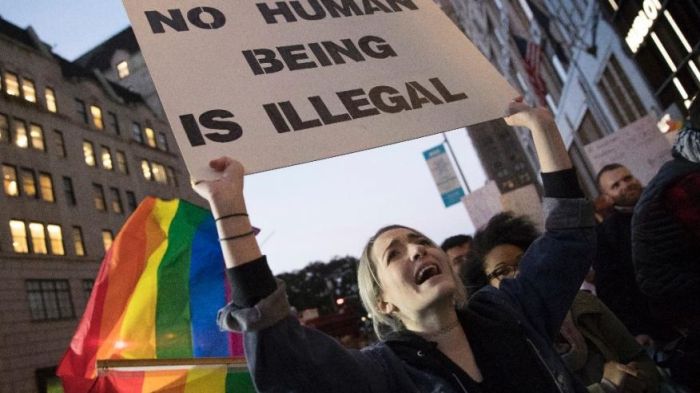
For those of you unfortunate enough to have caught the 45th President’s inaugural address, you will not need reminding of the fact that America would be putting itself ‘first’ henceforth. (Seriously, he pretty much just repeated that again and again for twenty minutes.) Americans, however, should consider the question of when their nation has ever done anything but this. After all, even though they produce only 5% of the world’s energy, they consume 24%. Their defense spending outranks the next top seven nations. They owe China over $1 trillion. And they have a dubious habit of invading wherever the globe may stop spinning at, depending on what’s for dinner. So Trump, if you or your idiot supporters are reading, please heed this blog.
The first week of the Trump administration has stirred about as much controversy as George W. Bush did in his first four years. Aiming to move against abortion (women’s) rights and the Department of Energy whilst reinstating interest in controversial pipelines have merely been the cream of this crop. This past weekend saw the 36% approval-rated President (and usually the first week is a popular one for any president) signing another executive order to place a temporary ban on immigrants from select countries (Iran, Iraq, Syria, etc.- the usual suspects). The shit hit the fan immediately with a New York judge, Ann Donnelly, ruling to prevent the removal of approved refugee applicants, people with valid visas, and “other individuals… legally authorised to enter the United States”. This did not impede on the constitutionality of the President’s order but it did send a strong message that will undoubtedly be interpreted as ‘the law being out to get him.’ The public, strangely enough, sided with the judge, in another devastating blow to the unpopular oligarch (whose approval rating, again, is 36%).
This is significant. We cannot repeat the mistakes of the past and turn a blind eye to the refugee crises. Shutting down national borders may be a means to consolidating national security but is there a point to proudly claiming this as one’s nation then? Remember the Holocaust. Remember the breakdown of Yugoslavia. Do not let this be another instance of when humanity failed to look after its own. Do not make me look up quotes to illustrate this message better. Just accept that there are times when the right thing could have been done.
Immigration is not the only instance where Trump aims to look out for his beloved country, however. He’s also bringing the jobs back. Whilst this is undoubtedly an appealing notion (which anyone could get on board with), he seems a little bit naive. America is a strong nation with an innovative market but it’s also, like every other country, part of a global network of commerce. Many established brands such as Apple have held bases abroad for years now, to the point that turning back seems inconvenient, if not, inconceivable. I will not claim to be an economics’ expert but on a basic level of logic, do these companies need America more than they need the rest of the world? Are their images not enhanced by the fact that they employ in other countries? Is that not, in turn, beneficial for US relations with these countries? America needs to establish more manufacturing jobs, undoubtedly. They should also invest more in green energy. There are ways to thus get these jobs. On a practical level though, Trump’s ideology falls through.
Of course, this notion of putting America ‘first’ cannot be solely attributed to Trump. It has always been in the lexicon of their culture and history. It stems from that age old idea of American exceptionalism which has in turn, always had to be taken with a grain of salt (or in Trump’s case, whatever they put in a KFC bucket). It’s true that the US retains this image of mysticism; a land periled by the optimist hard-worker who could go from rags to riches and turn their life around. Whether that’s ever been the case, well… we’re getting off topic – the point I am trying to make here, is that Americans need to readjust their attitude about what their nation represents. If you said, “only in Ireland..,” you would likely be referencing some disappointing anomaly in the system. In America, it would likely be with a chirrup of prevailing encouragement. To an extent, it is admirable that they believe anyone can grow up to be President. When you spout nothing but ideological fanfare however, there is a tendency to avoid self-doubt, which is a key ingredient, to any great mind. Self-doubt (or skepticism) makes you think; question yourself and your underlying principles. It makes you consider other factors; other people and other countries. In conclusion, it is imperative that America recognises the importance of acknowledging and practicing self-doubt on a world stage.
When I was in fifth year, our History teacher asked us to write an essay on the importance of Obama’s election. This was puzzling to me as this was not history. This was the present. Still, I managed to churn out some vague ramblings on the hope he inspired with the rhetoric of his speeches. You have to remember that back in 2008, Obama was like a celestial being sent from the heavens to save us from eight years of horror. Even if you knew nothing about the man, his days as a Community Organiser on the Southside of Chicago, or his political accomplishments in the Senate, you still held the innate sense that this was a good man who really was capable of enacting change and ushering in a new period of American prosperity. Eight years later, he has done just that, though perhaps not in the ways many of us would have imagined. His ascension to the highest office in the land, despite any beliefs you may hold of what came after, remains an historic moment. So, without further ado, let’s foolhardily tackle a legacy that will take years (if not decades) to fully understand, and appreciate.
The Audacity of Hope
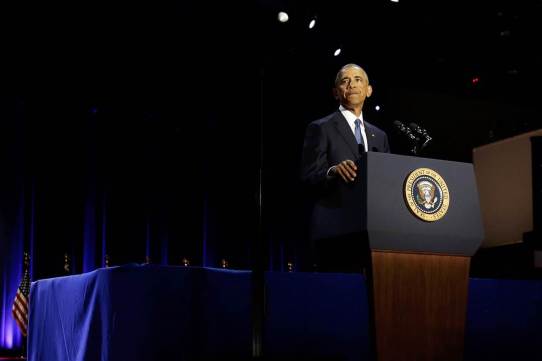
“Yes, we can” was always a banal and slightly cringe-inducing soundbite but its utterance at the Democratic National Convention last year and during Obama’s farewell address nevertheless made our hearts leap. I used to think that Obama’s great speeches weren’t that important- that what mattered were his actions. Looking back in history however, how can one simply dismiss the power of Lincoln’s Gettysburg Address, the comfort FDR brought with his radio addresses, or the tone Kennedy set for the Space Race as mere populist fluff? The truth of the matter is that a president leads not only with bills and the military, but with their words. From the get-go, Obama was a breath of fresh air because he spoke and acted with optimism, ebullience, caution, and consideration, not with bravado, brashness, and all guns blazing. As Stephen Walt put it in an early New York Times’ assessment two years ago; “[Even} when one disagreed with his choices, one knew that his acts were never impulsive or cavalier.” This helped restore not only peoples’ faith in America across the world; it helped restore general morale in an era dominated by economic hardship and political division. Particularly in light of what is to come, this will matter.
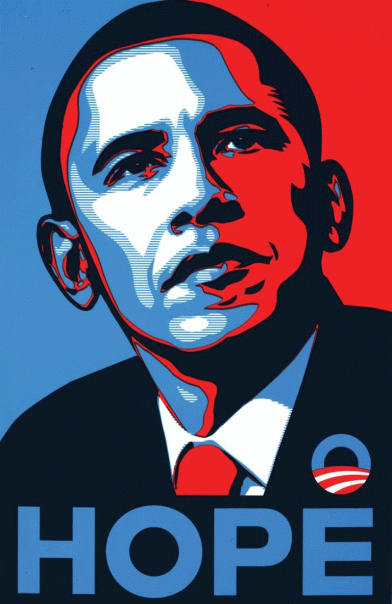
That famous 2008 poster
New World Terrors
The US was engaged in two wars when Obama took office. Many would argue that his decision to withdraw the US from Iraq was premature and facilitated the rise of ISIS. His policy on Afghanistan was somewhat wistful, quixotic, and naïve, which resulted in the stark realisation that nation building was not a feasible option. Many would contend that his condonation of drone warfare was abject and distant. Many would also assert that Obama’s foreign policy was, for the better part, a mere extension of the Bush administration’s. It’s a difficult area to assess because any of the repercussions from his actions will take years to manifest. However, it is pudent to remember the context in which his decisions were made:
There was the Arab Spring in his first term; which sparked the fervent outcry for democracy violently across the Middle East, resulting in a cascade of falling governments along with the end of the Gaddafi reign. There was the capture and assassination of Osama Bin Laden, which closed the chapter on an event that was a cathartic moment for all Americans. There was Benghazi, which undermined the credibility of his Secretary of State, Hilary Clinton, and set a stage for scathing Republican backlash. There was the Iran Nuclear Deal, which to most reasonable people, was a step forward but which nevertheless further divided the nation writ large. There was Syria – an avenue Obama wanted to pursue but was discouraged from doing so by Congress (his seeking authority to enter may yet be seen as an aberration in the attitude of previous presidential administrations). There was Cuba, a country shunned for 50 years, a status that Obama felt deserved to be reevaluated. There was Putin; a man emboldened by the supposed appearance of weakness on Obama’s part, who entered Crimea, alighting fears of a Second Cold War. Then there has been the proliferation of terrorist threats across the world from Paris, Berlin, and Istanbul, which have consolidated the last decade and a half as the “Age of Terror.”
Republicans consistently go too far with their half-formed criticisms of the President. What they have failed to grasp time and time again is that “diplomacy” is not a dirty word. Obama understood that. He tread these waters, possibly a little too carefully, but next to Bush and Trump, are we not glad that there was a president who was willing to consider compromise before warfare? Just what will happen when Trump, the capricious braggadocio, gets his tiny hands on the most powerful military in the world? Obama’s heuristic leadership will surely seem a distant and sought after memory.
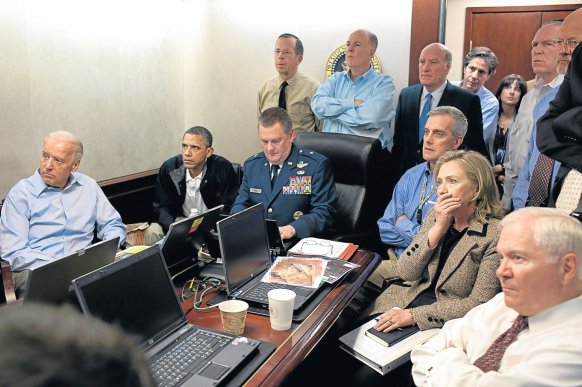
“The Situation Room”- 2011
A Nation Divided
Abraham Lincoln was a model of hope in an era of bitter division, preceded and succeeded by terrible leaders. Obama’s time draws similar parallels.
Political, economic, and social division have evidently dogged these past eight years however. To take the former case of division; we have seen from day one, the GOP’s effort to dismantle the President’s domestic efforts and undermine his legitimacy on a scale of determination even more reprehensible than during the Clinton years. The Affordable Health Care Act (arguably Obama’s magnum opus), may be a source of contention for many Americans, some see it as hyper-liberalism aiding a modern welfare state. The Republicans’ alternative however (still outstanding), simply cannot be taken seriously in this discussion; their opposition is based on nothing more than political gratification. Of course, the bill is not perfect but with 50 years’ efforts of trying to get some sort of coverage passed and 20 million more people insured, there’s something undeniably historic about this act.
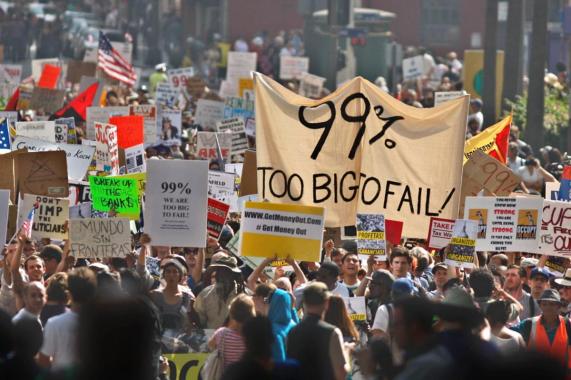
In terms of economic division then, the wealth gap has only continued to grow. Dodd-Frank was an amiable step towards reform but Wall Street was never properly disciplined and for this, Obama should be criticised. The Occupy movement was propelled by such injustice in this climate and so was Bernie Sanders, whose message, resonated with the youth, far more than Obama’s or Clinton’s. This problem, which Obama has on some level recognised, will no doubt continue to fester over the course of the next four years (if Trump’s tax plans are to be taken seriously) and it will dominate the 2020 election. To his credit, as an aside, he has made a substantive effort to promote the minimum wage and saved the country from another Great Depression (this particularly shouldn’t be forgotten).
The Occupy Movement
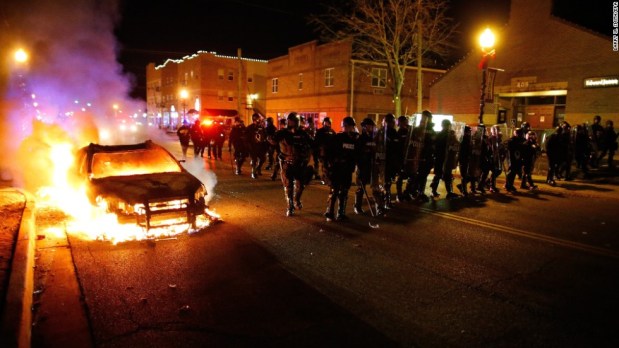
The rise of Social Media has meanwhile projected unto millions more the reality of racial, sexual, and gendered inequality. Despite having their first Black president, many members of the Black community felt disheartened by his seeming disinterest in tackling police brutality and discriminatory laws. Events like Ferguson have been a brutal reminder of the privilege afforded to White people over Blacks. With sexual equality then, Obama was not initially a champion of Gay Marriage but its passage into law in 2015 became a victory for his administration, as the culture wars took a massive swing to the left. Women’s rights, were seemingly thrown aside with the election of Trump, but Obama’s been a proponent of greater equity, particularly in the workforce.
Ferguson- gives rise to the “Black Lives Matter” movement
Guns
The fight over the Second Amendment cannot solely be hallmarked as an issue of the Obama years but it has been spread increasingly across social media lately. In a recent interview, Obama said his meeting with the families of the Sandy Hook victims in 2012 was the most difficult moment he endured in all his eight years and he meant that genuinely. Who could forget last year’s emotional speech when through tears, he told us, “every time I think about [them] it gets me mad”? Although nothing significant has been accomplished in all this time, Obama’s empathy will be remembered poignantly.
2016 Election
Obama’s own popularity rose throughout 2015 and 2016 despite an all-time low at the start of those years. He has since acknowledged however that this popularity did not transfer over to the Democratic base. Was the party, in some ways, damaged during his Presidency? November’s results would attest to just that but the election was of course anything but logical. Still, it may be argued in years to come that Obama’s greatest failure as President was to mobilise his party effectively and prevent the election of the Donald. Bill Clinton hasn’t exactly borne the grudge of Bush’s election. Carter’s leadership, on the other hand, certainly caused friction with the more liberal sides of his party and helped propel Reagan to power.
A Frustrated Presidency?
There are many areas this article hasn’t covered, including Climate Change, Obama’s generational image, the Auto-Industry, Immigration, and Citizens United. The overriding image these issues convey however is that of a “frustrated” presidency. The promises were many and the hopes were high; too high to ever formally be realized. Set against the schism of a society at odds culturally and politically, there were in many respects, very few avenues for this President to pursue without controversy. At first, he seemed a tad hesitant, especially given the Democrats’ initial majority. He was building the blocks of his legacy however, as a man of the people, not the politicians. Obamacare, I would argue, needed to be sold to the public. Politically, it would always be burdened. Indeed, many of his programs needed popular support. (Perhaps this is why he made so many chat show appearances!) And while his approval ratings have ended on a relative high, in many ways, this man and his team must be heartbroken; for just as so many greater heights could have been reached, so too could the measures he’s taken be torn apart in years to come.
In the final reflection, one has to wonder if Obama had ceded to Clinton in 2008 and ran, in perhaps 2020, would he had been better positioned to enact his powerful rhetoric of real change and unbridled hope for America? We’ll never know. When the dust has settled on his presidency, and equipped with the glorious retrospective vehicle of historical analysis, I think the 44th President of the United States will stand out as a coruscating example of a man, who in the face of constant adversity, lead the nation with progressive, principled, resolve.
Donald Trump barked his way through a mire of intangible promises on the campaign trail. His appeal however resonated with the public’s general perception of him as an agent of change; a man, who in his own words, would ‘drain the swamp.’ As we have seen in the past few weeks however, he is doing anything but this. The nominations of Wall Street fat cats Steven Mnuchin and Wilbur Ross to Secretary of Treasury and Commerce, Rick Perry to Secretary of Energy, and Jeff Sessions to Attorney General, among other malevolent choices, have made it clear that the billionaire will be anything but a champion of the blue-collar Americans he courted. In this respect, he is therefore already a ‘failed’ president.
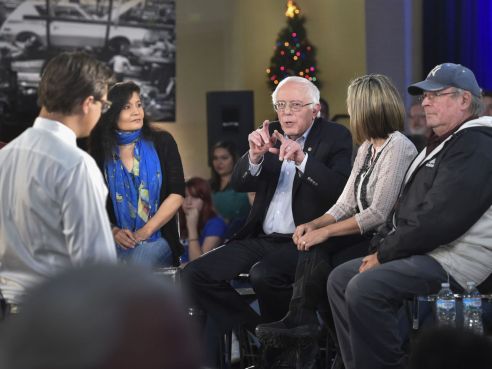
Last week, Bernie Sanders entered what might have seemed to many, the lion’s den, participating in a town-hall discussion with Trump supporters. What became abundantly clear from this Kenosha, Wisconsin talk was that the people there, who had suffered grave unemployment levels, were not in the least bit willing to be coalesced by the Clinton/establishment machine. Many would have chosen Bernie if he had been on the ticket. Politics, for the most part, did not influence their decision. What did was the deep and troubling realization that Washington, in its current state, would never cater for them. One of the gravest mistakes the mainstream media has made this year (and there have been many) is to conflate these peoples’ ideals with those of Trump’s. His supporters were for the most part never proponents of such ridiculous schemes as the Mexican Wall. They did believe however that this election could break the cycle of the past. After all, what would it be like to have an outsider in the White House? Hmmm…
Forty years ago, America did exactly that, with perhaps its most honest and earnest president ever, Jimmy Carter. The 39th President’s tenure was hardly a smooth road (to put it lightly) but it was undoubtedly a diversion from what came before and what would follow. For example, he conducted himself with an air of modesty, you wouldn’t even expect of state politicians, by carrying his own suitcase, enrolling his daughter Amy in a public school, and refusing the playing of the ‘Star Sprangled Banner’ for his arrival at functions. He led by example, when conducting policy, turning the air conditioning off to promote energy conservation whilst opting for a sweater when things got cold. He spoke candidly and took the blame when he felt it was deserved, addressing the nation on a ‘Crisis of Confidence’ in July of 1979. He also refused to bow to the whims of the Democratic Party, whose power was consolidated in Congress, but whose aspirations did not always meet in tandem with his idea of a fiscally responsible nation. In the end, he was punished with defeat, largely for his inability to solve the Iranian Hostage Crisis but also for his refusal, in many respects, to play the establishment game. Outsiders are necessary, every once in awhile, for the sake of shaking Washington up but as President Clinton, came to understand in 1994, compromise is essential too. So what happens then, when the so-called ‘outsider’ decides to compromise on this vision before his inauguration has even taken place?
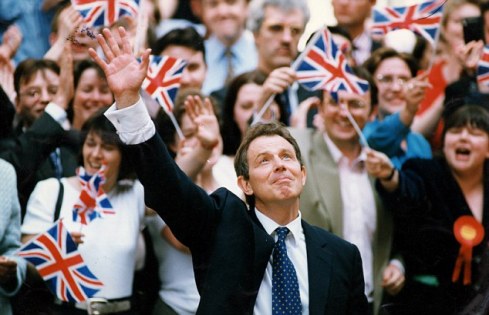
Populism drove the course of this election. Sometimes it can be a good thing. It gives way to new ideas or revitalizes issues lost within the course of a specified agenda. This happened with New Labor in Britain in 1997 during the era of ‘Cool Britannia,’ when Tony Blair helped recapture a country bogged down by over 17 years of Thatcherite policies. Sometimes, if unchecked, it can go terribly wrong however. For example, to step outside the election process, let’s take a look at the explosion of patriotism that blossomed in the wake of 9/11 (something we addressed briefly in our last piece). Whilst America’s critics remained, their voices were largely subdued. This gave way for Bush to instill his ineptly named ‘War on Terror’ on the world, pass the Patriot Act, and launch two wars. Before Congress, when he declared that nations must decide ‘whether they [were] with’ America or against them, applause rang across Washington. It was pretty disgraceful but populism drove the rational mind to cowardice amidst an atmosphere built on hate and American pride. Bush was an insider but he and his team knew how to capitalize on this bulwark of emotion. Carter did too, within a different context and Trump does now, within his.
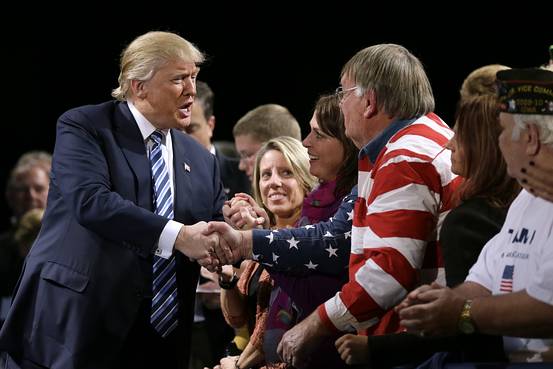
‘Populism’ is not necessarily a bad thing, if you take it to mean ‘pleasing all the people all of the time’ as Tony Blair so ambitiously hoped to do nearly twenty years ago. Its specific intent must always be checked however. Carter sought to break with the past and restore a moral sense of authority to America. In my opinion, with no lies put forward and no shots fired in four years, he did that. Bush used it, at an opportune time, to drive forward a domestic and foreign policy. Trump, it seems, has taken the people of America’s most desperate hopes and fears, and twisted them to project an image of authenticity in his own name. He is, within one sense, an ‘outsider’ because he lacks the political know-how to do his job. (He also doesn’t look like most humans.) His administration will however not be revolutionary in this vein. It will more likely resemble a Bush II presidency, pumped up with right-wing steroids and of course, gaffes galore.
With the assessment of many analysts and key figures, including Obama, that fake news’ stories shared on social media played a role in the outcome of this election, it must be recognized that there has been a significant lapse in critical thinking in America. Think about it- when you scan your Facebook feed, do you stop to read each and every article shared or do you just scoop the headlines into the back of your mind. I’m guessing, like me, you do the latter because there’s only so much time in the day and most of these stories seem trite and annoying. What you don’t realize however, read or not, is that a general impression is formed in your subconscious, resulting in a predisposition that can’t often be accounted for personally. For example, in the election cycle, we heard from a lot of people that Hillary was “crooked,” but we rarely heard from most of them exactly why (at least, in detail.) This resulted in the mass insemination of a wild notion that while Trump was none too desirable, Hillary was “just as bad.” If only, we had questioned these people as well as ourselves…
The media landscape has changed dramatically in recent years. Whereas Fox was always an anomaly in rationale prognosis, the other major networks such as CNN and MSNBC could be relied on, for the most part, to provide us with important news (if a bit left-leaning). Now, with the social media age, there’s so much flotsam out there that it’s become difficult to distinguish the bullshit from the professional and even then, the professionals get it wrong. (Thanks for those national polls, guys!) Many people are quick to out the amateurs in the comments’ section but even there, the gulf between credibility and crazy is wide. Is Obama the hero so many have painted him to be or is he an Islamic fundamentalist determined to take America’s guns away and flush them down the toilet? At this point, the level 1 critical thinker might surmise that the answer always lies somewhere in the middle. It’s all about balance, right? Sadly, it’s not that easy either. Critical thinking does not mean delving a line in the center of a Republican and Democratic thought; it means examining the very fabrics and grounds on which arguments are created.
Let’s take a case in point to illustrate the importance of this evaluative method: the Iraq War. In 2003, America launched one of its most dodgy exploits to date with the invasion of the Kuwaitan neighbor. Most people will tell you it was a disastrous campaign that has brewed trouble for the world since and only a few less will further that the grounds on which it was built were dismally unfounded. To sharply dispel any immediate backlash, I am going to formally state first that I do not think this war was a good idea. What I am going to attempt to do however is add a wrinkle to the clear picture many people have of it.
It all started in 1991 when George Bush Sr. declared war on Iraq after the invasion of Kuwait, believing such acts of aggression could not be tolerated. The mission was simple; to restore Kuwait’s territory and drive Saddam’s forces out. After an extensive air campaign, the battle was short and sweet for America. The casualties were relatively low for them, victory was swift, and the president’s approval rating rose to 89%. For many however, Bush Sr. made a critical blunder in failing to follow on through to Baghdad and dispose the despot. He felt, in this scenario, there were no grounds for this course of action. And so order was restored seemingly though Saddam remained in power, violating UN sanctions placed over the course of the 1990s, with repeated reports of chemical weapons being used against his own citizens.
In 2001, the World Trade Centers fell and the Age of Terror took hold of America. Many argued at this point that Bush II set his sights on Saddam before Afghanistan (the Bin Laden problem) was even on the books. This is a leap for others. Here, I believe, the truth may actually lie in the middle as the Bush administration’s policy was clearly set after a ridiculously named “war on terror.” Iraq, W. argued, had to be seen in a different light in this new world context. Did it? Or had it merely become convenient for the Republicans to enact the invasion they had been plotting for years? It became very difficult for moderate thinkers to thread the line between a revived and fervent patriotism in the wake of 9/11 and the dissent of liberal caretakers, who opposed the idea of an American New World Order. Finally, of course, the date was set when W’s intel (a gut-wrenching use of the word) declared their belief that Saddam held weapons of mass destruction (or later, the “capacity” for such weapons). The rest of the story played out then quite clearly. The war began. The statue fell. Saddam was taken. The casualties mounted. They didn’t get out. A surge took place. An economy fell. Another man took office. They began to withdraw. Insurgencies rose. A new terror formed.
Iraq was no prime example of interventionist success but its significance was different to many people. Some believed it was the most unnecessary and immoral act America had committed its sights to since Vietnam. Some believed it was a necessary precaution to take in an era of heightened international tensions. It wasn’t right to let a man like Saddam lead a nation, in many people’s opinions. His absence created a void from which organisations such as ISIS would arise however. Hindsight is 20/20 as well. Great critical thinkers such as the late Christopher Hitchens, who often rejected well-revered establishment figures such as Henry Kissinger and their philosophies, felt that America’s commitment to the sanctions placed in the 1990s meant they should have taken action much earlier. Others then, will always contend, that it is not America’s right to dictate the rights of another nation.
I chose Iraq as an example, not because I believe, it will mystify many who had blankly accepted it as a falsely premised war, but because it exemplifies the simplicity with which so many people view these matters. It’s important to question those who you have agreed with 99% of the time. It’s important to think on the other side once in awhile because while I reject the notion that sanity lies squarely in the center of the political aisle, I do believe that neither side has proven itself to always be on the right side of history. So with the dawn of a new dark era in America, let’s hope that people will begin to base their opinions on facts again and not just conjecture. 2016 marked a great lapse in logical and critical thinking for America, among other nations, because fear and anger fueled the fire. In 2017, let’s restore the approach (Nixon once noted) Eisenhower took to solving problems; through cold eyes.
President Obama has stated that while he will not engage in political battles outside of office, he will speak up when American ideals are “at stake.” Ergo, he will be more of a Jimmy Carter than a George W. Bush when it comes to commenting on his successor’s policies. And so he should be! The president’s opinions are highly respected worldwide and even out of power, he will continue to act as a source of inspiration and comfort for millions of people dreading the near future. As we have seen thus far however, he can’t go in too boisterously. Transitions are at the best of times awkward and some level of protocol must be recognized for the good of democracy. So, let’s take a look first at the candor with which Obama should conduct himself up until January’s inauguration before examining the ways in which he should behave thereafter, with a few comparisons to other presidents along the way.
It seems from various reports that Obama was just as surprised, shocked, and distressed as the rest of us by the results of the November 8th election. His initial address on Trump’s victory, whilst uncomfortable at parts to watch (owing to the long-standing animosity between the two) was nevertheless graceful though. He remarked how, while Bush II and he had many disagreements, he was well looked after when it came to the transition period- something he was very grateful for. Aiming to extend this courtesy to his successor, Obama has thus put politics and personal qualms aside for the good of unification. After all, he remarked upon that awkward televised meeting between the two, “when [he] succeeds, America succeeds.” Has a president ever had to show such restraint?
The US stands at its most deeply divided in decades. Trump’s policies may not be reflective of his voters’ own sentiments but his popularity and victory are symptomatic of a country pushing back the dial on a cultural shift towards liberalism. Racism, homophobia, and sexism were never wholly problems of the past but the scope of their significance hardly perpetuated the likes of the 1950s. Now, it seems for a great many Americans, all the cards are out on the table again. Obama has to tread carefully therefore- he’s not the president for just states like California and Washington, he’s the president for all these people, whose voices (like it or not) were heard this election. To compromise Trump with (let’s face it) the facts would serve not only to undermine the legitimacy of the Oval Office but alienate a great portion of the population and foreign interests.
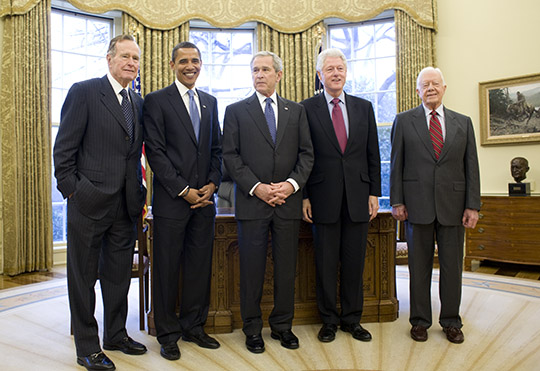
Obama’s stature will not wholly diminish come the next presidency. The likes of Bill Clinton and Jimmy Carter, after all, are still given a spotlight when they have something to say. His responsibilities however will become Trump’s, allowing him once again to lead the ordinary life of an American citizen. That means, that like every other citizen, he is entitled to his opinion. Like everyone else, he can choose to express this when and how he likes, or not at all, if he wants to take the more quiet line of both the Bushes. While world leaders can technically can do this, they never seem to because of the dynamics of politics. In power, you have to work with people and that’s more easily accomplished when relations are kept sweet.
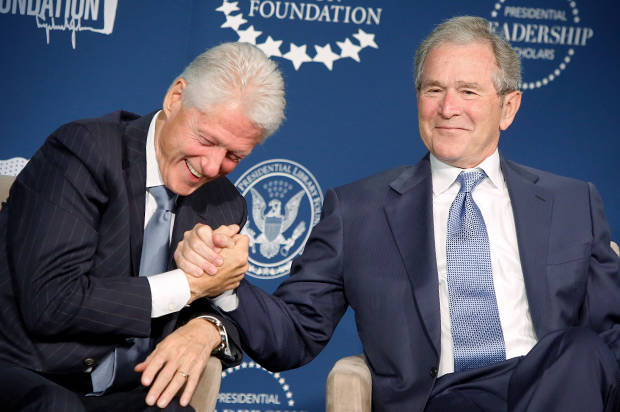
A certain level of caution, even outside of office, wouldn’t go amiss either. Former presidents have such a high profile that to intervene stridently with strong criticism can have a major effect on another administration. For example, Jimmy Carter’s opposition to engagements such as the Gulf War or his decision to speak to the press after a North Korean trip arranged by the Clinton administration were hardly appreciated by teams, devising specific, PR-led strategies. He’s loved by many for his blunt assessments (e.g. once calling George W. Bush the worst president of his lifetime) but sometimes sensitivity is needed in politics too. Bill Clinton, in many ways, is a nice compromise between Carter and the Bushes. He speaks on occasion on issues he supports, such as health care, but he doesn’t speak controversially- very much, as if he is (was) preparing to return to the arena of politics. Of course, future scenarios will hardly run in a neat parallel to what Clinton experienced in his post-presidency. Bush II had to contend with an injured country in the wake of 9/11. Clinton was a very different president in terms of politics but he recognised his successor needed all the support he could get. They even went on to become good friends! Obama and Trump, I estimate, will not.
Thanks to the House and Senate elections, Trump is in a greater position than most succeeding presidents, to dismantle the legacy of his predecessor. If he moves on Obamacare or the Iran Nuclear deal without any justification, it is likely the pushback from Obama and his camp will be nothing short of vitriolic. This is understandable. Bush II may have turned a surplus into a defecit before his first year was out but Clinton’s legacy was assured by the state of the union in 2000. A great part of Obama’s legend will depend on how his programs sustain in the future. Years from now, if the Affordable Health Care remains, historians will look back and say it all came to fruition in 2009. Trump’s not only a threat to Obama of course but liberal values he and his followers support. If Trump goes to build his wall, work against women’s rights, etc, then Carter may have a friend in the former president’s club. And while I personally admire old Jimmy, he kind of needs one.
A state of shell-shock remains. Although we’ve had nearly two days now to process the results, I still can’t help shake the feeling that we are living in some kind of dark, twisted timeline; one in which Donald Trump has won the presidential race. What’s most terrifying of course is that this most simple statement will soon feel natural to the tongue: Donald J. Trump is president! If shudders could echo, the world would burst apart at the seams. Alas, we must now accept this. And so, even though it feels slightly disheartening and pointless, we must try and diagnose exactly what went wrong.
Why Trump Won
1. Voter Apathy – The facts are not clear yet but it seems that 130 million out of 230 million (approximately) went out to vote this year. The ones who didn’t presumably had something better to do, like catch all new episodes of ABC’s The Middle. This long-held popular belief among many however that voting “doesn’t make a difference” and that “they’re all the same” has cost humanity dearly this time. To any who chose not to vote; you only have yourself to blame – do not try to hide behind some miscalculated notion of being too dignified to get your hands dirty. It may well emerge that the real victims of a Trump presidency are minority groups in the U.S., particularly African Americans, and Latinos. The tragedy here is that voter apathy played a significant role within these demographies. For example; a woman in Alabama littered her front yard with signs that read, “African American’s Don’t Vote November 8, 2016 Presidential Election,” which coincided with a t-shirt and flier campaign to discourage blacks from voting. The central argument here is that a larger number of the electorate were simply dissatisfied with the choice they were presented with. This, though, is simply not good enough. Remember, where apathy festers, mercy is not forthcoming.
2. The Media – The mass media gave far too much time to Trump from the beginning and they calculated the spirit of the American voter so poorly that they influenced not only the course and outcome of this election but the threshold for what would become acceptable in American political rhetoric. Bernie bemoaned this in nearly every televised interview he gave but the priority always lay with whatever crap Trump was up to. As for the pieces on celebrity endorsements and their reactions to the results; really? Next time around, pay serious attention to the people of America, not just their idols. It’s condescending, it’s click-bait cheap, and it’s irresponsible! On another note, the reputation of pollsters now hangs by a thread. Placing faith in polls has always been a worthless endeavour, as has been proved through the recent referendums on Scottish Independence, and Brexit. The Media’s pitiful dedication to spurious poll figures throughout this year’s election coverage has cast a serious shadow over the public’s faith in various agents of information.
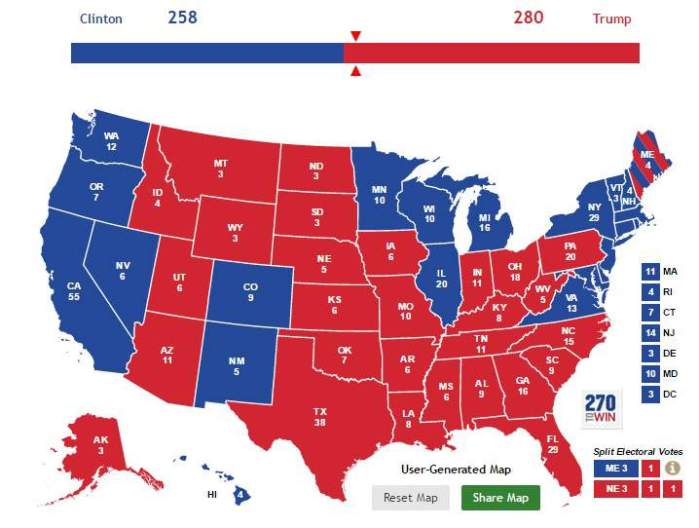
3. American Culture – While it seems the Religious Right may not have been as pertinent to the outcome of this election as others, the clear divide in liberal and conservative circles has become more evident than ever. We cannot ignore the people of the Midwestern states any longer; they are as much a part of the American fabric as liberals are. The states of Wisconsin and Michigan hung in the balance for much of election night, which indicated the Democrats risky strategy of targeting densely populated urban areas like Detroit. The same can even be said of Virginia, and Pennsylvania. Also, bigotry, sexism, and racism are apparently no longer on the blacklist.
The State of the Nation
What Does This Mean?
1. Global Warming – Climate change is the most significant issue for our generation. Trump, if we are to believe him (and I don’t know whether to) believes it is a hoax- so do many Republicans and they control the House and Senate. This is the most dangerous repercussion of the election as a result, as the US could withdraw its support from the Paris accords and its commitment to a cleaner future.
2. Obama’s Legacy – This was my first thought after “oh shit…” On November 8, I expected to wake up the next morning to a comfortable Clinton lead and a Democratic Senate. There would be change undoubtedly but for the most part, programs such as the Affordable Care Act would be upheld. Now, it could all be undone. Obama’s pages in the history book could effectively be erased. It was a glum, knee-jerk reaction and I can only hope, these darkest fears won’t be realized. It’ll take two years of intensive marshaling on the Democratic Party’s part against Republicans on the floor of the Senate (thankfully the GOP majority is not a 2/3 one) but beyond that, Congress must be regained in the 2018 mid-term elections.
3. Perhaps It Won’t Be Too Bad? – There’s Republicans all around him but I’ve always believed that the office of the presidency eschews overt partisan influences. Presidents have to tackle problems as they arise and with many issues (especially foreign ones), that calls for what is simply, the best response. Sometimes at home, that can mean playing the middle ground. Let’s not forget, George Bush Sr. raised taxes despite an election pledge and Bill Clinton chose to work with a Republican majority where he could. Admittedly this is a thin veil of hope. Let’s consider another desperate avenue then- Trump’s ego. It’s big and I doubt he would like to go down as the worst president in US history. Right? Again, we’re clutching at straws here.
Hillary’s Concession
Clinton’s concession speech was indeed “painful” but it was also beautiful because it revealed something a great many of us had forgotten; that she’s just a human being too. With this speech, it likely dawned on many people what a big mistake had been made, not only at the polling booths but throughout the entire election cycle, when people chose to take her up on every minuscule non-controversy. Her political career may be at an end now (it may also not be) but her example for women and girls out there should never be forgotten. She did not moan. She did not contest the election. She did not say she lost because she’s a woman (although, I think we’ve got to accept there’s an element of truth behind this idea). Rather, she accepted the result with grace and eloquently said that we owe Trump the “open mind” he refused so many.
Obama’s Last Months
As the transition from a Democratic to a Republican White House takes place, a great deal of the Walrus’ attention will focus on the legacy of Barack Obama. Time has a way of clearing perspective which will undoubtedly change much of what we have to say on his domestic and foreign efforts. The class with which he has conducted himself these past two days however, cannot be repudiated. He’s undoubtedly disappointed, angered, and upset by the results. He has also recognized however the effort Bush II’s team made for him upon taking office in 2009. Trump’s success is America’s, he stated. What else can a true patriot say?
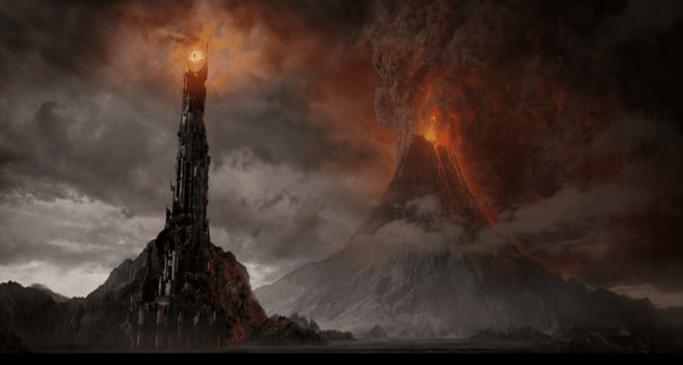
2016 has been a dark year. We not only lost the man behind “Purple Rain,” but we got more than we could bargain for with the man who believes orange is more than just the new black. Now, with a little more than a week to go before what could be the most decisive day of the decade, we are confronted with what I like to call that last trek of the Fellowship; the part in which Samwise grits his teeth while carrying Frodo up the slopes of Mount Doom. And just as a new age came from the ashes of that fiery climax, so too can we expect a sliver of hope on the horizon, if not a great beacon. But enough Lord of the Rings for now, let’s speak plainly; for if not only the Donald is defeated November 8 but the Republican majority is overthrown in the Senate/House of Representatives, America could begin to herald in a New Deal for the 21st Century- one led by Hillary Rodham but directed by that old favorite maverick, Bernie Sanders.
The Gandalf of US Politics
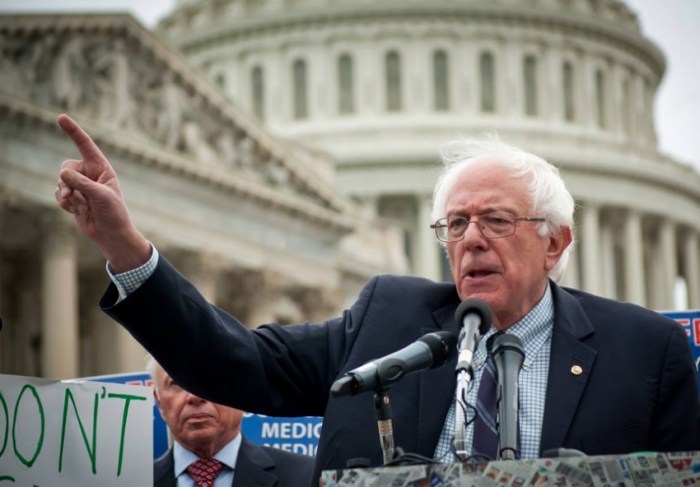
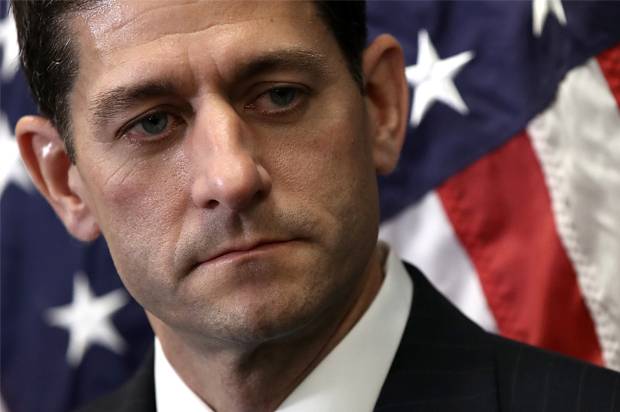
Earlier this year, we wrote a piece on a plausible return to the left for America, in which we explored the possibility that the strength of Bernie’s rhetoric would push the Democratic party far enough to the left, that the next administration would mark the most progressive agenda since the time of Lyndon B. Johnson. Bernie’s eventual defeat was a crushing blow to many, especially among the young, who scattered their way about to Hillary, Jill Stein, and for some incredulous reason, Donald Trump. We figured at the time however that although Bernie had lost the nomination, he had dealt a significant blow to the once centrist stances of Hillary, ensuring that she would be held accountable for the promises she made on the campaign trail. In recent weeks, a lot more focus (though far from enough) has been placed on the Senate though, because of Speaker Paul Ryan’s warning to the GOP base: ‘[if] we lose.., do you know who becomes chair of the Senate Budget Committee?’ Yup!
It must be noted of course that Bernie’s ascension to this highly sought podium is not guaranteed, but it is a strong possibility and thus, a strong opportunity for liberals. The logistics of taking the Senate are not at all daunting either; there are 34 seats up for grab this year (a term in the Senate lasts six years) of which 24 are held by Republicans. (It may interest you to know John McCain, Marco Rubio, and Rand Paul will all be contesting their highly coveted seats). They need to take at least four of those away to bring the Republicans down to 50 seats and another one or two, if they want a majority (accounting for Independents). This miscalculated statement on the Speaker’s part has given rise to the #ThanksPaul emblem now spreading the Sander’s seed once again across the nation. As we all know however, a tweet or Facebook post is nice, but a vote is helpful.
‘What Have I Done…’
Generally speaking, the Republicans have been better at marshaling their cohorts out to vote for mid-term elections and on other less exciting occasions (e.g. for town mayors). The result has been a systematic rightward shift for the country on a national, statewide, and local level, making it particularly difficult for the Democrats to gain any legislative ground, even with a majority. This changing dynamic can be traced back throughout America’s entire history but in 1980, the ball really got rolling with the GOP’s courtship of the Evangelical vote. Reagan’s revolution was not only one against the Soviets and the Carter administration, it was one built on Supply-Side (or ‘Trickle-Down’) economics and a distrust of Big government. The deficit grew but the brainwashing worked- people kept going out to vote Republican. When in 1994, after a particularly heartbreaking mid-term election, the Democratic President Bill Clinton, declared the ‘era’ of such government to be over, an unfortunate belief was ground into the American psyche, that some level of conservatism would always be needed. Obama’s rise then should have dispelled this notion, building on the promise of the Affordable Care Act the so-called audacity of ‘hope.’ He was abandoned in a significant respect however, by those who championed his cause in 2008, but felt deterred and disinterested by the nitty gritty bits of the legislative process- the public. So, three election terms later, will America’s liberals and moderates finally learn the imperative lesson? It’s not enough to solely elect a president, you need to elect his/her network on all levels. A slab of paint may make a wall look nice, but beyond that wall, you’ve still got Mordor.
Trump Tower
As it stands, the Senate is split between 54 Republicans, 44 Democrats, and 2 Independents. Polls are currently indicating a strong chance for a Democratic take over, though baffingly Marco Rubio is still leading in Florida, despite losing to Trump, criticizing him, then supporting him. With the House of Representatives then (in which all seats are contested every two years), there are presently 247 Republicans, 186 Democrats, and 3 vacant seats. A Democratic coup here is far less likely, though recent polls suggest they could take an extra 20 seats. President Johnson once said the difference between a Senator and Congressman was the difference between ‘chicken salad and chicken shit.’ It’s a darn good quote but as asserted earlier, every little difference matters. So come November 8, when the world wakes up to a new dawn or a poorly devised Hobbit trilogy, remember that the power to change the United States does not solely belong in one office.









 The Washington Walrus