It might seem like folly to try and summarize the events of a whole year in a single article, or even to surmise the prevalent themes which distinguished it. Nevertheless, we’re going to attempt to do just that because something needs to be gained from all this mayhem. (It’s also been awhile since we published anything.) So here’s a few thoughts:
Was it the residual hangover of 2016?
Yes, 2017 can in many ways be regarded as the dark sequel to its predecessor. This is the case with most inaugural years but of course, this year we had the Donald, whose presidency quickly bolstered sales of Orwell’s 1984. Everything we feared he might do came to fruition, although legislatively he was not successful. Rather he inspired fresh bouts of fear not felt since the early 1960s, from the Muslim Ban to unnecessary tensions with North Korea and everything in between. However, this is just the beginning of the hangover and it will not dissipate till at least late 2018, should the Democrats get their act together.
Was the “#metoo” movement a breakthrough?
At the Golden Globes next week, we will see many actresses dressed in black, in a sign of solidarity. Although, sexual harassment scandals can hardly be limited to Hollywood, the cases here have drawn so much attention because of the prolific figures involved (not to justify it.) They’ve also inspired a deep and intellectual, if highly sensitized debate, across the world. Can we merely dismiss the actions of men from another generation as of their time and thus tolerable? Can we separate their art from their character? Do we need to ensure perspective with relation to whats worse (from groping to raping) more readily? Can this then be seen as an attempt to undermine change by bracketing off areas, if less heinous, as forgivable?
There’s still much to suss out and I do not enter this foray lightly, for the level of media scrutiny and social media backlash can be detrimental even to those who have not themselves done anything wrong but who, in others’ opinions, miss the point and thereby contribute to the normalization of harassment (e.g. Matt Damon.) It seems to me, nonetheless, that this has overall been a watershed moment of positive change; one which must not be limited to being labelled as a 2017 talking point or more likely, a Hollywood scandal. In the coming years, it’ll thus be important to find balance between sensible, if insensitive opinions and a zero-tolerance approach.
Between the backlash to his remarks on the #metoo movement and his movie, The Great Wall, Matt Damon had a meh year.
Is “Fake News” just a thing now?
Has the word “lies” lost sustenance? The idea of “Fake News” grew during the 2016 election and was dismissed by most as a “stupid”. Unfortunately, like most Trump labels, it stuck and with it, an array of other baffling terms like “Alternative Facts”.
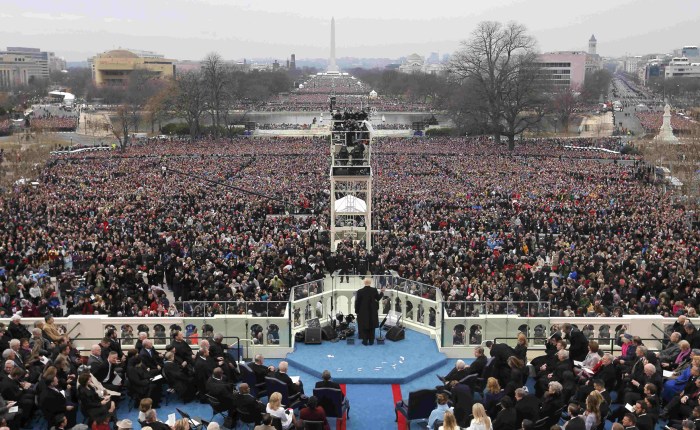
Yes, the media has been known to sensationalize the wrong things and some papers are more reputable than others but with Trump, fiction’s become redundant. You merely need to collect his quotes these days to form an article. It may be a coherent, slobbering mess but so is every Trump speech. So, in 2018, let’s stop paying into the idea of “Fake News” because you can’t hide the video footage of Sean Spicer hiding in the Rose Garden bushes, inauguration crowd sizes, or the words Trump spoke mere weeks ago. It’s out there, in the open.
Are people ready to accept the Left again?
Roy Moore was inexcusably awful but still, a Democratic Senator from Alabama is not something you hear about every day. Grouped with the #metoo movement (not exactly political, though women’s rights are generally sided with the Left), Trump’s low approval ratings, Obama topping Gallup’s most admired man poll, the Women’s March on Washington, and more however, it begins to paint a picture. In November 2018, we’ll of course see with the Mid-Terms but this time, we’ll need a United Left. Even though, we’re discussing 2017, the lesson of 2016 must not be forgotten.
Was The Last Jedi disappointing? (SPOILERS)
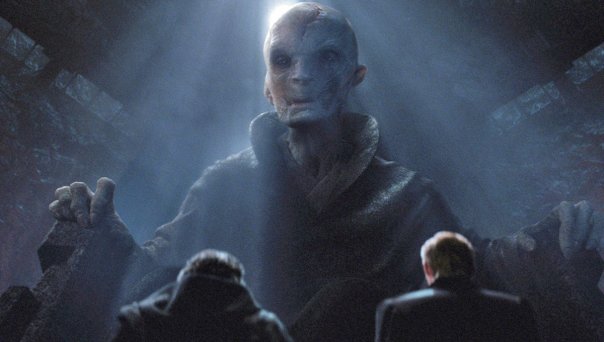
Yes, this is a political blog but we also love Star Wars. So did Rian Johnson deliver the goods? Ultimately yes- it was a beautiful and unusually thematic entry in the franchise. But come on! Is Snoke really just some nobody leader, dispensable to a larger purpose? He looks like a disfigured Goldmember, had a super cool throne room and guards, and obviously influenced Kylo Ren somehow. So, tell us who the Phantom Menace he is! And I don’t want to figure this out through some extended universe graphic novel bullshit or another needless stand-alone movie. He’s relevant to this trilogy! I also don’t care that we didn’t know who the Emperor was in the originals- his origin wasn’t important at that point and since Episode VII, we’ve been baited with questions. Rectify this please, J.J. Abrams. Otherwise, I enjoyed it a lot. Anyways, that’ all- have a happy new year!
When I was in fifth year, our History teacher asked us to write an essay on the importance of Obama’s election. This was puzzling to me as this was not history. This was the present. Still, I managed to churn out some vague ramblings on the hope he inspired with the rhetoric of his speeches. You have to remember that back in 2008, Obama was like a celestial being sent from the heavens to save us from eight years of horror. Even if you knew nothing about the man, his days as a Community Organiser on the Southside of Chicago, or his political accomplishments in the Senate, you still held the innate sense that this was a good man who really was capable of enacting change and ushering in a new period of American prosperity. Eight years later, he has done just that, though perhaps not in the ways many of us would have imagined. His ascension to the highest office in the land, despite any beliefs you may hold of what came after, remains an historic moment. So, without further ado, let’s foolhardily tackle a legacy that will take years (if not decades) to fully understand, and appreciate.
The Audacity of Hope
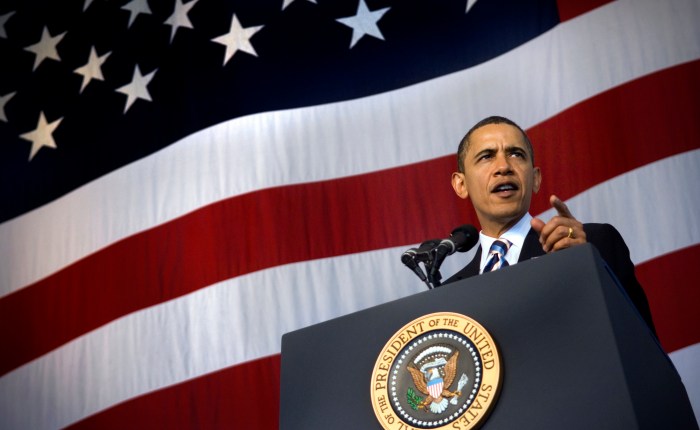
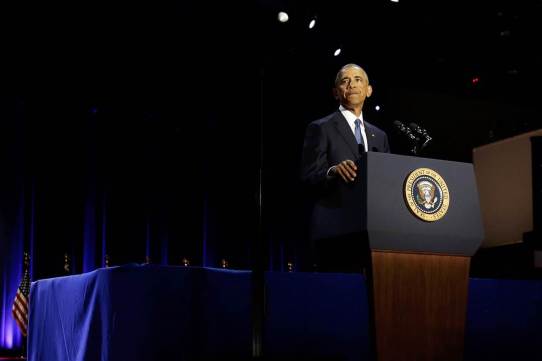
“Yes, we can” was always a banal and slightly cringe-inducing soundbite but its utterance at the Democratic National Convention last year and during Obama’s farewell address nevertheless made our hearts leap. I used to think that Obama’s great speeches weren’t that important- that what mattered were his actions. Looking back in history however, how can one simply dismiss the power of Lincoln’s Gettysburg Address, the comfort FDR brought with his radio addresses, or the tone Kennedy set for the Space Race as mere populist fluff? The truth of the matter is that a president leads not only with bills and the military, but with their words. From the get-go, Obama was a breath of fresh air because he spoke and acted with optimism, ebullience, caution, and consideration, not with bravado, brashness, and all guns blazing. As Stephen Walt put it in an early New York Times’ assessment two years ago; “[Even} when one disagreed with his choices, one knew that his acts were never impulsive or cavalier.” This helped restore not only peoples’ faith in America across the world; it helped restore general morale in an era dominated by economic hardship and political division. Particularly in light of what is to come, this will matter.
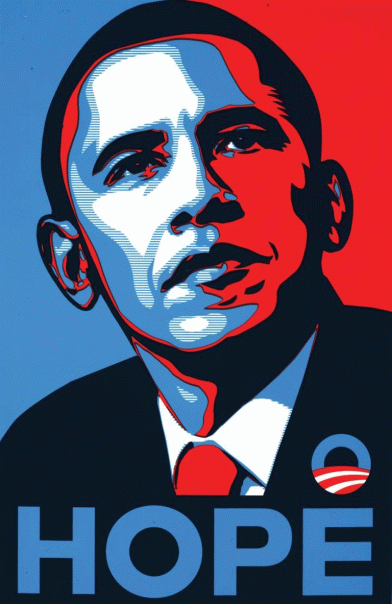
That famous 2008 poster
New World Terrors
The US was engaged in two wars when Obama took office. Many would argue that his decision to withdraw the US from Iraq was premature and facilitated the rise of ISIS. His policy on Afghanistan was somewhat wistful, quixotic, and naïve, which resulted in the stark realisation that nation building was not a feasible option. Many would contend that his condonation of drone warfare was abject and distant. Many would also assert that Obama’s foreign policy was, for the better part, a mere extension of the Bush administration’s. It’s a difficult area to assess because any of the repercussions from his actions will take years to manifest. However, it is pudent to remember the context in which his decisions were made:
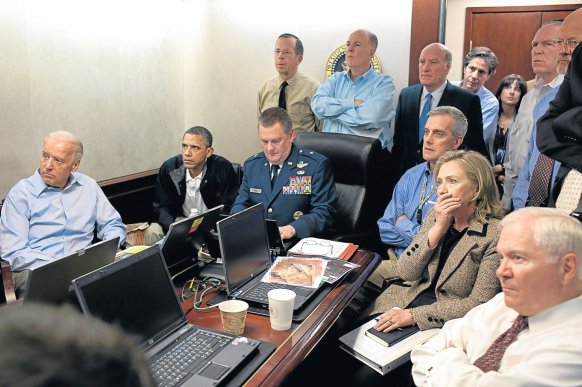
There was the Arab Spring in his first term; which sparked the fervent outcry for democracy violently across the Middle East, resulting in a cascade of falling governments along with the end of the Gaddafi reign. There was the capture and assassination of Osama Bin Laden, which closed the chapter on an event that was a cathartic moment for all Americans. There was Benghazi, which undermined the credibility of his Secretary of State, Hilary Clinton, and set a stage for scathing Republican backlash. There was the Iran Nuclear Deal, which to most reasonable people, was a step forward but which nevertheless further divided the nation writ large. There was Syria – an avenue Obama wanted to pursue but was discouraged from doing so by Congress (his seeking authority to enter may yet be seen as an aberration in the attitude of previous presidential administrations). There was Cuba, a country shunned for 50 years, a status that Obama felt deserved to be reevaluated. There was Putin; a man emboldened by the supposed appearance of weakness on Obama’s part, who entered Crimea, alighting fears of a Second Cold War. Then there has been the proliferation of terrorist threats across the world from Paris, Berlin, and Istanbul, which have consolidated the last decade and a half as the “Age of Terror.”
Republicans consistently go too far with their half-formed criticisms of the President. What they have failed to grasp time and time again is that “diplomacy” is not a dirty word. Obama understood that. He tread these waters, possibly a little too carefully, but next to Bush and Trump, are we not glad that there was a president who was willing to consider compromise before warfare? Just what will happen when Trump, the capricious braggadocio, gets his tiny hands on the most powerful military in the world? Obama’s heuristic leadership will surely seem a distant and sought after memory.
“The Situation Room”- 2011
A Nation Divided
Abraham Lincoln was a model of hope in an era of bitter division, preceded and succeeded by terrible leaders. Obama’s time draws similar parallels.
Political, economic, and social division have evidently dogged these past eight years however. To take the former case of division; we have seen from day one, the GOP’s effort to dismantle the President’s domestic efforts and undermine his legitimacy on a scale of determination even more reprehensible than during the Clinton years. The Affordable Health Care Act (arguably Obama’s magnum opus), may be a source of contention for many Americans, some see it as hyper-liberalism aiding a modern welfare state. The Republicans’ alternative however (still outstanding), simply cannot be taken seriously in this discussion; their opposition is based on nothing more than political gratification. Of course, the bill is not perfect but with 50 years’ efforts of trying to get some sort of coverage passed and 20 million more people insured, there’s something undeniably historic about this act.
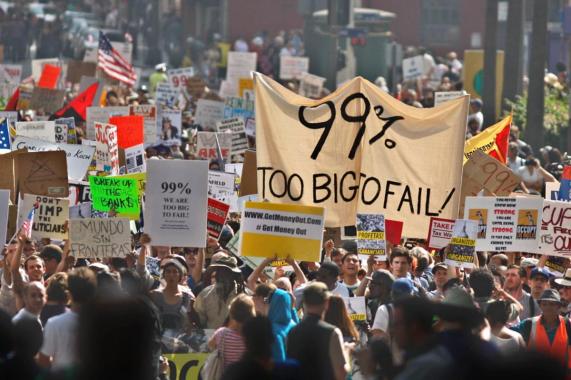
In terms of economic division then, the wealth gap has only continued to grow. Dodd-Frank was an amiable step towards reform but Wall Street was never properly disciplined and for this, Obama should be criticised. The Occupy movement was propelled by such injustice in this climate and so was Bernie Sanders, whose message, resonated with the youth, far more than Obama’s or Clinton’s. This problem, which Obama has on some level recognised, will no doubt continue to fester over the course of the next four years (if Trump’s tax plans are to be taken seriously) and it will dominate the 2020 election. To his credit, as an aside, he has made a substantive effort to promote the minimum wage and saved the country from another Great Depression (this particularly shouldn’t be forgotten).
The Occupy Movement
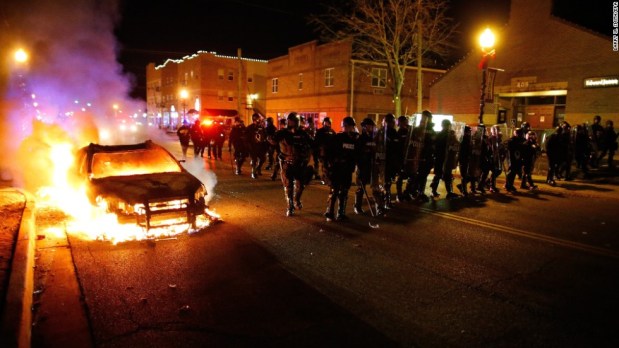
The rise of Social Media has meanwhile projected unto millions more the reality of racial, sexual, and gendered inequality. Despite having their first Black president, many members of the Black community felt disheartened by his seeming disinterest in tackling police brutality and discriminatory laws. Events like Ferguson have been a brutal reminder of the privilege afforded to White people over Blacks. With sexual equality then, Obama was not initially a champion of Gay Marriage but its passage into law in 2015 became a victory for his administration, as the culture wars took a massive swing to the left. Women’s rights, were seemingly thrown aside with the election of Trump, but Obama’s been a proponent of greater equity, particularly in the workforce.
Ferguson- gives rise to the “Black Lives Matter” movement
Guns
The fight over the Second Amendment cannot solely be hallmarked as an issue of the Obama years but it has been spread increasingly across social media lately. In a recent interview, Obama said his meeting with the families of the Sandy Hook victims in 2012 was the most difficult moment he endured in all his eight years and he meant that genuinely. Who could forget last year’s emotional speech when through tears, he told us, “every time I think about [them] it gets me mad”? Although nothing significant has been accomplished in all this time, Obama’s empathy will be remembered poignantly.
2016 Election
Obama’s own popularity rose throughout 2015 and 2016 despite an all-time low at the start of those years. He has since acknowledged however that this popularity did not transfer over to the Democratic base. Was the party, in some ways, damaged during his Presidency? November’s results would attest to just that but the election was of course anything but logical. Still, it may be argued in years to come that Obama’s greatest failure as President was to mobilise his party effectively and prevent the election of the Donald. Bill Clinton hasn’t exactly borne the grudge of Bush’s election. Carter’s leadership, on the other hand, certainly caused friction with the more liberal sides of his party and helped propel Reagan to power.
A Frustrated Presidency?
There are many areas this article hasn’t covered, including Climate Change, Obama’s generational image, the Auto-Industry, Immigration, and Citizens United. The overriding image these issues convey however is that of a “frustrated” presidency. The promises were many and the hopes were high; too high to ever formally be realized. Set against the schism of a society at odds culturally and politically, there were in many respects, very few avenues for this President to pursue without controversy. At first, he seemed a tad hesitant, especially given the Democrats’ initial majority. He was building the blocks of his legacy however, as a man of the people, not the politicians. Obamacare, I would argue, needed to be sold to the public. Politically, it would always be burdened. Indeed, many of his programs needed popular support. (Perhaps this is why he made so many chat show appearances!) And while his approval ratings have ended on a relative high, in many ways, this man and his team must be heartbroken; for just as so many greater heights could have been reached, so too could the measures he’s taken be torn apart in years to come.
In the final reflection, one has to wonder if Obama had ceded to Clinton in 2008 and ran, in perhaps 2020, would he had been better positioned to enact his powerful rhetoric of real change and unbridled hope for America? We’ll never know. When the dust has settled on his presidency, and equipped with the glorious retrospective vehicle of historical analysis, I think the 44th President of the United States will stand out as a coruscating example of a man, who in the face of constant adversity, lead the nation with progressive, principled, resolve.
2016 has been a dark year. We not only lost the man behind “Purple Rain,” but we got more than we could bargain for with the man who believes orange is more than just the new black. Now, with a little more than a week to go before what could be the most decisive day of the decade, we are confronted with what I like to call that last trek of the Fellowship; the part in which Samwise grits his teeth while carrying Frodo up the slopes of Mount Doom. And just as a new age came from the ashes of that fiery climax, so too can we expect a sliver of hope on the horizon, if not a great beacon. But enough Lord of the Rings for now, let’s speak plainly; for if not only the Donald is defeated November 8 but the Republican majority is overthrown in the Senate/House of Representatives, America could begin to herald in a New Deal for the 21st Century- one led by Hillary Rodham but directed by that old favorite maverick, Bernie Sanders.
The Gandalf of US Politics
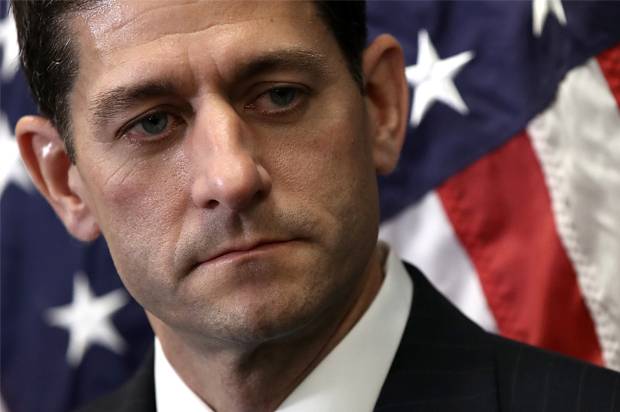
Earlier this year, we wrote a piece on a plausible return to the left for America, in which we explored the possibility that the strength of Bernie’s rhetoric would push the Democratic party far enough to the left, that the next administration would mark the most progressive agenda since the time of Lyndon B. Johnson. Bernie’s eventual defeat was a crushing blow to many, especially among the young, who scattered their way about to Hillary, Jill Stein, and for some incredulous reason, Donald Trump. We figured at the time however that although Bernie had lost the nomination, he had dealt a significant blow to the once centrist stances of Hillary, ensuring that she would be held accountable for the promises she made on the campaign trail. In recent weeks, a lot more focus (though far from enough) has been placed on the Senate though, because of Speaker Paul Ryan’s warning to the GOP base: ‘[if] we lose.., do you know who becomes chair of the Senate Budget Committee?’ Yup!
It must be noted of course that Bernie’s ascension to this highly sought podium is not guaranteed, but it is a strong possibility and thus, a strong opportunity for liberals. The logistics of taking the Senate are not at all daunting either; there are 34 seats up for grab this year (a term in the Senate lasts six years) of which 24 are held by Republicans. (It may interest you to know John McCain, Marco Rubio, and Rand Paul will all be contesting their highly coveted seats). They need to take at least four of those away to bring the Republicans down to 50 seats and another one or two, if they want a majority (accounting for Independents). This miscalculated statement on the Speaker’s part has given rise to the #ThanksPaul emblem now spreading the Sander’s seed once again across the nation. As we all know however, a tweet or Facebook post is nice, but a vote is helpful.
‘What Have I Done…’
Generally speaking, the Republicans have been better at marshaling their cohorts out to vote for mid-term elections and on other less exciting occasions (e.g. for town mayors). The result has been a systematic rightward shift for the country on a national, statewide, and local level, making it particularly difficult for the Democrats to gain any legislative ground, even with a majority. This changing dynamic can be traced back throughout America’s entire history but in 1980, the ball really got rolling with the GOP’s courtship of the Evangelical vote. Reagan’s revolution was not only one against the Soviets and the Carter administration, it was one built on Supply-Side (or ‘Trickle-Down’) economics and a distrust of Big government. The deficit grew but the brainwashing worked- people kept going out to vote Republican. When in 1994, after a particularly heartbreaking mid-term election, the Democratic President Bill Clinton, declared the ‘era’ of such government to be over, an unfortunate belief was ground into the American psyche, that some level of conservatism would always be needed. Obama’s rise then should have dispelled this notion, building on the promise of the Affordable Care Act the so-called audacity of ‘hope.’ He was abandoned in a significant respect however, by those who championed his cause in 2008, but felt deterred and disinterested by the nitty gritty bits of the legislative process- the public. So, three election terms later, will America’s liberals and moderates finally learn the imperative lesson? It’s not enough to solely elect a president, you need to elect his/her network on all levels. A slab of paint may make a wall look nice, but beyond that wall, you’ve still got Mordor.
Trump Tower
As it stands, the Senate is split between 54 Republicans, 44 Democrats, and 2 Independents. Polls are currently indicating a strong chance for a Democratic take over, though baffingly Marco Rubio is still leading in Florida, despite losing to Trump, criticizing him, then supporting him. With the House of Representatives then (in which all seats are contested every two years), there are presently 247 Republicans, 186 Democrats, and 3 vacant seats. A Democratic coup here is far less likely, though recent polls suggest they could take an extra 20 seats. President Johnson once said the difference between a Senator and Congressman was the difference between ‘chicken salad and chicken shit.’ It’s a darn good quote but as asserted earlier, every little difference matters. So come November 8, when the world wakes up to a new dawn or a poorly devised Hobbit trilogy, remember that the power to change the United States does not solely belong in one office.
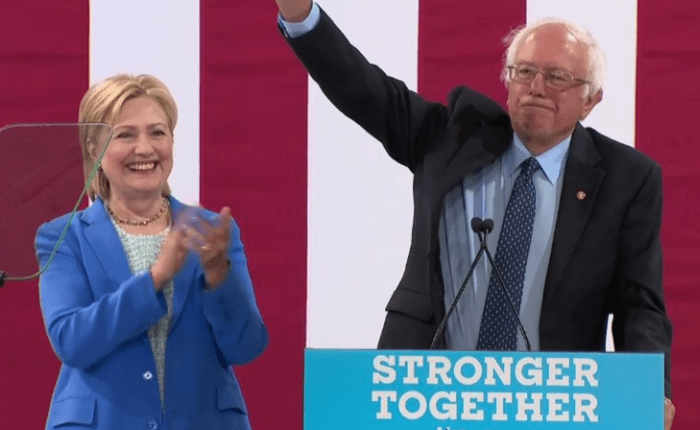
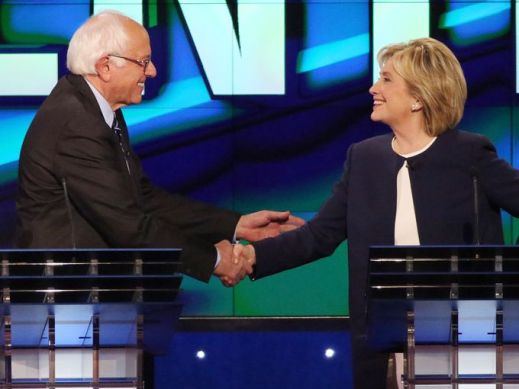
Last week marked the unofficial end of the rivalry between Hillary Rodham Clinton and that ever cantankerous Senator Sanders. In a speech delivered before the people of New Hampshire, who voted in his favour, he addressed the question of his movement’s future and where his loyalty lay. I watched this as it streamed live on Facebook, torn between the body language of the two figures at the podium and the incoming flood of knee-jerk reactions from half-wits and the odd informed. Many complimented this change in tone; it had after all been a long and arduous primary season. Others lamented however Bernie’s decision to stand by the Devil and surrender everything he had ever stood for. And that’s where we stop because (and I’ll put this plainly), Bernie didn’t sell out. Here’s why:
He won on the issues- if you listened to Clinton’s speech, which directly followed Sanders’ endorsement, you will have noticed how clever SNL were with their skit on Clinton becoming more and more Sanders’ like (to the point where Kate McKinnon ended up with a bald cap). At first, I gave her the benefit of the doubt on the assumption that she just isn’t as conservative as the uber-liberals have suggested. When it came to Wall Street however and her bargaining plea to overturn Citizen’s United, it became clear that she was taking note of the issues that prevailed in the debates, brought about because of Sanders’ longstanding rhetoric. She delved into college fees and global warming too, which made for a nice combination, leading me to believe that she has moved far more to the left than even the most hawkish of critics could have guessed.
It’s not just about the Presidency- Sanders’ movement and the rise of the Left cannot solely rely on an office tampered with more than ever. It needs to endure beyond one or two terms into a progressive model by which the future of the Democratic Party can be shaped. Yes, Hillary has, in many senses, won the battle but the future could be Sanders, so long as the issues on which he based his candidacy, continue to resonate. As mentioned above, I think they already have to the point that Hillary can’t afford to ignore them. As well as that however, he can also serve as a highly influential figure outside of the White House. Who, for example, had more of an effect on American culture in the 1960s than Martin Luther King? Has Jimmy Carter not accomplished some of his best work out of office? The presidency is a convenient altar, through which many channels, from foreign aid to educational reform, can be distributed but as Bill Clinton himself has noted, it’s also prey to circumstances beyond a president’s control (e.g. 9/11).
Trump must be defeated- I’ll admit that this is not my favourite argument as I do not believe elections should be contested on the basis of fighting against, rather than for something. It is an important one though and whether it depresses you or not, voting for the lesser of two so-called evils is still worthwhile. Bernie’s candidacy, has gone as far it needs to, in my opinion. With the Democratic National Convention coming up, it has become clear that his issues and supporters will not simply be sidelined but incorporated into the party’s agenda for the coming years. For now, he needs to ensure, if his own visions are to be realised though, that this party does as well as it can come November. Otherwise, the country will head in the exact opposite direction with Trump.
Listen to the speech again- Sanders didn’t have to necessarily endorse Clinton but it was the responsible thing to do; what purpose would their rivalry have served after all? Not enough to sway you? Listen to the speech again then and tell me where exactly he abandons the principles on which he built his campaign? Still not enough? Take a trip through his YouTube interviews and go back to a year ago when he expressed his admiration for Hillary Clinton whilst acknowledging their differences of opinions. Granted, the race heated up and nostrils flared during the primary season but the gulf in rhetoric that existed between their camps, was never as deep as many of Sanders’ less reasonable supporters suggested. He fought a good battle and we can only admire him for what he did but that battle is over now and at some point, you have to concede and look to the positives.
It’s undoubtedly sad to see Bernie leave the race; he shook things up and set the country’s vision towards a better tomorrow, in a manner we just couldn’t have expected over a year ago with the “inevitable” Clinton candidacy. His role however in this race will at least go down in the history books and his role to come will remain that of an inspiring spokesman for a disenfranchised generation.
As Philadelphia prepares to host throngs of Democratic Party delegates for the upcoming Democratic National Convention next month, authorities are gearing up for the inevitable ‘Bernie or Bust’ protestors. This wildly loyal cadre of Sanders’ supporters, most of whom are Independents young and old, are eager to voice their displeasure with the internal processes of the Democratic Party, and their vehement dissatisfaction with the manner in which this primary season has been managed.
Yet, there is always a hope and purpose that through the carnival-esque mechanisms of the convention process, the nominee will emerge and successfully unite the party behind their banner. This incredibly tough challenge falls not only to the presumptive nominee, Hilary Clinton, but also to the yolk of the Democratic Party and those pious super delegates. However, the outcome of disunity and a growing chasm of indifference is often the result. Will it be the same this time?
Sanders said that he will vote for Clinton in November to stop Trump
In short, no! Yesterday, Bernie Sanders stated that he will vote for Hilary Clinton in November in order to stop the meretricious master of tautology, Trump. Though Sanders’ concession to Clinton is long overdue, one cannot help but get the feeling that the political revolution at the foundation of his incredibly successful campaign will endure in some form.
For Sanders and his millions of dedicated supporters who continue to feel the ‘Bern,’ a revision (and in some cases overhaul) of Democratic electoral processes and procedures is desideratum. Following a meeting of the two Democratic primary candidates this week in Washington DC, the task fell to Hilary Clinton to placate the Sanders’ campaign in the interest of uniting the party and securing a larger voter base this coming Autumn. Both campaigns issued similar statements in the wake of the meeting saying that the candidates and their aids spoke constructively about beating their opponent and ‘progressive ideas.’
It is no surprise that the Vermont senator has called for the ousting of leadership from the convention committee all the way to the upper echelons of the party. He has been especially critical of DNC Chair, Debbie Wasserman Schultz. The Floridian Representative, Schultz, was this week replaced by Brandon Davies – a Clinton surrogate. This move likely came as a conciliatory tactic by camp Clinton following comments made by Sanders’ campaign manager, Jeff Weaver, on MSNBC. These overtures were clearly an attempt to placate Sanders’ stoic efforts. Caveat Emptor!
Hordes of Sanders’ supporters hungry for political revolution and reform
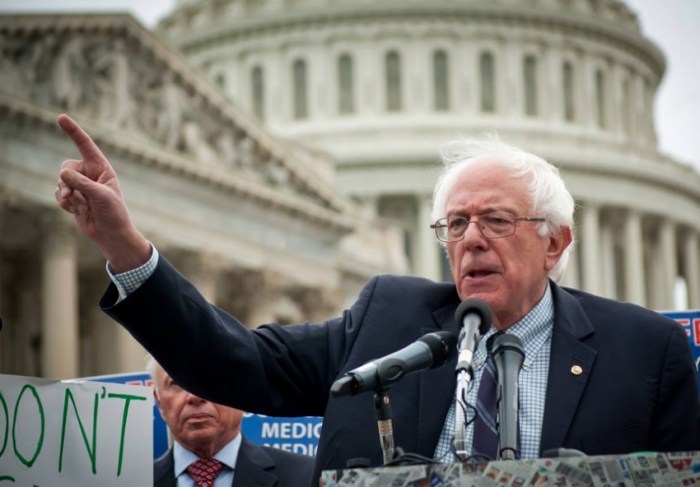
In a Washington Post article that Sanders composed this past Thursday, the obstinate senator laid out his 95 theses that, should we be living in the 1500s, he would nail to the doors of both the Wells Fargo Center and the Pennsylvania Convention Center. Sanders consistently and emotively repeats the question, ‘what do we want?’ at the beginning of each new point – appealing to the union and solidarity of his support base. Scansion aside, there is nothing new from Bernie here, yet he makes some incredibly salient points about the flawed criminal justice system and climate change.
If Bernie Sanders can auspiciously carry his brand of revolutionary politics to the convention floor and begin a comprehensive dialogue in a public forum the mollification process may continue. Among the alterations that the senator is lobbying for is the abolition of closed primaries, automatic voter registration, and the monitoring of voting machine software.
Sanders needs to show the Democratic Party that he still holds some of the chips, but will have to temper his approach if he is to garner any substantive gains. On the flip side, Clinton and the Democratic establishment know that the Sanders’ promissory note is a valuable asset and have slowly come around to his $15 an hour minimum wage, ban on fracking, and Wall Street reform. Though, according to a Bloomberg poll published on Wednesday, only 55 percent of Sanders’ supporters said that they would vote for Clinton – proving that the ball is now firmly in the establishment’s court.
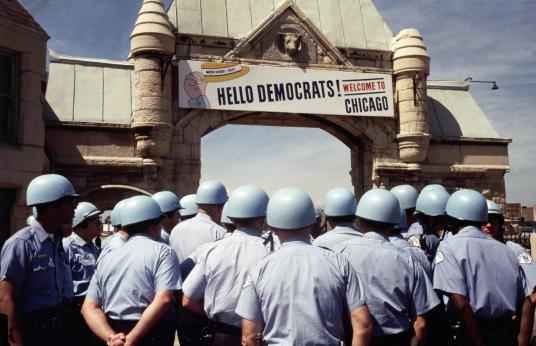
The National Guard were heavily utilised at the DNC in Chicago, 1968
For Democrats, the malaise of the 1968 DNC held in Chicago haunts the party to this very day, as it became a lacerating event that distilled a year of heartbreak, assassinations, riots and a breakdown in law and order. For many American’s, it symbolised the fragility and chaos of the nation. The present environment is equally as delicate and anarchic loaded with pernicious potential. While the issue of unity within the Democratic camp is tenuous, it’s not nearly as tensile as the threads holding the Republican Party together.




 The Washington Walrus