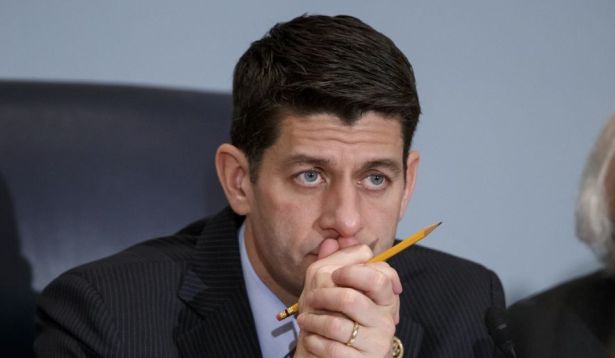
It’s no secret that we here at the Washington Walrus hold Speaker Paul Ryan in low regard. It’s not that he’s as knuckle drawn and villainous as his contemporary right wingers, but rather that he’s so spineless and tepid in his approaches within this political sphere that he appears lame and useless as a result. In fact, we even covered this last year in a piece on just how pathetic he is, in case you want to read that.
Still, that word feels almost a little too cruel for this boy among beasts. Despite the level of authority and respect his position should merit, he has never really shined the way he should have- that is within the confines of a Republican snowglobe. No, he’s just been there somehow, haunting the halls of Congress like a a specter of mediocrity or Wormtongue-like essence- waiting for justification to leave; a legacy on which he can stand.
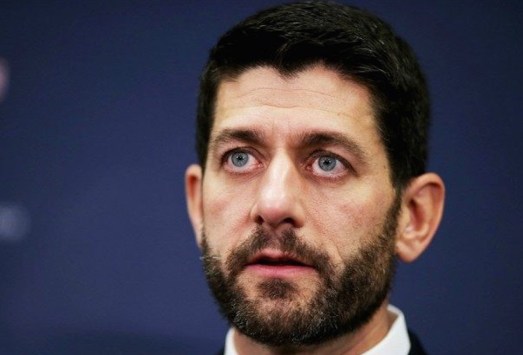
Paul Ryan during his service years to King Theoden
Has he achieved any sort of legacy therein? Not really. He may posit that his conservative agenda, with the likes of tax reform, has seen great strides in recent months but this has only haphazardly come to proposal under the tumultuous reigns of a man who pays porn stars to keep their mouths shut. He may argue that he never really wanted the position of Speaker and merely stood in to keep the reigns on the severing factions of the GOP. Even within that framework, he has largely failed- as evidenced by the election of a man he refused to even support one month out from voting. In fact, he has largely traipsed a line of abandoning any so called principles we thought he had in favor of appeasing a president who’s put him down more flagrantly than most political commentators. He may say he’s leaving to be more than a “weekend dad”, but does his family really want him at home?
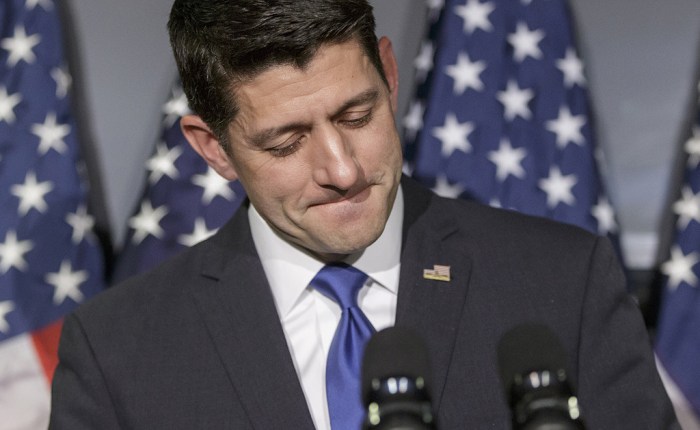
Ryan wonders where it all went wrong.
Okay, so admittedly these musings are a little slanted. Let’s take a shot at assessing a more objective truth:
He may very well miss some quality family time. Republicans are all about the family unit and Ryan, compared to many of his cohorts, does seem like more of a traditional Republican.
Perhaps he needs some time to lay low and relax. The Trump Presidency has been an exhausting experience and Ryan hardly needs the stress of the job.
Strategically, this doesn’t seem to be a promising year for Republican candidates. They’ll all be held, to some extent, accountable for all the chaos that’s ensued the last two years. By taking the LBJ route and removing himself from the game altogether, Ryan need not get entangled in what will surely be a contentious and hard-fought race. (Even if his team were confident he would win, it seems likely that the Democrats are due a comeback of some kind this year).
Ryan doesn’t like ‘identity’ politics and that’s something you better get used to in 2018. Maybe the environment’s just become too toxic for a man like him. Maybe this party has just gotten too crazy for him.
Maybe he’ll return in some years for a Presidential run or some sort of other role. Hypothetically, if he was going for the top job, a bit of a break might do him some good. To follow up on point 3, it’d allow him to escape the embarrassment of a potential loss and to remove himself from the tendrils of the Trump campaign; give him some time to become his own man again. He could even write a book and earn a few bucks.
He also had a beard at one point…
When one considers these five points, Ryan’s decision becomes all the more logical but truth be told, we can’t determine exactly why it’s time for him to step down. His overturning, like Boehner’s some years back, seems unlikely, given his stature and position within the GOP. Indeed, even his frothy relationship with Trump has stilled, probably owing to his decision to deal with the President increasingly in person, instead of in a public forum. One would hope, he finally came to the realization that ‘enough was enough’, but that seems a rather hapless and gullible approach to understanding this.
It may not matter- at least for now, our attention will turn to who will contest his seat on both sides come November and who, thereafter, will take the mantle of Speaker in January 2019. With many pundits already speculating about a Democratic takeover in the House, liberals will undoubtedly read this as a significant blow to their adversaries but if history has taught us anything, it’s that the GOP always have something up their sleeves (even if unintentionally).
20 years ago, the scandal that would define the latter part of the Clinton presidency broke on The Drudge Report. With the advent of the Internet Age, this story would take on a life of its own, exposing a changing media and political landscape traceable right through to today. Although the focus of the scandal would consume the next year’s news, resulting in the impeachment of the president, its elements and themes remain ever prevalent. In retrospect, we can now understand just how significant this cultural moment was for a) partisan politics, b) media sensationalism, and c) the online community / cyber bullying. Just how, you ask?
a) Partisan Politics
To be fair, 1998 can hardly be pointed to as the year in which partisan politics turned ugly. It’s not even when tensions began to spark between the Clinton Administration and the Republican majority. It is, however, reasonable to identify it as the year in which these tensions took a hold of the national consciousness and shifted the focus away from the issues to the ideological fronts on play. In establishing the impeachment process against Clinton in December 1998, the Republicans ushered in a new breed of malice that would become commonplace over the course of the next 20 years.
Of course, Clinton survived impeachment and his approval ratings even soared as the public saw past the petty under goings of the Ken Starr investigation but the bar for civility in politics was undoubtedly lowered. From thereon, the creed of the Republican Party became largely associated with winning on any level, as opposed to winning on the issues. Thus, support for Trump.
b) Media Sensationalism
Again, 1998 wasn’t the year sensationalism in the media was born but it easily got vamped up a notch as every sordid detail was covered in this case- from the blue dress to the definition of what sex is (“it depends on what the meaning of the word is is”- smooth Bill, really smooth).
Now, I’m not saying it’s in any way appropriate for the president to have an affair on the job but to be fair, a president’s always on the job and it’s a private matter. The media loves a scandal, of course, so in many ways Clinton can be blamed for digging his own grave. (It is conjectured by many that he’s a self-saboteur.) What many pundits, anchors, and journalists failed to recognize (or rather, chose to ignore) at the time however was a) how distracting their constant coverage was to the political and legislative process, b) how distracting it was from serious issues that could have been addressed- e.g. the growing threat of terrorist activity or the rise of Smash Mouth, and c) how damaging it was to a young woman (which we’ll cover in a moment.)
It’s one thing to make a case out of a proper injustice in the system (e.g. Watergate) but unlike any scandal beforehand, save that, this was covered with more gall and obsession than could ever be justified. And whilst being frank about it, let’s put to rest the claim that Clinton’s evasiveness and lies damaged the moral fabric of America. Yes, he was wrong but also politically motivated like any of the Republicans going after him, to save his own ass so that important things could be accomplished. Of course, many of his greatest opponents, like Newt Gingrinch, would later come under fire for their own affairs. Somehow, that just didn’t leave the same mark on the mass media’s blueprints however.
c) Cyber Bullying
Lewinsky at her 2015 TED talk
Today, you only have to load the comments’ section on any Youtube video to encounter the ugliest, most vile, and seemingly illiterate people around. In some ways, Monica Lewinsky was patient zero for this new wave of bullying (at least on a national level) and it took a long time for her to come to grips with what had happened, especially because the focus turned to her so immediately. As she remarked in her 2015 TED talk; “overnight I went from being a completely private person to being completely publicly humiliated.”
It could be argued that she hardly helped the situation. She, of course, had an affair with a married man and later admitted to having done this before, all whilst under the delusion that this could result in an actual partnership, swayed by the charm of old Slick Willy. (She even kept the dress…) Her mistakes were her own but the backlash was insatiable, as she struggled for years to find work and at every corner, was reminded of the shame she had brought upon herself and her family.
Years later, she became an activist against cyber bullying, relating her own experiences to those targeted on social media and other platforms: “I couldn’t count how many horrible things people online had said about me, but I could count when somebody said something face to face on one hand.”
This is symptomatic of what’s going on today and ties in with the points above, in illustrating the inner portrait of America that was being painted a la Dorian Gray style. I’m not saying things were perfect before this happened but in these three respects, they were a little nicer and political relations were a little more civil. When you lower your standards, it only gets harder to reach for a higher platform. Trump, the modern GOP, social media, and mass media have largely followed this line to to its natural next breach and where it goes next is beyond daunting.
On Tuesday, the Oscar nominations will be revealed and a maelstrom of ill-informed opinions will flood social media, ranging from whether the #metoo movement is appropriately being represented to what degree of whiteness this year’s festivities have lauded upon us. Of course, most of these people will not have seen the majority of these movies because a) most of them have only seen limited releases in America and b) people don’t seem to think before they enter the foray of the comments section (no doubt, a golden idea for Aaron Sorkin’s next outing.)
But hold on- this is the Washington Walrus- so why are we talking about the Oscars? Well, we thought with the Government Shutdown, it’d be a nice opportunity to delve into something a little different. Besides that, Hollywood’s been the focus of a lot of controversy lately thanks to the likes of Harvey Weinstein (well, not thanks… but you know what I mean.) So, sit back and relax with a few thoughts on what’s been going on lately:
Is Oprah Gonna Be There?
Maybe but people need to stop being stupid and suggesting she run for higher office. I mean, she’s a good interviewer (if a bit emotionally exploitative) and that was a nice speech at the Globes but just because Trump’s lowered the bar so far, doesn’t mean we should resort to castigating intellectual political leaders and rallying around celebrity icons (albeit successful and smart ones). This kind of playful discourse might seem harmless but it’s what led to Trump getting much further than he ever should have. If we accept his leadership as a new level of normalcy, then we are in deep trouble.
Oprah now wears glasses, a key point the mainstream media failed to pick up on. Although, she may have been wearing them for awhile. We’re not sure.
Do Female Roles Suck Compared to Males’?
Kind of. Jessica Chastain recently demonstrated with the help of an ever-giddy Jimmy Fallon the difference often found between male and female roles in movies. It’s a fair observation, especially for blockbuster franchises where women are often relegated to the role of eye-candy love interest, worrying mother, or deceptively kickass but otherwise entirely boring allies. To address this latter part in particular’ a “strong” female role should not necessarily mean that the female character is wholly competent or even treated as an equal (depending on cultural and historical context) but rather, that they are simply three-dimensional and complicated beyond what their primary role is supposed to be.
Take Sansa Stark from Game of Thrones for example- at first, she’s the annoying, princess aspiring elder sister of the much cooler Arya Stark. Then, for a few seasons, she’s treated like shit and learns to accept her role in an aggressively patriarchal and chauvinistic society. Then, she begins to understand the dynamics of these politics and drags herself away from an awful position to a point of both political and emotional influence. On the surface, it’d appear that she’s a useless, albeit sympathetic figure. But within this role, despite the frustrations she encounters at every turn, there’s depth there and an opportunity to explore a range of emotions. That’s a well written character.
Sansa at her ex’s wedding.
How about Sarah Connors from Terminator. She’s initially unremarkable but soon toughens up and becomes a resilient rebel in the war against Cybernet. Is she perfect? No– she’s temperamental and not exactly the best mom. That’s good though, no character should be perfect- in movies, that’s almost just as bad as being useless.
So of course, the bigger, better, and meatier roles are still being given to men (just look at most theatrical posters) and this may be an issue with the fact that some male writers are just not that great at writing female parts because women can sometimes be confusing to us. An effort needs to be made to change this however, because variety is simply invaluable for the creative process. It’s good that there’s a female Jedi now. It’s good that there are female-led franchises (like the Hunger Games.) It diversifies the medium, draws in a larger audience, and inspires women. With that said, Hollywood figures and producers must also recognize that these movies must be treated with tact; a lazy idea with an agenda can be spotted pretty easily… Female Ghostbusters…
Is The #metoo Movement A Witch Hunt?
Liam Neeson recently caught a lot of flack for an interview he did in which he acknowledged the importance of this watershed movement, whilst asserting that it was a ‘bit of a witch hunt’. Matt Damon, faced similar criticism, when he pointed out the undistinguished degree to which each figure faced with allegations was being reprimanded. Many people are outraged because they feel the legitimacy of this movement could easily be undermined by the questioning of its execution by those, who for all practical purposes, exert influence in this industry. This is understandable. There are also a lot of emotions out there. Women can relate to harassment on a level men just can’t. Plus, it’s long overdue.
It’s a difficult topic to broach and there are not a lot of popular, alternative ways of thinking outside the central narrative. With that said, if people are not willing to admit an element of paranoia inhabits this discourse, they should be willing to debate the intricacies of it. That’s what people do in a democracy, no matter how ugly or offensive the arguments mustered against them are.
Recently, James Franco and Azis Ansari have come under fire. Both Globe winners, their immediate careers now hang tenuously over the statements made by them and others in the coming couple of weeks (although Ansari seems relatively in the clear). Franco’s case is the more interesting one as he was until recently, for many, a surefire nominee for an Oscar. That could very well still be the case but given the toxic environment that it would create as well as what appears to be a call-out from Scarlett Johannson at the Women’s March, it seems ever more unlikely. Has his treatment been fair? Well, due process doesn’t seem to exist anymore for the collective public (even though this is not a legal case) but his responses have, at best, been tepid. If someone’s making false allegations against you, why not respond to them appropriately and call them out for what they are-lies. Clearly, he’s uneasy about something or at least giving that impression, at the worst point possible, to the public.
Again, because this movement has been long overdue, there is an element of bullshit fatigue for women. In the past, many figures have been afforded enough wiggle room to overcome their controversies and continue working. For example, Casey Affleck won an Oscar last year, despite mass protestations online and one of the most memorable facial expressions ever delivered by Brie Larson.
Brie won the 2015 Oscar for Room- which Casey may or may not have seen.
So what is the solution? To simply label it a “Witch Hunt” is to many, a way of undermining and thus, delegitimizing the movement. However, without some due process and recognition that the likes of Weinstein and Franco are not equal offenders, what can be said about the credibility of this cause? Clearly, we have no answer to offer but question marks are often just as good because they keep people thinking and thinking is never a bad thing (comment exceptions below).
So Should I Watch The Oscars? Is It Gonna Be Relentlessly Political?
I will- or rather, I will record and skim through it because it’s far too long and certain categories are boring (you know the ones).
It will be relentlessly political however. If you thought last year’s apology for 2016’s #oscarssowhite was encroaching (and it was), then prepare yourself for a a female win in every category (including Best Male.) Nah… but there will be speeches addressing all that’s gone on lately (as well as Trump) and there will be some half-assed attempt to draw parallels between today and what’s going on in Spielberg’s The Post. (Did you know when you were making it???)
Still, for the most part, I’ve always felt good movies were rewarded at the Oscars that otherwise might not have seen the light of day in a Box-Office driven market. They don’t always award the Best Picture category wisely (Goodfellas lost out in 1991 to Dances with Wolves). They don’t always go smoothly (last year’s La La Land kerfuffle). Most the speeches are pathetically cringeworthy (literally just type “Oscars Acceptance Speech” into Youtube.) But… the opening monologue is usually good and the forced grace by which the losers conduct themselves is something else…
DiCaprio eventually won an Oscar for the feel-good The Revenant but for years beforehand, he gave his greatest performance on these occasions.
So that’s all! Any thoughts yourself? Will Meryl Streep blast Trump? Will the statue now be of a woman’s figure? Who will win?
It might seem like folly to try and summarize the events of a whole year in a single article, or even to surmise the prevalent themes which distinguished it. Nevertheless, we’re going to attempt to do just that because something needs to be gained from all this mayhem. (It’s also been awhile since we published anything.) So here’s a few thoughts:
Was it the residual hangover of 2016?
Yes, 2017 can in many ways be regarded as the dark sequel to its predecessor. This is the case with most inaugural years but of course, this year we had the Donald, whose presidency quickly bolstered sales of Orwell’s 1984. Everything we feared he might do came to fruition, although legislatively he was not successful. Rather he inspired fresh bouts of fear not felt since the early 1960s, from the Muslim Ban to unnecessary tensions with North Korea and everything in between. However, this is just the beginning of the hangover and it will not dissipate till at least late 2018, should the Democrats get their act together.
Was the “#metoo” movement a breakthrough?
At the Golden Globes next week, we will see many actresses dressed in black, in a sign of solidarity. Although, sexual harassment scandals can hardly be limited to Hollywood, the cases here have drawn so much attention because of the prolific figures involved (not to justify it.) They’ve also inspired a deep and intellectual, if highly sensitized debate, across the world. Can we merely dismiss the actions of men from another generation as of their time and thus tolerable? Can we separate their art from their character? Do we need to ensure perspective with relation to whats worse (from groping to raping) more readily? Can this then be seen as an attempt to undermine change by bracketing off areas, if less heinous, as forgivable?
There’s still much to suss out and I do not enter this foray lightly, for the level of media scrutiny and social media backlash can be detrimental even to those who have not themselves done anything wrong but who, in others’ opinions, miss the point and thereby contribute to the normalization of harassment (e.g. Matt Damon.) It seems to me, nonetheless, that this has overall been a watershed moment of positive change; one which must not be limited to being labelled as a 2017 talking point or more likely, a Hollywood scandal. In the coming years, it’ll thus be important to find balance between sensible, if insensitive opinions and a zero-tolerance approach.
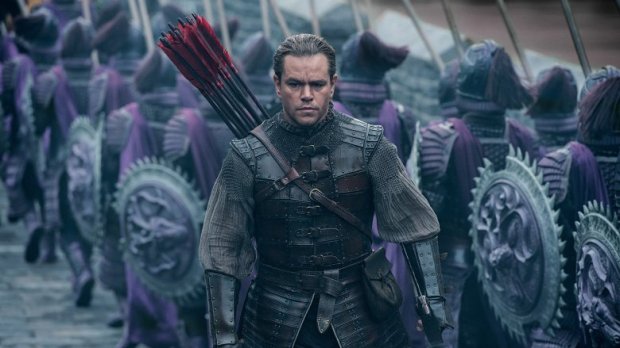
Between the backlash to his remarks on the #metoo movement and his movie, The Great Wall, Matt Damon had a meh year.
Is “Fake News” just a thing now?
Has the word “lies” lost sustenance? The idea of “Fake News” grew during the 2016 election and was dismissed by most as a “stupid”. Unfortunately, like most Trump labels, it stuck and with it, an array of other baffling terms like “Alternative Facts”.
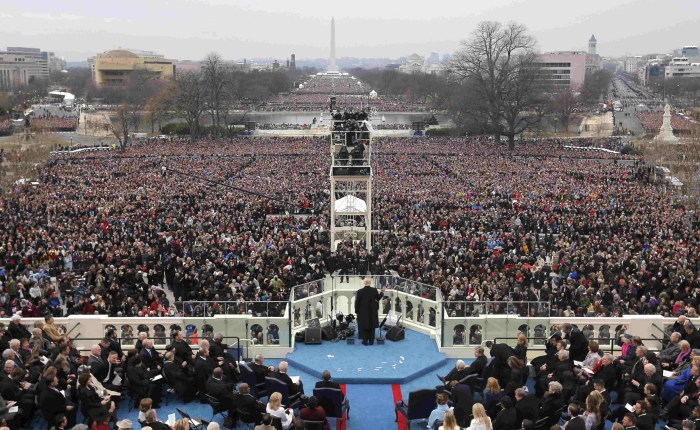
Yes, the media has been known to sensationalize the wrong things and some papers are more reputable than others but with Trump, fiction’s become redundant. You merely need to collect his quotes these days to form an article. It may be a coherent, slobbering mess but so is every Trump speech. So, in 2018, let’s stop paying into the idea of “Fake News” because you can’t hide the video footage of Sean Spicer hiding in the Rose Garden bushes, inauguration crowd sizes, or the words Trump spoke mere weeks ago. It’s out there, in the open.
Are people ready to accept the Left again?
Roy Moore was inexcusably awful but still, a Democratic Senator from Alabama is not something you hear about every day. Grouped with the #metoo movement (not exactly political, though women’s rights are generally sided with the Left), Trump’s low approval ratings, Obama topping Gallup’s most admired man poll, the Women’s March on Washington, and more however, it begins to paint a picture. In November 2018, we’ll of course see with the Mid-Terms but this time, we’ll need a United Left. Even though, we’re discussing 2017, the lesson of 2016 must not be forgotten.
Was The Last Jedi disappointing? (SPOILERS)
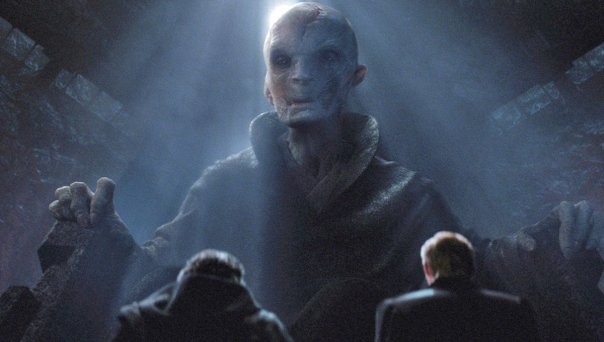
Yes, this is a political blog but we also love Star Wars. So did Rian Johnson deliver the goods? Ultimately yes- it was a beautiful and unusually thematic entry in the franchise. But come on! Is Snoke really just some nobody leader, dispensable to a larger purpose? He looks like a disfigured Goldmember, had a super cool throne room and guards, and obviously influenced Kylo Ren somehow. So, tell us who the Phantom Menace he is! And I don’t want to figure this out through some extended universe graphic novel bullshit or another needless stand-alone movie. He’s relevant to this trilogy! I also don’t care that we didn’t know who the Emperor was in the originals- his origin wasn’t important at that point and since Episode VII, we’ve been baited with questions. Rectify this please, J.J. Abrams. Otherwise, I enjoyed it a lot. Anyways, that’ all- have a happy new year!
Impeachment… the one sweet word caught in a perpetual echo these days; the prospect which denotes hope and security for the majority; and which entails many ramifications, of which, we cannot be certain. As it seems likely that President Trump will spontaneously combust any day soon, we decided it was finally time to take a look at a man less charismatic than beige wallpaper- he, who would be king, should impeachment or this combustion occur. Yes, you guessed it- this article is about the guy who looks like he’s from Thunderbirds- Mike Pence. (The title was also a clue.)
Who is he? It’s an important question to ask as he’s never exactly stolen one subset of a headline. Fret not, we’re here to dispel the mystery surrounding him. Born into an iron-clad Catholic family in 1959, the would be-law student went on to shock his community by becoming a born-again Evangelical. He then adopted an array of hypocritical conservative-Christian stances, before his first defeat for the Indiana 2nd Congressional District. Unfortunately however, he persevered (ignoring God’s will after a second defeat), succeeded in 2000, and thereafter every two years up until 2012. Then, he became the Governor of Indiana and something of a national joke among liberals for his refusal to attend any alcohol-serving events without his wife and for his draconian beliefs regarding gays. (Basically, they’re sick and need to be cured.) In many respects, just another right-wing righter.
At the 2016 Republican National Convention, he called himself a ‘Christian, a conservative, and a Republican, in that order.’ Indeed, his religious convictions seem to shape his persona even more so than the average Republican. Brian Hovey, a political columnist from Indiana once wrote that ‘[he] doesn’t simply wear his faith on his sleeve, he wears the entire Jesus jersey.’ Given the fact that he’s been one of Trump’s more steadfast supporters, it’s fair to posit that these principles are flexible (basing these on the Bible). Of course, one could then argue that like any other politician, he merely employs these convictions for electoral purposes while bending them to his own end. Plus, he’s the VP! It hardly makes sense to speak rashly about a man who fires people as frequently as he used to on The Apprentice. That POTUS handle could be a mere tweet away!
The conventional thought is that while Pence isn’t ideal, he’s a great deal more amenable that the Donald. It’s certainly hard to imagine him doing something so obviously stupid as flaring tensions with North Korea or insulting a war hero or widow the way Trump has. He is, however, dangerous in that he’s more closely associated with the traditional GOP base. He will work with Paul Ryan and others to establish solid conservative pieces of legislation and he will do it under the cover of less scrutiny because a) he’s no Trump, b) this kind of news will become relatively boring, and c) the people are ready to turn off.
Historically speaking, he has campaigned against abortion- placing restrictions on providers as recently as least year. He’s also supported most international trade acts, including NAFTA (which Trump’s consistently called a failure). He once stated ‘societal collapse was always brought about following an advent of the deterioration of marriage and family’ just in case he betrayed any image of outright homophobia. He supported Iraq (which apparently Trump always thought was a mistake) and he praised the Citizens United Supreme Court decision. A bit of a mix bag, in some respects, considering the administration he’s a part of but also an ‘unfortunate necessity’ in the words of Steve Bannon.
So, do you feel prepped? Or is there no point in such speculation? After all, there’s a new wild, crazt twist every month (if not, week) from the Trump administration and Pence could very well become nothing more than a footnote in the Age of Fantastic Ratings (if even for just wearing the same tie as Trump one day). He could also, however, be the man who brings America back from the pit of madness to the edge. Will he inspire? Will he be an improvement? Could he make America great again. No, probably, and no.
In recent months, people could be forgiven for mistaking Trump as the greatest force for evil in America. After all, his Tweets, missteps, policy proposals, staff appointments,, attempts at consolation, and gaffes have given us immunity to the notion of a slow news’ day. And quite simply, he’s just an egotistical moron. Indeed, one could argue that the state of delusion and anxiety prevalent in every corner of American society, in issues such as immigration and education, can be attributed, at least on some level, to the manifest ignorance of the public sphere or concerted motive with weak justification of the political. It’s become clear, however, that the issue of gun control is just that extra bit twisted and demented- a disease ripping away at the moral fiber of American society.
Let’s start with the Second Amendment- a Supreme Court ruling from 1791, included in the Bill of Rights, which has since sparked endless debate for its openness: “A well regulated Militia, being necessary to the security of a free State, the right of the people to keep and bear Arms, shall not be infringed.” At the time, it was a relatively sound proposal. America’s founding fathers and those first legislators, after all, were regarded as being among the wisest men of their era. (Their era.) They were still working out the logistics of their country, however, placating fears that a single Federal army might be established to outdo all state militias. Also, they didn’t have semi-automatics. Or good home security. And there was probably a greater chance of being assaulted by a bear. Essentially, they weren’t designing a framework of law for 2017.
1700s warfare
Gun Rights’ activists, without pause, will point to the Second Amendment as their scapegoat of justification whenever their ways come under attack. It’s so embedded in America’s culture that it can’t be undone. Indeed, its wisdom must not dare be questioned. It’s a part of the Constitution! What they systematically forget, of course, is that the Constitution isn’t perfect and that’s why amendments like this are made to it. And you know what? They can also be undone, as evidenced with the ending of prohibition in the 1930s. Tradition, unfortunately, is an illogical, if emotional, stranglehold.
And so we come to the NRA, the corporate embodiment of this way of thinking- the most sinister of lobbyists in America. Formed in 1871 for the improvement of rifle marksmanship (post Civil War), it has come to take on a much wider role in society since for its political and economic interests being held at stake (or as they’d argue, ‘defending freedom’). The organisation we recognize it as today, has basically existed for the past 40 years, since around the time when the nation began its dramatic rightward swing. In this time, they have been successful in passing pro-gun legislation such as the Firearm Owners Protection Act (1986) and opposing the renewal of less friendly legislation such as the Federal Assault Weapons Ban (1994).
Every time, a mass shooting occurs, their organisation is naturally brought under scrutiny by some whilst zealously defended by others. With 5 million members, their might is of course daunting but their economic influence over Republicans makes the real difference. For example, their investment of $50 million in the 2016 election, backing Trump and six Senate candidates, saw them succeed boisterously, losing their bet on only one seat. Now, while most data points to a fairly equal confluence in the number of mass shootings spread over the last 40 years, it should also be acknowledged that the nature of these shootings has become much ‘deadlier’ (Politico, 2017.) Even in a post-Cold War era, weapons’ technology has improved and automatics and semi-autos are readily available, even to those with mental illnesses. People apparently need these upgrades the way someone else might change their phone. There’s also one other facet however that’s kept this industry churning out pure madness for a living- gun pride.
Possessing a firearm is arguably necessary for some professions. It is a form of defense. It’s also a symbol of authority and pride, however, seemingly linked to American identity. As a PEW research piece revealed earlier this year, 42% of Americans live in a household with a gun and 79% have shot a gun. These might not, at face value, seem like staggering statistics but they highlight, at least, the normalization of this way of life. And the NRA, to swing back to those malevolent, victim-playing hounds, are happy to take advantage of this culture and emblazon it with the flag.
Ultimately, we must accept that the NRA probably has good people and that they do, for the most part, teach safe practice and respect for the weapons they hold. This diatribe is not intended to infringe on their respective, individual personalities, professions, or moralities. As a whole however, their fostering of a gun-proud, traditionalist, politically motivated base, speaks volumes to their detachment from reality and their willingness to let any ounce of remaining morality slide through the gaps.
As the Trump Administration stumbles its way out of its seventh month, one can only begin to wonder when exactly this vessel of chaos will finally crumble. Given the preponderance of Hurricane Harvey, one can of course be forgiven for forgetting that the Breitbart phantom, Steve Bannon, only left his position as Chief Strategist a mere two weeks ago. Indeed, it seems each scandal or road-bump along the way has been subsumed by another. This one shouldn’t be quickly skipped over, however, for it highlights what has already become crystal clear that Trump seems hell-bent on attaining a higher turnover rate than an unpaid McDonald’s internship.
Steve Bannon did not waste a second’s hesitation turning against Trump with an immediate return to Breitbart.
On January 30, a mere ten days into the Age of Truly Fantastic Ratings, the attorney general Sally Yates was the first to go, after directing lawyers not to defend Trump’s Muslim ban. Michael Flynn soon after resigned as National Security Adviser, pressured by the ongoing scrutiny of the Russian hacks. James Comey, the unfortunate FBI director who clearly didn’t pay attention to Flynn’s resignation, was fired on May 9 in the course of his investigation into the same subject. On July 21, Press Secretary Sean Spicer resigned, after being found hiding in a bush and opposing the appointment of Anthony Scaramucci (the Communications Director) who would be gone ten days later and ten before his official start date. Even in that narrow gap however, we also lost Rince Priebus, the Chief of Staff, who just couldn’t whip the White House staff into shape. Then, as already mentioned, was the departure of Steve Bannon, who gradually fell out of favour somehow with the usually steadfast Commander-in-Chief. Of course, that’s not all the company Trump’s kept that has fallen by the wayside but it’s simply unrealistic to expect us to comment on every single one.
Sauron, who also resigned from his advisory role on August 19, was concerned that Trump was not adequately addressing the national debt. “I was shocked” the dark lord admitted.
Naturally, turnovers occur and previous administrations have experienced their own tumultuous periods. In 1979, Carter fired five members of his cabinet in one foul sweep that backfired against his wishes to renew his administration’s credibility. In 1987, Reagan lost seven members of his cabinet when the Iran-Contra scandal came to light and threatened to take down his presidency. George W. Bush’s cabinet were hardly the bedrock of stability and even Obama’s, whilst relatively secure, was not the same in 2016 or 2012 as it was in 2009. Typically, according to a political science blog from Middlesbury College (2010), 75% of the president’s senior cabinet and advisers are retained through to the second year. Again however, Trump is only seven months in and he has already gone through a National Security Adviser, Press Secretary, and Chief of Staff. These are hardly the foyer decorators.
It is like jumping from a sinking ship that hit an iceberg November 8. Some analysts have opined that this turnover rate can be credited to the fact that Trump is a terrible leader. In conclusion, this fracture will undoubtedly plague any re-election hopes he might hold, for by 2020, it seems unlikely there’ll be any Republicans left to work for him.
With last week’s announcement of a ban on transgender soldiers in the US army, Trump slid to a new low that shocked even Sauron himself.
“I was shocked!”- Sauron
Of course, nothing is yet certain with this latest betrayal but even the proposal of such an amendment sheds light on the growing sense of desperation that characterizes this administration. And now at this fatal hour, when his cabinet is falling apart, North Korea is testing missiles, and the Republicans can’t pass a repeal on Obamacare, he must play what could perhaps be his last card; the culture wars.
Republicans have been playing this one for years. It’s what they do when the heat gets a little too intense in an election debate or when Modern Family introduces another minority character. It helps to convey the other side for what they really are; family-ruining, drug-addicted hippies who would have every American speaking Lithuanian, or some other strange language, if they could. And the thing is, it works.
The dog is also gender neutral.
In the 1980s, as the New Right became more powerful and assertive, they began to push back against some of the radical shifts in society brought about by the Left in the 1960s and 1970s, such as abortion. Although this issue had effectively been put to rest in 1973 with the Roe v. Wade case, the opposition never quite dissipated; in fact, they became more vocal and encroaching in everyday life, leading to the rise of Republicans like George W. Bush, who would, himself (yes), appoint two eyebrow-raising justices to the Supreme Court in 2005-6. Meanwhile however, leftist activists broadened their range of issues from anti-war activism and feminism, taking on the proliferation of nuclear weapons and power plants, energy sources, and globalism in the 1980s and 1990s. When the Kyoto Protocol of 1997, for instance, was turned down four years later, the cultural schism became apparent in the ongoing debates on environmentalist priority. The media, in their ever cunning way, capitalized on such tensions by targeting their audiences appropriately with ideological news channels like CNN, MSNBC, and Fox.
Former Fox giant Bill O’ Reilly, in one of his old pieces, ranting about how a single mother took his parking spot.
Today, Americans live in a zany, amplified version of this reality however. Many liberals see conservatives as backwards-thinking, science-abating morons with their heads stuck in the sand, yearning for a time long gone. The right, on the other hand, resent how soft and regulated America has become under the likes of Obama. They believe the right to bear arms is tantamount to their right to freedom, under the US constitution. And… Gwyneth Paltrow!!! It’s not all clear cut but a range of issues divide these collective groups, including: political correctness, church & state, LGBT rights, women’s rights, immigration, recreational drug use, censorship, and state rights.
Are there two Americas then? or is this all better understood as a modern-day struggle to define the spirit of what America is? Of course, no society is ever wholly united on every issue but in general, there’s usually a strong consensus on at least several of the ones mentioned above. Judging by the course of other nations and the prevailing tide of social history, it seems rational to guess the left will prevail on most of these, though at times, it must be admitted that even their tactics can be deemed a tad excessive (especially with political correctness).
Trump is no ideologue but he is a master at shit-stirring. He may yet be able to rally his supporters up, if he’s able to cast his liberal opposition in the same framework Bush did to Kerry in 2004. It’s not a surefire strategy but with the 2018 mid-terms becoming a more prominent talking-point, it may be the one by which he hangs on. It certainly helped in 2016. As Rich Lowry wrote for The Guardian in January, ‘ [he] is an unlikely cultural warrior, but if he can harness a sense of national solidarity and speak persuasively for ordinary American workers… he may prove a powerful one.’ The battle’s on liberals- your base will undoubtedly garner the support of the transgender community but leave your Facebook commentators at home. They’re just terrible.
We always believed that we were part of a great movement of humanity itself called democracy, involved in the search for freedom; and that belief has always strengthened us in our purpose. But just as we are losing our confidence in the future, we are also beginning to close the door on our past…
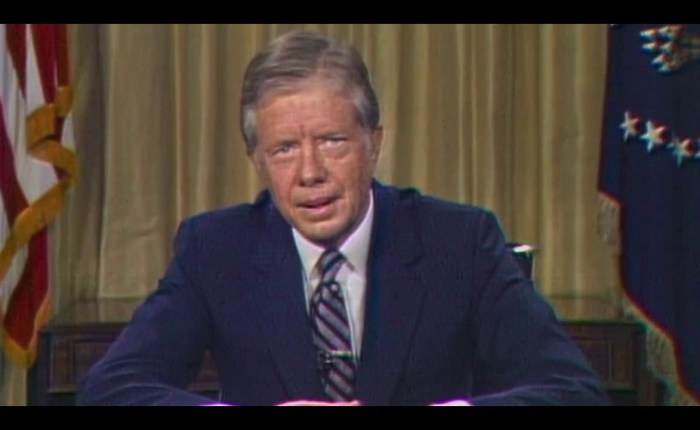
38 years ago, President Jimmy Carter spoke to the nation in an effort to reconcile the will of the people with his own agenda. In the years preceding, America had undergone a radical decline in morale thanks to the War in Vietnam, the assassinations of two Kennedys, Watergate, an Energy Crisis, and inflation. The people were agitated on an account of the inference that their lives were getting worse and that Washington, in its bubble, seemed unwilling to help. The same old story tends to repeat itself throughout history. So why revisit this one?
The short and simple answer is that it so emboldens the contrast in leadership values held between two of the most diametrically opposed leaders of recent history. Carter was a morally-minded, peace-seeking, detail-oriented hard worker who never lied to the American people and Trump is a comic-book villain. In tandem to this however, many of the things said in the famous ‘Crisis of Confidence’ speech still garner interest to people today. Indeed, I would go so far as to assert that it is one of the best speeches that was ever delivered by a president, at least in terms of diagnosing what was wrong with American values then.
It was delivered on July 15 under the context of an Energy Speech. Carter understood he wasn’t exactly popular and that this program needed help. In a somewhat prophetic move, he thus retreated to Camp David and let citizens of all walks of life give him their assessment of his presidency. To many today, this would appear a weak and even pathetic move. I would argue however that a little humility can go a long way in evoking an image of thoughtfulness. Confidence certainly has its place but not when misguided and blinded. Carter, a wise man, didn’t have the audacity to just stupendously ignore the people. He listened to them and did his best to understand their concerns.
… [After] listening to the American people, I have been reminded that all the legislation in the world can’t fix what’s wrong with America.
Many things were and still are wrong with America but back in 1979, Carter pinpointed a growing tendency towards greed and self-indulgence that would prevail in the succeeding decade and thereafter (a time in which Trump’s fortunes inflated beyond any sense of reality). It wasn’t purely a commercial, economic, and political triad of change however, it was one weighing on the consciousness of the American spirit which had always bolstered the idea of going from rags to riches through hard work.
In a nation that was proud of hard work, strong families, close-knit communities and our faith in God, too many of us tend to worship self-indulgence and consumption. Human identity is no longer defined by what one does but by what one owns.
Carter’s most savage critics sneered that he was piously preaching; even blaming the shortcomings of his administration on the hard-working American people. It’s not too difficult to make this case given the realities of the time. The importance of this speech, regardless, rests on the fact that no other president would ever say such things. As blunt as it may seem, they have always appeased the public with undeserved flattery to save their own skin like Goneril and Regan to King Lear… which brings us back to the mad King.
Can he change? Can he inspire? Can he tell the truth? Going by any interview, biography, or fortune cookie, it would be fair to say that he is a lost cause but we must remember, that other leaders will arise, from the smallest towns to the state capitals to Capital Hill and the White House. We must raise the bar for what we expect from them. Trump-level leadership is not acceptable. Paul Ryan-level leadership isn’t either. Not even George W. Bush, as saintly as he may appear these days, is acceptable. We need to be given a hard slap of reality frequently and not just when election cycles go haywire. America may have fallen off the band wagon altogether in 2016 but those wheels have been rocking for a long time. Of course, Carter called it back then:
We are at a turning point in our history. There are two paths to choose. One is a path I’ve warned about tonight, the path that leads to fragmentation and self-interest. Down that road lies a mistaken idea of freedom, the right to grasp for ourselves some advancement over others…
Yes, you read that title correctly. Now, I know most of you will propose that Trump or one of his cabinet members deserves this title but even the top dog himself pursues his reckless course of world destruction with an unapologetic pantomime of confidence. Ryan, on the other hand, is more like a snake, slithering his way to the top of a tree, crossing any and all branches to pursue his ultimate goal of a government that’s… well, we’re not quite sure of that even. Unlike most snakes of course, he’s not that cunning, sneaky, or threatening. He does however try to be all these things and for that reason, we’ll stick with the metaphor.
Last week, former FBI Director James Comey testified against Trump, resulting in a ripple across the GOP’s collective nerve system. Paul Ryan, likely hoping to remind America that he exists (despite his significant position), responded to the allegations of corruptions in the White House by saying that the President was ‘just new to this.’ It was a pitiful display for the straight-laced gym-bound Speaker and one yet of mild disappointment for the people who might have thought him a voice of (some) reason in a party so lost in its way; for this man was not always a reliable source of support for the Trump administration…
It was in May 2016 when the Republican Primaries were effectively over that the Washington Post ran a story on the Speaker ’emerging’ as the party’s leading anti-Trump figure. Like many, he was astounded at the rhetoric being used during the great Orange Surge. After all, Ryan, ever the serpentine, was the archetypal Republican; all about family values, pro-NRA, a Climate Change skeptic, anti-Obamacare, anti-Same-Sex marriage, anti-abortion, and anti-reason. In 2014, he even wrote an op-ed for The Wall Street Journal, in which he divided the American people into ‘takers’ and ‘makers,’ which he would later flip-flop on- just like a true Republican. So what he saw before his eyes at the RNC last summer must have disquieted him and moderates subsequently hoped he would stand his own ground. Unfortunately however, he had a lackluster answer even then when he finally decided to support one of his own most vocal critics; ‘Hillary isn’t the answer.’
Ever since, Ryan has been lost in some sort of strange limbo where his agenda is being pushed but he seems all the more insignificant. He can’t keep up with the fresh slew of news being generated by the Trump administration on a daily basis. He’s constantly reacting, in off-beat time, to whatever the latest hurdle is. He denounces Trump every now and again and then stands by him steadfastly, as if to ensure the safety nets stay on a trampoline shot into outer space. He is the stalwart of a party whose principles are as expendable as his own time, for all the people care. Even his haircut betrays the possibility that this man might at all be genuine or interesting.
So why do we pay so much credence to this shadow of a man? The fact of the matter is he is important, or will be again when Trump is impeached and the guy who looks like he’s from Thunderbirds takes over. It will be at that point or some other in the future when he releases his pulped autobiography when he will have to answer for all the hypocrisy he presided over during his tenure. With the likes of former Republican Representative Bob Inglis calling him out (‘You know that you would be inquiring into impeachment if this were a Democrat’), the Speaker has to determine the point of no-return, when none of his party’s principles coalesce with the trajectory of the current administration. Only then, will he be able to justify a non-microwaveable dinner.